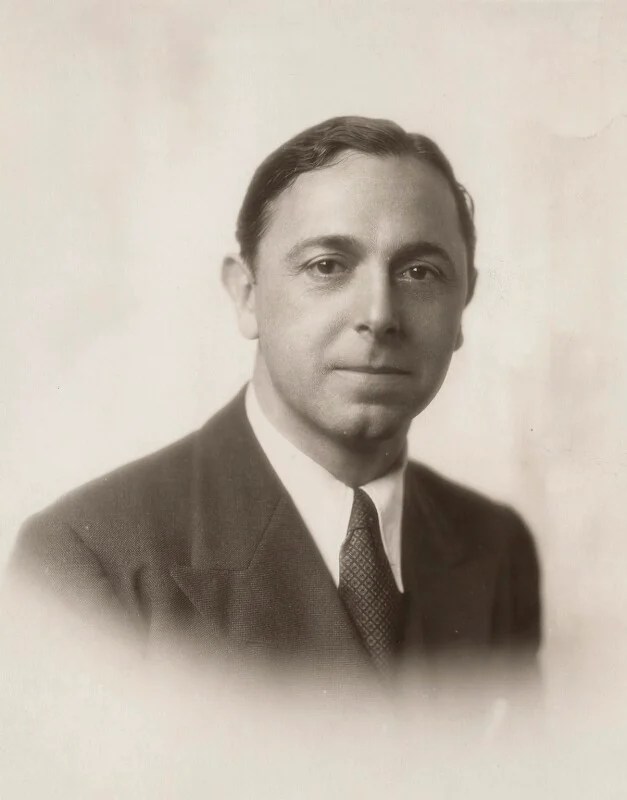
After returning to Britain in 1930, Lupino Lane managed the starring career in feature films that eluded him in Hollywood. One of his final Hollywood films, FIRE PROOF, had shown that he could successfully make a slapstick film in his old style with sound. In Britain, he achieved this again with 1931’s NO LADY, a great little film that features some of his best pantomime routines, revisited. But by the mid-1930s, this sort of comedy was going out of fashion, and light musical comedies were in. As a comedy all-rounder, this was a medium that Lane also enjoyed, and he had alternated much of his film career with appearances in stage plays.
In the mid 30s, British film exhibitors were beholden to exhibiting a quota of home-grown films, in an attempt by the industry to limit the dominance of Hollywood. This set up a boom of production, with many small companies deciding to have a go: quantity did not mean quality of course, and many of these films gained the derogatory term “quota quickies”. Still, with a guaranteed market for their product, it was a good time for filmmakers to launch a new venture, and Lane decided to get in on the game. He set up his own production company, ‘St George’s Pictures’, in 1935, with the intention of making independent comedy features. Most of these are lost, but THE DEPUTY DRUMMER survives, and shows him moving more in the light comedy direction. In it, he plays struggling composer Adolphus Miggs, who joins a band as drummer to attend a party at a stately home, but is mistaken for Lord Miggs. Subsequently, he’s mixed up witha jewel theft, but manages to both catch the thieves, and find a patron for his rhapsody. It’s easy to imagine this concotion as a stage play, and it’s similar to the vehicles that Lane’s cousin Stanley Lupino was making: a light, farcical comedy with some dialogue routines, songs, romance, and the odd bit of visual comedy.
The low budget, “quota quickie” status of THE DEPUTY DRUMMER shows through; it has a slightly slapdash feel to it, with a few half-burning dialogue routines. There’s much less visual comedy than usual for Lane, and a sequence of him let loose on a rare collection of china vases (I bet you can’t guess what’s going to happen…) is pretty predictable. Nevertheless, a running gag of a missing necklace seeming to follow him around comes off much better, and as with every Lane film, there’s at least one spectacular pratfall. Here, he misses the top step of a flight, and somersaults right down to the bottom. It’s over in a few seconds, but is a reminder of the absolute physical mastery of this unique comedian.
Elsewhere, the musical comedy format permits some charming musical numbers, especially a wonderfully understated dance number with Brutus the dog, ‘Dear Old Pal’. Oh, and look out for the always reliable Wallace Lupino and Syd Crossley as two villains, plus George Formby’s regular foil Hal Gordon.
So, overall, a mixed bag, but an interesting one. If you see the film for what it is, a 30s British musical comedy with low ambitions but some great assets, then it’s a pleasant way to spend an hour or so. Lane would make one more film with St George’s Pictures, TRUST THE NAVY – now lost – before the venture fizzled, but still had one more great film in him: 1939’s THE LAMBETH WALK. But that’s another story. Here’s THE DEPUTY DRUMMER…
 The Lost Laugh
Always nice to see a piece written about Lupino Lane. I’ve only seen a few scenes from The Deputy Drummer so thank you for the link. The wonderful singing/dancing number with the dog is so sweet. Especially knowing how much he loved dogs in real life! I’m hoping there will be a restored version eventually. I’m also hoping the lost films will turn up soon.
LikeLike