rare silent comedy

Arbuckle Kickstarter Project: Q & A with Steve Massa and Crystal Kui

For over twenty years, Roscoe Arbuckle made enormous contributions to screen comedy, in front of and behind the camera. This is a man who not only mentored Buster Keaton, but also gave valuable help to both Charlie and Syd Chaplin in their early careers, as well as many other comedians like Charley Chase and Al St John. Later, he was instrumental in directing films for St John, Lloyd Hamilton, Lupino Lane and many others. As a performer, he inspired a wave of ‘jolly fat man’ performers: Babe Hardy, Hughie Mack, Walter Hiers, ‘The Ton of Fun’.
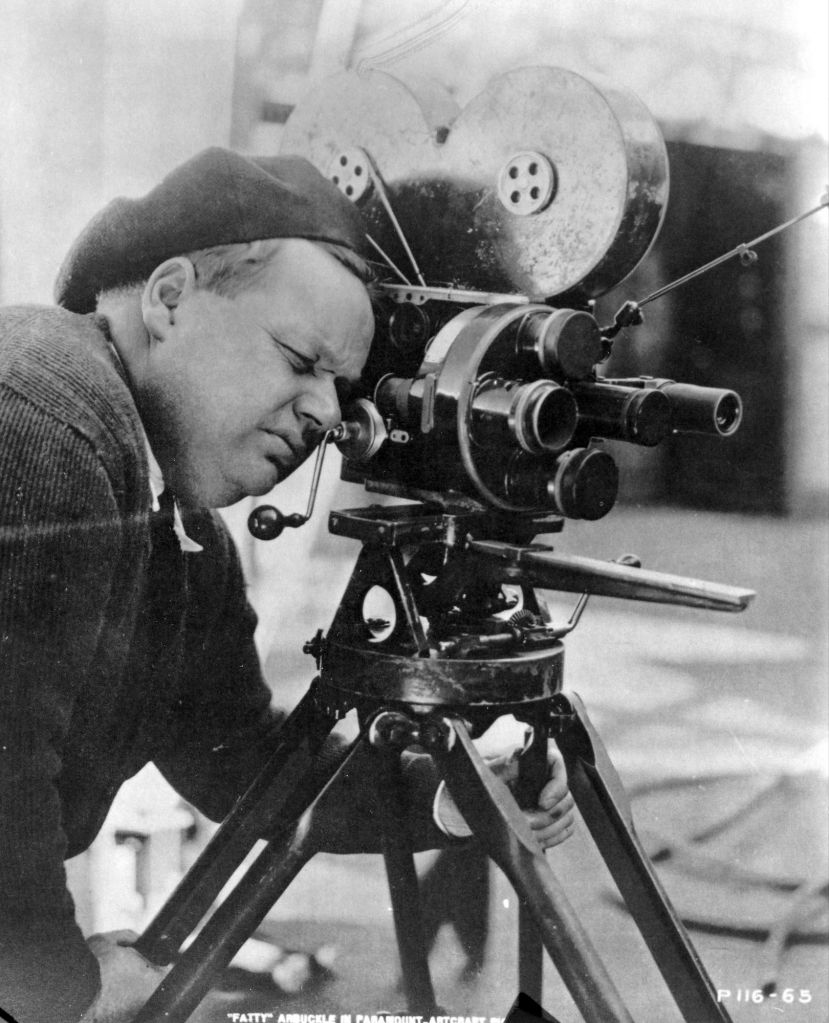
Yet for all that, Arbuckle often seems slightly taken for granted. His image is so sewn up with Keystone slapstick that his broader achievements in gentle situation comedy, farce and feature length comedies and as a director, are overlooked.

A wonderful new Kickstarter project featuring rare Arbuckle films from his entire career aims to set that straight. Take a look:  http://bit.ly/Arbuckle-Kickstarterhttp://bit.ly/Arbuckle-Kickstarter

It’s hard to believe that it’s now twenty years since the definitive DVD set, ‘ The Forgotten Films of Roscoe ‘Fatty’ Arbuckle’. This was the first set to really illuminate Roscoe’s wider achievements, and set a high bar. In the years since then, crowdfunding projects, access to Archives and digital technology have advanced, and the time is ripe to showcase some of the previously unseen and newly restored Arbuckle gems out there.

Among the highlights culled from Archives and private collections around the world are Arbuckle’s first Keystone THE GANGSTERS, THE SEA NYMPHS with Mabel Normand, rarely seen feature CRAZY TO MARRY, the Al St John shorts DYNAMITE DOGGIE and NEVER AGAIN and loads more! Overall, it’s a terrific sampler of silent comedy gold from one of tits finest talents. The Kickstarter campaign runs til Feb 14th and provides your opportunity to help bring these films to new audiences.
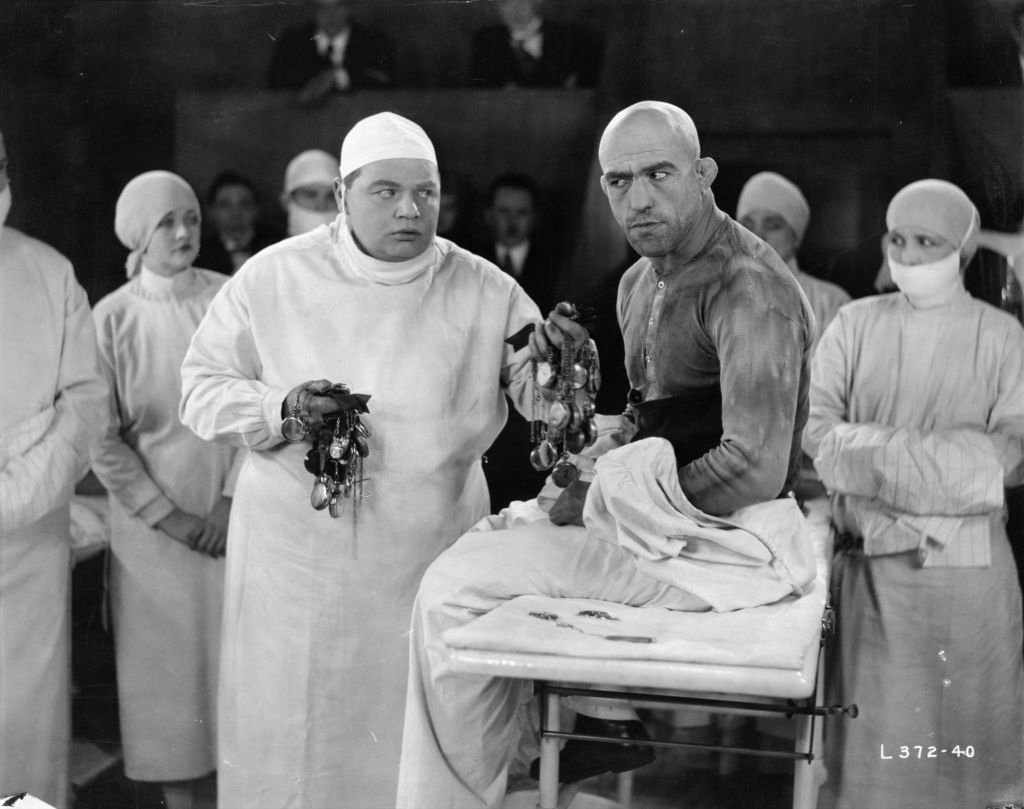
Crazy to Marry

Behind the Kickstarter campaign are silent comedy expert and author of ‘Rediscovering Roscoe’, Steve Massa, and producer Crystal Kui, with the new project being distributed through Ben Model’s Undercrank Productions.

Steve and Crystal very kindly offered to talk us through the new project, and some of the highlights it features. Read on for more…

This new Kickstarter release features a wealth of restored and reconstructed films, sourced from a range of archives and private collections. What are some of the logistical challenges in pulling all these disparate sources together?

Crystal Kui: In this Arbuckle release will be 11 shorts plus a feature sourced from seven different archives and two private collectors. Logistically, it will be quite a challenge to keep track of the shipping, scanning and restoration on all these films. We’re very fortunate that all of the participating archives were keen to provide access to their prints and are supportive of our efforts to share these treasures with the public. Thanks to Steve’s enthusiasm and deep knowledge of the films, we have been able to work with the archives on our side. After we draw up contracts with the participating archives, the next step is to coordinate the shipping or scanning of the film prints. A few archives have facilities on site to scan and restore the films, while for others we are able to ship the prints either to the Library of Congress for scanning on the east coast or to USC on the west coast. We have a team of digital restorers and color graders who are archive conscious and work diligently to bring the end result as close as possible to the original viewing experience. Not all films are complete, but we work with the best surviving or only surviving copies. My favorite aspect of working on this project is doing the research to reconstruct the missing parts or titles, finding out whether there was tinting and how it was used, and comparing foreign versions or reissues to the original domestic releases.


Were there any particular technical challenges involved in working with such rare and precious film elements?

CK: Several films in our release are sourced from foreign release prints including Crazy to Marry (1921) with Russian titles, The Sea Nymphs (1914) with Danish titles, and Fatty and the Broadway Stars with Norwegian titles. Instead of simply translating the titles into English, we tried to source scripts and censorship records in an attempt to reconstruct the titles as they were written originally in English. This requires a lot of close scrutiny and comparison. In studying the scripts, we also learned that Crazy to Marry had three tinting colors: yellow, blue and amber, which are detailed by reel, and will be recreated digitally by our graders Chris Crouse and Graham Brown, using original tinting samples from the early 1920s. Our regular collaborator, Jesse Pierce, an expert at recreating the intertitles, will design titles that faithfully match the original style of a Paramount feature, Keystone Comedy or Triangle release, for example.

 Is there a particular restoration effort on this set that you’re most proud of?

CK: Perhaps ask me this in a year; the real in-depth restoration work is only beginning now that the Kickstarter has met its initial goals. We have a lot of work ahead of us!
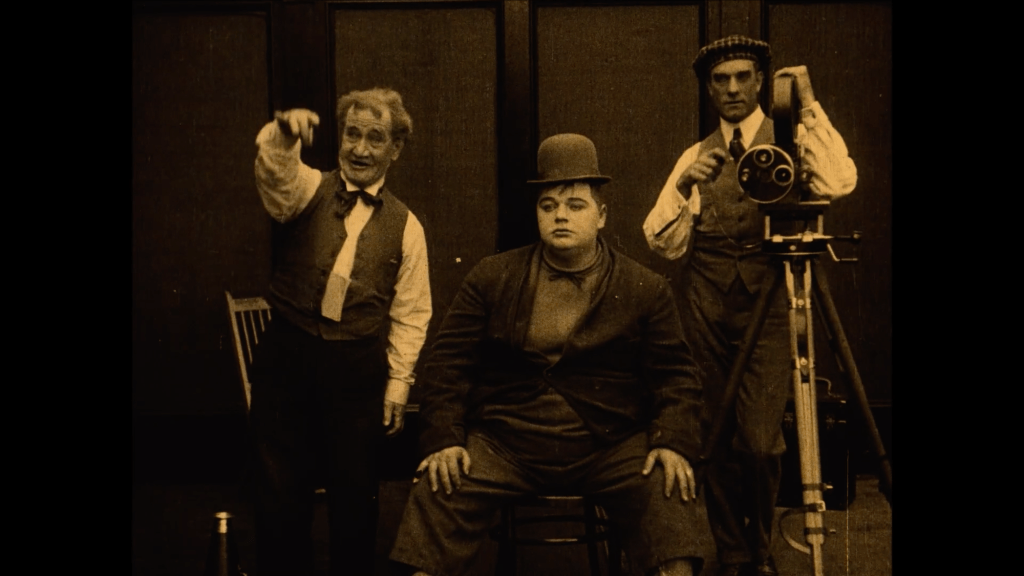
 

Steve, this set comes on the heels of your book, ‘Rediscovering Roscoe’. Championing Arbuckle is clearly a passion project for you. What is it about him and his comedy style that speaks to you?

Steve Massa: I grew up hooked on silent comedy, and although I got a steady diet of Chaplin, Keaton, and Laurel & Hardy there was almost no Arbuckle to be seen. This was probably due to left over stigma from the scandal. My first real look at Roscoe was thanks to film historian William K. Everson. In a 1983 all-Arbuckle evening at New York’s Collective for Living Cinema, Professor Everson showed The Waiter’s Ball (1916), his feature Leap Year (made in 1921), and the comeback sound short Buzzin’ Around (1933). Seeing the comedian from his first full flowering to his last hurrah was an eye opening experience and inspired me to try and get as much of his work seen as possible. Since then I’ve taken every opportunity I could to present his films – at places like The Museum of Modern Art and Library of Congress, on DVD, and in print.


The fact that Arbuckle made feature films is often overlooked. ‘Crazy to Marry’ shows him mixing polite comedy plots with slapstick. Where do you think his comedy style might have headed in the 20s, if fate had not intervened?

SM: Mabel Normand and Roscoe were the first stars of slapstick shorts to move into feature films. Their type of comedy shorts, while loved by audiences, didn’t get much respect in the film industry itself, where they were often treated like poor step-children. To be taken seriously they had to appear in more serious fare and be “legitimized” as feature stars.  Roscoe’s first feature was the dramatic western The Round Up (1920). The films that immediately followed, such as The Life of the Party (1920) and Brewster’s Millions (1921), were polite drawing room comedies based on popular stories, novels or plays, and were very plot heavy.

Unfortunately we don’t have access to all of his features, but by the time of Crazy to Marry and Leap Year he moved to farce comedy – which was better suited to his talents and gave him more situations to react to and opportunity to work in more helpings of slapstick. At the time of his banishment from the screen Paramount had very similar properties lined up for his next projects, so it seems likely that he would have stayed in that style.

It’s great to see Arbuckle’s directorial career represented as well. What led you to choose the particular films featured here? ( ‘Dynamite Doggie’, ‘Home cured’, ‘Never Again’, ‘Stupid But Brave’, ‘Honeymoon Trio’)

SM: The particular directorial films chosen for the set were picked for their excellence as well as their rarity and unavailability. In all of them Roscoe uses a very restrained and low-key approach that has the slapstick growing logically out of the situations. He gets very natural performances from the actors, with wonderful close-ups and reaction shots. His early sound short Honeymoon Trio (1931) will be a surprise to many people. It’s Roscoe’s “road film” – a black comic version of Detour (1946) and The Hitch-Hiker (1953), as Al St John and Dorothy Grainger head off on their honeymoon motor trip with Al’s former rival Walter Catlett in tow. Powerless to thwart or even shut up the obnoxious Catlett, Al is symbolically cuckolded as he’s caught in a never-ending honeymoon from hell.

 Do you each have a favourite film or gag from the set?

SM: One of my favorite films on the set is The Gangsters (1913). This was Roscoe’s very first film for Mack Sennett, it’s amazing to see how he hit the ground running. Besides being very funny he pulls the focus whenever he’s on screen, and his “Fatty” character is already developed at this early date. When this was made Roscoe was already a well-seasoned performer, having spent a decade touring with various stock companies around the U.S. and Asia. His film experience before this had been very limited – brief sojourns for Selig and Nestor, but he instinctively seemed to understand the intimacy of the movie camera. Understanding it, he used that intimacy extremely well and quickly became an audience favorite around the world.


CK: These films are so rare, I won’t have a chance to see the films until the scans have come in from the archives. We received our first film last week, The Sea Nymphs (1914) from the Danish Film Institute, and it was so much fun to watch, with extended scenes shot on Catalina Island. 

What do you hope viewers will take away from this set? Is there a particular facet of Arbuckle’s talents you’d like them to have a new appreciation for?

SM: I’d like viewers to get a full picture of what an excellent overall comedy creator Roscoe was. He’s best remembered for his on screen persona, but his work behind the camera gets taken for granted. He was a very sophisticated writer and director – even as early as 1915 his sure hand can be seen in films like That Little Band of Gold, Fatty and Mabel Adrift (1916), and He Did and He Didn’t (1916). That’s why after the scandal he was able to transition so easily to just writing and directing. He was already a pro, and turned out excellent shorts with comics such as Al St John, Lloyd Hamilton, Lupino Lane and Johnny Arthur.

So there you have it: a fantastic set rammed full of rarities featuring one of the true comic pioneers. I’m sure you won’t want to miss out on this chance to rediscover Roscoe! Here’s the link to the Kickstarter, and the full planned contents:

https://www.kickstarter.com/projects/179481334/rediscovering-roscoe-the-fatty-arbuckle-film-collection

Disc One

  • The Gangsters (1913) – 10 min, Museum of Modern Art
    Roscoe had been making sporadic appearances for Selig and Nestor since 1909. The Gangsters is his very first film for Keystone, where he shares the picture with Fred Mace and becomes an overnight Mack Sennett star.
  • A Noise From the Deep (1913) – 10 min, Museum of Modern Art
    The earliest surviving film of Roscoe with his frequent co-star Mabel Normand. It is also considered to have the first use of a thrown Keystone pie.
  • An Incompetent Hero (1914) – 12 min, Library of Congress
    Roscoe is a victim of circumstances in this rarely seen comedy, which also highlights Edgar Kennedy, Minta Durfee, Al St John, and Roscoe’s tight rope walking skills.
  • The Sea Nymphs (1914) – 25 min, Restored by the Danish Film Institute
    Mabel, Roscoe and a seal have fun in the surf at Catalina, in a new scan made from the only known surviving print.
  • Crazy to Marry (1921) – 40 min, Restored by Cinematek (Brussels)
    This was the sixth of Roscoe’s starring features, and was only in theatres for about a week before being yanked out of distribution and vanishing. This rare survivor illustrates how Roscoe was taking polite comedy plots and working in more and more of his signature physical gags and slapstick.
  • Bonus: New reconstruction of Fatty and the Broadway Stars (1916) – 7 mins, Nationalbiblioteket (Oslo) & Private collection / Restored by the USC HMH Foundation Moving Image Archive
    Only a few 35mm and 9.5mm chunks are all that’s known to exist today of this short. The Triangle Film Corp. had hired famous stage stars like Weber & Fields and William Collier to give prestige to their films, and used Roscoe to introduce some of these stage personalities to movie audiences.

Disc Two

  • Never Again (1924) – 12 min, Lobster/Blackhawk
    Roscoe here reworks the plots of Fatty at San Diego (1913) and A Reckless Romeo (1917) for his nephew Al St John. Scanned from the only surviving print.
  • Stupid but Brave (1924) – 21 min, Private collection / Restored by the USC HMH Foundation Moving Image Archive
    Having been banned from the screen, Roscoe focused on writing and directing, creating excellent comedies with Ned Sparks, Poodles Hanneford and Al St John.
  • Dynamite Doggie (1925) – 24 min, Lobster/Blackhawk
    Al St John co-stars with Pete the Pup in this rarity that reworks material from Love (1919) and Sherlock Jr. (1924), as well as early films that featured Roscoe’s dog Luke.
  • Home Cured (1926) – 10 min, Library of Congress
    Roscoe launched the series of Tuxedo Comedies for Educational Pictures which starred the fairly new screen comic Johnny Arthur. Scanned from the only known 35mm material, Johnny is a hypochondriac whose wife has had enough.
  • Honeymoon Trio (1931) – 12 min, Library of Congress
    This early sound short is Roscoe’s “road film,” a black comic version of Detour (1946) or The Hitchhiker (1953) that details Al St John on a never-ending honeymoon from hell.
  • Bonus: Video essay on Roscoe Arbuckle’s life and career.

Huge thanks to Steve and Crystal for giving their time to answer my questions, and for their efforts in making this project happen. I’m really excited for this set!
A Hullabaloo in Woolloomooloo

You don’t see too many Australian silent comedies. Several familiar comedians – Snub Pollard, Billy Bevan, Clyde Cook, Daphne Pollard – were Aussies, but they only made films after moving to the USA.

At the time that American silent comedy was maturing, the Australian film industry was in the doldrums (partly because of the dominance of US film), but a few comedies were turned out.

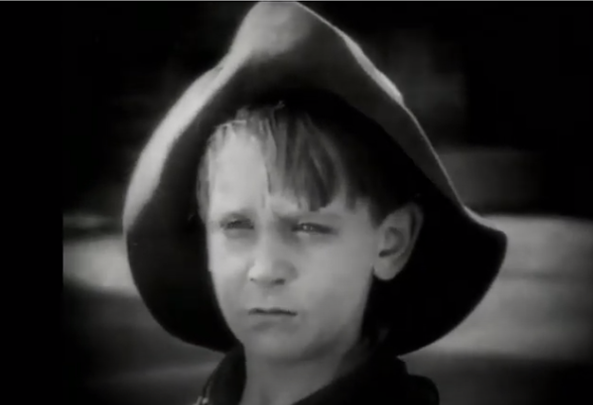
One surviving example is THE KID STAKES, a charming kid comedy from 1927. Following the adventures of a bunch of street larrikins from Woollamoolloo and their pet goat, this freewheeling little film has the flavour of Hal Roach’s OUR GANG films.

Like the Gang, it’s an ensemble piece, but the bunch of characters aren’t a Roach rip-off. Actually, they are inspired by the Sunday News comic strip ‘Fatty Finn’, and cartoonist Syd Nicholls makes a cameo in the opening scene. ‘Fatty’ is the lead character, a bit reminiscent of Jackie Cooper’s goodhearted little tough guy (he even looks a little like Cooper). With logic reminiscent of A.A. Milne, a title tells us that “they called him Fatty because he was not fat”. He’s played by Robin ‘Pop’ Ordell, the son of director Tal Ordell. (Tal was a well known character actor who turned to directing for this lone film – he plays the comic radio announcer in this film.)

Apparently, goat-chariot racing was a thing in 1920s Australia! Fatty’s gang are planning to enter their pet goat, Hector, in a big race, but their rival Bruiser lets Hector loose. He finds his way to a garden full of rare flowers, and after eating his fill is impounded by the owner. With the help of a pair of eloping lovers, and the hindrance of a bumbling policeman, they recapture Hector and make it in time to win the race.

Like the OUR GANG films, THE KID STAKES is often more charming than outright funny, but very watchable. It’s always fascinating to see silents made outside the standard American locations we’re used to seeing, and there’s a real slice-of-life quality to the old scenes of Sydney, the backyard games and dialect titles – not to mention the bizarre spectacle of the goat race! The bumbling policeman and goat provide some good laughs too.

On the downside, the direction is a bit clunky here and there, and there are too many titles. Old kid comedies always contain a few moments that make the more wary modern viewer wince – kids swimming naked in a stranger’s backyard pool? Or writing their names in blood? Ick. “The past is a different country”, after all.

Overall though, this is a fun watch that throws a light on another forgotten side of silent comedy. It’s certainly a pleasant way to do some armchair travelling for an hour of lockdown. The print below also deserves special mention for the music – played live to the film by Ian Cooper. I’m always astounded by the skill that silent film accompanists show, but Cooper’s task was even more of an achievement – he was blind! Astounding.

EDIT: Here’s a more complete version of the film:

Rare gems from the Cineteca Milano: Monty Banks, Jimmy Aubrey & more…

The Cineteca Milano has just published a collection of rare (and great!) silent comedy bits and pieces featuring some underrated comics. (As a heads-up, you need to register – it’s free – to watch the films, and I did have some difficulty getting them to play in my browser. They wouldn’t work on my laptop, but played fine on my smartphone… It’s not often you read the word smartphone on a silent comedy blog, is it?)

In my opinion, Monty Banks is one of the great unsung silent comedians. The dapper little Italian had a pleasing personality and a way with a gag that was quite his own, yet even in his day he was somewhat on the fringes of the scene. A lot of his shorts were independent films released on a states-rights basis, meaning they’ve remained much more obscure than those of the major comedy studios. The ones that survive reveal a fertile comic mind and excellent performer.

Physically, he resembled the typical put-upon “little man” comics and started out in a Chaplinesque vein, but by the early 1920s he’d settled on a more dapper costume and situational humour. In his films he became the tubby little man striving to be a leading man type, but always finding himself in embarrassing situations. In this he had some similarities Harold Lloyd and Charley Chase; certainly, he shared with Chase panache for mixing situational humour sight gags, with just a hint of the surreal. However, it’s not fair just to compare Monty to other comics – he managed to put his own unique spin on his material and made some very fun films. The more I see of his work, the more I like him.

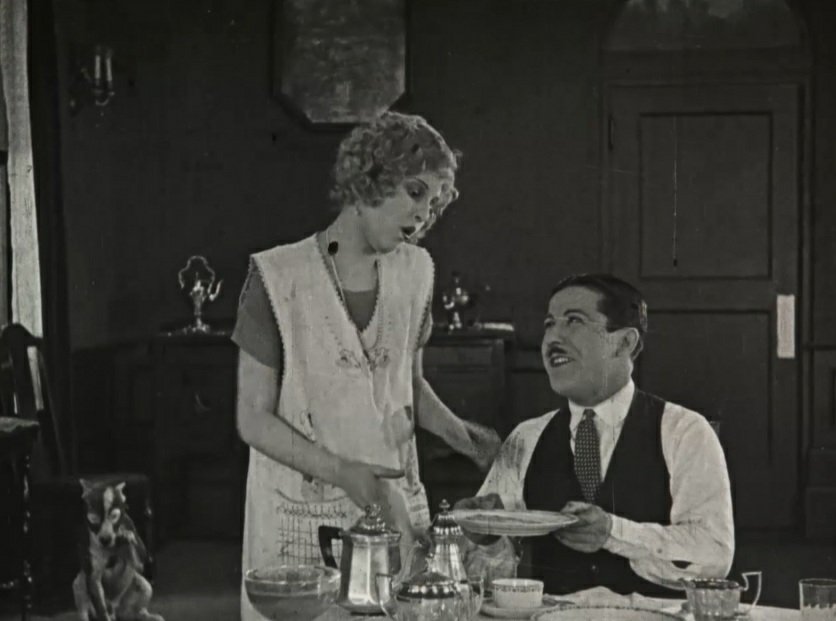
The Cineteca has published an 11 minute fragment called ‘Vitio Coniugale’ – it seems to be from one of his Grand-Asher comedies, HOME COOKED (1924). Bill Blaisdell, the heavy in the other Grand-Ashers, appears as Monty’s dad, and I believe his regular leading lady, Ena Gregory, plays his wife here. This is a simple domestic comedy of Ena’s struggle to learn to cook, and Monty’s struggle to learn to eat her food! The footage begins with Monty’s attempts to eat the meal she has prepared. The pancakes are so tough that they take the wheels off a car when he throws them out of the window, and when he pours her coffee in a pot plant, the plant has animated convulsions. The comic situation of an unpalatable meal isn’t exactly original, but Monty’s underplaying of the situation and the twists on the gags add something new and appealing.

With his family coming to meet the newlyweds, Monty engages in some damage limitation and says he will help Ena prepare a meal for them. The pair plan a goose dinner, which leads to a funny series of gags of Monty plucking the feathers from the bird. His execution of the bird takes place off screen – Monty walks into a room with the goose, and seconds later a ridiculously large number of feathers fly out of the door. Monty emerges covered in feathers, which subsequently transfer to a car and a dog.  All ridiculous, but handled adroitly and very funny. eventually, the goose shrinks in the oven and Monty has to steal a replacement from his neighbours, but there the footage stops. I’d love to see the whole thing; like ALMOST LATE and other Banks shorts that exist in fragments, it has a lot of promise. Here’s the link:

https://www.cinetecamilano.it/film/2547

By the way, for more on Monty Banks, here’s an article on his underrated feature films, and there’s more in issues 12 and 13 of The Lost Laugh ezine.

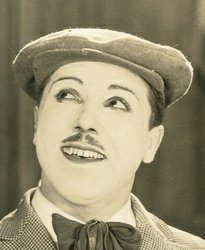
Monty Banks may be unsung, but it’s fair to say that Jimmy Aubrey is downright unloved by many comedy fans. Ok, so it’s understandable to a degree. He is one of your classic anonymous, moustachioed comics running around at high speed without much personality, and some of his surviving films just aren’t that funny. But, let’s give Jimmy his due. He was a graduate of Fred Karno’s Army, and starred in films for Vitagraph, Joe Rock and Weiss Brothers for over a decade, so he can hardly have been completely talentless. His supporting role in Laurel & Hardy’s THAT’S MY WIFE is very funny, too.

Part of the reason for his lowly status in the annals of Si-Com lore is probably his cantankerous nature; Babe Hardy recollected Aubrey being jealous and unpleasant towards him, and in late-life interviews (he lived until the early 1980s) he rarely had a nice word to say for anyone. This has coloured modern views of him but, well, that’s a can of worms now, isn’t it? There are many performers who probably weren’t very nice people (especially in bitter old age), but a lot of them didn’t live long enough to get interviewed and show it off! Let’s judge the Cineteca’s Aubrey film on its own merits. (‘Fridolen defenso del dieblo’ is, I believe, the Aubrey Vitagraph Comedy TENDERFOOT LUCK. It was filmed under the working title THE PROSPECTOR in June-July 1922 on location in Northern California, with J.P. Smith directing, and Frank ‘Fatty Alexander in the cast.) Here’s the link:

https://www.cinetecamilano.it/film/2544

You know what? It’s not bad. It’s true that Aubrey doesn’t have much charm, but in this comedy the gags are decent enough that it doesn’t matter too much. Rather like Ben Turpin, Aubrey wasn’t a comic innovator, and his films stand or fall on the quality of his gags rather than he himself (significantly, many of the funniest gags feature him in long shot, so his personality adds little to them).

In this one, Jimmy is a railroad stowaway who winds up in a Western town, falling in with Helen Kessler and her prospector father. He falls afoul of the town assayer (by blowing his hair and beard off with nytroglycerine, as you do!) and then sheriff Frank Alexander.

The best moment is a wonderful trick gag where Aubrey, pursued by Alexander, hides behind a narrow post. Thanks to double exposure, he seems to completely disappear. That gag has been done before, but what really makes it something else is the seamless way it is filmed. Just after Jimmy disappears, Frank walks right around the post, and even picks it up before Jimmy reappears. The topper comes when an angry mule also emerges from behind the post, chasing Jimmy and the sherriff away. A great bit of camera trickery, really presented well and made convincing by this little flourish.

Here’s an excerpt of that bit, courtesy of Dave Glass’s YouTube channel:

Ultimately Jimmy saves Helen from some marauding braves by improvising a catapult from a skinny tree. In the vast scheme of things, TENDERFOOT LUCK is no classic, and I doubt that any film is going to reveal Jimmy Aubrey as a master at work, but he was a hard working comic, and the film deserves 18 minutes of any silent comedy fan’s time.

Gag-happy Western comedy is also the order of the day in the next film, starring Lige Conley & Jimmie Adams. Some of the first comedies made by Jack White’s Mermaid Comedies featured these two diminutive comics – wild-haired Lige and balding, toothbrush-moustached Adams – in fast paced gags and stunts. The Cinemateca’s offering, BANG! (1921) shares with DANGER! an exclamatory title that sums up its breakneck comic method.

Gags come way before story in these shorts, and it’s best to abandon all worry about plot or characters. Instead, just jump into their slipstream-of-consciousness. Though BANG! is, roughly, a tale of Lige and Jmmie’s attempts to thwart corrupt sherriff Earl Montgomery, it’s all about the gag sequences and there are plenty of left turns to follow a comic whim. The Mermaids had good budgets and were often pretty elaborate, meaning a lot of these gags are impressive.

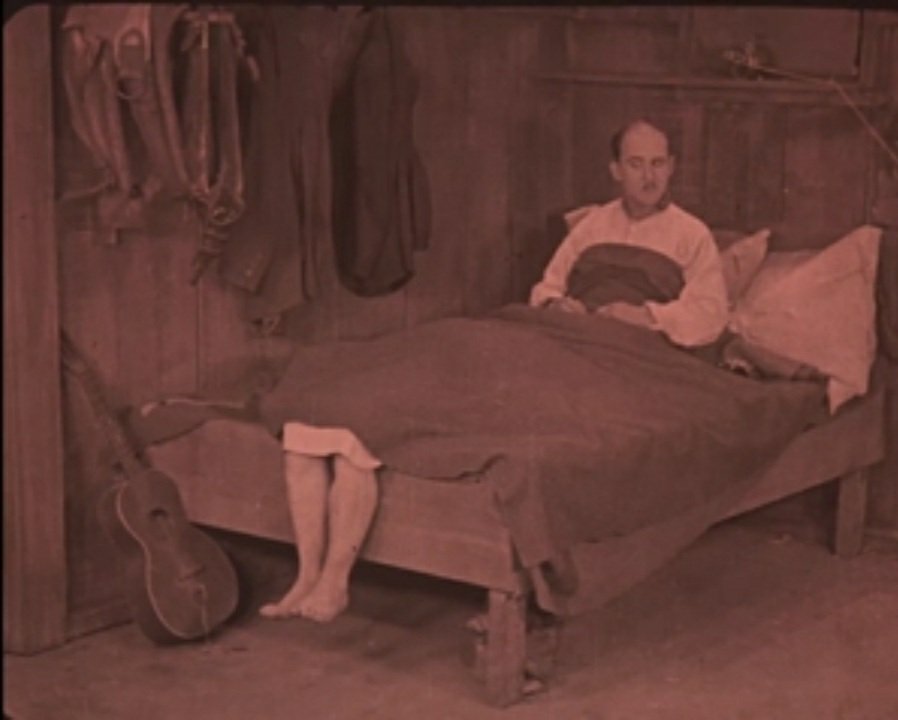
The short opens with a wonderful reveal gag of Adams in bed, apparently very elongated, before it’s revealed that the legs actually belong to Conley, hidden under the covers. Then we’re into some Rube Goldberg-esque business of their automated alarm clock and breakfast (similar to scenes in Keaton’s THE SCARECROW and Snub Pollard’s IT’S A GIFT) before a totally random scene of a dog, cat and mouse chasing each other!

The western saloon provides a nice surreal pool table gag, and some dark humour based around shootings. Then we’re into an exciting horse chase with some impressive stunts, and a good trick gag whereby Conley seems to jump across a river in one leap. Add some stolen money, a chimney, that cat again and you have a veritable gag whirlwind; leading lady Dorothy Wood has little else to do but watch the madness unfold.

This sort of material always benefits from a good print, and this is a beautiful tinted copy. The titles are in Italian, but you’re not really going to miss out on much story now, are you?

https://www.cinetecamilano.it/film/2545

There’s yet more Western spoofing in a fragment of HER SCREEN IDOL, a 1918 Sennett directed by Eddie Cline. Ford Sterling plays a conceited Cowboy star who agrees to attend a showing of his new film in a small town cinema, where superfan Louise Fazenda is in attendance. Sterling is best known for his scenery chewing Keystine performances, but here he’s very funny as the self-important star watching himself on the screen and marvelling at his own performance. We don’t get to see the wonderful Louise Fazenda do much in the existing footage, but look put for a glimpse of Ben Turpin and Heinie Conklin as two inept musicians in the orchestra pit. View it here: https://www.cinetecamilano.it/film/2548

It’s wonderful that the Cineteca Milano has released these rarities from their archives. It’s the films of lesser known, jobbing comics like Aubrey, Conley and Adams that fill out our picture of the silent era.

The Sheik of Silent Comedy

raymond_griffithThere was no-one else in silent comedy quite like Raymond Griffith.  He certainly bore very little stylistic similarity to Chaplin, Keaton or Lloyd. His closest evolutionary relative was probably Max Linder, with whom he shared a suave sophistication and silk-hatted swagger. Try saying that with a lisp.
To Linder’s breezy, debonair attitude, Griffith added a slyness and air of wry amusement that were entirely his own. In the 20s, Paramount billed him as ‘THE NEW SHEIK OF SLAPSTICK’; while slapstick was only a very small part of his modus operandi, there is something in the ‘sheik’ part of the description. His cool, effortlessly suave lounge lizard was very much a product of the 1920s jazz age, and like Harry Langdon, he was a reaction to the manic, larger-than-life style of many comics. Also like Langdon, his singular take on silent comedy was hugely appreciated by audiences clamouring for something different.

Griffith’s style was an example of the move towards greater sophistication in film comedy during the middle ’20s. At the extreme end of this movement were the ‘light comedies’, very polite films which were sometimes so light that they now barely seem like comedies at all. Griffith was able to balance the refined, sophisticated approach of light comedy with a more dynamic blend of sight gags and visual humour.

Partly, his visual instincts came from his training with Mack Sennett, for whom he appeared in shorts during the late teens.

He had then worked up to supporting parts in features. After garnering some great reviews for his roles, notably as a drunk in OPEN ALL NIGHT (1924), Griffith was promoted to starring status at Paramount; THE NIGHT CLUB launched his career in features with a high pedigree. It was produced and co-scripted by Cecil B DeMille, and directed by his protégées Based on the novel AFTER FIVE, it is a farcical tale in which Griffith is stood up by his bride, renounces all women and plots suicide, reconsidering when he inherits a fortune. (If you’re wondering where the eponymous night club features in all this, it doesn’t! Studios occasionally fabricated titles as “placeholder” listings in their upcoming film schedules – this was one such example. When it came to releasing the film, Paramount had promised something called THE NIGHT CLUB, so they delivered the unrelated film they had made under this title!)

Random title aside, it’s a warm and entertaining film. Griffith gives a wonderfully understated performance that sells the far-fetched story, and shows his trademark skill in creating laughter with subtle gestures and facial expressions.

THE NIGHT CLUB was a critical success, paving the way for several more Raymond Griffith features. The New York American echoed the sentiments of many when it commented that “Raymond Griffith gives Buster Keaton, Harold Lloyd or any of our million-dollar-a-year men a race for laurels.”

untitled

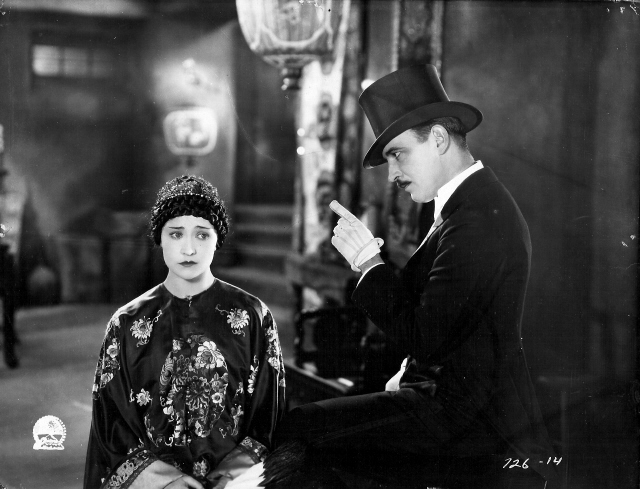
His next film was PATHS TO PARADISE, a terrific screwball-type tale of two rival cat-burglars. Griffith and Betty Compson are both wonderful in this witty and stylish comedy, constantly playing a game of one-upmanship before deciding to join forces to steal a diamond. The film shows exactly what made Griffith special; it’s hard to imagine any of the other major clowns playing a role on the wrong side of the law like this in their mature work. That Griffith plays a rogue and gets away with it speaks volume for his skill at creating a character. The film also benefits from snappy direction by Clarence Badger, and some excellent comic support (as always) from Edgar Kennedy. A scene where Griffith tries to dodge Kennedy’s torchbeam in a darkened room is simply wonderful.

Griffith & Compson in 'PATHS TO PARADISE'

Another highlight is the closing car chase, in which the two thieves make for Mexico with the police in hot pursuit. It’s a thrilling ride with some terrific visual gags thrown in, but sadly, the final couple of minutes of the film, in which they decide to turn themselves in and go straight, no longer exist.

https://www.youtube.com/watch?v=Y9Qa7hfE9NM

Sadly, this is portentous for the fate of most of Griffith’s other work. The two that do survive, the civil war comedy ‘HANDS UP!’ and ‘YOU’D BE SURPRISED’, reveal a truly unique and gifted talent.

In common with Keaton’s THE GENERAL, HANDS UP is a civil war comedy told from the point of view of the South. Griffith plays Jack, a cunning spy sent on a mission to destroy a gold mine that could help the Union troops win the war. The film isn’t available complete online, though the opening scenes below give a flavour. (The complete film is available to purchase from Grapevine video).

The Griffith feature available for viewing is YOU’D BE SURPRISED, a detective story that doesn’t quite come up to the standards of the previous two films, but is an enjoyable treasure nonetheless.

Sadly, we can no longer judge the quality of elusive films like WET PAINT, WEDDING BILLS or TRENT’S LAST CASE, so it’s hard to get a handle on his complete canon of work today.

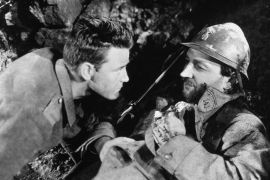
With his individual approach, Griffith remained popular until the close of the silent era. Alas, he more than any other silent comedian, had much reason to fear the microphone. Griffith didn’t have a bad voice; he had virtually no voice, a previous illness having left him with little more than a hoarse whisper. He did make a pair of talkie shorts, ‘THE SLEEPING POR2081153,6smqz__aIic26rMDSBg+6ve0dXjWDMr9BzUEy88u3tZBjmePWMNeFgd3fPSbJjq6wzKb_fFyuTeHO9i+18XSGw==CH’ and ‘POST MORTEMS’, which provided excuses for his voice, but clearly this could only go on for so long. His final role was wordless, as a dying soldier in ‘ALL QUIET ON THE WESTERN FRONT’. While his acting career may have been over, he remained busy as a producer for 20th Century Fox, passing away in 1957.
 

Griffith was very much a unique talent, and we can only hope some more of his features turn up in the future.


(Coat) Tales from the BFI Basement

Just come back from a trip to the BFI’s basement, having sifted through some more of their silent comedies. While the BFI’s online catalogue makes it now much easier to find a lot of the stuff they have, there are still things given generic titles (‘FAT MAN IN KNOCKABOUT’!), alternate ones left over from reissues, or occasionally completely wrong ones. One print marked as Larry Semon’s DUMMIES, for instance, turned out to be an extract from his THE STUNT MAN instead.

It is always fascinating to try and identify the proper identity of such films. Two Ben Turpin films were on our list, one called THE WRONG COAT, and the other given the catchy title ‘Comedy with Restaurant and Picture Stealing ‘.

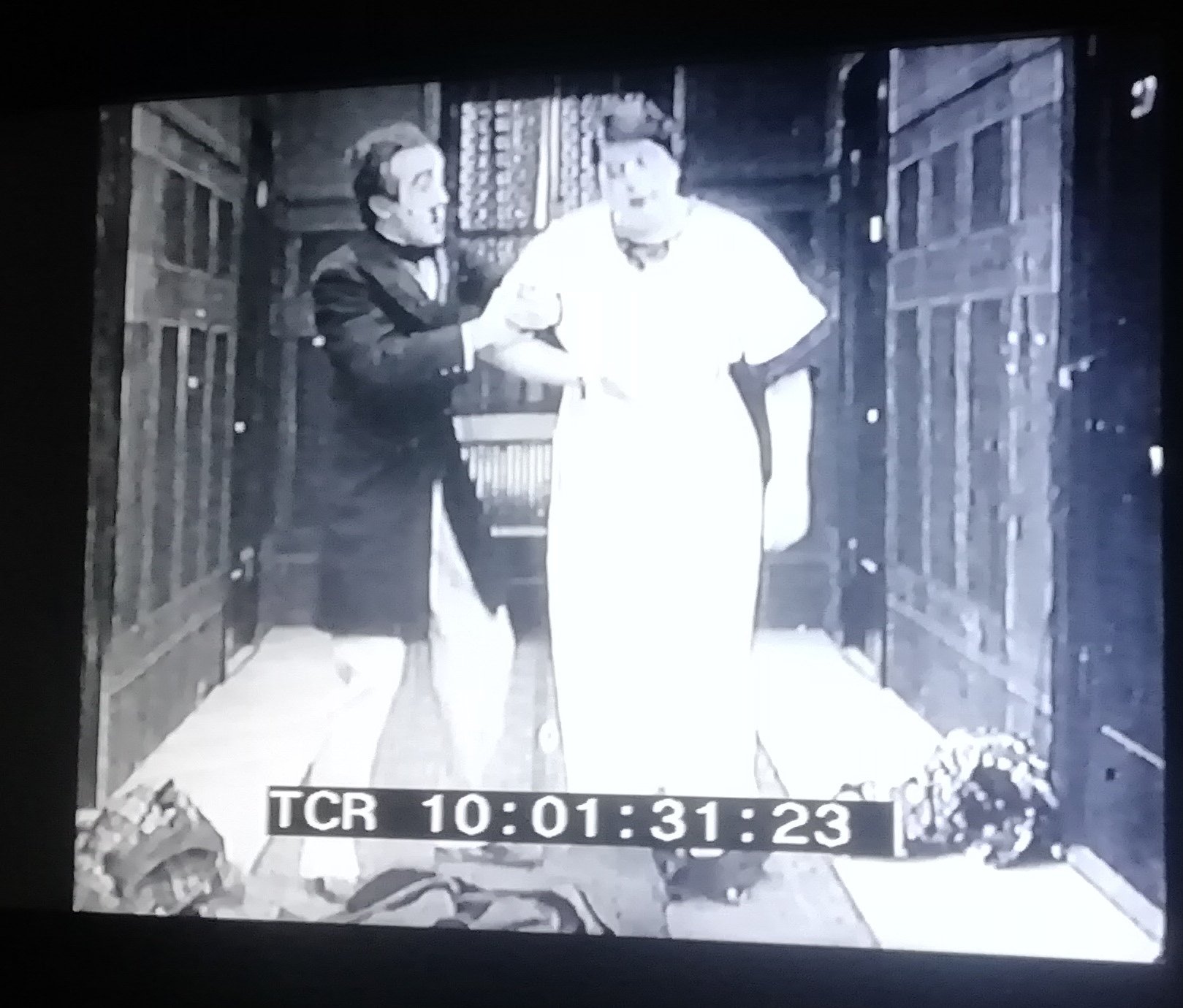
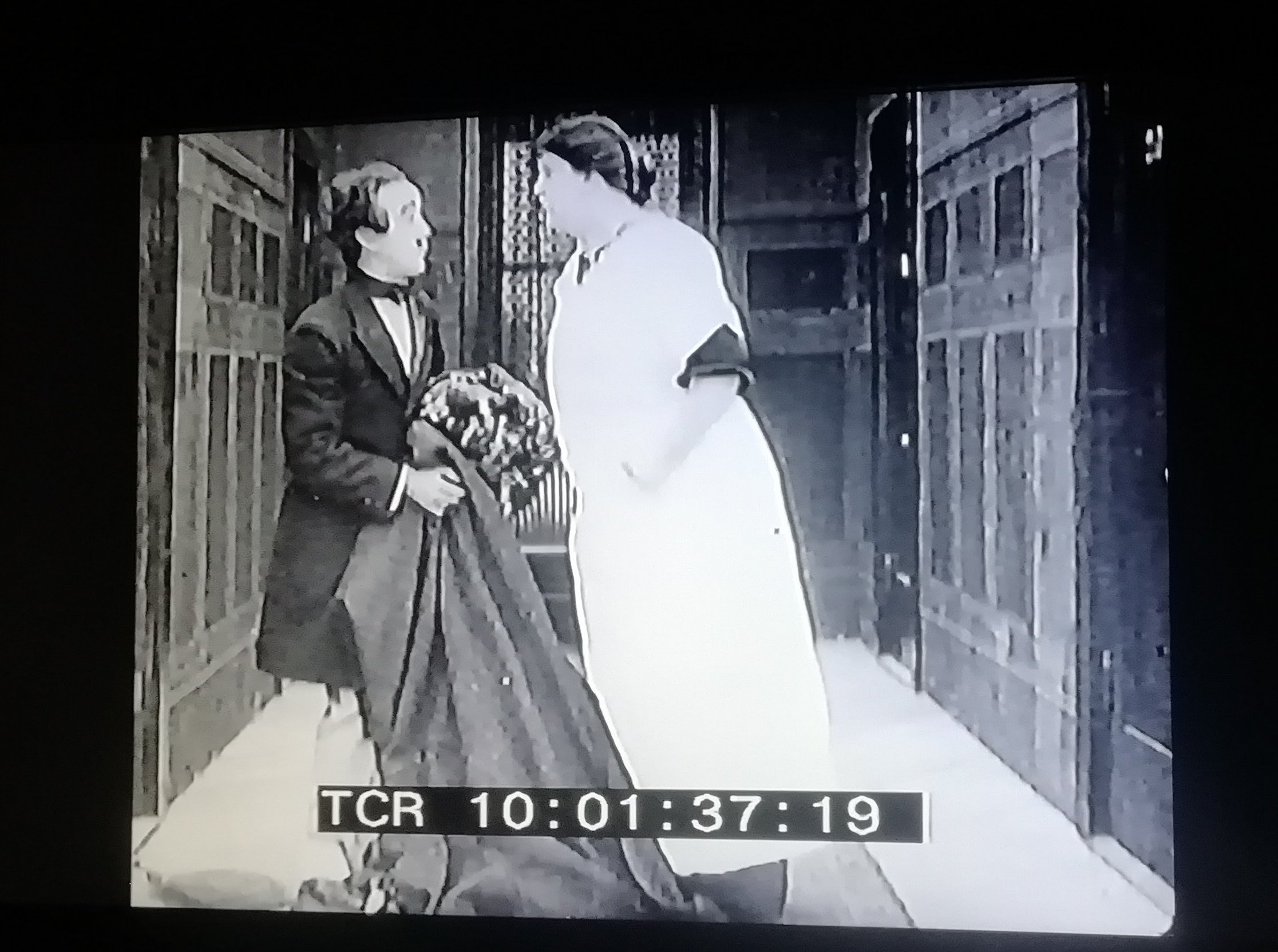
Both were clearly from early in Turpin’s career. THE WRONG COAT instantly hooked us in with a prominent appearance by Snub Pollard, as a salesman who battles with Turpin over the eponymous coat in the opening scenes.

Here are a couple of screengrabs of Snub (Sorry about the awful quality, it’s taken on a phone, off a TV screen showing a VHS transfer of an awful quality 16mm print!).

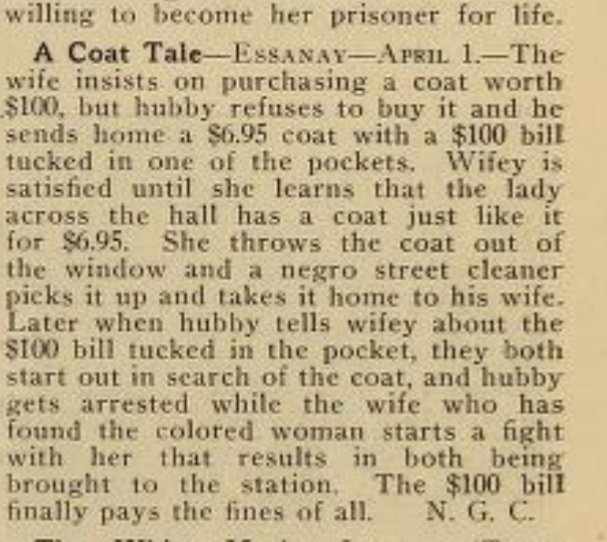
This was a knockabout tale of two coats being mixed up between two wives. Not a comedy classic, but a fun little film. Turpin has a particularly a nice bit of pantomime as he realises a cop is stood behind him by feeling for his badge – a great little moment that brings to mind his former Essanay colleague Mr Chaplin.

Looking at Turpin’s filmography suggested the real identity of the film as A COAT TALE (1915) , confirmed by looking at the film’s synopsis from MOTOGRAPHY:

The other Turpin literally did what it said on the (film) can, and provided us with scenes in a restaurant, where Turpin and another crook (Rube Miller) plot to steal a valuable picture. In the ensuing chaos, they accidentally poison themselves and the film closes with them having their stomachs pumped – a light comedy, this is not! Still, some funny scenes, not least in Turpin and Miller’s comic overacting when drinking the poison! Steve Rydzewski’s excellent Turpin book identifies this one as PICTURE PIRATES, a Vogue-Mutual from 1916.

The random assortments of silent comedies held by archives always offer some unusual gems, and it was great to see these. Not comedy classics, but rare and fun films that we’re lucky to be able to see. More to come on some of the other interesting BFI stuff in future posts…