For over twenty years, Roscoe Arbuckle made enormous contributions to screen comedy, in front of and behind the camera. This is a man who not only mentored Buster Keaton, but also gave valuable help to both Charlie and Syd Chaplin in their early careers, as well as many other comedians like Charley Chase and Al St John. Later, he was instrumental in directing films for St John, Lloyd Hamilton, Lupino Lane and many others. As a performer, he inspired a wave of ‘jolly fat man’ performers: Babe Hardy, Hughie Mack, Walter Hiers, ‘The Ton of Fun’.
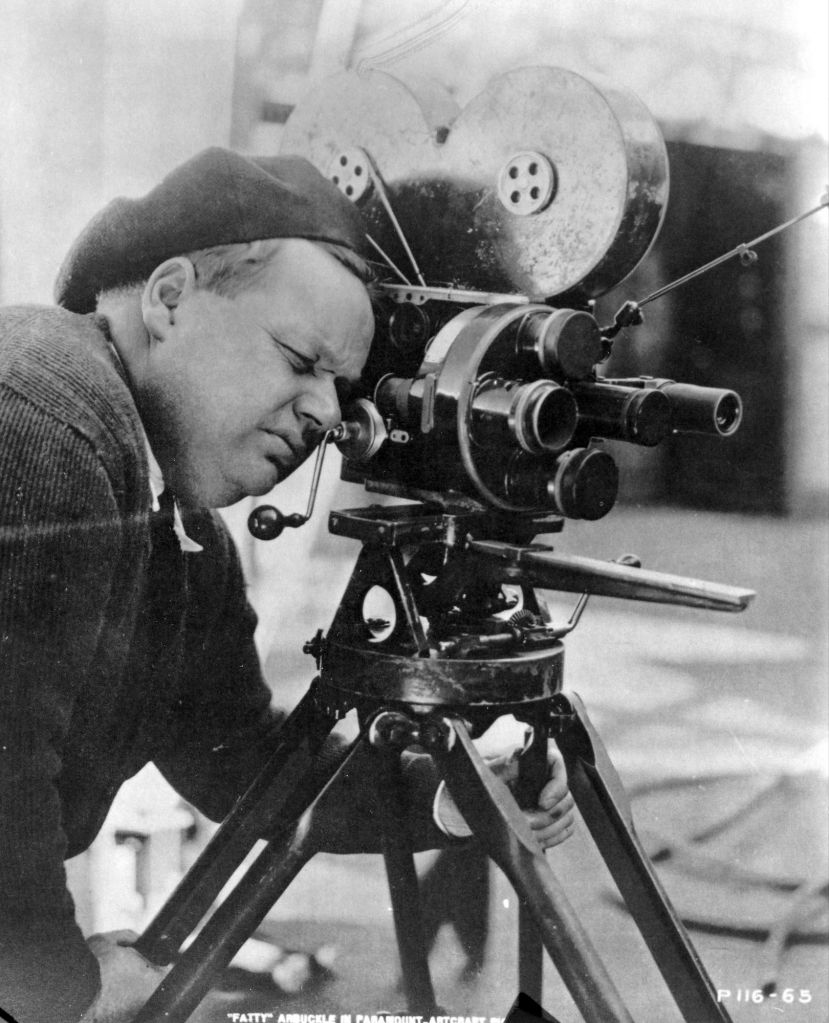
Yet for all that, Arbuckle often seems slightly taken for granted. His image is so sewn up with Keystone slapstick that his broader achievements in gentle situation comedy, farce and feature length comedies and as a director, are overlooked.
A wonderful new Kickstarter project featuring rare Arbuckle films from his entire career aims to set that straight. Take a look: http://bit.ly/Arbuckle-Kickstarterhttp://bit.ly/Arbuckle-Kickstarter
It’s hard to believe that it’s now twenty years since the definitive DVD set, ‘ The Forgotten Films of Roscoe ‘Fatty’ Arbuckle’. This was the first set to really illuminate Roscoe’s wider achievements, and set a high bar. In the years since then, crowdfunding projects, access to Archives and digital technology have advanced, and the time is ripe to showcase some of the previously unseen and newly restored Arbuckle gems out there.
Among the highlights culled from Archives and private collections around the world are Arbuckle’s first Keystone THE GANGSTERS, THE SEA NYMPHS with Mabel Normand, rarely seen feature CRAZY TO MARRY, the Al St John shorts DYNAMITE DOGGIE and NEVER AGAIN and loads more! Overall, it’s a terrific sampler of silent comedy gold from one of tits finest talents. The Kickstarter campaign runs til Feb 14th and provides your opportunity to help bring these films to new audiences.
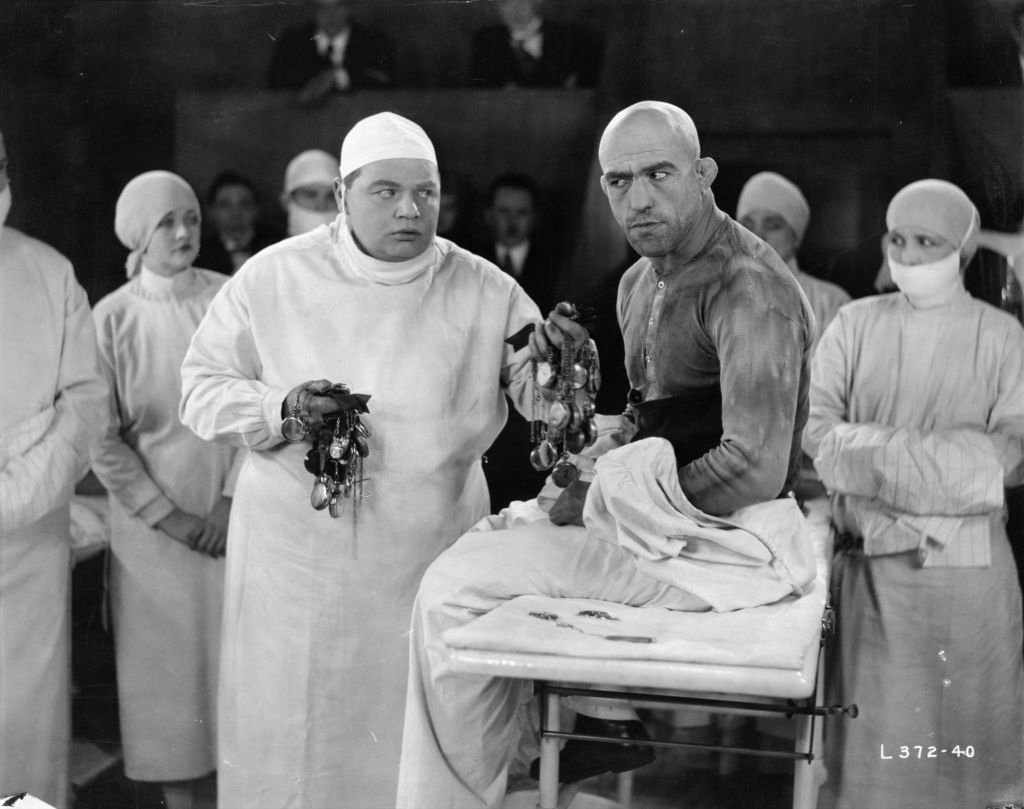
Behind the Kickstarter campaign are silent comedy expert and author of ‘Rediscovering Roscoe’, Steve Massa, and producer Crystal Kui, with the new project being distributed through Ben Model’s Undercrank Productions.
Steve and Crystal very kindly offered to talk us through the new project, and some of the highlights it features. Read on for more…
This new Kickstarter release features a wealth of restored and reconstructed films, sourced from a range of archives and private collections. What are some of the logistical challenges in pulling all these disparate sources together?
Crystal Kui: In this Arbuckle release will be 11 shorts plus a feature sourced from seven different archives and two private collectors. Logistically, it will be quite a challenge to keep track of the shipping, scanning and restoration on all these films. We’re very fortunate that all of the participating archives were keen to provide access to their prints and are supportive of our efforts to share these treasures with the public. Thanks to Steve’s enthusiasm and deep knowledge of the films, we have been able to work with the archives on our side. After we draw up contracts with the participating archives, the next step is to coordinate the shipping or scanning of the film prints. A few archives have facilities on site to scan and restore the films, while for others we are able to ship the prints either to the Library of Congress for scanning on the east coast or to USC on the west coast. We have a team of digital restorers and color graders who are archive conscious and work diligently to bring the end result as close as possible to the original viewing experience. Not all films are complete, but we work with the best surviving or only surviving copies. My favorite aspect of working on this project is doing the research to reconstruct the missing parts or titles, finding out whether there was tinting and how it was used, and comparing foreign versions or reissues to the original domestic releases.
Were there any particular technical challenges involved in working with such rare and precious film elements?
CK: Several films in our release are sourced from foreign release prints including Crazy to Marry (1921) with Russian titles, The Sea Nymphs (1914) with Danish titles, and Fatty and the Broadway Stars with Norwegian titles. Instead of simply translating the titles into English, we tried to source scripts and censorship records in an attempt to reconstruct the titles as they were written originally in English. This requires a lot of close scrutiny and comparison. In studying the scripts, we also learned that Crazy to Marry had three tinting colors: yellow, blue and amber, which are detailed by reel, and will be recreated digitally by our graders Chris Crouse and Graham Brown, using original tinting samples from the early 1920s. Our regular collaborator, Jesse Pierce, an expert at recreating the intertitles, will design titles that faithfully match the original style of a Paramount feature, Keystone Comedy or Triangle release, for example.
Is there a particular restoration effort on this set that you’re most proud of?
CK: Perhaps ask me this in a year; the real in-depth restoration work is only beginning now that the Kickstarter has met its initial goals. We have a lot of work ahead of us!
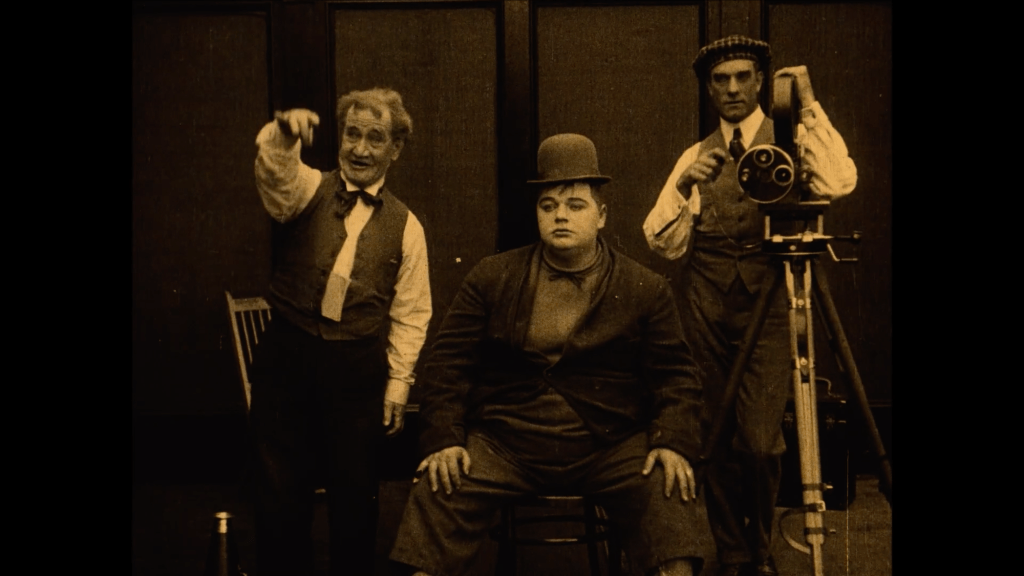
Steve, this set comes on the heels of your book, ‘Rediscovering Roscoe’. Championing Arbuckle is clearly a passion project for you. What is it about him and his comedy style that speaks to you?
Steve Massa: I grew up hooked on silent comedy, and although I got a steady diet of Chaplin, Keaton, and Laurel & Hardy there was almost no Arbuckle to be seen. This was probably due to left over stigma from the scandal. My first real look at Roscoe was thanks to film historian William K. Everson. In a 1983 all-Arbuckle evening at New York’s Collective for Living Cinema, Professor Everson showed The Waiter’s Ball (1916), his feature Leap Year (made in 1921), and the comeback sound short Buzzin’ Around (1933). Seeing the comedian from his first full flowering to his last hurrah was an eye opening experience and inspired me to try and get as much of his work seen as possible. Since then I’ve taken every opportunity I could to present his films – at places like The Museum of Modern Art and Library of Congress, on DVD, and in print.
The fact that Arbuckle made feature films is often overlooked. ‘Crazy to Marry’ shows him mixing polite comedy plots with slapstick. Where do you think his comedy style might have headed in the 20s, if fate had not intervened?
SM: Mabel Normand and Roscoe were the first stars of slapstick shorts to move into feature films. Their type of comedy shorts, while loved by audiences, didn’t get much respect in the film industry itself, where they were often treated like poor step-children. To be taken seriously they had to appear in more serious fare and be “legitimized” as feature stars. Roscoe’s first feature was the dramatic western The Round Up (1920). The films that immediately followed, such as The Life of the Party (1920) and Brewster’s Millions (1921), were polite drawing room comedies based on popular stories, novels or plays, and were very plot heavy.
Unfortunately we don’t have access to all of his features, but by the time of Crazy to Marry and Leap Year he moved to farce comedy – which was better suited to his talents and gave him more situations to react to and opportunity to work in more helpings of slapstick. At the time of his banishment from the screen Paramount had very similar properties lined up for his next projects, so it seems likely that he would have stayed in that style.
It’s great to see Arbuckle’s directorial career represented as well. What led you to choose the particular films featured here? ( ‘Dynamite Doggie’, ‘Home cured’, ‘Never Again’, ‘Stupid But Brave’, ‘Honeymoon Trio’)
SM: The particular directorial films chosen for the set were picked for their excellence as well as their rarity and unavailability. In all of them Roscoe uses a very restrained and low-key approach that has the slapstick growing logically out of the situations. He gets very natural performances from the actors, with wonderful close-ups and reaction shots. His early sound short Honeymoon Trio (1931) will be a surprise to many people. It’s Roscoe’s “road film” – a black comic version of Detour (1946) and The Hitch-Hiker (1953), as Al St John and Dorothy Grainger head off on their honeymoon motor trip with Al’s former rival Walter Catlett in tow. Powerless to thwart or even shut up the obnoxious Catlett, Al is symbolically cuckolded as he’s caught in a never-ending honeymoon from hell.
Do you each have a favourite film or gag from the set?
SM: One of my favorite films on the set is The Gangsters (1913). This was Roscoe’s very first film for Mack Sennett, it’s amazing to see how he hit the ground running. Besides being very funny he pulls the focus whenever he’s on screen, and his “Fatty” character is already developed at this early date. When this was made Roscoe was already a well-seasoned performer, having spent a decade touring with various stock companies around the U.S. and Asia. His film experience before this had been very limited – brief sojourns for Selig and Nestor, but he instinctively seemed to understand the intimacy of the movie camera. Understanding it, he used that intimacy extremely well and quickly became an audience favorite around the world.
CK: These films are so rare, I won’t have a chance to see the films until the scans have come in from the archives. We received our first film last week, The Sea Nymphs (1914) from the Danish Film Institute, and it was so much fun to watch, with extended scenes shot on Catalina Island.
What do you hope viewers will take away from this set? Is there a particular facet of Arbuckle’s talents you’d like them to have a new appreciation for?
SM: I’d like viewers to get a full picture of what an excellent overall comedy creator Roscoe was. He’s best remembered for his on screen persona, but his work behind the camera gets taken for granted. He was a very sophisticated writer and director – even as early as 1915 his sure hand can be seen in films like That Little Band of Gold, Fatty and Mabel Adrift (1916), and He Did and He Didn’t (1916). That’s why after the scandal he was able to transition so easily to just writing and directing. He was already a pro, and turned out excellent shorts with comics such as Al St John, Lloyd Hamilton, Lupino Lane and Johnny Arthur.
So there you have it: a fantastic set rammed full of rarities featuring one of the true comic pioneers. I’m sure you won’t want to miss out on this chance to rediscover Roscoe! Here’s the link to the Kickstarter, and the full planned contents:
Disc One
- The Gangsters (1913) – 10 min, Museum of Modern Art
Roscoe had been making sporadic appearances for Selig and Nestor since 1909. The Gangsters is his very first film for Keystone, where he shares the picture with Fred Mace and becomes an overnight Mack Sennett star. - A Noise From the Deep (1913) – 10 min, Museum of Modern Art
The earliest surviving film of Roscoe with his frequent co-star Mabel Normand. It is also considered to have the first use of a thrown Keystone pie. - An Incompetent Hero (1914) – 12 min, Library of Congress
Roscoe is a victim of circumstances in this rarely seen comedy, which also highlights Edgar Kennedy, Minta Durfee, Al St John, and Roscoe’s tight rope walking skills. - The Sea Nymphs (1914) – 25 min, Restored by the Danish Film Institute
Mabel, Roscoe and a seal have fun in the surf at Catalina, in a new scan made from the only known surviving print. - Crazy to Marry (1921) – 40 min, Restored by Cinematek (Brussels)
This was the sixth of Roscoe’s starring features, and was only in theatres for about a week before being yanked out of distribution and vanishing. This rare survivor illustrates how Roscoe was taking polite comedy plots and working in more and more of his signature physical gags and slapstick. - Bonus: New reconstruction of Fatty and the Broadway Stars (1916) – 7 mins, Nationalbiblioteket (Oslo) & Private collection / Restored by the USC HMH Foundation Moving Image Archive
Only a few 35mm and 9.5mm chunks are all that’s known to exist today of this short. The Triangle Film Corp. had hired famous stage stars like Weber & Fields and William Collier to give prestige to their films, and used Roscoe to introduce some of these stage personalities to movie audiences.
Disc Two
- Never Again (1924) – 12 min, Lobster/Blackhawk
Roscoe here reworks the plots of Fatty at San Diego (1913) and A Reckless Romeo (1917) for his nephew Al St John. Scanned from the only surviving print. - Stupid but Brave (1924) – 21 min, Private collection / Restored by the USC HMH Foundation Moving Image Archive
Having been banned from the screen, Roscoe focused on writing and directing, creating excellent comedies with Ned Sparks, Poodles Hanneford and Al St John. - Dynamite Doggie (1925) – 24 min, Lobster/Blackhawk
Al St John co-stars with Pete the Pup in this rarity that reworks material from Love (1919) and Sherlock Jr. (1924), as well as early films that featured Roscoe’s dog Luke. - Home Cured (1926) – 10 min, Library of Congress
Roscoe launched the series of Tuxedo Comedies for Educational Pictures which starred the fairly new screen comic Johnny Arthur. Scanned from the only known 35mm material, Johnny is a hypochondriac whose wife has had enough. - Honeymoon Trio (1931) – 12 min, Library of Congress
This early sound short is Roscoe’s “road film,” a black comic version of Detour (1946) or The Hitchhiker (1953) that details Al St John on a never-ending honeymoon from hell. - Bonus: Video essay on Roscoe Arbuckle’s life and career.
Huge thanks to Steve and Crystal for giving their time to answer my questions, and for their efforts in making this project happen. I’m really excited for this set!
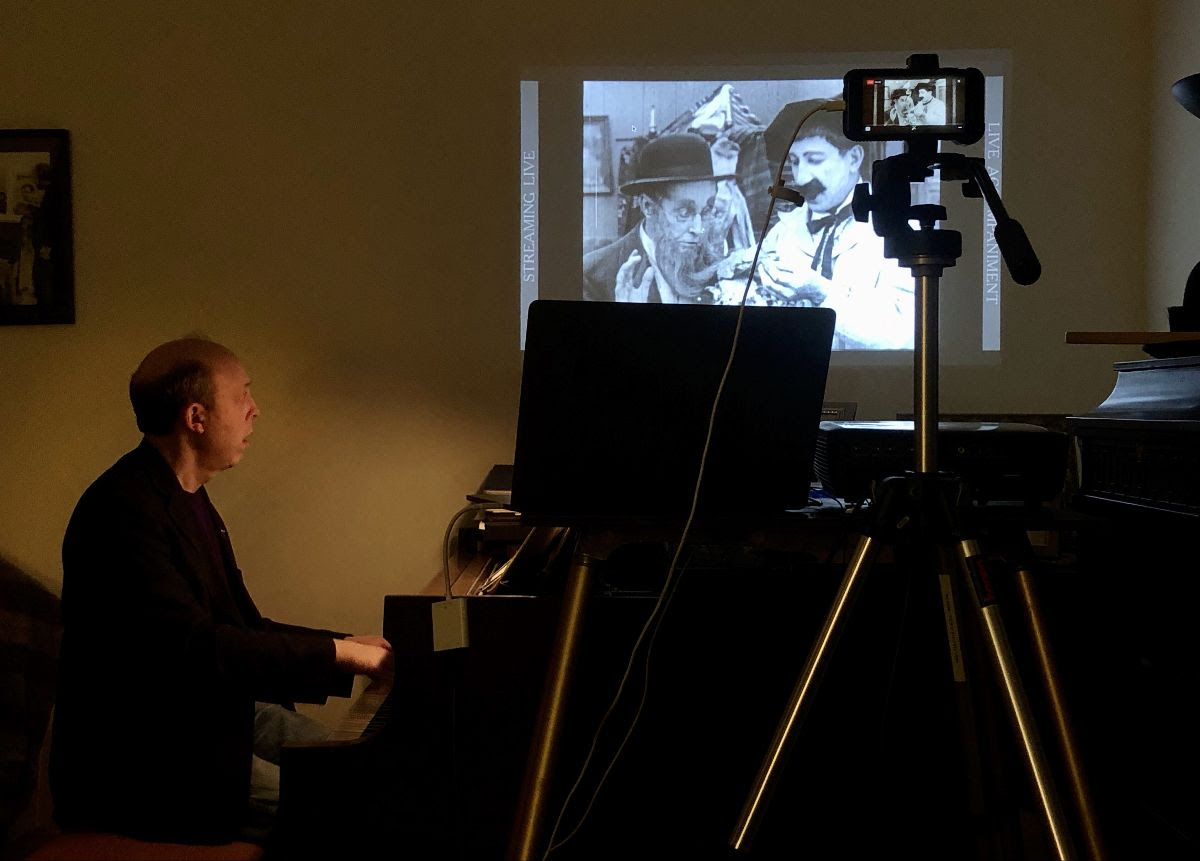
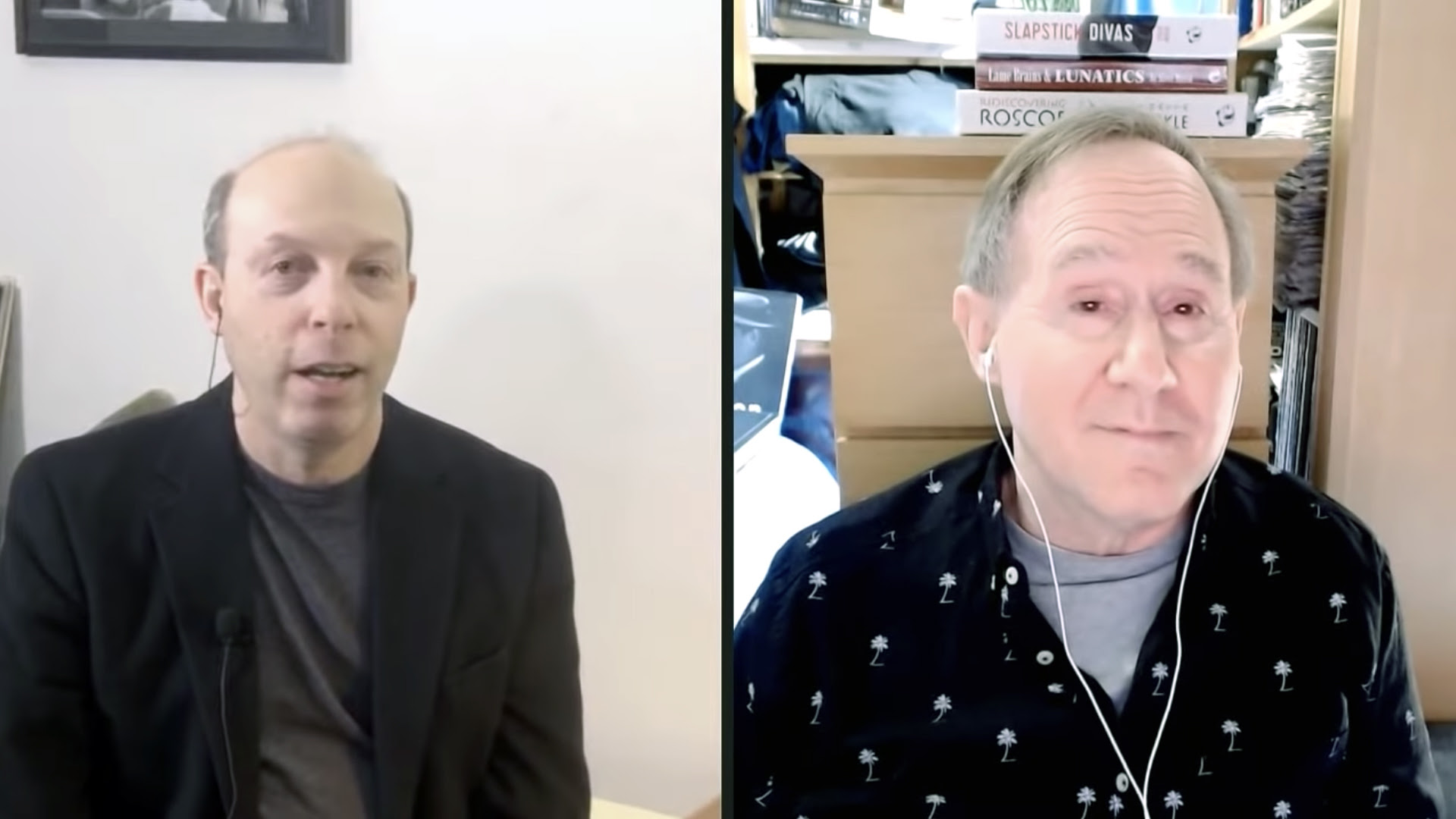
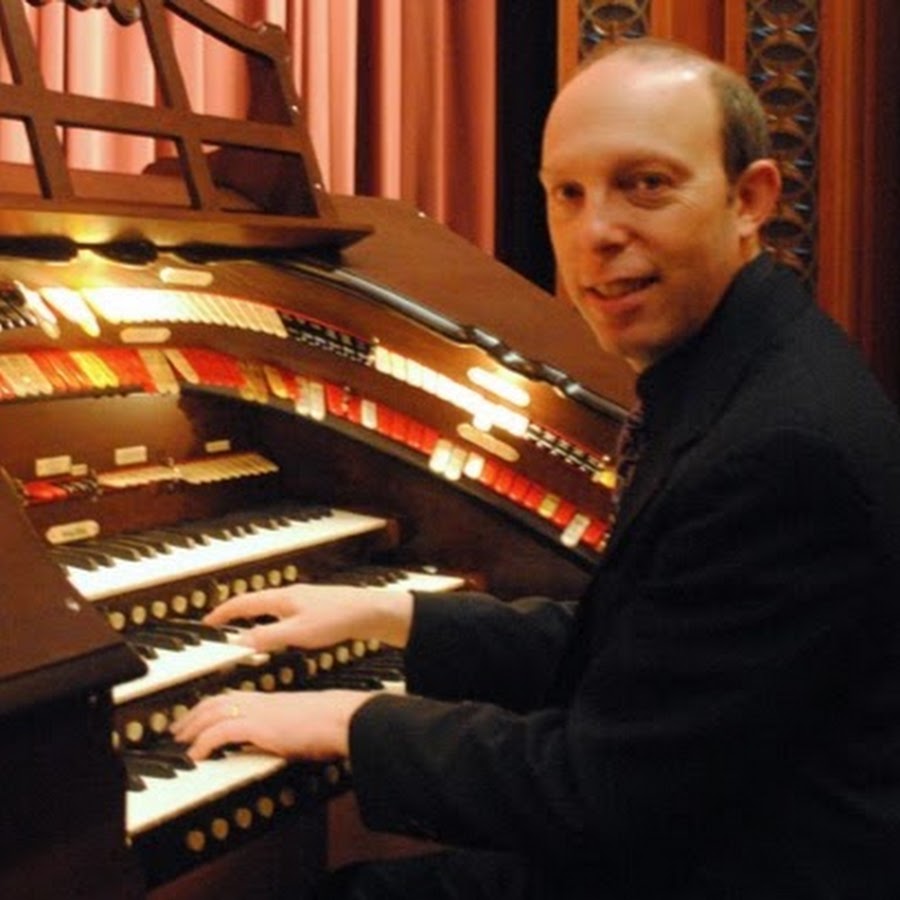 The Lost Laugh: Hi, Ben! Thanks so much for taking the time to answer these questions. Can you tell us a little about the silent comedy watch party and how the idea for the shows came about?
 On-screen, he is an odd creature to be sure; his slithery, amphibious movements inside oversized clothes and a bucket-shaped hat give him the appearance of a strange, giant newt. His saucer-shaped eyes and slow blink anticipate a little of Langdon, but nothing else indicates any real kind of character. HIS BUSY DAY, as its title suggests, was a fairly generic little trifle, with parks, pretty girls, pies and a lack of continuity: Toto steals a pie, dresses as a woman to escape a policeman, gets a job as a newsreel cameraman for a bit, then gives it up after he angers the newsreel proprietor (Bud Jamison). Even allowing for some missing footage, this was clearly a fairly run of the mill effort. Toto did have good timing however, as the highlight of the film showed: a scene where he hides from Bud Jamison behind a pivoting wooden sign, at one point attaching himself to it in the splits position! Ultimately, Toto’s biggest contribution to film comedy was in leaving films, thus opening the door for Roach to hire a young Stan Laurel as his replacement.
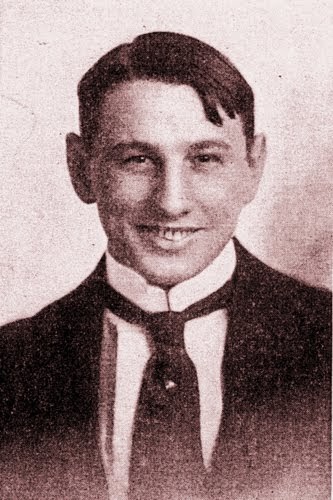 of independent comedies and also working as a director. ‘SWEET DADDY’ was a simple tale of a henpecked husband who seizes his hour of freedom when sent out for the groceries, but it was full of some great gags, and snappily directed by Perez. Particularly there was a charming sequence in which he gazes at a girl on a poster, who seems to come to life and flirt with him. Perez’ career was sadly coming to an end; cancer cost him a leg in 1923, and while he continued as a director, the illness returned and took his life in 1928. Nevertheless, he was obviously a real talent, and it’s been mainly due to the efforts of Steve Massa and Ben Model that we’re able to see his films again: they’ve put together
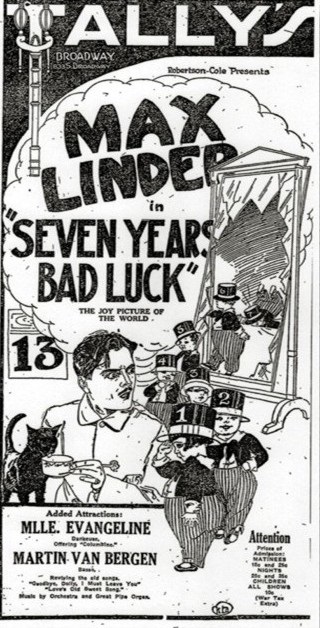 Next up was ‘SEVEN YEARS BAD LUCK’ (1921), perhaps Max Linder’s best feature. It’s now famous for having one of the best versions of that broken mirror routine, some 12 years before the Marx Brothers’ DUCK SOUP, but the whole film is most entertaining. David Robinson’s introduction paid a heartful tribute to Max’s daughter Maud Linder, who passed away last year. It was her zealous promotion of her father’s talents that has ensured he is still remebered today, almost 100 years after his death.
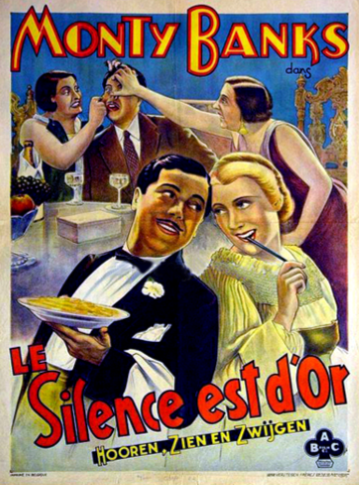

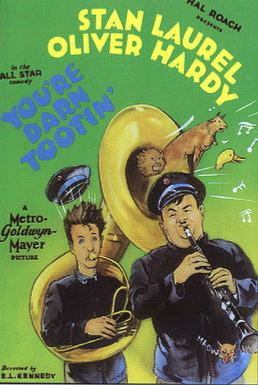 We finished off in fine style with some audience participation for Laurel & Hardy’s YOU’RE DARN TOOTIN’, in which the pants-ripping finale was replicated through the ripping of newspapers placed under each chair in the auditorium. This programme was great fun, and a real variation on the usual silent film accompaniment. No kazoos were hurt during the screening of these films.
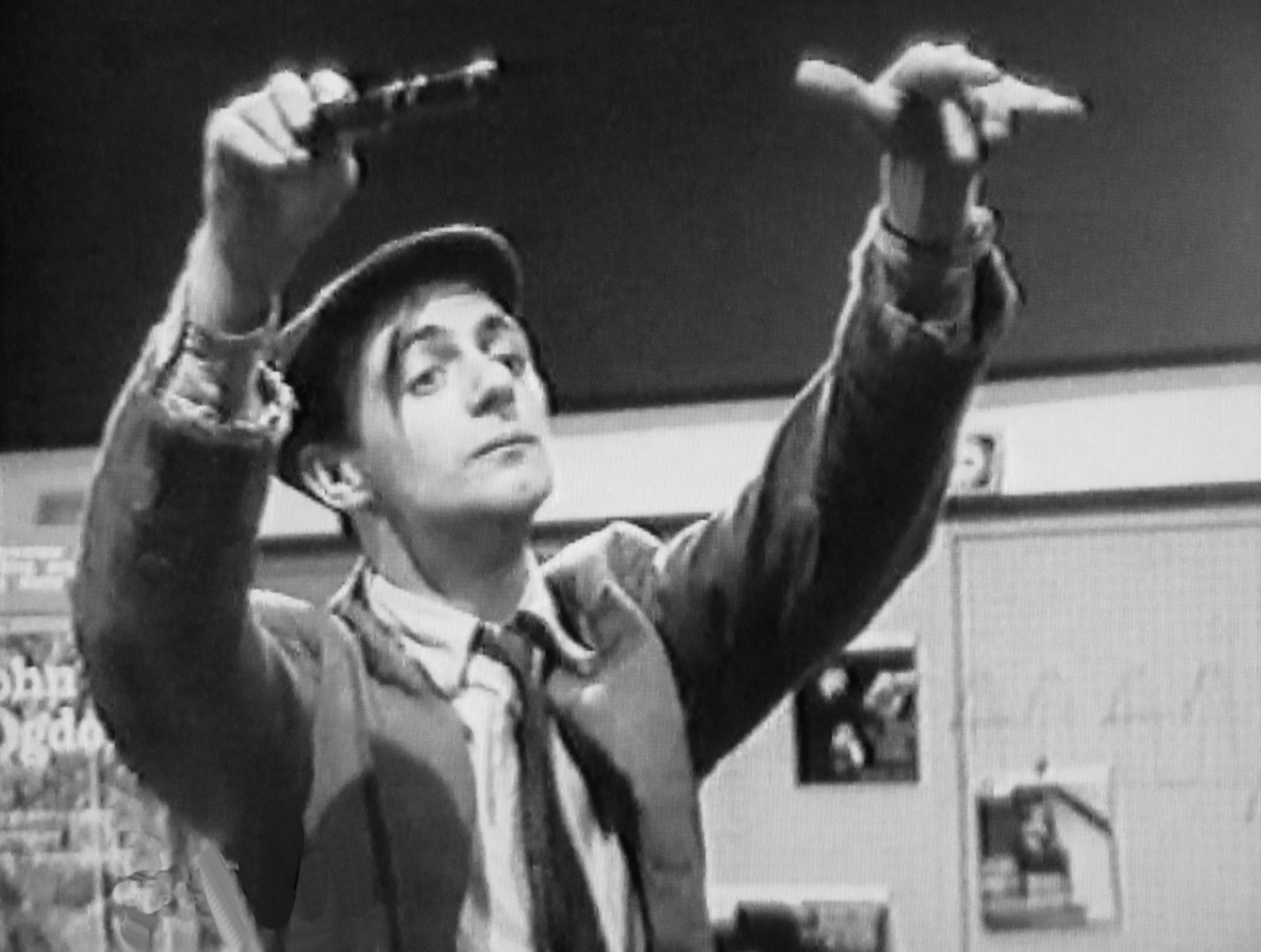 knowledge for the old comedians. Among the highlights were clips from Tati’s MON ONCLE, Lupino Lane’s JOYLAND, and Roy’s own semi-silent film ‘THE MALADJUSTED BUSKER’. Finally, we concluded with a full showing of the complete ‘BATTLE OF THE CENTURY’. I’ve written about this film before, but it was as marvellous tonight as the first time I saw the ‘new’ footage; simply one of the iconic silent comedy scenes, now once again “as nature intended”.
 The Lost Laugh