The Lost laugh

More Laurel & Hardy Revelations

This is the second in a series of posts  about Kennington Bioscope’s Silent Laughter Weekend, where a host of rare and obscure silent comedies were shown.

hundredyears

I keep saying it, but it’s a damn good time to be a silent film fan. We’ve seen so many rediscoveries of classic comedy footage lately, some that we didn’t even know existed in the first place! For Laurel & Hardy fans, of course the big news has been the rediscovery of the complete pie fight from ‘THE BATTLE OF THE CENTURY’, but there have been other discoveries too. Last year, we saw a new, much improved version of their early short ‘DUCK SOUP’; now comes a similar upgrade for ‘THE SECOND HUNDRED YEARS’, as well as two previously lost solo films.

At Silent Laughter Weekend, these were introduced by L & H experts Glenn Mitchell and David Wyatt, who provided some context for the rediscoveries. When Robert Youngson was compiling his silent comedy compilation films like ‘THE GOLDEN AGE OF COMEDY and ‘WHEN COMEDY WAS KING’ in the late 50s, he was the first person to access many of the silent comedy films for years. He was able to access the films before they decomposed, and the excerpts he chose are in many cases the only surviving material of the films now. However, as well as taking the footage he needed, it turns out that he had a habit of sneakily making copies of whole films that he particularly liked. He kept quiet about this, presumably so he didn’t get into trouble, and the prints went undetected. Meanwhile, by the time companies like Blackhawk got around to issuing commercial prints of the films, many of the masters had gone forever. Youngson’s orphan prints, which have only just come to light, preserved these in the nick of time. This is how the ‘BATTLE’ footage came to be, and is also the provenance of ‘new’ prints of ‘THE SECOND HUNDRED YEARS’ and ‘PUTTING PANTS ON PHILIP’, found by Jon Mirsalis, while examining other films in the Gordon Berkow (ex-Youngson) collection.

second-100

In contrast to the large chunks of ‘new’ footage in ’BATTLE…’, the new discoveries in ‘THE SECOND HUNDRED YEARS’ are less revelatory. They are, however, still worth noting. Essentially, there are a few scenes which go on a bit longer, presumably because advanced decomposition later led to these segments being cut. While these can be seen as fairly minor differences, they do restore the full film to us as the filmmakers intended it to be seen, for the first time since the late 1920s. Here are the key differences I spotted while watching it through:

1) Opening scene: The UK Universal DVD set introduces Stan to us as ‘Little Goofy’, but not Babe. This version offers a tiny bit of extra footage of the pair at the outset, as well as an intro for Ollie: “Big Goofy— convicted on purely circumstantial evidence—- they caught him with both hands in the cash register”. I believe this was included in the US ‘Lost films’ version, but certainly for UK fans this is new.

2) The flooded office: We get a couple of seconds of extra footage, showing Frank Brownlee stepping into the office and falling in the water that has risen through Stan and Ollie’s tunnel.

3) The paint scene: this is the most interesting new bit of footage, as it’s a completely new, albeit short, scene of L & H. After Stan has painted Dorothy Coburn’s behind, the pair run in and out of some parked cars , and the scene fades out, ending the sequence. The Youngson version adds a tag: we fade up on the title “Four hours later—- “ and see the cop still in pursuit of the boys in the dark! Stan drops his paint can, and the cop ends up tripping over and landing in it. This is where the scene was supposed to end.

4) Finally, there’s a little extra footage of the French prison governors as they are introduced, following the scene above.

While studio publicity referred to this as the first film starring Roach’s new team, and many historians accept it as such , it never seemed quite so clear cut to the studio just what the team would be billed as. Publicity refers to “Stan Laurel and Oliver Hardy”, “Oliver Hardy and Stan Laurel”, and even “the new comedy trio, Stan Laurel, Oliver Hardy and James Finlayson”! How did the original titles decide it? Revealed for the first time here, they fudge the issue by not giving team billing at all! The film is titled as ‘Hal Roach presents ‘THE SECOND 100 YEARS’’, with the cast following on the next title, like this:

With

Stan Laurel

  Oliver Hardy

    James Finlayson

      Stanley J Sandford

Perhaps the lack of a joint star billing above the title explains the reason why neither Stan nor Babe considered ‘THE SECOND 100 YEAR’ to be their ‘official’ first film, both instead giving this claim to ’PUTTING PANTS ON PHILIP’. As L & H fans know, ’PHILIP’ is actually far less like an official L & H film than this one; what it does have, however, is the billing ’Stan Laurel & Oliver Hardy in…’ before the title. Perhaps ‘PHILIP’ represents the moment when the matter of billing crystallised, a small but significant moment in their history. Speaking of ‘PUTTING PANTS ON PHILIP’, the new version from Youngson’s collection doesn’t contain any new footage, but does offer an upgrade in image quality. Hopefully both prints will be restored and available soon.

the-second-hundred-years-press-sheet

SOLO DISCOVERIES

We were also treated to the UK premieres of two L & H solo films. Both come from Italy’s Cineteca Nazionale, and accordingly have Italian titles. Translation voiceovers were ably provided for us on the day by Susan Cygan.

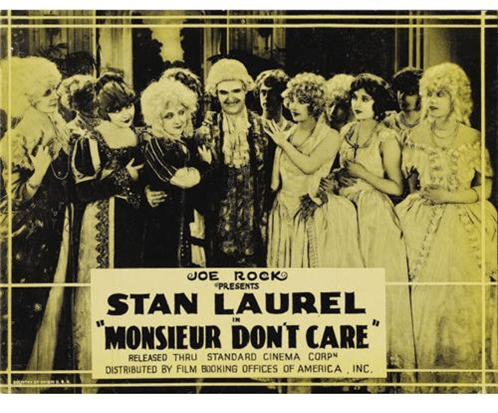
I wrote about the rediscovery of Stan Laurel’s solo film ‘MONSIEUR DON’T CARE’ a while ago, and particularly one two minute scene that made it to YouTube. To recap briefly, this was a spoof of Rudolph Valentino’s ‘MONSIEUR BEAUCAIRE’, and the only one of Stan’s 12 films for Joe Rock not to be around in some form. However, only 7 minutes of fragments have been recovered. On viewing the full extract, it turns out that the surviving footage is not one or two scenes, but a quick tour through the whole film. We open with Stan, as Rhubarb Vaselino, “practising his favourite hobby”: doing his make up. This is a parallel scene to one in Stan’s other Valentino spoof ‘MUD AND SAND’, both mocking Valentino’s legendary vanity. Here, Stan, applies beauty spots and goes about his ritual with comically oversized accessories.

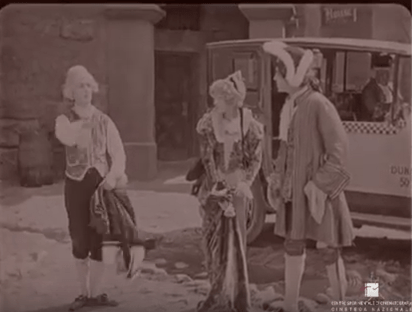
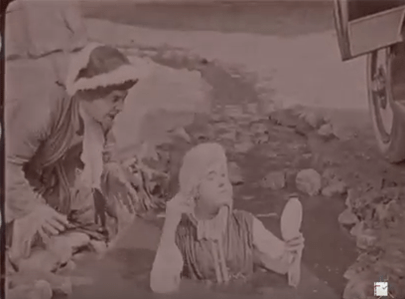
monsieur_dont_care__still1_Next, we have a brief dinner table scene where Stan enjoys some bathtub gin, and a card table scene, where Stan is playing against a count, and accuses him of cheating. This leads to him having to flee, disguising himself as a barber, a per the Valentino original. There are the brief bones of a comic barber sketch, before we cut into the flirtation scene I discussed at greater length in the last issue: Stan is attempting to escort the lady across a puddle in the street to an anachronistic yellow taxi cab. He lays down his coat, Walter Raleigh style, on top of the puddle. Stepping on it, Stan and escort disappear beneath the water; yup, it’s an early example of the famous L & H bottomless mudhole™! Here’s that scene, courtesy of the Cineteca’s YouTube account:

Following this scene, a title informs us that “ a new lady makes her entrance into society”: cue a great scene of a vampy Stan swaggering along that holds lots of promise. Alas, this is where the footage ends, so we can only wonder what happened next!

‘MONSIEUR DON’T CARE’ looks like it was great fun, up there with the best of the Laurel parodies. Frustratingly, the surviving footage always cuts to another scene before any gags have the chance to build, but there are some very funny moments peppered throughout.

Finally, the Universe’s laws of equilibrium have been preserved, as , to accompany the new Laurel solo discovery, there’s a new Hardy solo film too! Hooray! ‘MAIDS & MUSLIN’ is more complete than ‘MONSIEUR DON’T CARE’; it is ,however, both much less funny and rather less interesting. The star is Jimmy Aubrey, a Karno colleague of Laurel and Chaplin, who made a string of alliteratively titled films (SQUEAKS & SQUAWKS, DAMES & DENTISTS, etc)  like this one for Vitagraph in the late teens and early 20s. While I can usually find something to enjoy in practically any comedian, I have to admit Aubrey leaves me cold in these films. He later showed, in character parts, (eg L & H’s ‘THAT’S MY WIFE’) that he could be very funny, but gets little chance to show any natural gag or pantomime ability in his own films, or at least the ones I’ve seen so far.

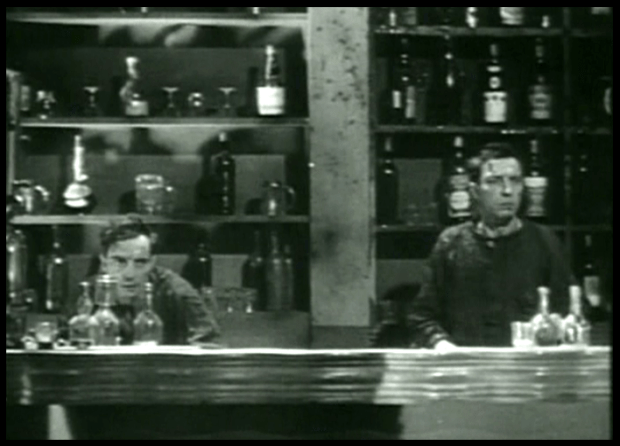
movpicwor471movi_0013Take this film, for example. It’s mainly crude knockabout set in a department store, based rather obviously on Chaplin’s ‘THE FLOORWALKER’, right down to a central staircase prop. Here, it’s a precursor of the collapsing staircase Keaton used in 1921’s ‘THE HAUNTED HOUSE’. Did Buster get the idea from here? Whatever, it’s a perfect example of why Keaton was head and shoulders above performers like Aubrey; in ‘MAIDS & MUSLIN’, there’s no reason for the prop to be there, and the only gags that happen are people falling down it. Keaton, on the other hand, furnishes a reason for the staircase, and adds in a host of different variations on its use, that almost make it a character in itself.

The best scene in ‘MAIDS & MUSLIN’ is actually outside the department store, as Babe chases Jimmy. Jimmy hides amongst some dummies and Babe searches for him, slowly becoming more and more suspicious. It’s a fun little moment of quiet between the slapstick madness, and significant that Aubrey is funniest when doing pretty much nothing, and leaving the reacting to Babe. The (unintentionally) most amusing moment of all though, is surely when the heroine writes a note describing Aubrey as “cuddly and charming”! What had she been drinking? I can’t think of any two less suitable adjectives!

Hardy almost certainly wouldn’t have used this description, as Aubrey had him fired from the series shortly after for upstaging him. It’s easy to see why, based on the evidence of ‘MAIDS & MUSLIN’. Even behind his huge prop moustache and eyebrows, the touches of humour Babe added to his traditional ‘heavy’ roles really shine through in a film with few genuinely amusing gags, and show how sophisticated his acting style was compared to most of the other performers in the film. Speaking of other performers, there’ s a blink-and-you’ll-miss-him scene of Monty Banks, and director Dick Smith (Alice Howell’s husband) also has a small role. It might not be a classic, but ‘MAIDS & MUSLIN’ is an interesting film to see, and helps paint a fuller picture of Hardy’s solo career.

These two films have been rescued and restored in 4k by the Cineteca Nazionale. Many thanks to them, both for their efforts in doing so, and for allowing the films to be shown as part of Silent Laughter Weekend.
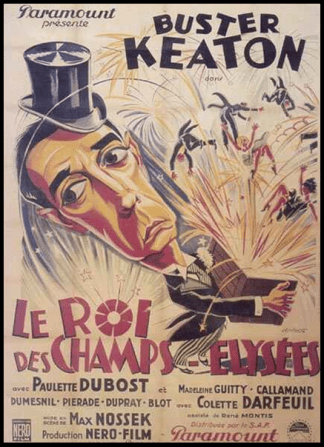
Les Aventures de Monsieur Keaton

Who says Buster Keaton never made a decent sound feature? His 1934 French film, ‘LE ROI DES CHAMPS ÉLYSÉES’ is an obscure and often overlooked gem. le-roi-1

After falling from the heights of making prestigious features at MGM to taking whatever low-budget work he could get in the mid 30s, not to mention going through a rough patch in his personal life, it’s perhaps not surprising that Buster had a fairly low opinion of the work he was doing at this point. For all that, his first films after leaving in MGM, a series of two-reelers for Educational Pictures, have some fine moments amongst them. Clearly, this was a great demotion for him though,  and he jumped at the chance to regain his slipping stardom when the offer came for him to appear in a feature length film. The only catch was that he had to go to France to do so; Buster was still revered in Europe at a time when America had put him on the scrap heap. Happily, this meant he was pretty much guaranteed a sympathetic ear to his ideas.

So, in the early summer of 1934, with two Educational shorts under his belt (‘THE GOLD GHOST’ & ‘ALLEZ OOP’) Buster and his then-wife, Mae, left for France. Travel expenses weren’t included in the contract, so they travelled by freighter to save money.

As might be inferred from this, the budget of the film was not bottomless; while certainly much more generous than the Educational films, there were financial troubles from the start. The production company, Margot films, became unable to complete the production due to financial difficulties, and proceedings were picked up by producer Seymour Nebenzal. Nebenzal ran Nero Film, a Berlin-based company whose top successes had been director Fritz Lang’s ‘DR MABUSE’ series. As the Nazis’ stranglehold began to tighten on Germany, Nebenzal, Lang and the rest of the company had relocated to Paris.

The change in production was probably a good thing; while the budget was still relatively small, Nebenzal was an experienced man and used to juggling costs to sensitively fit the budget to the film ; The shooting schedule was a fairly hasty 12 weeks, and the film isn’t as elaborate as the best of the Keaton silents, but in other areas there was no skimping; there’s a full orchestral score, some lavish sets and plenty of location shooting.


The plot of the film is strong and fairly elaborate. Buster Garnier works as a publicist for an ailing company, but dreams of becoming a great actor. His job is to hand out ‘bank note’ flyers while pretending to be a millionaire; meanwhile, the company has just received 5,000 francs in cash to solve its financial worries;. Of course, there’s a mix-up, and Buster ends up giving out the real banknotes to all of Paris, including a pretty young waitress (Paulette Dubost) who he falls in love with. Fired from his job, he contemplates suicide, but his mother (Madeleine Guitty) gets him a job in a theatre production, “Le Roi des Champs Elysees. It’s been fairly simple thus far, but now things start to get a bit more involved. Buster’s part in the play is an escaped convict; the same night, an American gangster, Jim Le Balafre (also played by Keaton), escapes and his gang pick up the wrong Buster and take him back to their hideout! After a variety of mix-ups, there’s a wild chase back to the theatre, where Buster arrives back on stage, captures the crooks, makes the play a roaring success, and gets the girl!


le-roi-4

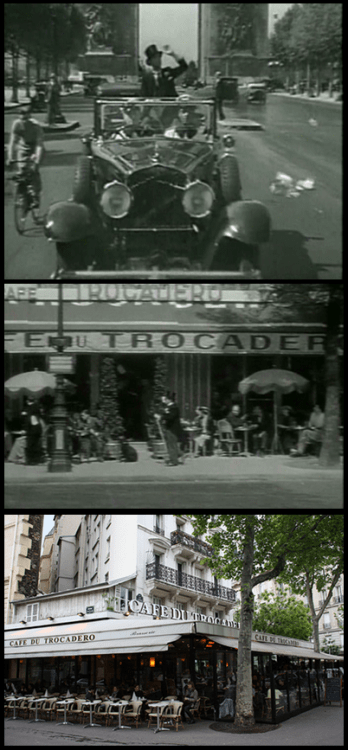
Buster on location in Paris; the Café du Trocadero is still in business today!

The film opens with scenes of Buster riding in the back of a car down the Champs-Elysees, throwing away bundles of his fake money. As Buster rides past famous landmarks like the Arc De Triomphe and L’Opera, it’s almost as if the scenes were filmed just to say “Look! We’ve really got Buster Keaton here! In Paris! Wow!”. Nevertheless, the wonderfully bright and sunny atmosphere stops the sequence becoming gimmicky and captures the feel of silent comedy nicely.


In fact, ‘LE ROI…’ is closer to the spirit of a silent comedy than perhaps any other of his sound films (far more subtly so than his later pastiches). There are lots of throwaway pantomime bits, and many of the sight gags, especially during the early scenes, are very subtle and witty. When handing out the genuine money, Buster wanders through a wedding party. One minute the groom is declaring his undying love to his homely bride; when Buster hands him the money, he runs away down the street shouting “SAVED! SAVED!”


There is barely any dialogue at all until at least 20 minutes in; Keaton’s lines were purposely reduced to bypass his need to speak French. The film has recently been subtitled, but is so primarily visual that it makes perfect sense even if you don’t speak the lingo. Of course, this fits Keaton’s own sound dictum of only using talk when necessary, and Buster is the calm at the eye of the hurricane, remaining passive as he causes havoc around him. He’s surrounded by some rather stereotypically verbose European actors, but none of them mow him down like Jimmy Durante had, and in fact it makes a rather good contrast to his stoic demeanour.

His first meeting with Paulette Dubost is entirely wordless, and yet beautifully expressive, as he becomes totally captivated with her and just looks deeply into her eyes. As he eventually leaves, he keeps popping back round the street corner to have one last look at her. It’s a bit reminiscent of Harold Lloyd’s meeting with Jobyna Ralston in ‘THE KID BROTHER’, but only Keaton could create such a convincing expression of lovelorn longing with such minimal action.

When he does speak, he’s dubbed in a rather slimy and unappealing voice. Why this was deemed necessary is puzzling; while not a great linguist, Keaton could at least get by in French, and had spoken it in phonetic versions of his MGM films. Furthermore, he obviously did speak the lines in French before he was dubbed over; his lip movements match, and in some scenes, a few utterances like “Oui” and “Moi?” remain in Keaton’s own husky voice. At the very least, they could have let him use his own voice for the American gangster character, for which his accent would have been perfectly acceptable.

No matter, most of Keaton’s performance is pantomime anyway. It should also be mentioned how well he plays his dual role; his deadpan demeanour works surprisingly effectively as a villainous trait, and he imbues each character with different traits, never leaving you in any doubt which Buster you’re watching.

le-roi-5

Two Busters for the price of one!


Another strong suit of the film is its wonderful music score; obviously expense was not spared on this. The result is perfect, jaunty in the comedy sections, beautifully wistful in all the romantic spots, rousing in the chase sequences, and often very carefully synchronised to the action onscreen. There’s even an overture before the film begins, and exit music! Best of all, the clunky wordless segments that characterised some of the Educational films are filled, giving a real rhythm to the film.

Many of the gag sequences return to familiar themes in ‘LE ROI…’: Buster’s unsuccessful attempts at suicide recall ‘HARD LUCK’, the gangster’s tricked up hideout ‘THE HIGH SIGN’ and his wrecking of a stage show is familiar from both ‘SPITE MARRIAGE’ and ‘SPEAK EASILY’.

Interestingly, it’s not just Buster’s own past that is revisited; the final chase sequence, with Buster trying to get the entire police force to chase him, is lifted from Harold Lloyd’s short ‘FROM HAND TO MOUTH’ (1920). The cheap budget necessitated use of stock footage from Fritz Lang’s ‘THE TESTAMENT OF DR MABUSE’ to fill out the sequence, but it’s used sensitively and effectively. The scene, and the onstage slapstick battle that follows it, is an exciting and effective climax to the film. It’s also not the only Lloyd gag to be seen in the film. As well as the previously mentioned similarity to ‘THE KID BROTHER’, there’s also one suicide gag lifted from ‘NEVER WEAKEN’(1921). It’s interesting to speculate whether this was Buster’s decision, or if the credited scenarist Arnold Lipp threw them in. If it was Buster’s call, then was it in homage to Harold, or due to a lack of inspiration on his own part?

Probably, like the Educational films, the short shooting time didn’t leave Buster with the luxury of all the time he needed to dream up the perfect gags. My main criticism of the film is that we do get rather too many gags that riff on the theme of Buster getting stuck on ladders, door frames, chandeliers, etc. Of course, he always performs them well, but such scenes of frustration are hardly the trademark of swift-paced silent Keaton, nor as inventive.

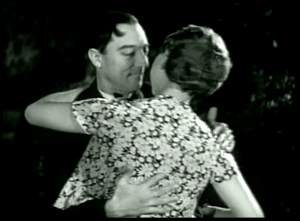
le-roi-6The other rather un-Keatonesque thing about the film is his smile at the film’s fadeout. Yes, you read that right; in the final scene, Buster tentatively kisses Paulette, then grabs her in his arms, purrs “Ohhh Baby!” in his dubbed French voice and breaks into a massive grin! Keaton had fought this his entire career; he told Rudi Blesh how director Chuck Reisner insisted on a smile to close ‘STEAMBOAT BILL, JR”, but how the audience hooted it off the screen at preview, and faced the same fight when making ‘THE CAMERAMAN’ at MGM. It’s puzzling that he agreed at this point; perhaps the more emotional Europeans insisted on it, substituted it for a stone-faced ending in the cutting room, or maybe Buster was just losing the will to fight.
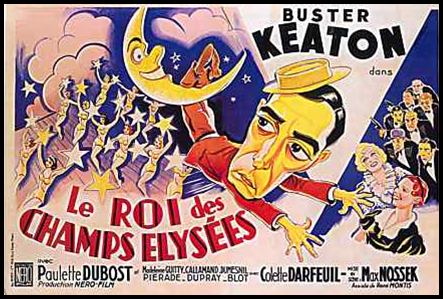
 

The film did good business in France, and was exported across Europe, but was destined never to make it across the Atlantic. Unlike the market for Spanish-language films with the large Hispanic community in some areas of Los Angeles, there was not a large ex-pat community of French speakers in America. Long before the dawn of the Art-house cinema, Paramount, or anyone else just didn’t have a market for French language films. It wasn’t until the 1970s, when William K Everson turned up a 16mm print, that American audiences would get the chance to see Buster’s French almost-classic.


Most likely, this failure to reach America and and re-invigorate his stardom, was Buster’s main reason for his subsequent low opinion of the film. As you can probably tell by now, I’m really a big fan of ‘LE ROI DES CHAMPS ELYSEES’, and so, in terms of quality alone, I find his views puzzling. As with his Educational films, part of the blame probably lies with the fact that it was generally an unhappy time in his life that he later wanted to forget (of his marriage to Mae, he later said “it didn’t last very long, which is the nicest thing about it that I remember”!) .Additionally, Keaton’s purist nature must have hated both the restricted budget and, especially, the idea of using stock footage, no matter how intelligently it was done. In fact, it’s very likely that he never saw the finished film! Had he seen how well it was put together, with careful editing and an excellent score, he may have had a better opinion.

‘LE ROI DES CHAMPS ÉLYSÉES’ has always been one of the most obscure Keaton films to pick up, but it’s definitely worth the effort. For the time being, at least, it’s on YouTube, in a print apparently off Spanish TV. Even with a fraction of a budget of the MGM sound films, for me it manages to surpass them all. Take a look and enjoy this most underrated of Bk films:


le-roi-7

This article is adapted from one I wrote for issue 2 of The Lost Laugh magazine (then called ‘Movie Night’)

Rare Ham

ham

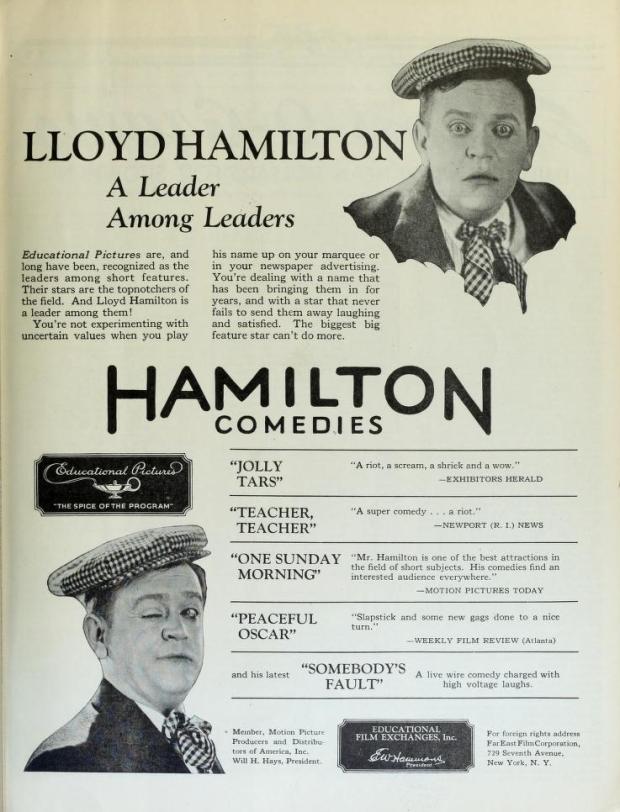
Lloyd Hamilton exists now like one of those dusty, anonymous portraits hanging in a long corridor. To most people, if his image is seen at all, it is a faded likeness of the flesh and blood he once was, the achievements of his life almost totally forgotten. While this analogy could go for a good majority of the performers I write about here, none have faded or fallen so far from their previous colourful heights as Hamilton.

With his offbeat humour and fantastic reaction-based comedy, ‘Ham’ was once considered among the funniest men in the world (he was reportedly a favourite of both Chaplin and Keaton). But his career was dogged by spectacularly persistent bad luck. This continued beyond his early death, as his best films went up in smoke, leaving only a fraction of his works scattered in archives. Most of these are from the bookends of his career, either embryonic versions of the style he later perfected, or tired re-workings that his heart clearly wasn’t in. Only in snatches of classics like ‘THE VAGRANT’, ‘CRUSHED’ or ‘MOVE ALONG’ can we see what really made him special.

So, when a scarce or previously unseen Hamilton film turns up, it’s a pretty big deal for Ham’s fans (all 17 of us). Could each new discovery be the one, the film that restores his tattered reputation beyond doubt? A couple of years ago, a very rare example of his films, ‘A HOME MADE MAN’, turned up on eBay in a 16mm print. I placed several bids but lost out. The film never resurfaced; I figured it had gone to someone who didn’t want to share it with the world. That is, until I mentioned it to a friend, and it turned out that they had known the person who bought it. (Not only this, but there were some potential plans to have it telecine-ed (sic) with some other rare Ham films in the hope of possibly putting together a DVD of a few of his films. Excitingly, I finally got the chance to see the film a little while ago.

The stakes were high,  but the chances of it being a classic were pretty low. It was among Hamilton’s last silents, as problems with alcohol were taking their toll. Of another 1928 release, ‘ALMOST A GENTLEMAN’ critic Raymond Ganly’s review was short but brutal: “Remember how good Lloyd Hamilton used to be? Weep when you see him in this.” These late silent shorts tended to eschew his character based comedies for random gags and gratuitous slapstick. Would ‘A HOME MADE MAN’ be any different?

Well, as expected, it’s not the holy grail of Hamilton films. But, I doubt it would have made Mr Ganly weep, either. It was a pretty good comedy, below the Hal Roach comedies of the same time and Hamilton’s better previous work, but enjoyable. Like another late period Ham short, ‘BLAZING AWAY’, it has two distinct halves, and is based around Ham finding a job.

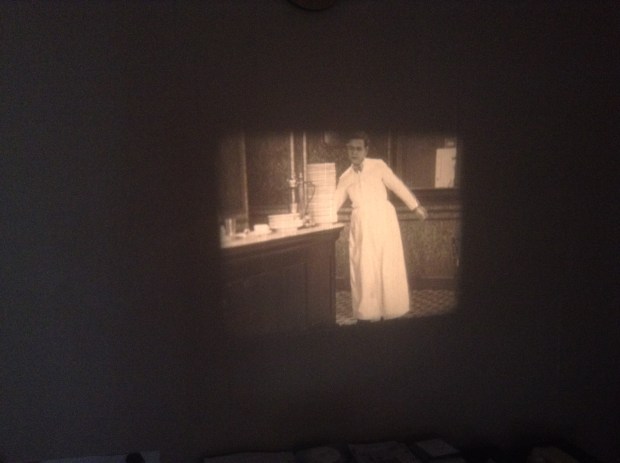
In the first reel, Ham has been sent by the employment agency to a soda fountain-cum-gym run by Kewpie Morgan. Morgan takes one look at him and winces, but he’s desperate, so Ham gets the job. Next we get the incompetent soda jerk routines you’d expect, with ice cream splattered, eggs broken and plates smashed. In fact, it’s all quite similar to the early scenes of Buster Keaton’s ‘COLLEGE’, from the year before. However, Hamilton is able to show what made him special. The way he delivers hackneyed gags in this line is uniquely his own, and it is not the slapstick itself that causes the laughs, but rather his hurt dignity. As a result, you feel less like you’re watching a Keaton rip-off, and more a reaction comedy that anticipates Oliver Hardy’s attempts to master simple tasks. As a result, the soda bar gags are the best moments of the film.

img_5413

Another typical Hamilton twist on standard material: he is carrying a huge pile of plates, that wobble to and fro. He loses his footing, and theplates are sliding all over the place…. but the crash never happens as he safely reaches the counter. Morgan and Hamilton sigh with relief; “I never broke a plate in my life,” says Lloyd. However, he has placed them on top of his apron on the counter top, and as he walks off, the plates finally crash to the ground.

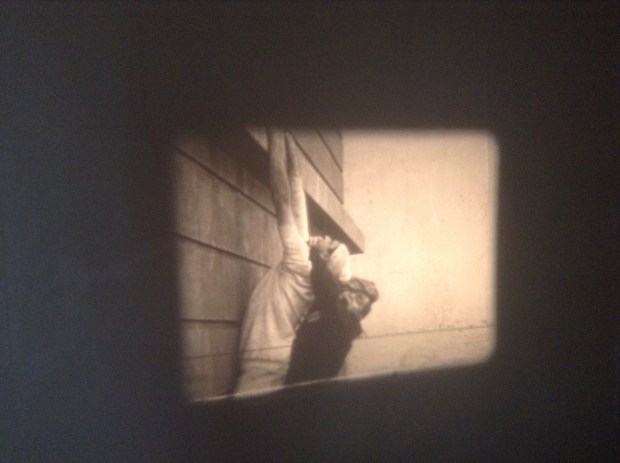
Fearing for his remaining crockery, Morgan sends Hamilton in to the gym as a personal trainer. After all, if you can’t trust someone with breakables, then why not trust them with peoples’ health? Here, he predictably makes an equal mess of things, first trying to instruct a line of athletes in a nicely choreographed sequence, then taking to the gym equipment himself. Things go downhill from here, as his efforts on the rings lead to him swinging out of the window and clinging on to the ledge in a pretty feeble Harold Lloyd ripoff.

img_5425

Once he is safely back inside, the film ends with him pitted against Morgan in a boxing match, which he surprisingly wins. Ham victoriously leaves the gym behind.

img_5429

OK, so it’s not the classic  we could hope for. But, it does show what Hamilton could do, even with mediocre material, and as such I’m very glad to have seen it. Certainly it’s a decent comedy short for the time, and he makes the most of his opportunities, even when the material is subpar. Hamilton was without doubt a great, individual comic performer with his own distinct style. Yet again, after viewing one of his films, I’m left with the question: What could he have done with better material?


New issue of the Lost Laugh magazine

THE LOST LAUGH #10

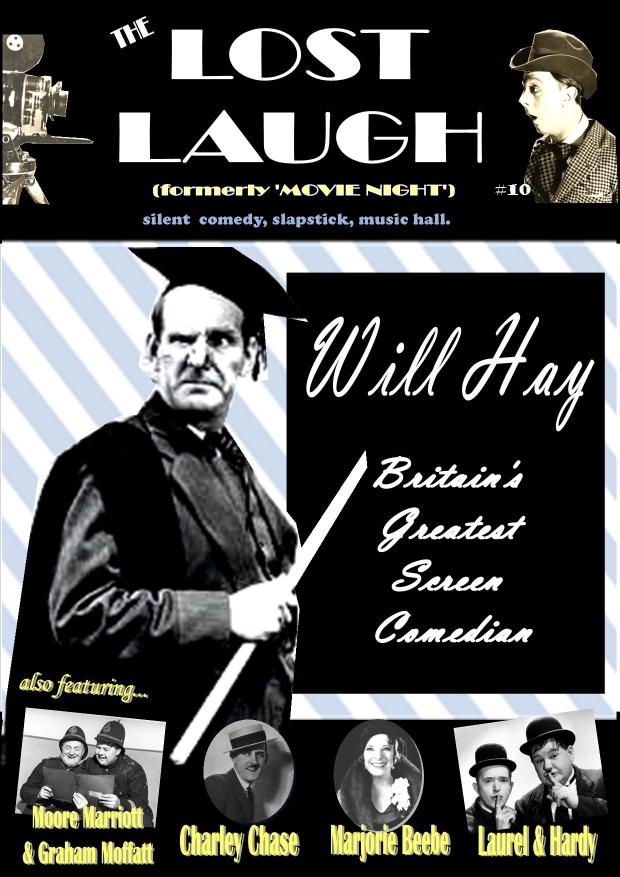
It’s here, finally! 1001 things seem to have got in the way of completing it, but here we are. Inside you’ll find the final part of our look at the great Charley Chase’s films, an in-depth appreciation of master British comedian Will Hay, details of other British comics coming to DVD, a guest article about forgotten comedienne Marjorie Beebe, reports from last year’s Silent Laughter Saturday, plus all the usual news and views.

Right -click the link, and choose ‘Save target as…’ to download:

THE LOST LAUGH #10

Why not make sure you never miss an issue? Send an email to movienightmag <AT> gmail.com for details of how to subscribe to the mailing list. It’s free!

Oh, and don’t forget that back issues of ‘Movie Night’ (before we rebranded) are available to download from the magazine page.

Happy Reading!


Silent Laughter returns to London!

silent laughter logo

Last October, Kennington Bioscope presented an all-day feast of silent comedy, which I wrote about here, here, here and here. Now, Silent Laughter returns to London’s Cinema Museum for a full weekend!

The programme is just days away from being revealed, but in the meantime, save the date of October 22 – 23, 2016.

More info will be available at http://www.kenningtonbioscope.com  and also at http://www.silentlaughter.org. I’ve also made a dedicated page on this site.

Tickets are a steal at just £28 for  weekend pass, or £16 for a day.

Watch this space for more details as they come!

Rhubarb Vaselino rides again!

A little while back, I posted about the discovery, in November last year, of the lost Stan Laurel solo film ‘MONSIEUR DON’T CARE’, or 7 minutes of it, at least.

monsieur

The film revisits Stan’s parody of Rudolph Valentino in his earlier classic ‘MUD AND SAND. Stan’s version of the great lover -‘Rhubarb Vaselino’ – gives him lots of opportunity for the silly parody that the British sense of humour does so well. Here, he parodies another Valentino film, ‘MONSIEUR BEAUCAIRE’, in which the Latin lover portrayed a favourite courtier of Louis XIV, forced to flee to England and pose as a barber.

So, why am I returning to this? Well, 2 minutes of the rediscovered footage has been posted on YouTube, and it provides some interesting talking points. It’s a brief scene of Stan parodying Valentino’s reputation as a vainglorious ladies’ man, flirting with another man’s wife, and attempting to escort her into a taxi.

monsieur 2

The footage, jumpy though it is, has some great moments. There’s a healthy dose of the comic anachronism that makes Laurel’s other parodies, like ‘WHEN KNIGHTS WERE COLD’, such a delight, as New York yellow cabs roam the streets of 17th Century France. Most interestingly, at the end of the scene, there’s a forerunner of the legendary Hal Roach bottomless mudhole™ that enlivened so many Laurel & Hardy films. Stan is attempting to escort the lady across a puddle in the street, and lays down his coat, Walter Raleigh style, on top of the puddle. Stepping on it, Stan and escort disappear beneath the water. Sound familiar? With the coat replaced by a kilt, the scene is reworked as a running gag in the seminal L & H film, ‘PUTTING PANTS ON PHILIP’. Considering this, and the atypical role of Stan as woman chaser in that film, and it turns out a big chunk of ‘PHILIP’ was quite possibly inspired by ‘MONSIEUR DON’T CARE’. Who knew?

The scene in ‘MONSIEUR’ also has  a great punchline: as Stan resurfaces from the water he is most concerned with redoing his hair, in a parody of Valentino’s famous vanity. But, while Stan’s lost dignity (and his refusal to acknowledge it) here is good for a laugh, it took Oliver Hardy’s sense of real hurt pride to make it into a great comic scene.

monsieur

It’s always fascinating to see more footage of L & H turning up, especially when it helps to fill in pieces of the puzzle we didn’t even know were missing. Here’s hoping we can see the whole 7 minute extract soon.

Here’s the 2 minute extract…

…. and the similar scene from ‘PUTTING PANTS ON PHILIP’


Lessons in punctuation with Stainless Stephen (open brackets, exclamation mark,close brackets)

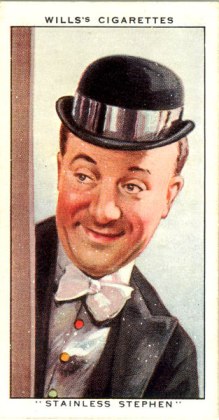
StainlessstephenIn the hectic world of variety, performers needed a niche to stand out from the crowd. ‘Stainless Stephen’ found an especially idiosyncratic one. Taking his moniker from his Sheffield origins (then centre of the U.K.’s stainless steel industry), he continued the gimmick by  wearing a stainless steel waistcoat and steel-rimmed bowler hat.

Such gimmickry was ‘Stephen’s forte; in addition to his costume, the core of his act was to soliloquize in a whistling Robb Wilton deadpan, speaking all the punctuation, and adding in other asides:

“What a wonderful year 1930 was, semi-colon, said Stainless Stephen, semi-conscious. Thousands of new motorists took to the road, comma, and as a result thousands of pedestrians took to the pavements”

A little of this obviously goes quite a long way, and its no surprise that he never carried full films or shows on his own, but as a short turn on the radio, or on a 78, he was good fun. He made but one film appearance, in the all-star extravaganza RADIO PARADE (1933). While it sadly presents him out of his bizarre regalia, his 3 minute routine playing a railway guard is really quite funny and one of the highlights of the film.

Stephen’s real name was Arthur Baynes and his day job was as a school teacher, a job he continued for some time after finding success, meaning he could only make appearances at weekends and during school holidays!

crookes

Stainless Stephen’s day job was at the former Crookes Endowed School in Sheffield. Coincidentally, it’s about a mile from my home.


Legend has it that Stainless’ lessons on Friday were always a bit light on the ground, as he spent most of the time leaving his classes to it whilst he wrote his radio material for the weekend! Baynes retired in 1952 to become a gentleman farmer in Kent, describing himself as “stainless, painless, brainless, shameless, aimless, semi-conscious and approaching semi dotage.” He died in 1957.

(On a teacher’s note, there is currently much panic over the introduction of a new punctuation and grammar test for primary school children. This would surely have been a breeze for Stainless Stephen’s classes!)


The Full Monty!

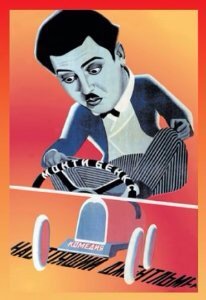
IMG_5447

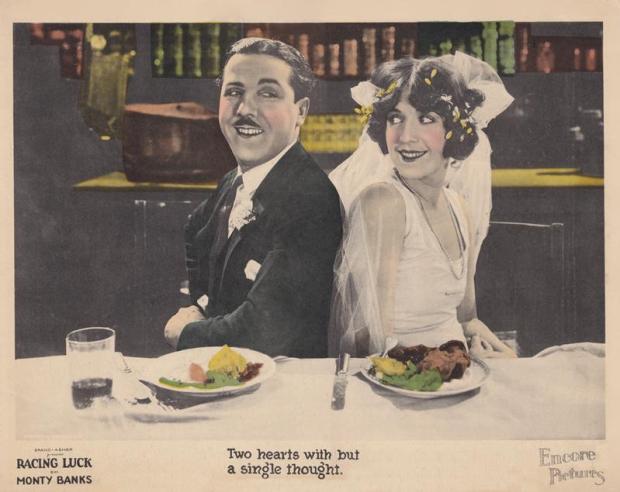
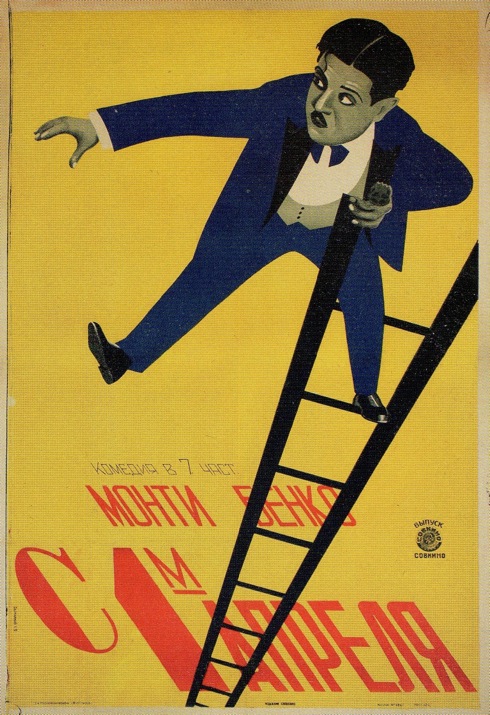
This terrific poster features Monty Banks, in a scene from ATTA BOY. Monty was, even in his day, a bit undervalued, so it’s no wonder he’s not mentioned much these days. A tubby yet dapper little Italian, he presented an appealing cross between Charley Chase’s farces and the Keaton-Lloyd model of thrill-climaxed gangbusters silent comedy. His most famous film nowadays is ‘PLAY SAFE’, or at least an extract titled ‘CHASING CHOO-CHOOS’. It features a stunt-filled train climax that ranks with anything by Keaton or Lloyd. His other starring features, among them HORSESHOES and A PERFECT GENTLEMAN, were of a similarly high calibre (these two films actually shared Keaton & Lloyd’s collaborator Clyde Bruckman as director). Here’s a clip from HORSESHOES. If you’ve seen the 1940 Buster Keaton Columbia short ‘PARDON MY BERTH MARKS’, you’ll notice that writer Bruckman lifted much of that film wholesale from here…

Despite the fact that he got to make features, and despite the evident quality of his work, Monty Banks never seems to have quite ‘broken through’ to full success. Perhaps audiences were just spoiled in the 20s by having such an outpouring of comedy films (generally two a year from Keaton & Lloyd, plus Chaplin’s sporadic efforts, not to mention Banks and all the other contenders). As a result, it was harder to stand out during a time of such riches. Despite Monty’s films being released by Pathe to replace the Harold Lloyd films they had lost to Paramount, he seems to have not been as financially successful as hoped, leaving him to head to England to escape bankruptcy proceedings in 1928.

IMG_5435

The Russians though, seem to have been fond of Monty, at least if their wonderful posters of him are anything to go by. Here’s another great Soviet poster, for A PERFECT GENTLEMAN. I recently watched the BFI’s copy of this film, and it’s an absolute gem of a farce comedy.

The English, too, were Monty Banks fans. Making his home there, he was welcomed by the film industry (as with Lupino Lane) as both star comic (‘ADAM’S APPLE’, ‘WEEKEND WIVES’, ‘SO YOU WON’T TALK’) and director (many films, most notably George Formby’s ‘NO LIMIT’ and ‘KEEP YOUR SEATS PLEASE!’ and several with Gracie Fields). In fact, these days he is best remembered as Mr Gracie Fields; they were married in 1940.

Certainly, his films need re-evaluating and to reach a wider audience. Based on what I’ve seen so far, they’re great fun.


The Little Chap with a Big Nerve: Rediscovering Stanley Lupino

$_57

Network DVD’s groundbreaking ‘The British Film’ series continues to illuminate the murky waters of 30s British film comedy. The dominant Film History 101 myth of 30s cinema tells us that the only worthwhile British comedies were Will Hay, Gracie Fields and George Formby. Occasionally, Jack Hulbert or The Crazy Gang get a mention, but mostly everything else is brushed over. Actually, there are hundreds of other 30s British comedies out there, and some hidden gems among them, too.

A gamut of Stanley Lupino films have made their appearance out of the archives for the first time. To me, these are really the highlights of this DVD series. Lupino is a terrific performer, who also took a big hand in the writing of his scripts and musical numbers; indeed, the majority of his films are based on his own musical plays. Lupino’s persona is that of a little cockney playboy, often an aspiring songwriter; usually, he’s down on his uppers. He’s a small fellow, and a little peculiar looking, but he has a whole lot of nerve, and relies on this, as well as his energy, quick wit and acidic sense of humour to pull him through. A typical Lupino put-down, delivered with a sickly mock-earnest grin:

DOORMAN: Your face makes me tired.

LUPINO: And yours gives me insomnia!

And another:

MAN IN BRIGHT SUIT: Be careful! You nearly spoiled my suit!

LUPINO: Impossible!

Lupino was another member of the illustrious Lupino family. Here, he hams it up with a rather awkward interviewer, discussing his heritage and career:

Stanley was cousin to Lupino Lane, and sure enough, the two performers share a certain comic technique derived from their family training. If you’ve seen Lupino Lane’s films, then Stanley’s wide-eyed, darting glances and jerky, bird-like movements in the face of danger will be familiar. While Stanley was certainly limber enough, he didn’t take the acrobatic slant of Lane, directing ,most of his energies into musical numbers and farce comedy instead.

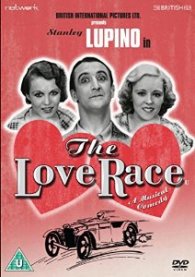
Typically his plays and films followed one, some or all out of the following formulae: quirky variations on farces (‘THE LOVE RACE’ ‘HONEYMOON FOR THREE’, YOU MADE ME LOVE YOU), moonstruck quests for a girl in a crowd (‘YOU MADE ME LOVE YOU’, ‘CHEER UP’, ‘FACING THE MUSIC’) or a similarly dogged mission to sell an invention, song or play (‘HAPPY’, ‘CHEER UP’ ). All feature some great musical numbers, including comic songs like ‘STEAK & KIDNEY PUDDING, I ADORE YOU’, and creative dance routines. These reach their zenith in ‘OVER SHE GOES’: a perfectly synchronised 3-man song-and-dance routine, ‘SIDE BY SIDE’, filmed with a continuous 360 degree camera pan.


the love race It was Lupino Lane who scaffolded Stanley’s entry into films, directing his first two efforts. ‘LOVE LIES’, his debut, remains elusive, but ‘THE LOVE RACE’ has been released in a sparkling print. It’s is a good early effort, obviously stage-based in it’s country house settings, but with a zip to it that transcends a typical 1931 stage adaptation. Based on his play, it features Stanley as Reggie Powley, best buddy to Jack Hobbs, even though their families are fierce rivals. He’s also engaged to Hobbs’ sister Ida. Unfortunately he’s had a baggage mix up and up turns Rita Payne with his case.(Keeping things further in the family, the girls Ida and Rita are named after Stanley’s daughters, by the way)
The contents of the bags get mixed, and Reggie’s fiancé arrives just in time to sees his pyjamas fall out of her bag. Hobbs gets flustered and passes her off as his sister. Confused yet? Well, ‘THE LOVE RACE’ takes delight in piling on complications. Adding to the confusion, Hobbs’ mother has remarried silly ass Ferdinand Fish (Wallace Lupino, here billed as Wallace Arthur—was he just one Lupino too many?). He arrives unbeknown to the mother, and makes himself at home in his new house. Lupino and Hobbs think he’s nuts, and humour him. There’s a terrific scene of Stanley repeatedly conning Wallace out of hisdrink by manipulating a swivelling table. Each time his lips find the glass empty, he mutters “Well, well, well, dear, dear dear…”, rising in incredulity each time. It’s a great example of music hall pantomime, executed by some of its finest exponents.

When the Furious father turns up, now Rita is passed off as Stanley’s wife! Throw in a drunken cabbie looking for his hat, and a gawky spinster determined to wed Lupino, and you have a very entertaining, if highly improbably, high speed farce. The speed becomes literal in a racing car climax which features an amusing cameo from Lane as a race spectator.

His later films streamline the farcical ingredients, to their advantage, but still provide original twists. ‘HONEYMOON FOR THREE’ sees him drunkenly entering the wrong flat and waking up, innocently, in a girls’ bed. The girl’s father happens to be meeting Lupino’s father on business; when the two men find Stanley and the girl together, they insist on their getting married and going on a honeymoon. Stanley agrees to go along with it, promising he will give her a divorce as soon as the honeymoon cruise is over. Her fiancé, furious at being spurned, tags along, threatening Lupino at every turn. Eventually, of course, the newlyweds really do fall in love, and the divorce never happens.

YOU MADE ME LOVE YOU

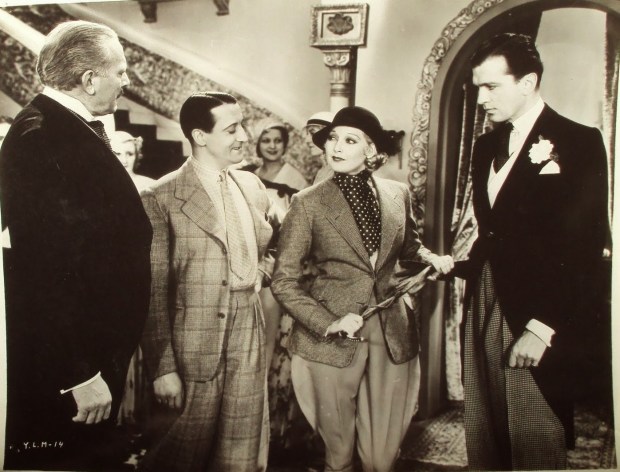
Stanley Lupino and Thelma Todd in ‘YOU MADE ME LOVE YOU’

One of Lupino’s most unusual films was made in 1933, and it is also one of his best. ‘YOU MADE ME LOVE YOU’ is one of a series of early 30s English films by British International Pictures featuring Hollywood stars in an attempt to bring prestige to the domestic industry. As such it features lots of resources thrown at it. There’s wonderful comedienne Thelma Todd moonlighting from appearances in Hal Roach comedies, during a promotional trip taken with Roach and Charley Chase. Rather than a jarring contrast, Todd’s Hollywood glamour is a great foil to Lupino’s English musical comedy and pantomime heritage. The film is ably directed by slapstick comedian Monty Banks, who himself makes a cameo. To top it all off, the last ingredient in this cinematic hodgepodge is a screenplay by Frank Launder, based on Shakespeare’s ‘THE TAMING OF THE SHREW’! Unlike many of the films made by comedians in unfamiliar foreign studios (Atoll K, The Invader, El Moderno Barba Azul, anyone) works out just dandy, thank you very much.Such a contrived confection really should be dreadful, but there’s so much talent in here that everything comes off beautifully. The performances are pitch-perfect by all concerned, and the script zings with one-liners and comebacks. Stanley Lupino’s usual moonstruck lover, small but determined to get his way and laugh in the face of bad luck, is made for this film; having seen Thelma, he is determined to win her over, even when he finds out she’s a holy terror. He hatches a plan to “treat her mean”, with lots of comic contrivances along the way, including cheerily putting her through an awful honeymoon, before everything turns out happily. The whole film is a barely believable piece of fluff, but it is packed with such energy, humour and movement that it carries off its unlikely ingredients with aplomb.

Similar in tone, and very nearly is good is ‘FACING THE MUSIC’, which sees Lupino again in dogged pursuit, this time to the beautiful secretary to a temperamental opera singer. Once more, it’s Lupino’s energy that really carries the film through some great visual comedy and dance routines.  Films like these prove Stanley Lupino to be one of the most under-rated English film comedians, his films glossy, well produced and action packed.  He undoubtedly offers the most rewards of any comic performer yet rehabilitated by Network’s ‘The British Film’ series. See for yourself here!

Stanley_Lupino

Pierre Etaix: The Forgotten Frenchman

pierre etaix 2

Running late again and battling traffic this morning, I found my thoughts turning to a film I saw a couple of years ago. ‘HEUREUX ANNIVERSAIRE’ is a short film starring the French comedian Pierre Étaix , which follows his frustrated attempts to rush home for an anniversary dinner with his wife. He must contend with rush hour Paris (the traffic is so gridlocked that the drivers read novels, polish their vehicles and play cards between occasional movements inching forward). While he struggles with driving home, parking, and picking up an anniversary  present, his wife tires of waiting, drinks all the wine and ends up comatose by the time he finally arrives home. Happy anniversary, indeed.

Although he is from a much later heyday than most of the comics featured here, Pierre Étaix fits right beside them. A disciple of classic silent comedy, he also found himself unfairly cast aside by history.  Most of the comedians featured on this site are largely forgotten because they are long dead, and many of their films do not exist anymore. In the case of  Étaix, neither of these statements are true.  He is still alive at 87, and his films, although admittedly few in number, all still exist. And yet, if he has been written about at all, it has been as a footnote to the career of Jacques Tati.

Originally pursuing the ambition to be a circus clown, Étaix was instead drawn into illustration and cabaret work. He met Jacques Tati, and was hired to work on designing and co-directing his 1958 film ‘MON ONCLE’. In 1961, he set out to work on his own in a series of shorts and features. Although his style contained elements of Tati, the most frequent stylistic comparison is to Buster Keaton, with whom Pierre shared a stoic demeanour as the dapper little man who fate confounds at every turn. However, he absorbed not just Keaton but all the great clowns, adding a leisurely Gallic twist to the comedy to make something uniquely his own. Étaix’ cinematic output was small – just 3 shorts and 5 features in the 1960s – but each was full of golden moments of witty visual comedy.

In old age, the silent clowns found themselves forgotten as their films disappeared from view due to forces beyond their control. In a bitterly ironic comparison to the clowns he so admired, the same fate, for years, fell Pierre Étaix. It is not nitrate decomposition or changes in taste that are to blame however, but an unpleasant saga of legal battles and rights issues. For 40 years, the rights to his classics were held by unsympathetic companies who treated them as assets and nothing more (a situation similar to, but much more prolonged than, Hallmark’s treatment of the Laurel and Hardy films in the USA.). The films disappeared from cinemas and TV. A fickle public soon forgets when they are not given a reason to remember, and with Pierre Étaix’ films in this legal purgatory, he soon slipped to footnote status in the textbook of comic history.

Finally, the murky clouds of litigation have cleared. Étaix  has been on the comeback trail, restoring his reputation with DVD releases and screenings at festivals, such as Cannes and the 2012 Bristol Slapstick festival.

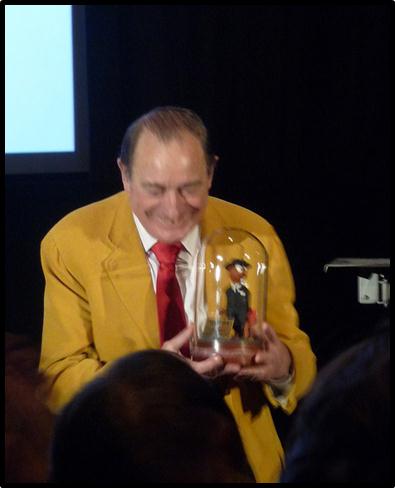
At Slapstick, it was a thrill to see a great clown in the flesh. Sat hunched beside the screen, M Étaix was a small, lugubrious looking man with great, watery eyes. The comparisons to Keaton aren’t just stylistic; he shares Keaton’s passive stocism and  has the same kind of cheekbones that make the silver light from the cinema screen fall dramatically on his face as he watches himself. Watching the opening clip, an excerpt from ‘LE SOUPIRANT’ (1963), he seldom smiled whilst the rest of us rocked with laughter, and I had a twinge of worry that he would be a saddened and withdrawn man. However, in conversation there is nothing at all morose about him; in fact, he’s a complete charmer, who frequently breaks into animated bouts of mime accompanied by an infectious gap-toothed grin. His gift for visual business is undimmed by the years, and frequently he uses it to get over the language barrier; asked the reason for his films’ disappearance, he responds with a very funny, but obviously heartfelt mime of lawyers stuffing money in their pockets.  Similarly, while he holds Keaton as “a demi-God”, when asked who his favourite comedian of all is, his response was an absolutely pitch-perfect mime of Stan Laurel mannerisms.

pierre etaix bristol

Monsieur Étaix receives his award at the Slapstick festival in 2012

Both Laurel and Keaton’s slapstick helplessness with props are evident in ‘RUPTURE’, the first film he made. This short takes a simple premise, Pierre trying to write a reply to his girlfriend’s break-up letter, and extracts a great deal of comedy business from it as he struggles with broken pens, stubborn desk drawers and an uneven surface that his writing materials slide about on.  HEUREUX ANNIVERSAIRE takes these to even greater levels.

The dapper dignity that he tries to keep up in the face of slapstick calamity came to hallmark Étaix’ work and was, he says, inspired by a tremendously po-faced opera singer; “Something as trivial as losing a button would be catastrophe to him, and I find that idea very funny”. This character also fitted into natural, situational comedy. Unlike the bewildering modernity that Jacques Tati stranded his oddball character M. Hulot in, Pierre Étaix had all the material he needed in the day-to-day trials of love and life. After making 5 feature films (the last of which, LE GRAND AMOUR features a brilliant fantasy sequence in which beds replace cars on the roads), Étaix focussed his attentions on TV and setting up the French National Circus School.

Like almost everyone else, I’d almost never seen most of his work until that evening in Bristol, but I’ve since been working through the long overdue box set of his films. M. Étaix absolutely charmed the Bristol crowd, and is on his way to regaining his standing  as the third great clown of French Cinema, alongside Max Linder and Jacques Tati. There are lots of jewels amongst his films, which provide more out and out laughter than much of Tati’s work.

It is fitting, given all the comparisons that have been made between Étaix and Buster Keaton, to finish with a nod to Buster; In Rudi Blesh’s book ‘Keaton’, written during the twilight of its subject’s life, he poignantly describes Keaton’s race against time to restore his reputation.

“It is a timely restoration, with the public tired of stand up and one-line comedy and turning back eagerly to the visual gag and the timeless silent art of the mime. But it still is late, late evening for the mime himself. His race with time quickens.”

Pierre Étaix today finds himself in the same circumstances, and, in his 88th year, the same race against time. Already, though, the films of this sweet, humble and quietly brilliant man are beginning to be seen again and earn the praise and following they should have had for the last 45 years. They are wonderfully creative visual comedies. Don’t miss a chance to see them; we owe it to him.

EDIT 15/10/16. After the paragraph cited above, Rudi Blesh had to update his biography with a poignant last sentence noting Keaton’s passing. Unfortunately, today the same is necessary for Pierre Etaix. It is at least of some consolation that he got to see his reputation restored, but deeply sad that perhaps the last truly visual film clown has left us. Sleep well, Pierre, and thanks for the laughs.

pierre keaton

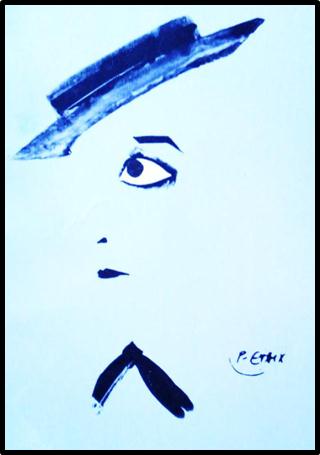
Étaix is also a talented artist, as evidenced by this lovely, minimalist Keaton piece.

Pierre’s films haven’t made it to DVD in the UK, but are available subtitled on this American release, or in their original French versions.

This article by Matthew Ross has been adapted from one included in issue 3 of The Lost Laugh Magazine