Silent Comedy Lover & editor of blog and e-zine The Lost Laugh www.thelostlaugh.com. Tentatively working on a book about great clown Lupino Lane.
National Park Ranger, Nature lover and occasional nature writer.
Guitarist & songwriter; half of Landscape Pop duo Mr Magpie: mrmagpieband.bandcamp.com
Network DVD is currently releasing a magnificent series on DVD, ‘THE BRITISH FILM’. These long-forgotten comedies, dramas and thrillers have been unseen in decades, leaving their stars little more than nebulous names in history books. There’s a tendency to think of 30s British films as all stodgy, talk-heavy films, or ramshackle music hall vehicles. Well, ok, there are a fair few that fall into those categories, but certainly not all. The lack of availability has led to a lazy blanket assessment of what was actually a very diverse, often entertaining and creative bunch of films.
Best of all, Network is having a sale for 2 more days on their British Film series; you can get 40% off most titles at networkonair.com until the 7th.
I’ve partaken myself, and I’ll be reviewing some of these forgotten gems as I work through my glut of purchases.
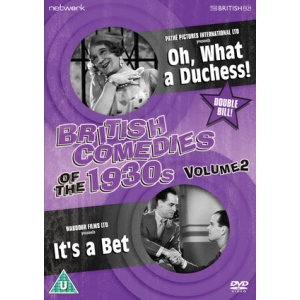
First up, one of a series, ‘BRITISH COMEDIES OF THE 1930S’. Vol 2 features two films, ‘OH! WHAT A DUCHESS!’ (1933) and ‘IT’S A BET!’ (1935).
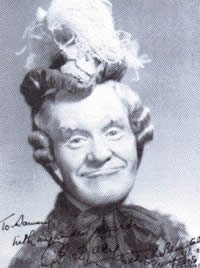
‘OH! WHAT A DUCHESS!’ boasts an interesting pedigree. George Lacy, the star, was the most celebrated pantomime dame of the era. The film was originally trumpeted as an adaptation of Fred Karno’s famous ‘show-within-a-show’ sketch ‘Mumming Birds’, which was Charlie Chaplin’s breakthrough stage role. Enlisted to direct was silent comedian Lupino Lane, who had made his own version of ‘Mumming Birds’ as the great silent short ‘ONLY ME’.
However, little of this is left in the finished product, beyond a vague resemblance in a sequence in which Lacy accidentally wrecks a show taking place on stage. If something of a let down for the Karno enthusiast, ‘OH! WHAT A DUCHESS!’ actually stands up pretty well on its own. Lacy is incompetent lacky to a lousy theatre troupe, but dreams of becoming an actor. The troupe are invited to dinner by a butler at one of the audiences, who really has his eye on one of the actresses. With his employers, the Duke and Duchess of Stonehenge, away, the butler declares open house, but a visiting American film producer demands to see the house, leading to Lacy impersonating the duchess.
Some reviewers of the time, perhaps expecting something more in the Mother Goose idiom, complained that “Lacy is given not much to do”. In fact, this is a fine film, rich in the music hall tradition, and snappily directed by Lane. The slapstick of the stage-wrecking scenes is done well, if not terribly original. Performances in the film are good, too, especially that of Lacy. He is excellent both as his bumbling, enthusiastic character, and in drag as the ‘duchess’. It’s easy to see why his dames were considered the best; as director Lane himself observed in his book, ‘HOW TO BE A COMEDIAN’, “this type of comedy looks fairly easy, but there is more to it than you would think. […] The stance of the female species is totally different to the male”.
Lacy is a master of this. He is able to remain convincingly feminine with just the right degree of eccentricity to be funny, but not grotesque. As with many music-hall based films, the momentum is lost as he replicates (presumably) a stage sketch, an eccentric song and dance version of ‘The Pipes of Pan’. It’s funny stuff though, if unnecessary to the plot, and this film as a whole is great fun. On the basis of the evidence here, it’s curious that Lacy made no more films after this one. Lane always had the ambition of making a film version of a pantomime, and he could have fitted right in.
Nevertheless, Lacy’s career can hardly be said to have fizzled out. He went on playing Mother Goose on stage for another 50 years after completing this film, making his last performance in Southsea at the age of 80.
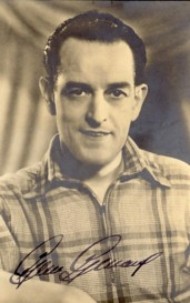
‘IT’S A BET!’ finds itself surprisingly topical; the setup is uncannily similar to recent TV series ‘THE HUNT’. If you haven’t seen that show, it involves several member s of the public going on the lam for a month to see if they can evade capture by the police and MI5 in our world of constant surveillance. Remove the modern CCTV technology, add in dapper stage star Gene Gerrard, and you essentially have this film. Gerrard looks rather like Harold Lloyd did when he removed his glasses, and that’s actually a pretty good analogy: he’s good looking and charming, but without any particular feature to make him stand out. Our star is a journalist who bets a friend he can go into hiding for a month and not be found by anyone. Things are complicated when his car is stolen and used In a robbery, with a result that the manhunt for him becomes a national race. It’s a good story that has more excitement than the usual kind of bland light comedies made by stars like Gerrard. The story also aids the pace of the film, which moves along smoothly. It also provides opportunity for lots of nice location work, including nice scenes of St Leonard’s Pier. The finished result is a film with a sunny atmosphere and a feeling of constant motion. It lacks any standout comic set pieces, but remains engaging all the way through as an amiable time-passer.
The two films on this disc very much belie the notion that British comedies of the 1930s are all stodgy, hoary old relics. Both seem fresh and entertaining, if undeniably dated. Both come in sparkling new transfers from original elements, and are well worth taking a look at.
On Tuesday, I went to see Laurel and Hardy at the cinema. Not at a special silent film event, or in a little indie cinema, but in an ordinary Vue multiplex. Thanks to L & H devotee Ross Owen, who has coordinated several batches of UK-wide Laurel & Hardy Roadshow cinema screenings this year, Stan and Babe took their place once again amongst all the other contemporary comedies, dramas and romances filling cinema screens. It’s been a terrific thing to see, and it got me thinking about the conditions under which these films were first seen.
This is the age of information. Unlike the nebulous facts available to the first waves of silent film historians, we have precise, accurate information at our fingertips. Take L & H, for instance. We know the exact order they filmed their shorts and features, even down to precise filming dates. We know all about scripts, working titles and the days on which the films were released. Thanks to books and the internet, much of this information is now in the public domain.
In recent years, the internet has even begun to play host to reproductions of film trade magazines and newspapers, all helping to build our understanding of the films’ context, production and release.
Paradoxically, the glut of information can sometimes undermine our neat and tidy filmographies. With UK cinema screenings in mind, I explored the British Newspaper Archive to see how the L & H films were first advertised and reviewed.
Now, if you’re an L & H buff, you know that their first films as a bona fide team were ‘The Second Hundred Years’ and ‘Putting Pants on Philip’ released in late 1927. Most sources give a date of 8th October for ‘Second’ and 3rd December for ‘Philip’. Now, these were the dates they hit general release at the ‘first run’ cinemas; these were the most prestigious, big city film theatres. However, if you lived in Nowheresville, USA, or even worse, in the UK, you wouldn’t have had chance to see the films until they had completed their runs in all the first-run houses, and then the next most important cities and cinemas. I’ve not been able to trace any Uk release dates for those first two L and H’s as of yet, but at this time many regional cinemas were still playing Stan’s solo comedies from 2-3 years earlier! 1924’s ‘RUPERT OF HEE-HAW’ is being proudly exhibited as late as April 1927, for instance. This 2 year lag is standatd for much of the late 20s.
‘THE BATTLE OF THE CENTURY’ was released to first-run cinemas on Dec 31st, 1927. It was one of L & H’s first big hits to really launch them in the public consciousness (helped by a big promotional campaign).
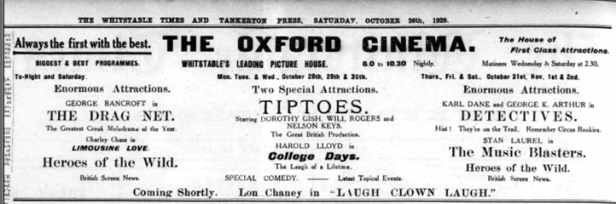
According to local newspapers, ‘BATTLE’ didn’t reach small towns in the UK until May and June of 1929! This means that the L & H team were only just beginning to make an impact with audiences almost 2 years after they had done so in the US. Let’s not forget that L & H were snubbed by many critics; their real fans were, for the large part, the everyday people in these small towns and regional cities.
The UK press seemingly weren’t aware of the official teaming yet, either. In contrast to the barrage of publicity greeting ‘BATTLE’ in the US, here it was billed as merely ‘A Hal Roach comedy’.
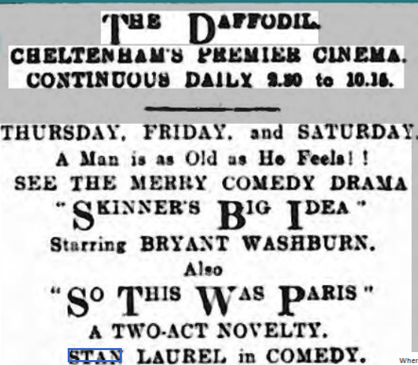
When the performers do start getting a mention, it’s like this:
Notice anything missing? The UK publicity dept. seem totally oblivious to Oliver Hardy and his role in the team. Was this partly due to Stan’s British origins taking precedent? The Glasgow newspapers sometimes refer to him proudly as ‘The Glasgow Comedian’.
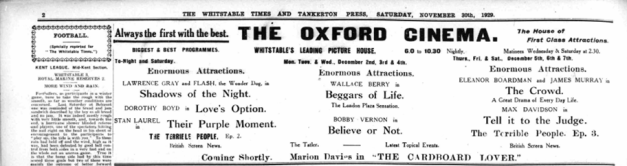
Well into Stan and Babe’s mature partnership, films like ‘EARLY TO BED’ and ‘YOU’RE DARN TOOTIN’are being referred to as Stan Laurel comedies. In the US, the boys were making sound films by this time, and yet we were still seeing their early silents, apparently hardly being publicised as team efforts!
The other interesting thing you might notice above is the use of alternate titles for the UK market. I’ve heard ‘YOU’RE DARN TOOTIN” as ‘THE MUSIC BLASTERS’ before, but ‘THE WEDDING WRING’ is new to me. I presume this represents the blackmail plot of ‘SUGAR DADDIES’, it’s title a mysterious Americanism alien to the patrons of the Oxford Cinema, Whitstable. (The Oxford’s slogan: “Always the first with the best” seems a little ironic when showing this 2-year old film…). More trivial is the change of ‘SHOULD MARRIED MEN GO HOME?’, to ‘SHOULD HUSBANDS STAY HOME?’ in at least one source.
By late 1929, the boys are finally being billed as a team; ‘HABEAS CORPUS’, and ‘DOUBLE WHOOPEE’, for instance, are both billed as ‘Laurel and Hardy in…’. The introduction of sound probably heralded more publicity which helped to establish this, and also helped to close the time lag in film exhibition. York cinemas are showing ‘MEN O’ WAR’ by November of 1929, but the silents do continue straggling on into 1930 and even 1931. What I do find remarkable about all of this is that, given the time lag in establishing the team, how jubilant the reception was greeting them to the U.K. in 1932, a mere couple of years after they really seem to have established themselves as a team in the eyes of the everyday public here in the UK.
All of this might seem pretty trivial, but I find it quite fascinating. It just goes to show that our neat and precise filmographies are inaccurate. Film release dates and exhibition were fluid and overlapping, even down to the films’ titles. Viewing the L & H filmographies through the lens of local newspapers offers just another window on their fascinating and beloved partnership. And, if the recent cinema screenings show anything, it’s that they might have taken a while to get established, but the boys are here to stay!
The influence of British comedians and their music hall heritage on silent comedy in Hollywood cannot be overstated. Chaplin and Laurel are just two of the comedians who made a huge impression on the scene. And, of course, as they reached huge popularity, their styles influenced other comedians. Then there were the hundreds of other comics, supporting actors, writers and directors all bringing their memories of the music hall and British sense of humour in to the huge melting pot of ideas: Lupino Lane, Andy Clyde, Syd Chaplin, James Finlayson, Billie Ritchie and Charlie Rogers to name a few.
But what about those who stayed behind in dear old Blighty? There are many primitive comedies from the 1900s. From the teens we have Fred Evans (‘Pimple’), Billy Merson and an early series of Lupino Lane films. WW1 certainly slowed the flow, but even as the industry picked itself up, comedy remained conspicuous by its absence. It was the golden age of comedy in America, and no-one seemed to want to compete with the flow of classic shorts and features.
No-one, except for Walter Forde.
If Walter Forde is remembered at all today, it is primarily as a very good director of British comedies and thrillers in the 1930s (ROME EXPRESS, THE GHOST TRAIN, BULLDOG JACK, SAILORS THREE). Before this, though, he was Britain’s premier silent film comedian. Indeed he was sometimes billed as “Britain’s ONLY comedian”. A little hubristic, perhaps, but he was certainly the only comedian appearing in comedies styled after American films.
London-born, Forde was a musical prodigy and music hall performer from a child. His father, Tom Seymour, was also a music-hall performer, and wrote Walter into his sketches. In 1921 they decided to enter film production together, writing and directing the films. These independent films, such as ‘WALTER MAKES A MOVIE’, show them learning the ropes. Walter’s character is at this point very Chaplin-esque in action and movement, without being nearly as loveable. Unlike many of the Chaplin fanciers though, he wears a costume of his own. The straw hat, blazer and Oxford ‘bags’ (a kind of trouser then in fashion in 1920s England) marked him as an Englishman. This home-grown quality helped the films do well enough for him to try his luck in Hollywood.
in 1923, he made a couple of long-vanished shorts for Universal, ‘GOOD DEEDS’ and ‘RADIO ROMEO’. The latter features a rather bizarre concept for a silent film; Walter is a romantic poet whose readings on the wireless send housewives into a frenzy, and soon all the husbands are after him. Neither film set the world on fire, and he was let go, becoming a house painter for a while.
In 1925 he returned to the U.K., and for a while found it hard to break back into the industry. In 1926, though, he made another series of shorts, a great improvement on the first. This time, he was without the assistance of his father, who stayed on as a gag man, apparently at Hal Roach studios.
Films like ‘WALTER THE SLEUTH’ and ‘WALTER’S DAY OUT’ showed Forde developing a more subtle, less Chaplin-esque character. They also show him gaining a greater hold on his film-making and gag construction abilities. Off the back of these he was able to bluff his way into making a feature.
The result, ‘WAIT AND SEE’ is a very respectable first effort, if sometimes derivative of other comics. The storyline and final chase are clearly influenced by Lloyd, and W.C. Fields’ famous golf routine is lifted wholesale. Part of the reason for this surely lies in the lack of industry geared towards comedy film-making. Unlike Lloyd and Keaton, with their teams of gag man to support and refine their ideas, Forde had no such experienced film gag men around him.
However, he took steps forward with ‘WHAT NEXT?’, a comedy thriller, and ‘WOULD YOU BELIEVE IT?’, which is generally believed to be where he hit his stride. (You can see this one at the Leeds Film Festival next week!)
‘WOULD YOU BELIEVE IT’ won great praise from reviewers in the UK, feted as a comedy to finally rival the American stars. It smashed box office records, being held over at the London Pavilion for 22 weeks. However, the film was obsolete as it was released. A contemporary advert, from March 1930, for the Preston Palladium cinema tells all. While encouraging patrons to “See this laugh riot and then you will believe it!”, it adds an ominous footnote: “After this week we go definitely over to talkies, regretting that we can no longer accede to our patrons’ requests for silents.”
All this brings us to Forde’s last starring film, ‘YOU’D BE SURPRISED’. Long thought lost, it turned out to have been lurking in the depths of the BFI, and was shown, for the first time in 84 years, as the highlight of Kennington Bioscope’s ‘Silent Laughter Saturday’.
I’ve been writing several other posts about the films shown on the day (here, here and here). However, I realise I’ve been amiss in not acknowledging the contribution made by the musicians accompanying the films. Nothing made me realise this more than seeing ‘YOU’D BE SURPRISED’, which benefited from a truly heroic effort on the part of pianist John Sweeney and a few other helping hands. It’s a tale that deserves telling in full. As the talkies beckoned, Forde made this film as a part-talkie: mainly silent with synchronised music and sound effects, but also with some full sound sequences.
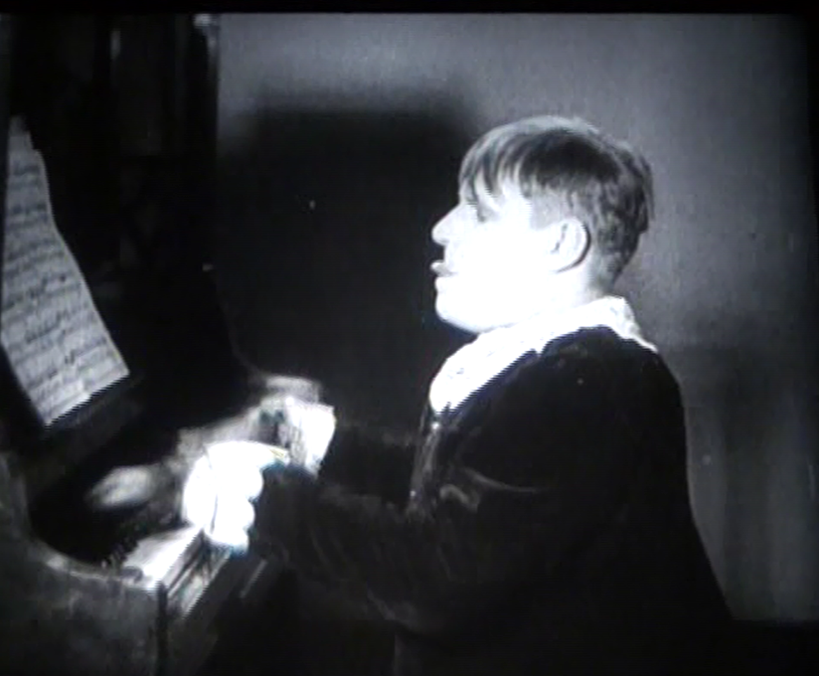
In fact, the whole film centres around sound. Walter, as in real life, has been passionate about music since birth. This is shown in some flashbacks to him to him as a toddler, and then a small boy struggling to play an enormous piano. Moving forward to 1930, he is an aspiring songwriter, seen playing his latest song at a piano. However, he hasn’t quite made it yet, and in a great camera ‘reveal’ gag, we see he is actually playing the piano in the back of a moving van. Writing songs might be his dream, but moving pianos pays the bills!
The next two reels of the film deal with his attempts to get his song heard by a publisher, including sound sequences… Unfortunately, the accompanying sound track had long since vanished. Normally, this wouldn’t be too much of a loss, but the whole film centres around music, and some of the key comedy sequences involve various noises interrupting him as he tries to sing it! The day’s organisers were suddenly thrown into a bit of a panic… how could the film be shown without sound when it was so explicitly designed for it?
The solution, with a herculean effort from all concerned, was to recreate a live soundtrack to match the original as closely as possible. This involved John Sweeney finding the original song music in the British library and transcribing it. Next, a vocalist was found to sing the song live. Sound effects – wind, thunder, aeroplanes, etc – were located to run at key points in the film. Best of all were the effects used in the film’s funniest and most charming sequences. In the first, Forde attempts to sing the song at a piano in an Impresario’s office. Gradually, various noises and interruptions overcome his efforts: a typist chewing gum, legions of typewriters, doors slamming, telephones, a clock being wound. As the sequence goes on these become more improbable – a tap dancer, for instance – culminating in the typist’s chewing gum becoming stuck all over the keyboard and Walter’s hands. All this was matched by some great live sound effects courtesy of Dave Wyatt and Susan Cygan, the highlight of which was Susan’s tap dancing in time to the film!
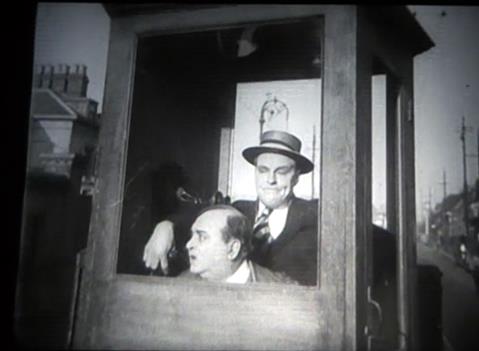
“The only instrument he’ll listen to is a telephone,” concludes Walter glumly. This give him an idea…
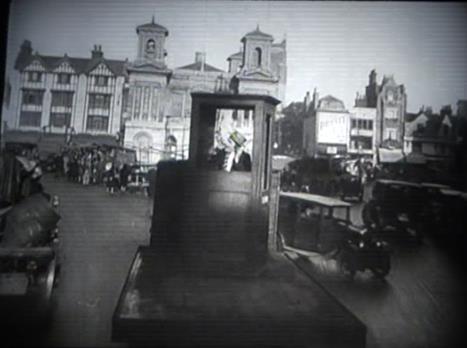
Fade in on Walter singing down the phone… Unfortunately, the box is disconnected and carried away on the back of a lorry, right across the town before he notices! Back to the old drawing board.
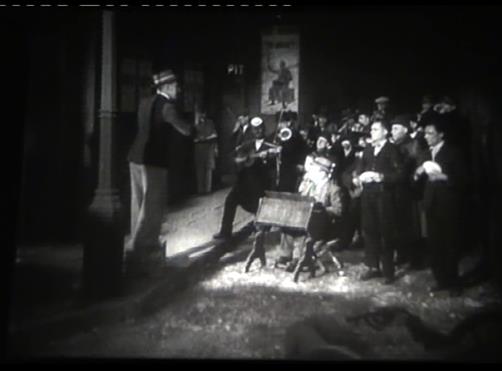
Next up, Walter decides to sing the song outside the impresario’s window. Unfortunately, at this moment, legions of buskers playing all kinds of improbable instruments arrive on the scene! Walter makes the best of it, and corrals them into joining in with his song. At the cinema museum, the live accompaniment now continued, not with just piano and vocal, but with an army of buskers! A gang of us grabbed musical instruments -trumpets, ukuleles, accordion, tambourine, and harmonica – and emulated the cacophony of the buskers. Then, a strange thing happened. We found ourselves, led by Cyrus’ great accordion abilities, actually joining in with the rhythm and tune of the song, matching the action on-screen of the buskers.
I absolutely loved joining in with this (despite my limited musical skill!), and it was more amazing still that the harmonica I picked happened to be in the right key! I now have an even greater respect for the amazing skills of the accompanists on the day, John Sweeney, Cyrus Gabrysch and Lillian Henley. Never have I seen a silent film benefit more from its accompaniment than ‘YOU’D BE SURPRISED’, and it was a privilege to be a very small part of that.
The rest of the film took a bit of a detour, as the young songwriter is mistaken for a convict and handcuffed to a murderer making his escape. Nevertheless, it remained light and entertaining, if not up to his best standards. This turned out to be Walter Forde’s last starring film. By all accounts a very shy man, possibly he tired of being in the limelight. Certainly, ‘YOU’D BE SURPRISED’ shows a real flair for direction, and he already had two dramatic pictures to his credit. Many of the later films he made are well-known and loved, but his own certainly need more appreciation and screening. I’ve been inspired to seek more of them out and research his life and work. Hopefully I’ll post more of my findings here in due course.
Yesterday was not only Halloween, but also the 90th anniversary of Max Linder’s tragic death. It’s hard to believe that the films he made are almost (and in some cases, more than) a century old. They still remain fresh, innovative and funny to this day.
In Linder’s last years, his illnesses made it hard for him to summon the strength to complete films. After returning from his attempts to make films in America, he made only a couple more films. Both AU SECOURS (1923) and ‘KING OF THE CIRCUS’ (1925) exist, but have remained in obscurity. A shame, as they’re both worthy films.
AU SECOURS! is especially interesting, as it was directed by Abel Gance, the young film-maker who would soon make NAPOLEON, one of the most celebrated silent features. Gance’s interest in working with Linder shows the high regard Max was held in as a performer and film-maker. The two collaborated on the script, with Gance taking director credit. The cameraman, ‘Specht’ also deserves a good deal of credit.
This short film (3 reels) is an example of that tired genre, the horror comedy. But, far from the usual haunted clichés, it is one of the few such examples that succeeds as both comedy and horror. Gance uses the film as a showcase for lots of bizarre and disturbing camera effects, making the image turn negative, or making the whole picture vibrate. In fact, if anything AU SECOURS! is more successful a spooky film than a comic one. Max, for his part, turns in his usual excellent performance; few other comics would have been so restrained in the circumstances.
I’d seen this film before, but only in grainy VHS. This print is much nicer to look at, and with an excellent live score
Now, dim the lights and enjoy a bizarre and sinister meeting of two masters…
I’m blogging about comedy films seen at Kennington Bioscope’s SILENT LAUGHTER SATURDAY.
The first show of the afternoon was my turn to take the stage, presenting some shorts starring forgotten silent comedians. Time has slimmed down our view of popular culture so that a few names dominate – to the novice, Chaplin and maybe Keaton. To the slightly more dedicated film fan – Harold Lloyd, L & H, maybe at a pinch Harry Langdon. But silent comedy was a huge, rich field. So many talented names are unfairly forgotten, so it was a privilege to give these neglected talents some of the exposure they deserve. The four SILENT CONTENDERS I selected were great comedians all, at one time or another, tipped to be the next Chaplin, Keaton or Lloyd. That they didn’t quite make it was down was down to a variety of factors ( the studio system, time and place, personal demons, etc). Nevertheless, they turned out some work that I think is quite, quite wonderful in its own right.
First up, was a comedian who pre-dated even Chaplin. Max Linder was one of the first international comedians. He was French, and making films from the mid 1900s for Pathe. These little films, with their cardboard painted sets, are primitive in their look, but Linder’s acting and directing are amazingly sophisticated for films over 100 years old. He played a suave yet often embarrassed boulevardier, a silk-hatted Romeo who got himself into farcical situations like fighting duels and hiding inside suits of armour. Chaplin was a fan, dedicating a photo to him “ To the one and only Max- the professor”. He could well have made it. But then, WW1 intervened, just as Chaplinmania was striking. It was a fulcrum of Linder’s career for two reasons. For one thing, it decimated the French film industry. Linder managed to get around this by going to America to make films. At a time when anything vaguely. Chaplin-related was gold dust, an endorsement from the man himself was irresistible to the American studios. However, the war had also had a more personal, and sinister, impact on Linder; called up and severely injured in conflict, his experiences affected him mentally and physically. He would never quite have the strength to capitalise on his opportunities, and eventually his demons won with his 1925 suicide.
Before this tragedy, he did make a run of 3 superb feature films in the U.S.. ‘Seven Years bad luck’, ‘The Three must Get There’s’ and ‘Be My Wife’, failed to win the audience they deserved to give Max a breakthrough to the big time. Despite this, they are really quite excellent. We showed a scene from seven Years bad luck that is an antecedent of the famous ‘mirror routine’ in Duck Soup. A masterpiece of timing and comic reaction, It went over a treat with the audience.
The other three ‘contenders’ were comics who flourished in short films, but never made it to features. Over time, feature films came to be seen as the acid test for greatness, but this wasn’t always the case. In the beginning, all comedy films were short. When Mack Sennett made the feature length ‘Tillie’s Punctured Romance’, they said it couldn’t be done. When Chaplin made ‘THE KID’ , publicity marvelled at the 6 reel picture “ upon which the famous comedian has worked a whole year!” If only they’d known how long it would later take him to make ‘CITY LIGHTS’.
Of course, Chaplin’s features were a great success; features became the norm. Shorts, over time, became the Cinderella. Today, the comics best remembered are the ones who took on the challenge of feature length films – carrying the fuller, more developed stories showed their skill, and these are indeed the films that endure the best.
However, there’s been this image of the comics in shorts, with a view that anyone who couldn’t make it in features was a lesser talent. That it was all just moustachioed men falling in water and flinging custard pies around like But shorts, in their own way, are a separate art form. To tell a story, keeping a constant ripple of laughter is no mean feat. I think it’s a good analogy to the classic sitcoms of the 70s. Dad’s Army, Porridge, Are You Being Served? They all tried to make feature versions, but they’re always disappointing. Some things are just better in miniature.
Of course, with so many thousands of shorts being turned out, yeah, there’s a lot of dreck. But there are also many, many gems, including some by our next three comedians.
Lloyd Hamilton was a comedian’s comedian. Keaton said he was, “one of the funniest men in pictures,”, while Mack Sennett said “[he] had comic motion. He could do nothing except walk across the screen, and still he’d make you laugh.” What appealed to fellow performers was his unique style of reactionary comedy; playing an overgrown mama’s boy, he relied less on mechanical gags and slapstick than reacting to an endless series of disasters that befell him. His comic equipment included a tottering walk ill-matched to his eternal sense of dignity, a silly pancake hat and a range of hilarious facial expressions. Hamilton could show disgust or disdain better than perhaps any other performer at that time. Oliver Hardy certainly picked up some hints for camera looks from him. Unlike many comedians, he didn’t especially need a strong strong storyline, just to have a really, really bad day! The titles of his films, such as ‘CRUSHED’, ‘LONESOME’ or ‘NOBODY’S BUSINESS’ reflect this; they sound more like Kafka novels than comedies!
Unfortunately, most of Hamilton’s best work went up in smoke years ago. Scattered examples do exist, but it was a challenge to find a film in projectable quality that represented him well. We had to settle for THE SIMP, an early, embryonic film in his canon. It’s not one of his very best, but has some good examples of his anti-hero style. For instance, there are some amusing gags involving him trying to get rid of a pesky dog (don’t worry, dog lovers, apparently the dog was his own and not hurt during filming). We were lucky to be able a newly reconstructed 22 minute version of THE SIMP compiled by David Glass. It didn’t get quite the laughs I’d hoped for, but was a rare treat to see nonetheless.
Here’s a better Ham film, 1926’s ‘MOVE ALONG’:
Our next comic was actually one of Lloyd Hamilton’s directors in his early days. Charley Parrott, or as he later became better known, Charley Chase, was one of the top comedy directors in the teens and early 20s. He had a happy berth working in this capacity at Hal Roach studios, before fate intervened. Harold Lloyd, Roach’s top star, left to produce independently. Now, Roach’s remaining comics were all very good, but none had the human appeal of Lloyd. Roach realised his talented, good-looking director might fit the niche perfectly and put him in a series of one-reelers.
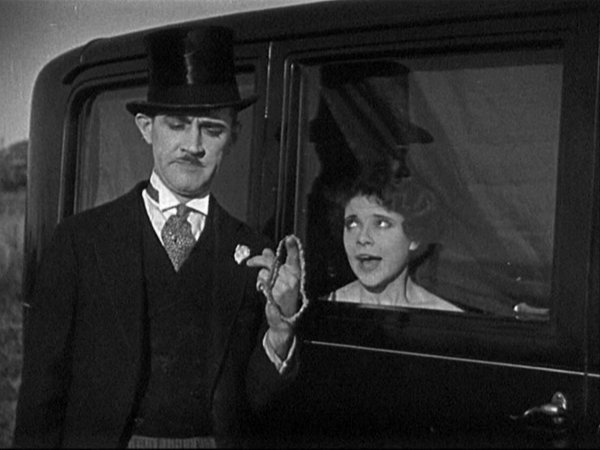
From the get-go, Chase had his comic style in place. While he was slightly reminiscent of Lloyd, he actually owed more to Max Linder, an eternally embarrassed bon vivant fallen on hard times, always winding up in farcical situations. Chase could not have existed in his full capacity before the jazz age, though; he was especially interested in risqué gags and plotlines to heighten his character’s embarrassment, and the permissive ways of the late 20s gave him perfect opportunities to do so. A prime example of this is LIMOUSINE LOVE (1928), which we showed to a terrific response. It’s also a great forum for Chase’s ability to take a simple, everyday beginning to a story, then pile on loads of ridiculous, absurd complications, yet still have these plot twists seem believable. In LIMOUSINE LOVE, he is just a normal guy, heading to his wedding. He’s run out of gas though, and time is ticking on. While Charley goes off to find some gas, a young lady (Viola Richard) is soaked in a mud-puddle. Seeing his seemingly abandoned car on the country road, she hops in the back to change her clothes and dry off.
Charley returns, unaware of this, and drives off. Viola’s clothes fall out of the window, and he is left with a naked woman in the back of his car on the way to his wedding. Things go from bad to worse as he picks up a hitch-hiker, who of course, turns out to be her husband… Charley’s attempts to get rid of Viola without her husband or his fiancée knowing make up one of the funniest sequences in silent comedy.
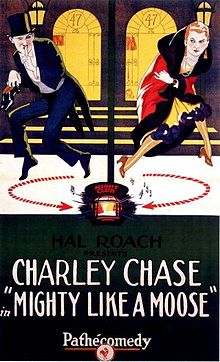
Sadly, this film isn’t on YouTube, so here’s another. It’s another great example of Charley’s absurd, yet warm and believable stories. ‘MIGHTY LIKE A MOOSE’ (1926) is the story of a homely husband and wife who have plastic surgery to surprise each other. Trouble is, they then fail to recognise each other, and embark on an affair. This goofy sounding story actually seems totally natural when you see it told by Chase and director Leo McCarey. Throw in great performances, terrific set-pieces and you have one of the greatest silent comedies ever made. With shorts as good as this, who says features are better?
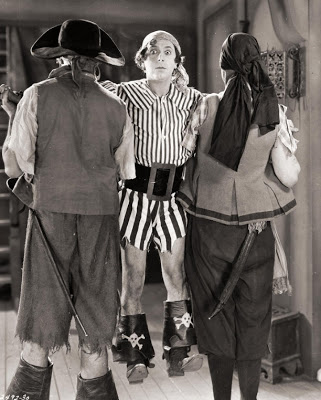
The talents of Lupino Lane were very different to Charley Chase. Lane was British, but born of a long line of entertainers tracing their roots back to 17th Century Italy. From the time he could walk, he had been trained in the rich pantomime tradition. He would later recall that, as a small child, his father made him sit in the splits for half an hour every day! All this training paid off; he was a master of comic timing, slapstick and acrobatics. Within seconds, he could backflip from a table, tumble across a room and fall into the splits, then raise himself up to standing position without putting so much as a hand to the ground. On film, he wore a perpetually startled expression enhanced by his huge eyes, almost as if these acrobatics happened by accident. A little chap, he used his size to contrast comically with the epic background his films placed him in: he might be a misfit gaucho, pirate, explorer or Mountie.
‘SWORD POINTS’ is his version of THE THREE MUSKETEERS, and is one of his best films. Even better, we were able to show it in a sparkling print that enhanced the whirlwind of gags and acrobatics.
SWORD POINTS has two centrepieces. The first relies not on acrobatics, but is a carefully constructed wine cellar sequence that showcases an alternative facet of the music hall comedian: an ability to squeeze any possible gag out of a handful of props and a simple task. Here, Lane is sent to the wine cellar to fetch some tankards of wine. Over the course of the next few minutes, he manages to get all his hands and feet stuck in jugs, and flood the wine cellar, eventually swimming off with the tray of tankards atop his head.
The second is a maelstrom of rolls, flips and trips through some secret trapdoors, which also packs in some amusing take-offs on Fairbanks’ casual swashbuckling style. The speed and energy of these scenes must be seen to be believed. Sadly, ‘SWORD POINTS’ is another film not on the ‘tube, but Lane turned out dozens of these great little films. Here’s FANDANGO, also from 1928, and another good ‘un.
Lane’s talents were probably better off in short films than stretched across a full feature film. However, as I’m sure the Kennington audience would agree, he was still an incredible comedian and acrobat. The other silent contenders, in their own ways, were all real individuals whose efforts to bring laughter to the world deserve better remembrance. It was a pleasure to share them, both at The Cinema Museum, and here, with some new audiences.
I’m currently blogging about the silent comedy films shown at Silent Laughter Saturday, an all day festival of hilarity at London’s Cinema Museum.
L & H expert David Wyatt introduced some tasty rarities. While THE BATTLE OF THE CENTURY has been the talk of the town, other discoveries continue. First up was a ‘new’ version of ‘DUCK SOUP’. This is a pivotal film in the L & H story. Based on a sketch by Stan’s dad, it was later remade into the mature L & H film ‘ANOTHER FINE MESS’. As two bums on the run who hide in a mansion, and pose as the owner and his maid, it brings us remarkably close to the eventual L and H characters, even though it was incredibly early in their partnership. Compared to ‘BATTLE’, today’s version of DUCK SOUP featured only very small bits of new footage, but nonetheless managed to seem like a totally new film. The versions we’ve been accustomed to are incredibly choppy versions in dismal quality. Sourced from Belgium, the titles have been translated into French from the original English, then sloppily translated back into English, apparently by someone who speaks neither language. Thus, Stan’s exclamation ‘I’ve been robbed!’ becomes the incredibly unwieldy, ‘In effect, I have the feeling i have been disrobed!’. These sort of titles go a long way to killing the comedy, so it was great to have the much simpler English text. We also learned that one of these titles is the source of the seemingly random title: “Duck Soup, Hives! the whole house to ourselves!”. Well, I guess it’s still quite a random title. The second improvement was the print quality, light years beyond anything we’ve seen before, and also far less mauled about. I’ve always thought DUCK SOUP far too full of frenetic slapstick, but this version’s less edited, spliced shots offer fuller, more natural versions of the gags bringing the film closer to typical Hal Roach pacing. This helped me notice one subtle gag that I’d always missed before; as Stan and Babe commandeer a bicycle to help their escape, Stan chooses to ride on the handlebars of Babe’s bike, even though there’s one right next to it that he could have used! typical Laurel logic, already in place.
The biggest surprise is the existence of a much fuller version of the scene in which Madeline Hurlock asks ‘Agnes’ the maid (actually Stan in drag) to run her a bath and give her a massage. Stan’s crying panic escalates as he sees her apparently naked through the keyhole of the bathroom door (modestly photographed, of course). Seen from the shoulders up, Madeline approaches the door. In panic, Stan thrusts his head under the bath water, making frantic “Go away!” Gestures with his hand. Finally giving in, he emerges, makes a “What’s the use?” face to the camera and turns to face Madeline. To his relief, he finds she has now covered herself in a dressing gown.
This scene was far too risqué for many audiences, as evidenced by a small town censorship reel, featuring many scenes deemed unsuitable for public consumption. These scenes included a slightly longer edit of the bathroom scene, including one extra title. A characteristically American H.M. walkerism, “MY GAWD, she’s raw! Seemed rather incongruous coming from the British Laurel’s lips.
Following this, DW introduced another great historian, David Robinson. Mr Robinson was one of the few to appreciate Laurel and Hardy’s significance early on, capitalising on their visit to the UK in 1953-4 to gain an interview. The subsequent Sight and Sound article, ‘The Lighter People’ was the first real critical attention paid to L & H. David gave us some insight into the context of the time. L & H were forgotten by critics and writing about them was tantamount to “errant populism”; a number of Shakespeare references were deemed necessary to make the article seem more highbrow!
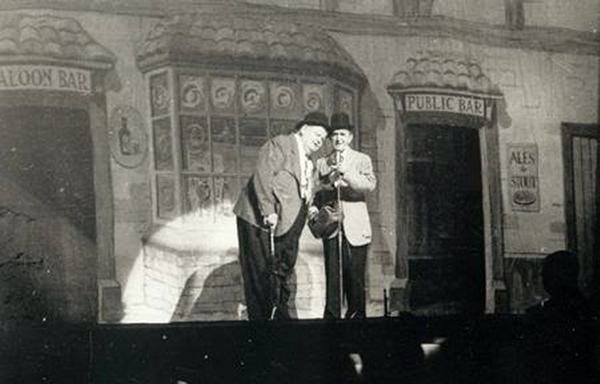
He then recalled his visit to the theatre. Of the act, BIRDS OF A FEATHER, he claimed to remember almost nothing, except their beautifully timed entrance through two doors, continually missing each other through a set of saloon doors:
“The audience went wild, which they obviously appreciated.”
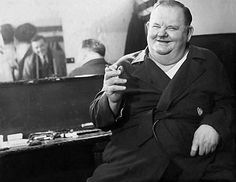
Backstage, the young reporter was introduced to the comedians. Eyewitness accounts like these are becoming ever more rare, so these reminiscences were especially precious. He recalled them both as “incredibly kind, gracious people”, who were both wrapped up in matching blue dressing gowns.
“They were both the opposite of their screen characters,” he continued, “Oliver was very serious, but Stanley talked and giggled all the time.”
However, he did note one amusing similarity to the films…
“I know they got a great of happiness from their last marriages, but nonetheless the wives acted just like the wives in the films!” Mr Robinson recalled them forever fussing and scurrying about until Oliver had finally had enough:
“”Can’t you see I’m talking to the gentleman?” he said grandly, which was a rather wonderful thing to have said to you as a 23 year old.”
As the interview began, Our young reporter realised to his embarrassment that he had come equipped with pad, but no pencil. Graciously, and hiding his amusement, Babe came to the rescue with a pencil from deep within his dressing gown pocket. It was Stan, however, who led the interview, providing a precious series of reminiscences. Alas, the young David Robinson had no tape recorder, but we should be eternally grateful that he did manage to record such precious words when no-one else was bothering. It was absolutely fascinating to hear him speak first hand about his experience… Another moment when you wish to go back in time!
Rounding off this programme was a film that has been seen before, but only very occasionally. Stan Laurel’s ‘WHEN KNIGHTS WERE COLD’ was later fondly recalled by its creator, but was frustratingly elusive for decades. Happily, it turned up a few years ago at the Library of Congress, or at least the second reel did.
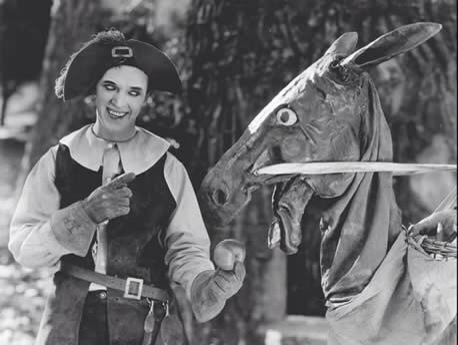
One of the first parodies of the kind he came to specialise in, ‘WHEN KNIGHTS…’ is a loose Robin Hood spoof that also references ‘WHEN KNIGHTHOOD WAS IN FLOWER’ (1922). Stan is Lord Helpus, a Slippery Knight, who sets out to rescue a Maid Marian type from the clutches of Prince John. It’s easy to see why Laurel had such fondness for this film. It taps into a superb vein of pantomime silliness inherited from the music hall tradition Stan loved so much. For instance, Laurel ‘rides’ a pantomime horse, actually a costume with fake legs dangling over the side. Stan does this superbly, giving the horse a character all of its own. There’s one especially funny moment as he feeds it from a water trough, and the horse drains the whole thing.
Things get even more ridiculous as he is chased by a whole army of knights on pantomime horses, not to mention more than a little reminiscent of the much later ‘MONTY PYTHON AND THE HOLY GRAIL’.
Arriving at the castle walls, Stan tries to climb up some ivy, but finds that it only goes a few metres high. Not to be outdone, he finds a watering can, which instantly makes the ivy grow and shoots him up the castle walls. This is followed by a very funny fight scene, with a clever gag where, by trick photography. Stan seems to dart around the room to confound his opponent. There are some other clever, Keatonesque gags here too. Eventually, the king returns and Stan is pardoned. The final scene is the wedding, which turns into a ragtime dance before the king protests: “Stop! Woulds’t put my kingdom on the bum!”
This is a great little short film, or at least half of it. Hopefully one day this can be released to DVD, as it ranks with DR PYCKLE AND MR PRYDE as one of Stan’s best parodies.
Laurel and Hardy still command so much love that any new scrap of footage is eagerly devoured by the faithful. We’ve been spoiled with all the recent discoveries, and this programme was another reminder of this. Truly, it’s a good time to be a silent comedy fan.
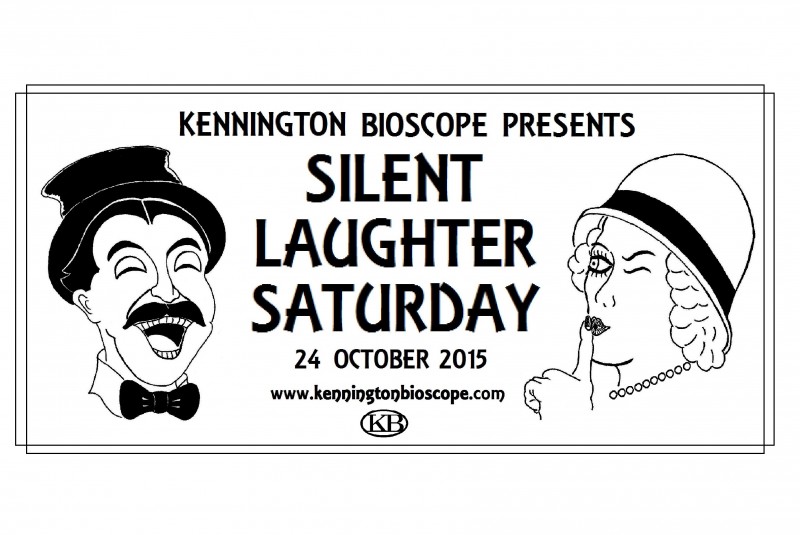
This weekend, Kennington Bioscope presented SILENT LAUGHTER SATURDAY, an all-day smorgasbord of classic and rare silent comedy curated marvellously by David Wyatt. Over the next few days, I’ll be blogging a run-down of the day, including many of our favourite lost comedians…
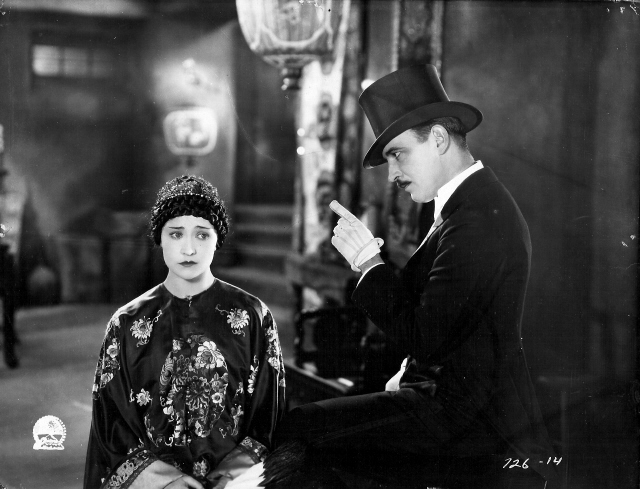
Kicking off things was the terrific 1925 film ‘PATHS TO PARADISE’ a Raymond Griffith-Betty Compson feature film. Griffith and Compson star as rival crooks, who are initially in a constant battle of wits to steal a priceless diamond necklace. This is a beautifully suave and witty comedy, a great showcase for the silk-hatted sophistication of Griffith. Owing something to Max Linder, he nevertheless has a subtle, laid-back style uniquely his own and is incredibly watchable. Constantly presenting himself under an array of pseudonyms, Griffith manages to bluff his way as a detective into the home where the diamonds are stored. Compson has also managed to find her way in, posing as a maid, and after several rival attempts, the pair eventually a Decide to team up. Things gather speed in some terrific night-time scenes inside the house. Dumbbell detective Edgar Kennedy is guarding the safe, and Griffith and Compson’s attempts to get to the necklace are both suspenseful and very funny. There’s one especially wonderful gag sequence as a dog steals Kennedy’s torch. Trying to wrestle it back, the spotlight is constantly turned on Griffith; whichever way he turns, somehow the light ends up following him. Eventually, an exhausted Griffith admits defeat and surrenders in the spotlight, but Kennedy is so embroiled in dealing with the dog that he doesn’t notice. Griffith reconsiders and makes a swift getaway. This scene is a nifty variation on the routine most famously done by Chaplin in ‘THE GOLD RUSH’, where he constantly ends up with a gun pointing at him as two men fight over it.
After lots of twists and turns, Griffith and Compson finally outwit the detectives, and make off with the necklace. Up to now, this has been a very sophisticated drawing room-type comedy, so it’s a surprise to see a brilliant chase sequence at the end, more the sort of thing associated with Lloyd or Keaton than with this kind of ‘light’ comedy. Even better, it’s a terrific one, really climaxing the film effectively. Driving south toward the Mexican border, more and more cops join in the chase until there are literally hundreds following Griffith and Compson’s car. Throw in some great visual gags ( a hilariously efficient tyre change; Griffith refuelling the car on the move) and you have a tremendously satisfying topper to the film that went over gangbusters with the Kennington Crowd. Sadly, the ending proper is missing from the film. The film peters out just as the couple reach the Mexican border. In a moment of doubt, they wonder whether they should give themselves up. Apparently, the film originally ended with them high-tailing back through all the cops to return the necklace, footage now lost to us. Nevertheless, the existing film does end at a perfectly acceptable point, and the loss did not detract from its overall effect.
‘PATHS TO PARADISE’ was introduced by the great Kevin Brownlow, who offered insight into Griffith’s failure to stay in the top rank of comedians. He recalled interviewing gag writer. Monte Brice, who had spoken of Griffith’s stubborn nature and perfectionism in constructing his films.
Another reason for Griffith’s dwindling screen career lay in his voice, or rather, lack of it. He was left with little more than a hoarse whisper after apparently acting in a stage melodrama where he had to scream every night. This was obviously going to be a problem as talkies beckoned.
Aptly, Griffith’s last film role was a wordless one, as a dying soldier in ALL QUIET ON THE WESTERN FRONT. However, whilst his on-screen career may have been over, he remained busy as a producer for 20th Century Fox. He died in 1957.
Sadly, in words I’m going to repeat a lot on this site, we’re left with precious little by which to judge his work. Most of the Paramount comedies he made went up in flames years ago, and those that do survive tend to be locked away in the vaults. The following year’s ‘HANDS UP’ is considered to be his masterpiece, and is available from http://www.grapevinevideo.com
Fresh from a fantastic weekend in London for Kennington Bioscope’s ‘SILENT LAUGHTER SATURDAY’, the blog is now ready to launch properly. Reviews of films from the weekend to follow, but before we get to that, here’s a brief rundown of some of the greatest forgotten comics you’ll find here. Sure, we’ll be featuring Keaton, Laurel & Hardy etc, too, but these are some of the comics who need a bit more information and appreciation about them on the internet, the core purpose of this site. As time goes on, I’d like to add pages for each of these performers to the site to hopefully become a definitive reference source, but for now, here’s a brief introduction to some of my favourite lost comedians…
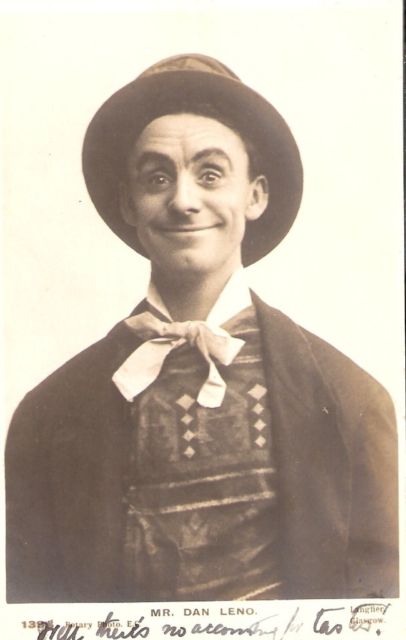
DAN LENO
Going right back to the music hall days, it’s impossible to conceive of many of the later British comedians without Dan Leno. His sketches and whimsy were beloved by the Karno comics, and absorbed into their acts. Just look at that bowler-hatted, vacantly grinning face and tell me you don’t see Stan Laurel. Chaplin loved Leno, too. Leno died young at the turn of the century, and has left only scraps of his act, but he left a long shadow in British comedy.
2. MAX LINDER
Just as influential, in his own way, was Frenchman Max Linder. Stage-trained Linder made films from the mid-1900s for Pathé. These films may look primitive, with their cardboard, painted sets, but Linder’s acting is remarkably subtle and sophisticated. As a silk-hatted boulevardier, he maintains this pleasingly low-key style as he is pulled into ridiculously farcical situations, such as being carried through the streets of Paris in his bath!
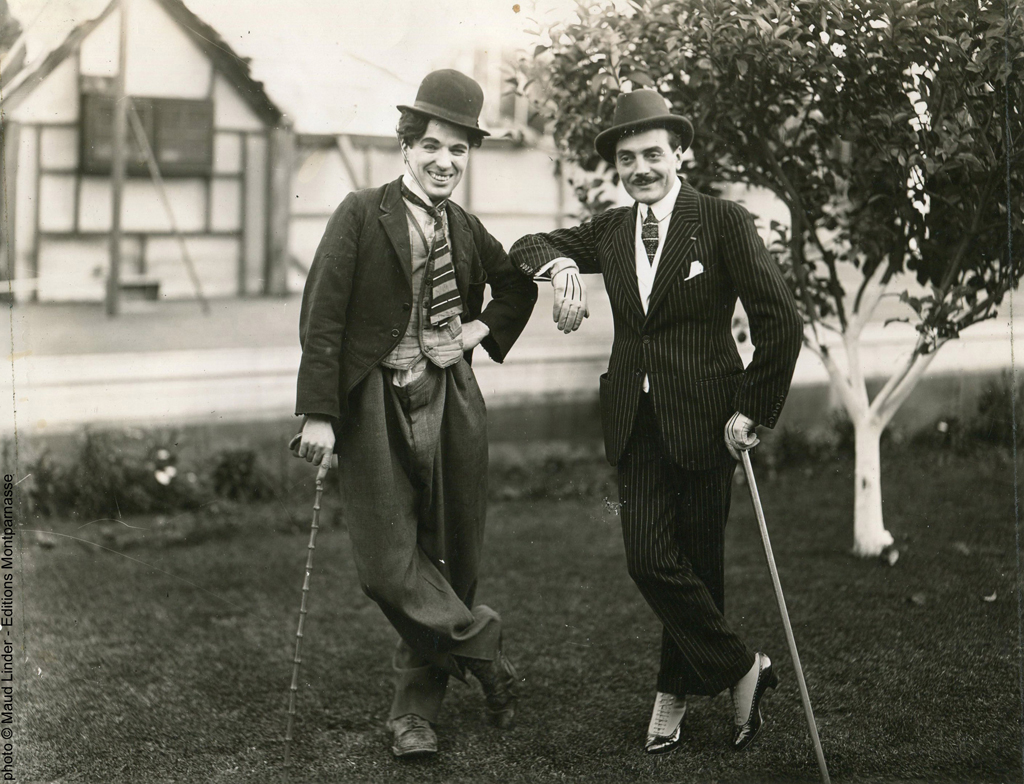
Chaplin, again, was a huge fan. He became friends with Linder (below), dedicating a photo to him, “To the one and only Max, the Professor. From his disciple, Charles Chaplin.” Linder’s sophisticated, dapper style in the face of eternal embarrassment was also a huge influence on two other great silent comics, Raymond Griffith and Charley Chase.
3. ROSCOE ARBUCKLE
It’s amazing how many of these underappreciated comedians had such an influence on the more enduring names. It was Roscoe ‘Fatty’ Arbuckle, then Mack Sennett’s biggest star, who persuaded the producer not to fire a young, temperamental Chaplin. He’s also said to have provided the original tramp costume’s oversized pants. The eternally generous Arbuckle later had an even more profound impact on the young Buster Keaton,giving him his first screen roles and teaching him the ropes of film-making. On his own account, he made some really charming and funny screen comedies, before his career was unduly and unfairly stopped by a 1921 scandal. To this day, it’s impossible to write a paragraph about him without mentioning it, so I’m just going to shout from the rooftops, “HE WAS INNOCENT!” once more.
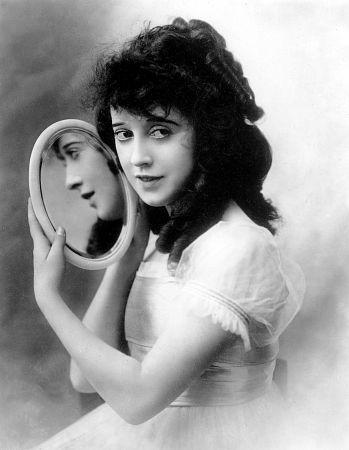
4. MABEL NORMAND
The first really popular screen comedienne, Mabel was also a pioneering female director. From the mid 1910s, she was directing her own films at Keystone, later moving into feature films for Goldwyn. She’s great proof that women could be both funny and attractive at the same time, which was a difficult thing to achieve in such a male-dominated industry. Mabel was a wonderfully lively performer, who deserves remembering more for her pioneering work.
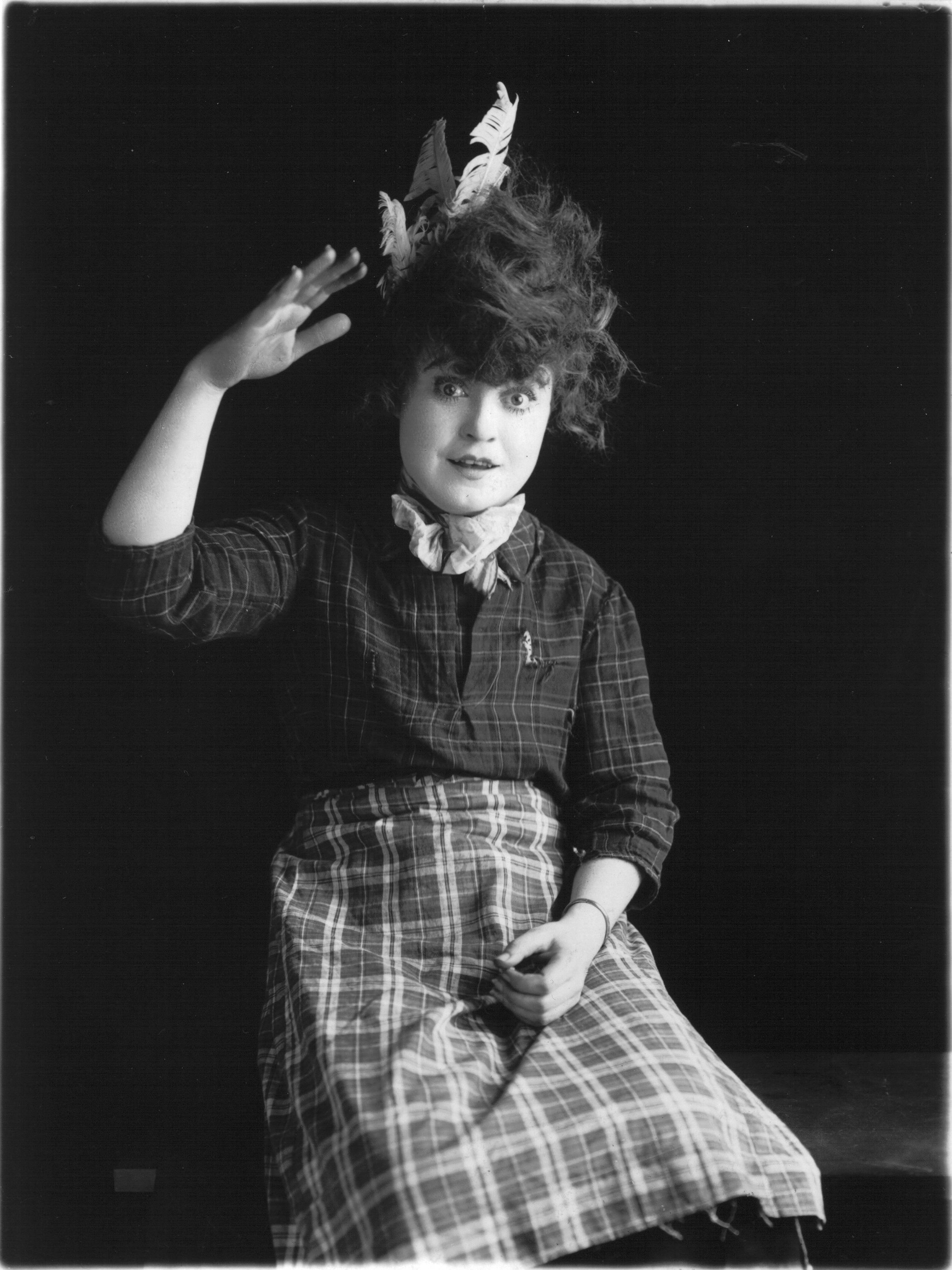
5. ALICE HOWELL
Alice Howell took a more clownish approach to her humour. Her round, eternally started kewpie doll face, topped off with a mass of frizzy red hair was instantly amusing, and totally suited the ditzy characters she played on film. However, she was still a true original, almost a forerunner of Lucille Ball. Her films are sadly scarce, but reveal a uniquely funny lady. “Everyone a Howell!” was her strapline.
6. LUPINO LANE
To see one of Lupino Lane’s films is to suspend belief in the laws of physics; he was a phenomenal acrobat who surpasses even Keaton. Tracing his family’s history in entertainment back to 1642, he was a proud inheritor of the pantomime tradition, and could do pretty much anything: acrobatics, dancing, singing, crosstalk routines, juggling. He later added starring in, writing and directing Hollywood comedies to his resumé. These films are great little two reelers, maybe not deep in characterisation, but they make up for it in a whirlwind of gags and acrobatics. Lane’s signature stunts include rising up from the splits, somersaulting down flights of stairs, and running 360 degrees around the inside of a proscenium arch! In later years, he returned to England, where he originated the role of Bill Snibson in ‘ME AND MY GIRL’, along with the famous dance, ‘The Lambeth Walk’. He should be recognised as a national treasure in Britain, but is undeservedly forgotten.
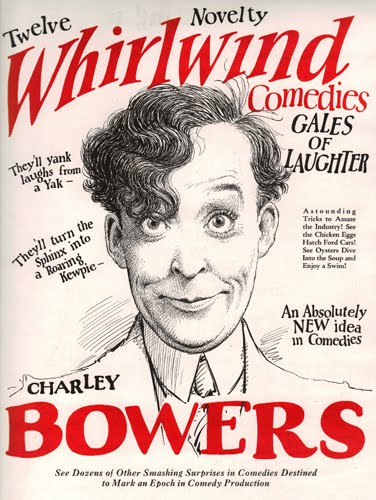
7. CHARLEY BOWERS
The films of Charley Bowers are as jaw-dropping as Lupino Lane’s, but for different reasons. Bowers isn’t an astounding performer, but he was an incredibly talented animator and gagman. In two series of comedies in the late 1920s, he mixed his wild, incredibly realistic stop motion animation into live action films starring himself. The results are incredible, a world where pussy willow trees sprout living cats, mice fire guns, cars hatch from eggs and the figures inside paintings come to life. Beloved by surrealists like André Breton, Bowers was just way ahead of his time, and returned to obscurity before being rediscovered in recent years.
8. HARRY LANGDON
Langdon is usually cited as one of the “big 4” names of silent comedy, with Chaplin, Keaton and Lloyd, but he’s far, far less well remembered than those performers. Part of the reaon, I think, is that he is very much an offbeat, reactionary performer, a minimalist in reaction to the overblown chaos of Mack Sennett madness. Now that we’re less familiar with this, it’s harder to place Langdon’s curious, quiet style. He played an overgrown baby of indeterminate age, his performances marked by long silences and the tiniest flinches in facial expression. He was proclaimed as the next Chaplin in his day, but crashed and burned through a combination of factors. He’s kind of a marmite performer, an acid test for your appreciation of silent comedy. Those who ‘get’ him revere him. Among them were Chaplin, Keaton and Stan Laurel. That must count for something.
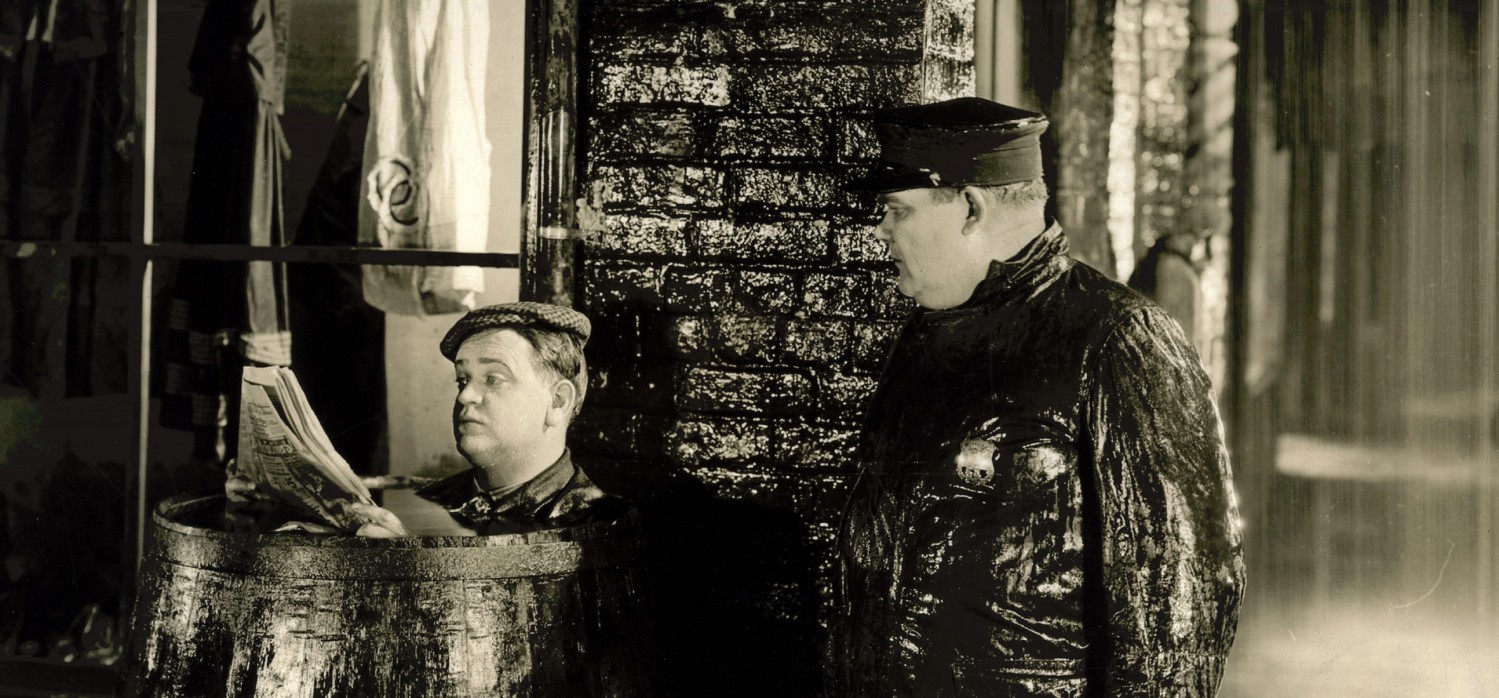
9. LLOYD HAMILTON
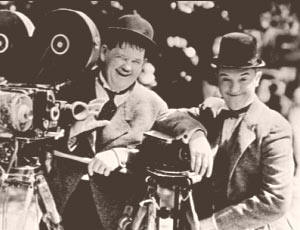
You might recognise the photo above from our header image. Lloyd Hamilton (on the left) is another comedian’s comedian, a reactionary type who has a similarly ‘marmite’ appeal to Harry Langdon. Playing a curious overgrown Mama’s Boy type, he walked with a prissy waddle and treated everything with disdain. A typical Hamilton film has little story, but is simply a string of disasters to showcase his fine reactionary comedy. However, he’s hamstrung (pardon the pun) by the lack of most of his best films, and the fractured and scattered nature of what remains. But, as Mack Sennett said, “[Lloyd Hamilton] had comic motion. He’d do nothing but walk across the screen and make you laugh.”
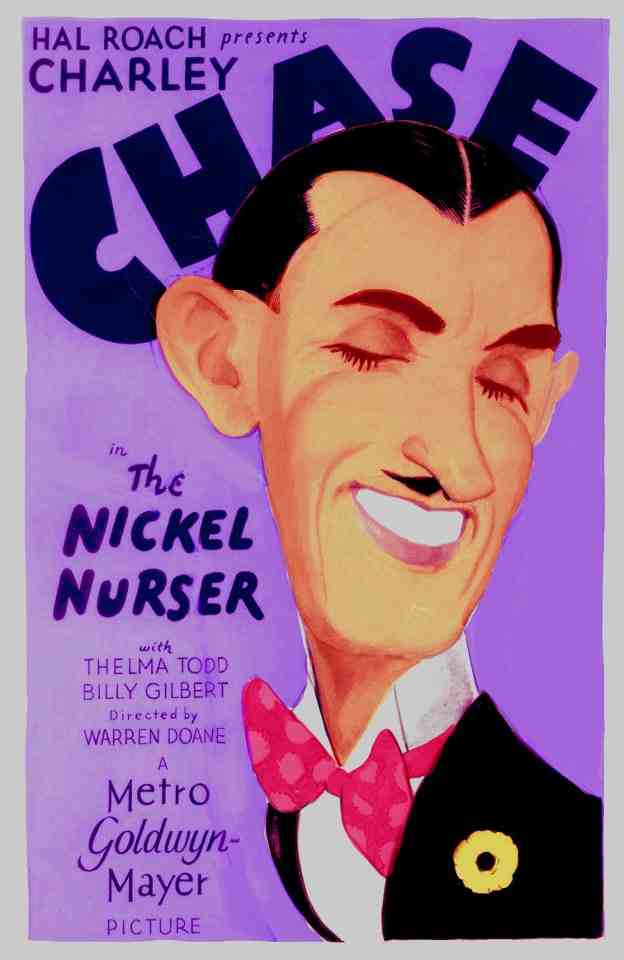
10. CHARLEY CHASE
I simply adore Charley Chase. Debonair, charming and a multi-talented gagman, director and story-constructionist, he had a knack for creating beautiful little farce comedies that escalate to heights of absurdity yet remain completely believable throughout. For example, ‘MIGHTY LIKE A MOOSE’, in which he and his wife have plastic surgery without telling each other, meet on the street, and then embark on an affair. It’s a totally ridiculous story, yet made believable and human by the warmth and skill of Chase and his team. Chase continued doing some great, charming work in the talkies, making short films at Hal Roach studios that need to be seen more widely.
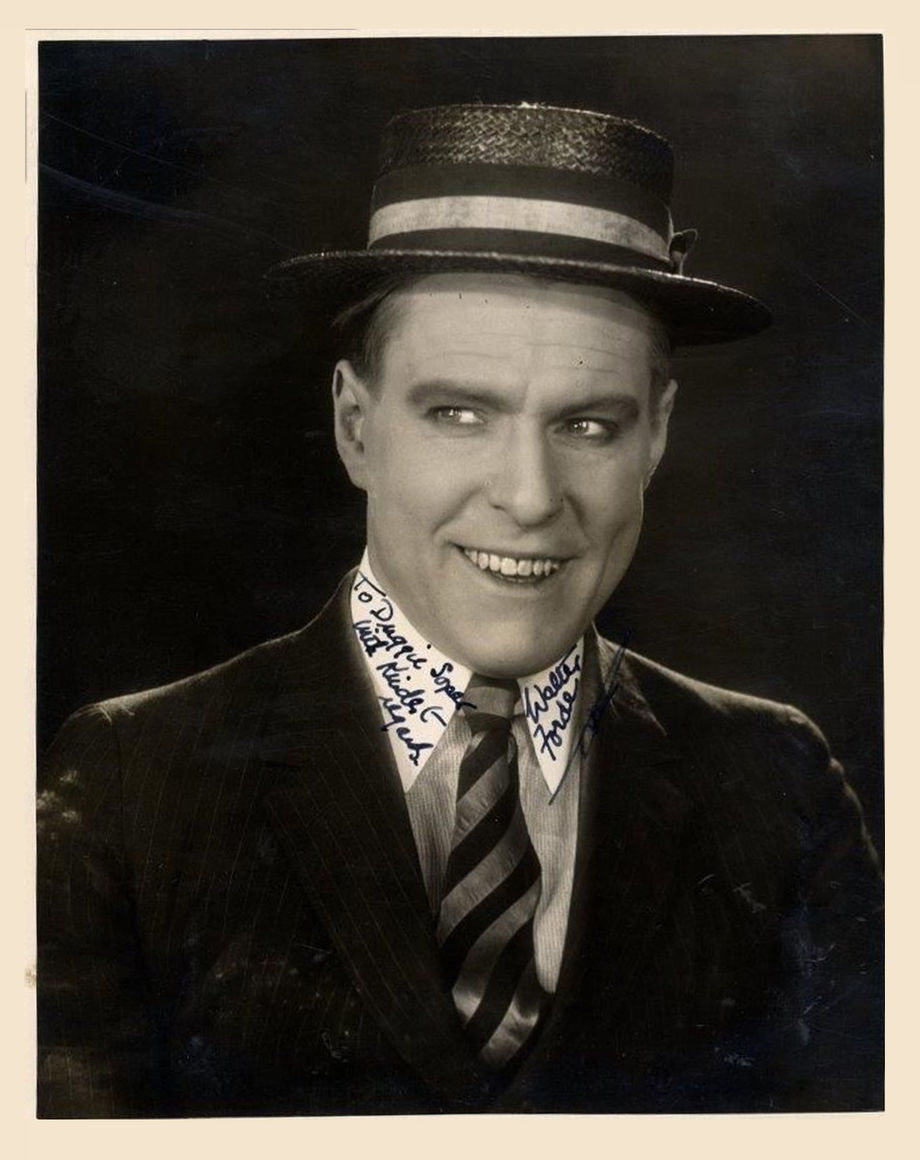
11. WALTER FORDE
Walter Forde was once billed as ‘Britain’s only comedian!”. That’s rather stretching it, but he was the only comedian making film comedy shorts and features in Britain for most of the silent era. Forde’s work in this area continues to be undervalued, but is slowly being re-evaluated. He played a likeable chap, “two parts Chaplin, three parts Harold Lloyd,” as one reviewer put it, and directed his films himself. A shy man, he gave up performing in 1930, and instead became a renowned director of both comedies and dramas.
12. WILL HAY
Taking Walter Forde’s place as premier comic of British films in the sound era was Will Hay. Hay’s music hall character was an incompetent ignorant schoolmaster who was barely a step ahead of his pupils. This enabled him to follow a rich line of comedy, transferable in films to any position of seedy authority: ship’s captain, shyster lawyer, policeman, or stationmaster in his all-time classic ‘OH, MR PORTER!’. Hay’s films are acknowledged as classics, but as a performer he needs some more love. he’s another superb reactionary comedian, a master of pauses, sniffs and shady glances to sell material that looks feeble on paper. He’s also one who stands up very well today, as British bureaucracy and incompetence hasn’t gone anywhere in the 65 years since his passing…
13 CLARK & McCULLOUGH
We close with a wonderfully vibrant act who flourished in sound comedies. Clark and McCullough were successful on Broadway before making a great little series of sound two-reel shorts for RKO in the early 1930s. They are often considered Marx Brothers rip-offs (partly due to Bobby Clark’s painted-on glasses), yet turned out a brand of humour uniquely their own, rich in movement, dialogue, pantomime and farce.
As I leave off here for now, I’m already thinking of the other comics I haven’t included here today… Raymond Griffith, Jack Hulbert, Stanley Lupino, Snub Pollard, Thelma Todd… Rest assured, they’ll all have their place here. I hope you’ll bookmark this site and keep dropping by from time to time to share these great performers with me. Next up, some highlights from ‘SILENT LAUGHTER SATURDAY’, featuring some of the names above.
So, hey there. A tip of the porkpie hat to you! Take off your tramp’s shoes, hang up your derby and pull up a chair. We’re going to have some laughs and share some memories.
This site is a new blog dedicated to the classic clowns of the golden era of laughter. For me, that era was from the 1910s through to the 1950s. Silent Comedy, sound shorts, music hall, radio… In the words of The Kinks, “God save Donald Duck, Vaudeville and Variety”.
You’ll find a selection of articles, rare photos and film clips from these great performers. As well as the classics -Chaplin, Keaton, Laurel and Hardy – I’m fascinated by the fringes of the industry. Neglected and forgotten performers, who brushed greatness but whose names have not endured. Many of these now seem dated; some of them do not transcend cultural barriers. Some were dubious in the first place! But, amongst them, were some perfect fools, magical acrobats, superb pantomimists, skilled filmmakers and witty wordsmiths who still can provide so much entertainment. Charley Chase, Lupino Lane, Lloyd Hamilton, Harry Langdon, Will Hay, George Formby, Mabel Normand, Dan Leno, Clark and McCullough, Alice Howell, Jack Hulbert, Roscoe Arbuckle, Anita Garvin, Charley Bowers, Jerry Drew, Max Linder, Poodles Hanneford, Walter Forde…. the list goes on.
There are plenty of silent film and comedy blogs out there, but I’d like to broaden the spectrum here. Vaudeville, Music Hall, Variety, Broadway and the film industries of many countries all interlocked to provide the greatest of comic tapestries. I plan to cover performers from all these arenas, and hopefully give some new insights on their talents and connections. At the same time, there will be room for the more famous performers, but with a special focus on their lesser known works; Buster Keaton in the talkie era, for instance.
I’ve actually been compiling articles of this nature for a while, published in other film fanzines, and especially through the thrice yearly e-zine MOVIE NIGHT, which I edit. More on that soon!
I’ll be uploading some articles soon, but if you’ve stumbled across here early, drop a line and let me know what you’d be interested in reading about!
God bless all clowns
Who star the world with laughter.
Who ring the rafters, with flying jest.
Who make the world spin merrily on its way,
And somehow add more beauty to each day.
God bless all clowns
So poor the world would be,
Lacking their piquant touch, hilarity.
The belly-laughs, the ringing lovely mirth,
That makes a friendly place of earth.
God bless all clowns
Give them a good long life.
Make bright their way, a race apart.
We love them most who turn their secret pain,
Into a dazzling jest to lift the heart.
God bless all clowns.









 The Lost Laugh