Hotter Than Hot! Harry Langdon at Hal Roach DVD reviewed.

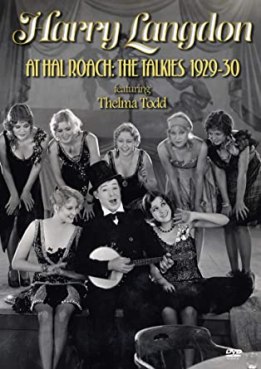
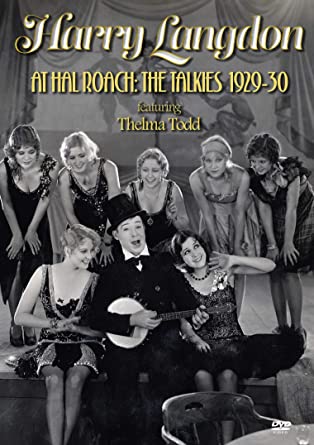
langdon dvdIt came! After weeks of waiting for Trans-Atlantic deliveries to return to normality, yesterday HARRY LANGDON AT HAL ROACH: THE TALKIES 1929-30 finally dropped into my mailbox.

A DVD release of these much maligned, obscure little films is a wonderful thing indeed. These shorts have had a decidedly mixed reputation, but were well received at the time and deserve a fresh viewing.

Even in his best work, Harry Langdon always arouses quite visceral reactions, and these films are maybe the most contentious of his entire career. Partly this is because they were hugely obscure for a long time, and partly because when they were written about it, it was often by someone who didn’t enjoy them (most notably by Leonard Maltin in THE GREAT MOVIE SHORTS) . Well, recent showings of some of the films on TCM have enabled people to at last judge for themselves. Now, they’re out in the real world again on this wonderful DVD from The Sprocket Vault, which collects all eight of the shorts, including the incredibly rare HOTTER THAN HOT and SKY BOY.

The shorts brought Langdon to the Hal Roach studios for the first time. His career in features had crashed, coinciding with the arrival of sound. Harry’s return to the short comedy was celebrated as a comeback, and though I have some favourites among his features, I do feel that this was the idiom that suited him best. Langdon’s comedy was all about creating his own little world, and in twenty minutes the real world doesn’t need to impinge on his fantasies too much.

Langdon fully capitalises on that here. His childlike ‘little elf’ character always tended toward the surreal (in one of his silent films he has a bearded woman as his leading lady!). These shorts continued that trend, with the new era of sound seeming to encourage him to be more experimental. Harry always babbled away in his silent films – now you can hear him as well as see him! Much has been made of his use of his voice, and it did take him a little while to get it right, but I think his voice actually suits his character really well. It’s not all talk, anyway. In the best of these films, there are terrific pantomime routines and some, like THE BIG KICK are practically silent comedies. There are some wonderful sight gags and images in these shorts that, if they weren’t quite so bizarre, might be considered iconic: Harry sat with his fingers in his ears and a firecracker fizzing away in his mouth, for instance, or in a cartoonish boxing match, his gloves floating around on the end of long poles coming out of his jumper!

It doesn’t always work, and the early sound technology does create some pacing problems, but there’s a lot to enjoy here. While films like SKIRT SHY and THE HEAD GUY are a little unsure of themselves, there is some vintage Harry on show, with THE BIG KICK and THE SHRIMP near-classics.

If you’re on the fence about Langdon (or his sound work), give this set a go; I think you’ll be pleasantly surprised. There are some terrific moments, and you also get to enjoy some choice moments of Hal Roach players like Thelma Todd, Edgar Kennedy and Max Davidson into the bargain.

Of course, if you’re already a Langdon fan, then buying this set is a no-brainer. For one thing, this is your first chance to see HOTTER THAN HOT & SKY BOY in 90 years!
slapstick_langdon_121940754443248496479.jpg

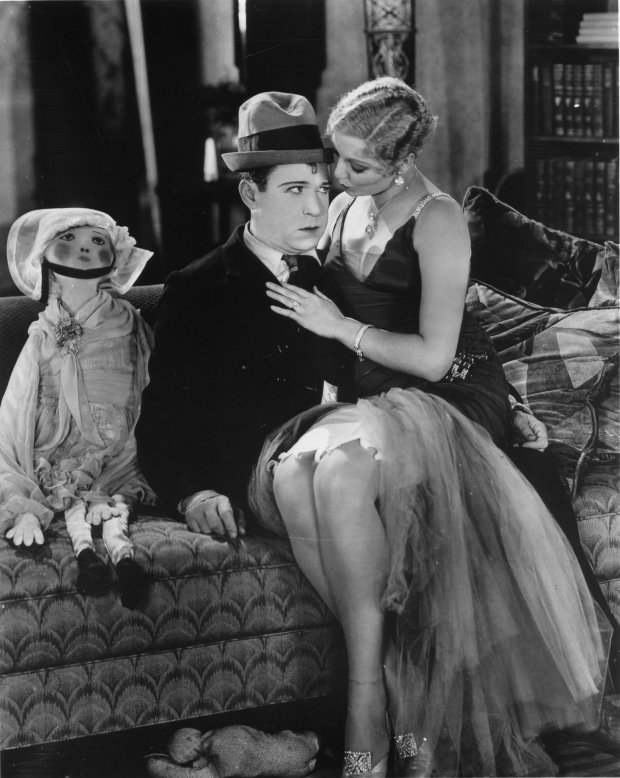
These two films, contrasting tales of fire and ice, are among the most offbeat of all Langdon’s work (against some stiff competition!). HOTTER THAN HOT might just be one of my new favourite Langdon shorts. Harry plays a pyromaniac of all things, who is chasing a fire engine when Edgar Kennedy bribes him to take a ‘Dear John’ letter to Thelma Todd’s apartment. There are some lovely sight gags in this one, including Harry trying to cross a slippery floor, his attempts to retrieve a key that an unconscious Thelma has hidden in her dress, and his manipulation of a doll so that it seems to have Thelma’s legs. The film was based on Langdon’s own vaudeville skit THE MESSENGER, so he was intimately familiar with the material and pulls it off wonderfully.

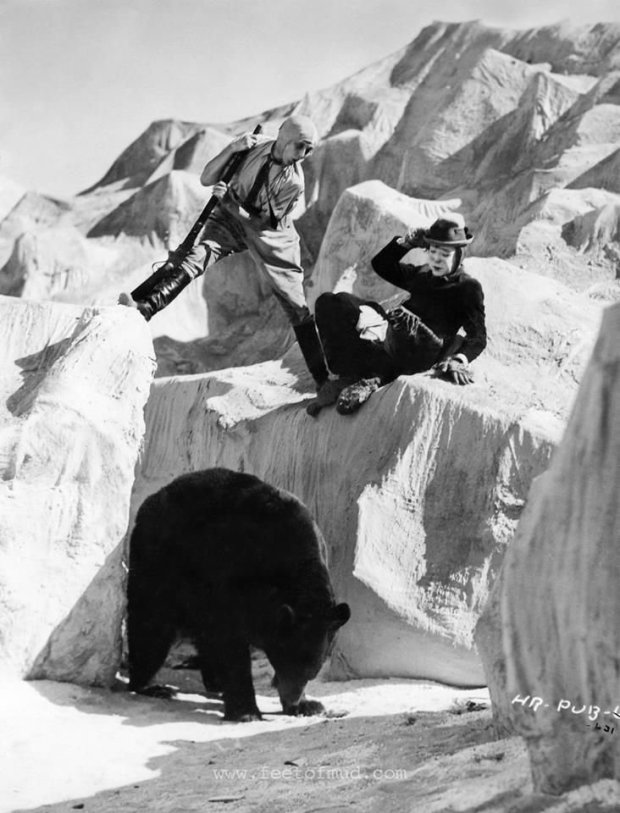
SKY BOY has him marooned on an iceberg with Thelma, Eddie Dunn and a bear! The striking iceberg setting is an unusual but fitting backdrop for Langdon’s minimalism, and the centrepiece of the film is a long routine of Harry trying to shave the bullying Eddie Dunn. The angelic Langdon character often had darkness lurking not far away, and there’s a wonderful example here, as Thelma tries to persuade him to cut Eddie’s throat; add to this a fishing line attached to Harry’s wrist that causes his hand to jerk dangerously all over the place and you have a great little routine that’s suspenseful as well as funny.
301f6e713c16b0c8e4898361c83166942868322707058232890.jpg

Both these films are missing their original soundtracks, but subtitles and music from Andrew Earle Simpson carry them along nicely. After all, the visual is the essence of Langdon’s beautiful pantomime performances. Even if he never made me laugh, I could happily sit and watch him act for hours. Do you know what, though? He made me laugh a lot in these shorts. I laughed out loud, in fact.

Leonard Maltin got it so wrong when he called these shorts “horrible”. That’s like criticising Picasso for getting his faces all mixed up. Sure, they’re quirky, sometimes surreal and abstract, but that was Langdon’s vision. What you have here is a master comedian still pushing the envelope and creating something that no other comedian could have. Often, he manages to be very funny in the process. Maltin said that the “blame” for the films “surely lies with Langdon himself”. Change “blame” to “credit”, and now you’re talking!

As far as the DVD goes, the presentation of these films is exemplary. I once owned a print of LONG PANTS that was so bleached out that you could barely see Harry’s facial expressions. Without this ability, it became virtually unwatchable. You need to see every nuance of Langdon’s being, and the terrific digital restorations here make that possible. The films benefit hugely from this.

Like the previous Charley Chase and Thelma Todd DVD sets, all the shorts come with tremendously detailed commentaries from Richard Roberts. So, even if the films aren’t your cup of tea, you can still listen and learn a great deal not just about Langdon and these films, but about the Hal Roach studios in general.

Bravo to Richard Roberts and Kit Parker for making this, the most improbable of all DVDs, available for us to enjoy. The Sprocket Vault continue to give us chance to appreciate films that no-one else would even consider releasing, with the best possible presentation. If you’re still not convinced to buy, just remember that incredibly niche projects like this can only continue if we support them. Here’s the Amazon link… https://www.amazon.com/Harry-Langdon-Roach-Talkies-1929-1930/dp/B07ZW9Y36M
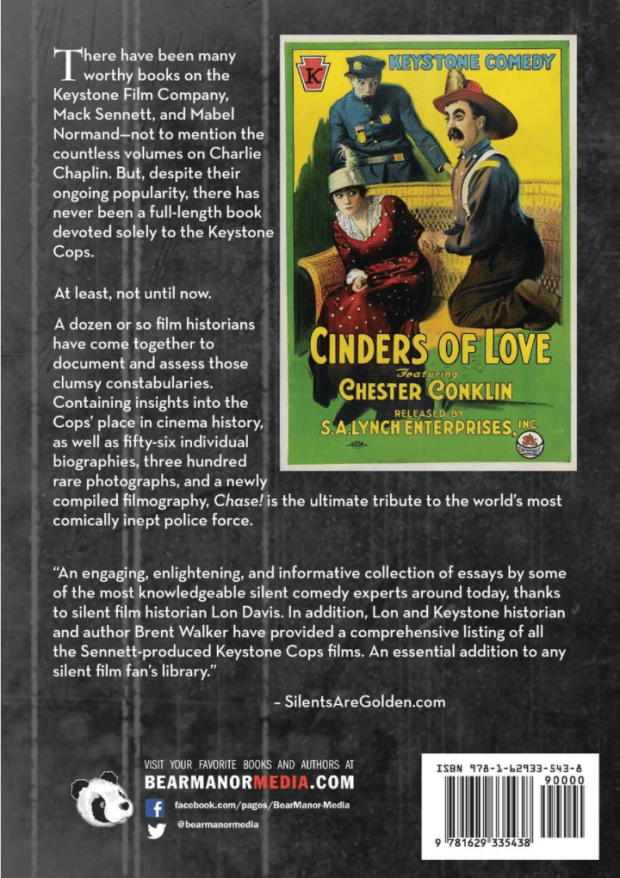


Chase! New Keystone Cops book from Bear Manor Media


chase

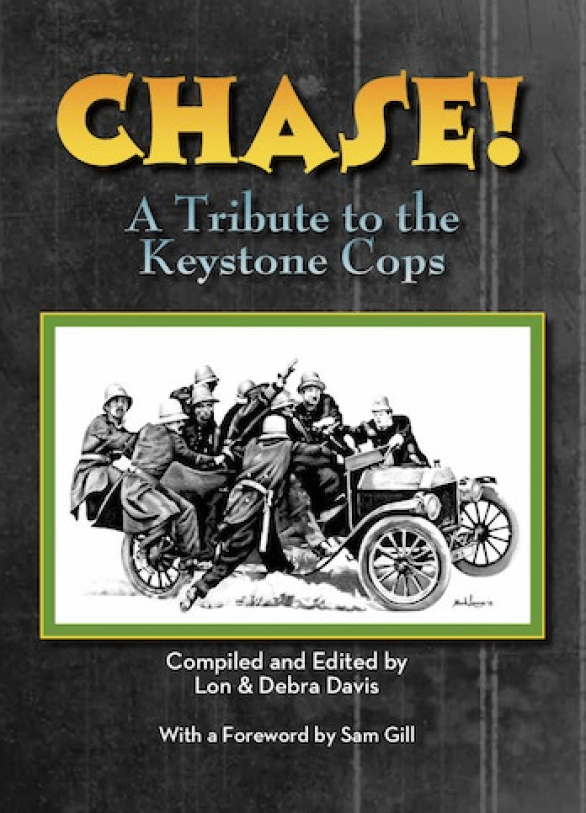
Here’s a new book that looks fascinating. CHASE! A Tribute to the Keystone Cops is a compendium of writing about the Keystone Cops by a collection of great silent comedy writers, edited by Lon & Debra Davis.

Though the humour of the Keystone films may seem primitive today, the impact and influence of the Cops was enormous. Authority had never been shown to be so incompetent as a subject of comedy before this, in the stuffy Edwardian era of polite manners. Early film comedy was as rebellious, in its way, as rock and roll later was, and the Cops were at the forefront of comic anarchy.  They represent the alternative comedy movement of their day!

Even those who know little about silent comedy probably have some vague notion of the Keystone cops. Yet, despite the fact that they are such icons, this is surprisingly the first book devoted solely to them. Over the years, false rumours have become taken as fact, misinformation has been perpetrated and films have been mislabelled. Who were the cops? How did they originate? What films did they appear in?

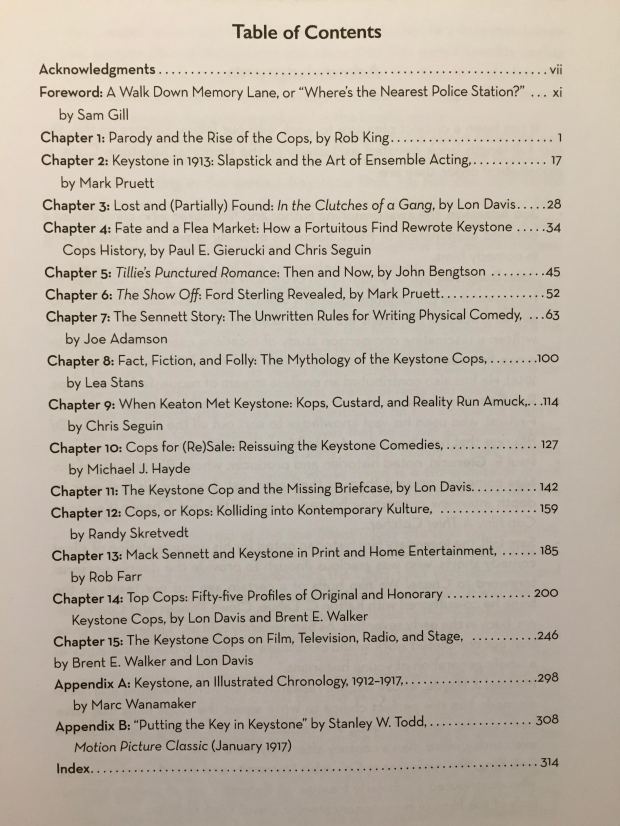
CHASE! answers these questions and many more. The book’s contributors include silent-era historians of the first rank, including Joe Adamson, John Bengtson, Lon Davis, Rob Farr, Paul E. Gierucki, Sam Gill, Michael J. Hayde, Rob King, Chris Seguin, Randy Skretvedt, Lea Stans, Brent E. Walker, Marc Wanamaker, and Mark Pruett (see the image of the contents page below for details of the contents). The book promises over 300 seldom-seen photos, press book illustrations, lobby cards, and trade ads and bios of 56 performers who appeared as cops over the years.

The book is available from Bear Manor Media, and also through Amazon and other online retailers.  All the proceeds are being donated to film preservation, so there’s no excuse not to! I’m looking forward to getting my teeth into this one. Here’s the link, and the back cover and contents pages are below.

http://www.bearmanormedia.com/chase-tribute-keystone-cops-hardcover-edition-by-lon-and-debra-davis 


chase 2chase 3

Download the new issue of The Lost Laugh magazine now!

front cover

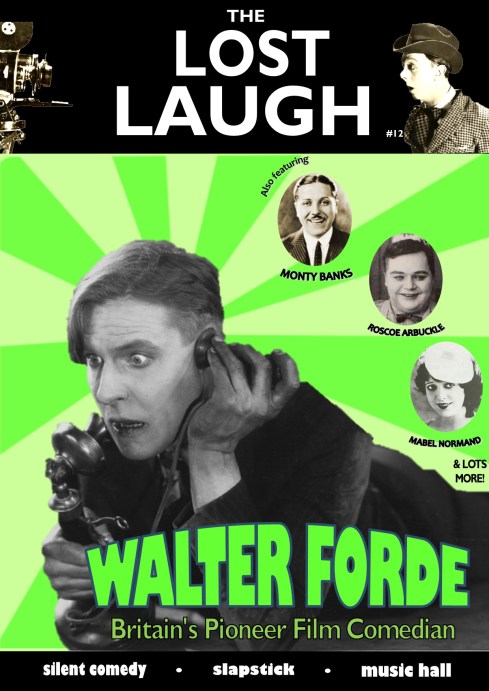
The new issue of The Lost Laugh Magazine is now available! There are exclusive articles, rare photos, reproduced articles from trade magazines and news and reviews.

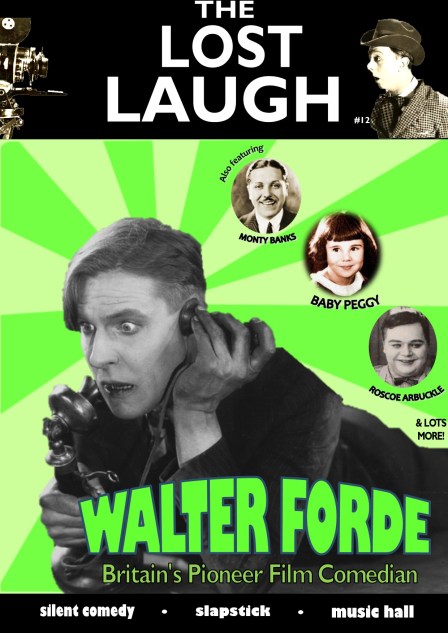
Our cover star this time is British silent comedian Walter Forde; in this issue we focus on his early career and short films (including a complete filmography) , with his feature films to follow in the next issue.

Last time we looked at Monty Banks’ starring comedies. Issue 12 continues his story into the sound era, examining his handful of starring films, and his work as a director.

Other articles include:

*some of Roscoe Arbuckle’s most obscure films

*A Q & A with Ben Model, all about The Silent Comedy Watch Party

*Mabel Normand’s missing film ONE HOUR MARRIED.

*New DVDs featuring Lupino Lane, Laurel & Hardy, Charley Chase and Harry Langdon

*Screening notes on some rare films from Hal Roach and Mack Sennett studios.

Click on the link below to open the pdf of the magazine, or right click and ‘save target as’ to download the file:

THE LOST LAUGH #12

Finally, don’t forget that you can download all previous issues for free from the magazine page.

Lockdown Laughter: a Q & A with The Silent Comedy Watch Party’s Ben Model

silent_comedy_watch_party-revise2-web

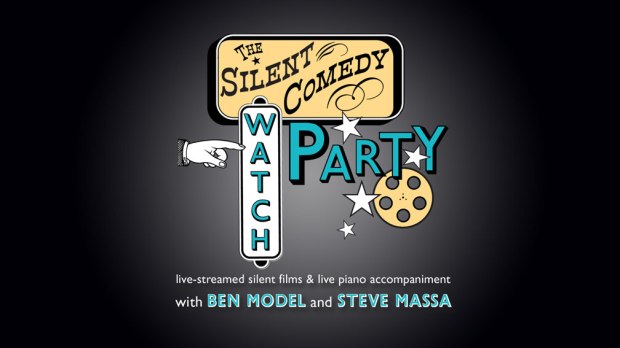
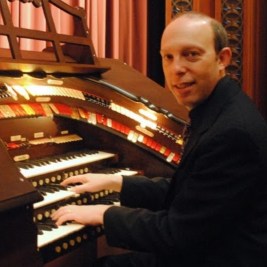
For classic comedy fans in lockdown, The Silent Comedy Watch Party provides a weekly ray of sunshine. This wonderful weekly live streaming event takes place every Sunday on YouTube and is the brain child of Silent film accompanist and historian Ben Model and author/historian Steve Massa.

Presenting three comedy shorts with Ben’s terrific piano accompaniment and Steve’s insightful intros (streamed in via FaceTime), the watch parties make for wonderful viewing and are preserving the essence of live silent cinema in the most difficult circumstances. They are especially a joy for those outside of the US, who wouldn’t normally get to see the shows put on by Ben & Steve!

Ben very kindly took the time to give some insight into the shows for us:

ben modelThe Lost Laugh: Hi, Ben! Thanks so much for taking the time to answer these questions. Can you tell us a little about the silent comedy watch party and how the idea for the shows came about?
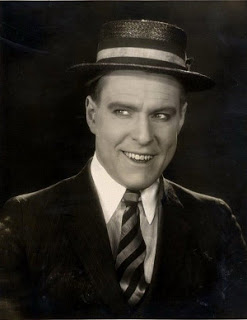
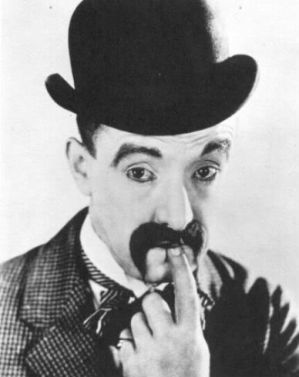
Ben: I’ve had the idea to do a live-streamed silent film show for a few years, actually. I was always reticent to take the plunge and give it a shot because my main interest is in promoting attendance at shows. I didn’t want to do something that would make staying home from an art house or museum or whatever palatable. Then the week of March 8th I watch all my gigs topple like dominoes, gradually over the course of a week. One thing that occurred to me was that a cancelled show meant two things: that I wasn’t going to do a show and, maybe more importantly, that each of those shows meant 50 or 100 or 400 people weren’t going to get to see that silent film they were looking forward to.

I already had all the bits of equipment I needed, tech-wise. Some I had picked up in my recent years’ interest in iPhone filmmaking, and some I’d had for a while. And I had this light-bulb moment where all the puzzle pieces came together in my head — including the fact that my YouTube account was approved for live-streaming — and I decided to give it a shot. The response has been, frankly, moving. Even from the first test pilot show we did on March 15. Folks had been in their homes a week already and were looking at movie theaters and more shutting down, knowing they wouldn’t be going out for movies for a while.

This became more than a replacement for a live show for people, almost immediately. It meant so much more to people who were watching, to be able to go into that crazy universe of silent film comedy to laugh and get relief from what everyone is going through.

Have there been any challenges in setting up and performing these live streaming events?

Most of it came together for the first show, and we’ve just gotten used to the routine of it. My wife and I practically have to have a sign-up sheet to figure out what function our living room will be at any given moment, since we’re both teaching our university courses, and having Zoom meetings and coffee klatsches and phone calls. My wife’s a musical theater educator and performer, and hasn’t done camera work like this before, but she’s gotten the hang of it pretty well.

I’m looking at a few different softwares that allow you to bring in a second performer or guest in a split screen, and to feed the video signal directly into the streamed feed. We want to keep the informal and home-made feel, of course, but if there’s an opportunity to tidy up some of the presentation so parts of it look and sound better, I’d like to head in that direction. I’m getting close, testing out one particular program, and we’ll see if I can get it to do what I want.

It’s also given me an opportunity to try and keep the piano in some semblance of being in tune, and I tidy it up every week or two.

Programming the shows hasn’t been too difficult. Steve Massa and I have programmed lots of comedy shorts shows over the years at MoMA.  We’ve been very fortunate in the cooperation we’ve gotten from the people who’ve released these films on DVD or online as far as permissions, like Kino Lorber, Milestone Films, the EYE Filmmuseum, and Lobster Films and the Blackhawk Collection. Between that and the great responses we’ve had to films with really obscure comedians from my Undercrank Prods releases, we’re like kids in a candy store.

How do you go about creating the music for the films you accompany?

Most of it’s improvised, like it is at a regular show. What’s different for me, and it took me about 2 or 3 shows to realize this, that I’m playing for someone who’s six feet away. I’d initially been playing like I was at a theater, and I had to remind myself to dial it back. I was already doing this in my intros, trying to talk like the person watching was in the room with me. It’s like doing radio, where you are performing for an audience of 1. It’s what Ernie Kovacs referred to as “an intimate vacuum”, where it’s just you and the person at home, and you don’t have to project or have a bigger energy.

Can you remember your first encounter with silent film? What was it that hooked you in?

I can’t remember it — my parents tell me I discovered Charlie Chaplin on TV when I was a toddler. Back in the 1960s the Chaplin comedies were on TV in the daytime, and that’s what got me hooked. For some kids it’s trains or construction equipment or zoo animals; for me it was silent comedies.

Looking ahead to the world beyond lockdown… Have you thought about continuing with some live streaming events once we’re on the other side?

You know, I’ve gotten emails and social media comments from people all over the world about the show, people for whom there wasn’t a place for them to go see silent film with live music before March 8th. Initially I’d figured I’d stop once the cinemas opened up again and public gatherings resumed. But I’ve realized, from connecting with so many people who are watching every week, that this is the show with live music they can attend. I don’t know that I’ll be able to continue on a weekly basis — ordinarily, I have shows a two or three times a month on Sunday afternoons — but I think I’d consider continuing the live-streamed shows in some way.

You’ve also produced some fantastic DVDs through your label Undercrank Productions, including the ACCIDENTALLY PRESERVED series, and recent volumes of Alice Howell & Douglas MacLean films. Do you have any plans for future DVDs that you can share?

I had about a half dozen projects percolating when everything shut down in March. Until everyone can go back to work and films can get pulled, inspected and scanned, there’s no sense in talking about anything. At the moment, the companies that do DVD duplication are still duplicating, and the MOD company I work with is still MOD-ing for orders that come in on Amazon, TCM Shop, DeepDiscount et al.  I do have one project that could actually move ahead, but I need to wait at least a month before I can consider launching a Kickstarter for it, and it’s another bunch of silent comedy shorts that haven’t been available to the public since they were in release in the 1920s. (It’s not Hank Mann, though.)

You can find out more about the shows, and the link to the latest episode  (8pm CDT, 3pm GMT) here:

http://silentcomedywatchparty.com 

Why not support the shows by becoming a patron on Patreon?

Or you could buy one of the many great DVDs from Ben’s label Undercrank Productions! I especially recommend the Marcel Perez and Alice Howell collections! Real gifts to fans of obscure silent comedy.

Steve Massa has also produced several wonderful books. No self-respecting silent comedy shelf should be without LAME BRAINS AND LUNATICS, SILENT COMEDY DIVAS, or his newest opus, REDISCOVERING ROSCOE: THE FILMS OF FATTY ARBUCKLE  (These also come in extremely reasonably priced kindle editions if postage is a problem for you at the moment).

Huge thanks again to Ben for answering this Q & A -and of course for putting on the shows and helping to spread the laughter in these trying times! It really is a wonderful idea.

Finally, here’s last week’s show for you to view, while you wait for Sunday to roll around!

Keep Smiling!


Walter’s Winning Ways

Walter Forde 2

In the U.K. in the 1920s, Walter Forde was virtually alone in dedicating himself to comedy film-making in the manner of Chaplin, Keaton and Lloyd, et al. Today he is forgotten by all but handful of film buffs, and even then is usually better remembered for his work directing sound-era comedy thrillers such as ‘THE GHOST TRAIN’ or ‘THE GAUNT STRANGER’.

However, he did some fine work in his two series of comedy shorts and four features in the silent era, and these are more than worth reviving. In recent years his features – ‘WAIT AND SEE’, ‘WOULD YOU BELIEVE IT?’, the recently discovered ‘WHAT NEXT?’ and part-talkie YOU’D BE SURPRISED have begun to be shown, but his short comedies still remain quite obscure. Many exist courtesy of cut-down editions on the obsolete 9.5mm gauge, and 16mm prints also circulate; the BFI holds most of the efforts complete. You can even see a few of the shorts (or parts of them) on YouTube.

Walter made two series of films (1921-22 and 1926-27), punctuated by a short, unsuccessful stay in Hollywood. The first group were made for ‘Zodiac Films’, and the latter ‘British Super Comedies’.
Here’s the first of his Zodiac two-reelers, WALTER FINDS A FATHER in a nice print, courtesy of Ben Model’s YouTube channel. Not startlingly original, but a lot of fun, especially the second reel.

As you can see, Forde’s early style is pretty Chaplinesque (he had originally been a Chaplin impersonator on stage). In ‘WALTER MAKES A MOVIE’, he plays a particularly Chaplinesque bum and petty thief who steals an actress’s purse and then winds up playing the villain in the movie she’s starring in. This shows a clear parallel to Charlie’s early tramp (“He was a bum with a bum’s philosophy – he would steal if he got the chance” – Buster Keaton’s description), and Walter’s body language, funny walk and all, is certainly reminiscent of Charlie. There’s also this restaurant scene that harks back to Charlie’s food filching in ‘A DOG’S LIFE’ and to the restaurant scenes in THE IMMIGRANT).

WALTER’S TRYING FROLIC (snappy titles weren’t Walter’s thing!) has him in a double role as Lord Montmorency Gadabout and his usual character. Beginning with his attempts to sell his dilapidated old car, it develops into Forde’s version of Chaplin’s ‘THE IDLE CLASS’ as he attends a costume party. Sorry about the watermark on this one, it’s the only copy I can find online.

To his credit, Forde played down the Chaplin influence as his career went on, and accordingly the films got better. They were well received in Britain, and in 1923, he was invited to made a couple of films in Hollywood. Quickly he realised that he was a small fish in a big pond and soon returned home. Things weren’t much better back in Britain; with no film offers forthcoming he spent two years playing piano in cinemas before getting a second chance to make a two-reel series.
The second batch of films are smoother and more sophisticated, with less frenetic slapstick and more space given to developed gag routines. Walter’s character is a little more sophisticated, too; it’s immediately apparent that he has shifted from Chaplin as his main influence to the lighter, “boy-next-door” style of Harold Lloyd. To this end, his costume is smartened up with shiny-buttoned blazer and ‘Oxford bag’ trousers, then in vogue. Instead of a bum or petty thief, he is now a smart young man struggling to get by in the modern world. Gone are the building sites and farmyards of the earlier films, replaced with white collar jobs in offices, insurance and tailor’s shops. The gag sequences are more carefully built.

Here’s a brief 9.5mm snippet from WALTER’S WORRIES, featuring some fun tailor shop gags.

And lastly, WALTER’S DAY OUT, my favourite of his short films, shot in the seaside town of Margate in September 1925.


In 1927, Forde was given the chance to star in feature films, and turned out four efforts that are most enjoyable, and worthy of a DVD release (come on, BFI!). In the wake of his future successes, his two reelers were largely forgotten. Viewed today, they seem undeniably crude compared to the contemporary efforts of the best Hollywood comedians, but on their own terms are an enjoyable novelty, not to mention an incredibly valuable training ground for his talent. It’s not quite fair to judge them by the same standards as the Hollywood comedians; the British film industry was simply not geared to producing quality comedy films at speed, and so the opportunity to learn ‘on the job’ was never as available. The slow advances of his career in films meant that he was never going to improve as quickly as Harold Lloyd, for instance, who took dozens of films to reach a mature version of his ‘glasses’ character. Forde made only about 15 silent shorts in twice the time, but nevertheless you can see an outline of a character coming into focus, comic technique developing. One has to admire Forde’s efforts at forging a film career, trying to develop a unique style. The films, while not comedy classics, are entertaining and fascinating for the glimpses they offer of a vanished Britain.

I’ve done quite a bit of research on Forde lately; you can read the full story of Forde’s early career and his short films in the upcoming issue ofTHE LOST LAUGH MAGAZINE, which will be free to download soon. Stay tuned!

LOST LAUGH #12 COVER v2

Our Gang on tour

SEEING THE WORLD is a curio in the OUR GANG series. Purporting to show a school trip around Europe led by their teacher (Mr “D’oh” himself, Jimmy Finlayson), it is a comic travelogue with scenes shot on location in London, Paris, Rome and more.

Look a little closer and you’ll spot that actually it’s a cunning mixture of location footage and bits shot on the Roach backlot, and with back projection.  Finlayson and Gang director Robert MacGowan shot footage on a holiday around Europe, but the kids never went along.  In Leonard Maltin & Richard W Bann’s book THE LITTLE RASCALS, Joe Cobb recalled “They took our clothes and got these other kids to wear them, and then they photographed those kids together in all the long, long shots you see, so you can’t tell it isn’t really us. And then we made the rest back in the studio. A lot of people say “Oh, you went to Europe, I saw that picture and you were there. No, well, I wasn’t!”

Back at the studio, a few other Roach regulars were roped in, too. Charlie Hall plays the chauffeur, and two other Englishman appear in a small cameo: Frank Butler and… Stan Laurel!

A fun little curio. Enjoy!

Gifts from Snub

dumbbell-SnubPollardWith his upside-down Kaiser Wilhelm ‘tache and permanently startled expression, Snub Pollard is another one of those moustachioed icons on the silent comedy Totem pole. Like Billy Bevan and Ben Turpin, he was a gift to caricaturists, a flesh cartoon. Realism was never the idiom of these comics; instead, they traded in fast-paced sight gags. They might not have had deeply developed characterisations, but what gags they had!

There’s sometimes a snobbery towards the one-and-two reelers full of slapstick and sight gags, which is totally unmerited. Yes, there was a lot of filler turned out by the industry, but many of these comedies have wonderfully inventive gags and routines, and amazing stunts.  Pollard’s films are some of the best examples of these.

Snub was an Australian, real name Harry Fraser, who adopted his stage name after working as part of the ‘Pollards Liliputians’ juvenile theatrical troupe. He made early films at Essanay in the teens, appearing opposite Chaplin and Ben Turpin. It was also at Essanay that he met Hal Roach.

When Roach set up in independent production, he hired Pollard to be second comic and villain to Harold Lloyd, before promoting him to his own series in 1919. The Kaiser moustache was a remnant of his more villainous roles, but came to suit his starring character well. As he came to play roles of the little man, always being trodden on, the ‘tache became a perfect match for his drooping, put-upon countenance.

Snub starred in films for Roach until 1924 (though a couple were held back and released into 1926), and is best remembered today for this wonderful little short. IT’S A GIFT is a beautifully zany little two reeler featuring his many Rube Goldberg-esque inventions. Wallace and Gromit, eat your heart out!

Thanks to being featured in Robert Youngson’s WHEN COMEDY WAS KING, IT’S A GIFT has long been hailed as one of the classic silent shorts. However, the side effect is that it’s often the only Pollard film ever mentioned. It’s the easy (read: lazy) Silent Comedy 101 option to write that IT’S A GIFT is Pollard’s  magnum opus, but there are many other great ones out there! While you wouldn’t rank Pollard with comic auteurs like Keaton or Laurel, he was surrounded by  hordes of brilliant gagmen and directors at the Hal Roach studios who kept cranking out wonderfully funny gags and situations for him.  One of these was Charles Parrott/Charley Chase, who helmed many of the best Pollard films.

Here are two examples, the terrific FIFTEEN MINUTES (recently pieced together by David Glass) and WHAT A WHOPPER. Both feature a classic Chase premise of a mundane beginning that swiftly escalates to become absurd, yet somehow believable.

Another of my favourite Chase-Pollard collaborations is SOLD AT AUCTION. Again, it starts simply: Pollard is an auctioneer, and does a house clearance. Trouble is, he’s gone to the wrong house! Cop James Finlayson is none-too-pleased to find his house empty and demands that Snub recovers every single item, including a runaway grand piano and a pair of false teeth being worn by an airplane pilot! Like the best of Snub’s films, it’s wonderfully absurd, but remains human. The whole film is on YouTube, but only in awful, retina-detaching quality; here’s a much better looking excerpt, courtesy of Ben Model:

Many of the Pollards only exist thanks to home movie excerpts, especially 9.5mm Pathex cutdowns. Here’s one such example. ‘CALIFORNIA OR BUST’ is a tale of Snub and his wife (regular leading lady, the charming Marie Mosquini) driving west with a wagonful of all their possessions. You can guess that they don’t make it, but the inevitable destruction of their belongings takes place in some wonderfully original ways. A favourite grace note is Snub struggling to play a game of Pool in the back of the wagon; only when it has been smashed to smithereens is he able to steady the balls to pot them! There’s only about half the original film here, but the essence is preserved nicely.

Snub Pollard’s films are full of ingenious gags, snappily performed, and deserve a wider audience. Kickstarter, anyone…?

A Big Kick: Harry Langdon talkies on DVD


langdon dvd

The Sprocket Vault continue their terrific mission to release rarely seen classics from the Hal Roach archives. The latest volume, out next week, covers the series of sound shorts made by the great Harry Langdon.

These are an offbeat and sometimes bizarre group of films, but I find them absolutely fascinating and often quite wonderful. Click here to read a detailed piece I wrote about them a few years ago, and below is my favourite of the shorts, THE BIG KICK. It’s an almost silent short with some wonderful bits of pantomime from Harry, and some truly strange gag ideas!

As usual, the disc is packed with real treats. For Langdon’s devotees, the real holy grail is the inclusion of his first two talkies, HOTTER THAN HOT and SKY BOY. These now only exist in silent versions without their soundtracks, and haven’t  been seen in many, many years. There’s also a Spanish phonetic version of THE BIG KICK! Many find Langdon’s speaking voice strange in English.. imagine what it must be like in Spanish. There are also commentaries on the films by Richard Roberts. All in all, a wonderful gift for these troubled times.

Here’s the link to buy on Amazon, and the burb follows below:

After falling from Hollywood stardom at the end of the Silent Era, quirky silent film comedian Harry Langdon made not only his first talking films, but also his first screen comeback with a series of eight two-reelers for comedy producer Hal Roach. This pre-code series offers an interesting and entertaining look at what critic James Agee referred to as Langdon’s ”baby dope fiend” characterization, presented for the only time in sound as the undiluted comic creation he made famous in silent films. Langdon had developed a strange, stream-of-consciousness vocal patter in vaudeville, as showcased here. With another fifteen years to go in talkies after he made these shorts, Harry Langdon would never again deliver to films full-force his truly bizarre humor. Along for the ride is the beautiful comedienne Thelma Todd in some of her earliest film appearances at the Lot of Fun, as well as others from the Hal Roach Stock Company like Edgar Kennedy and Max Davidson.

This is Harry Langdon at his most surreal:

  • 1929: Hotter Than Hot
  • 1929: Sky Boy
  • 1929: Skirt Shy
  • 1930: The Head Guy
  • 1930: The Fighting Parson
  • 1930: The Big Kick
  • 1930: The Shrimp
  • 1930: The King

Bonus Material:

  • ”La estación de gasolina” (Spanish language version of ”The Big Kick”)
  • ”Hal Roach Presents Harry Langdon” (1929)
  • ”Hal Roach Studio Auction”(1963)
  • Commentary by Richard M. Roberts
  • Photo Gallery
  • Supplemental music composed and performed by Andrew Earle Simpson


Never work with Children & Animals…

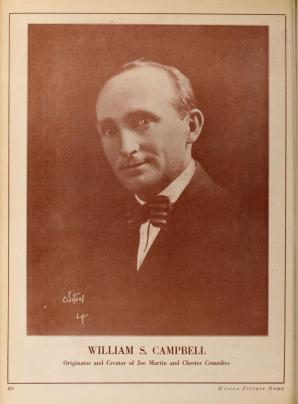
“Never work with children and animals” was a message that never seemed to reach director William S Campbell. Campbell specialised in films combining both, including this rarity from the EYE film institute, SCHOOLDAY LOVE (1922). Bears, monkeys, dogs and donkeys abound; among the children are Doreen Turner, Coy Watson, Jr and Laurence Licalvai.

william s campbellCampbell had previously worked on a series of films starring ‘Joe Martin’, an orang-utang (“the world’s only monkey comedian!”) in the late teens, then moved on to Chester Comedies starring ‘SNOOKY THE HUMANZEE’.
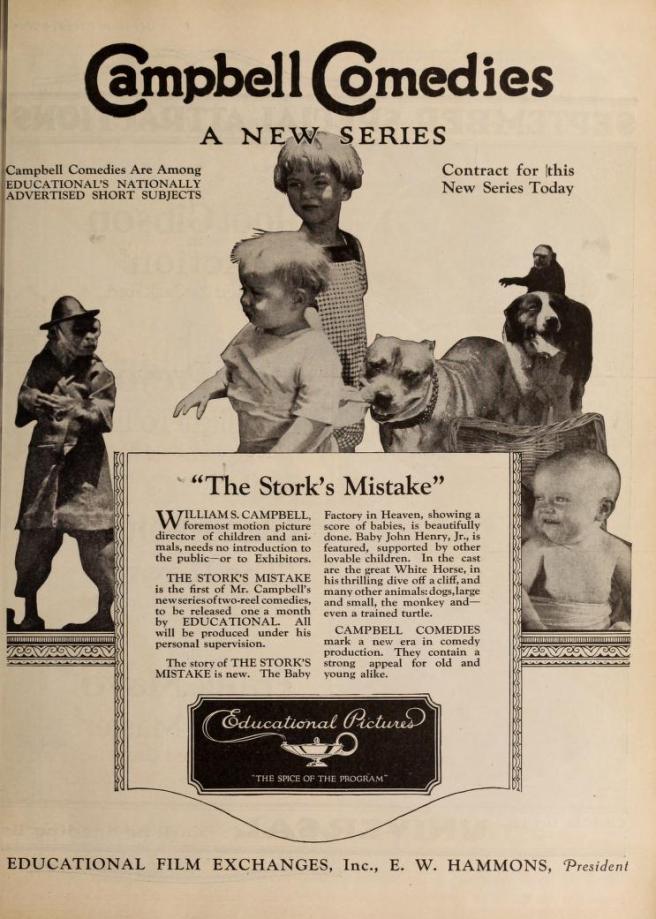
His work was well-regarded enough in the industry for his name to brand a series of ‘Campbell Comedies’, distributed through Educational Pictures. These began with ‘THE STORK’S MISTAKE’, which was a big success. ‘SCHOOL DAY LOVE’ was the follow-up, and while reviews were positive, it was noted that it wasn’t quite as good as the initial entry. Indeed, the novelty soon wore off the Campbell comedies, and series didn’t continue as one of Educational’s mainstays.

campbell comedies

These days, old films manipulating animals seem cruel and unnecessary, but we can’t deny that they were popular at the time, and formed an unusual sideshow to the comedy film industry. As such, they do have a historical interest.

As for Campbell, maybe he disproves the old saying, as he outlived most of his contemporaries who worked with humans! He lived on to the age of 87, passing away in 1972.

Join the Silent Comedy Watch Party!

Thanks to COVID-19, upcoming silent film screenings and film festivals have been decimated. But, necessity is the mother of invention, and now you can join a live streaming silent comedy watch party every Sunday!

This terrific idea comes courtesy of historian and silent film accompanist Ben Model and author/historian Steve Massa. After already giving us a string of crowdfunded DVDs and magnificent books between them, the pair have once again proved to be heroes of silent comedy fandom!

How does it work? Ben livestreams the films from his home, giving wonderful accompaniment to them on his piano. Steve contributes introductions to the films via video link. Simple but ingenious.

You can find all the details at https://www.facebook.com/pages/category/Movie-Theater/The-Silent-Comedy-Watch-Party-104795847832966/ and https://www.silentfilmmusic.com/category/The-Silent-comedy-watch-party/

Thehttps://www.silentfilmmusic.com/category/The-Silent-comedy-watch-party/ next stream can be found here:

https://youtu.be/_FAYLPqFwm0

The stream begins at 3pm EDT (that’s 8pm for those of us here in Britain).

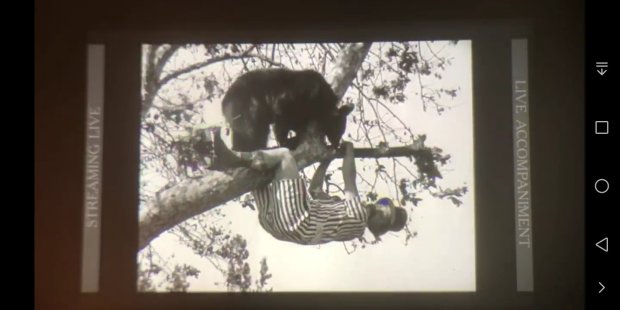
Last week’s episode gave us some rare treats. A clever ‘Out of the Inkwell’ cartoon kicked things off followed by Snub Pollard in the wonderful chase comedy FIFTEEN MINUTES. Snub is tired of being dragged around by his wife, and sits on a bench to rest for a little while. Or so he thinks… this is a wonderful example of director Charles Parrott/Charley Chase’s skill at starting with a mundane situation, and escalating it to absurdity. Snub has a washerwoman’s tub of water tipped over him; when he protests, her husband Noah Young comes after him. Soon, he has lost his trousers, is being shot at, has half the L.A police department after him, and ends up stuck in a tree with a bear! Just wonderfully ridiculous (and did I possibly see a cameo from Mr Parrott as one of the men shooting?)

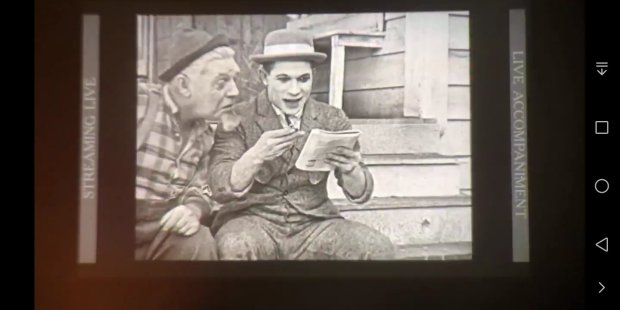
Next up was a real rarity, the surviving reel of a manic Harry Sweet comedy, THE TWO JOHNS. Sweet comes across as a capable but bland performer, and it’s no coincidence he was better known as a director (he directed some of Stan Laurel’s solo shorts, and later initiated the RKO Edgar Kennedy series). No matter, for THE TWO JOHNS was more concerned with elaborate stunts and slapstick than its star performer. Ben and Steve described it as “like a Larry Semon comedy on steroids!” and that’s a great summation. Heaps of fun and wonderful to see one of the rare Fox Sunshine comedies.

Lastly, we had a terrific Joe Rock short called THE WHIRLWIND.

Best known today as a producer, Joe Rock made films both as a team with earl Montgomery and on his own. THE WHIRLWIND is one of those wonderful milkings of a single gag – Joe is stuck in a town being ravaged by a cyclone. There were some great gags, particularly a funny scene as Joe is thrown out of his girl’s house, but repeatedly blown back in by the wind causing the father to become more and more irate.

What a treat this was, and I can’t wait for the next edition. Its so great to see silent film screenings being kept alive at a time when we need laughter more than ever. Make sure you tune in!