It’s the 2025 Silent Laughter event this Sunday at The Cinema Museum! A full day of silent comedies on the big screen, with live musical accompaniment and introductions from film historians. Among the line-up are W.C.Fields, Louise Brooks, Colleen Moore, Mabel Normand, Wanda Wiley, Fred Evans (‘Pimple’), Snub Pollard, a long-lost silent P.G. Wodehouse adaptation, and Laurel & Hardy as you’ve never seen them before…
The programme notes are now available for download – eleven pages of essays and commentary by Glenn Mitchell, Michelle Facey, Bob Geoghegan and yours truly. You can read them below, or download the pdf.
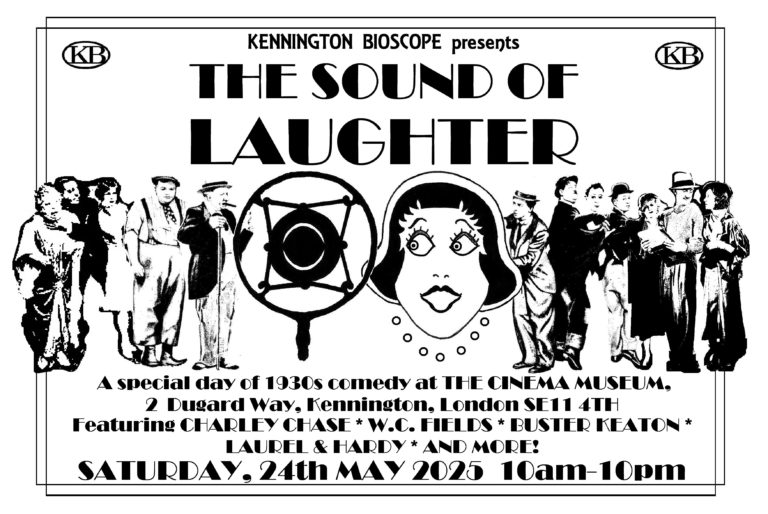
Coming next month at The Cinema Museum! After years of celebrating silent comedy, we thought it was high time we did a spin-off event to celebrate the best sound comedy. From favourites like Laurel & Hardy, Charley Chase and W.C. Fields, to forgotten funnies like Harry Gribbon, Lloyd Hamilton and Tom Walls, we think we’ve got a great programme. But it’s your laughter that will bring the films to life… so we hope to see you there.
Here’s the link to the event page, and to buy tickets. You can also find the full programme below, but this great little video by Dave Glass gives a nice flavour of what it’s all about…
—
Kennington Bioscope present a fun-packed day of vintage film comedies from the 1930s, on the big screen. A spin-off from the ever-popular Silent Laughter events, this all-dayer will feature some of the very best talking comedians in a hilarious selection of shorts, features and rarities. We’ll also be spotlighting the work of silent comedians who transitioned to sound, with classic shorts from Laurel & Hardy, Charley Chase and W.C. Fields, plus the rare chance to see a fantastic Buster Keaton feature that captures the essence of his silent work. All this, plus some choice rarities from the British Film Institute, Library of Congress and private collections. Introductions and presentations by film comedy experts will spotlight the work of key performers and studios, and there will be plenty of screenings on celluloid! So come along and enjoy the sound of laughter as we celebrate one of film comedy’s greatest decades. The full programme is below. All films subject to confirmation.
10.00 SOUND BEGINNINGS
The coming of sound brought new opportunities in cinema for comedians specialising in verbal humour, nonsense patter and musical comedy. From the zany antics of the Marx Brothers and The Three Stooges to the sly humour of Mae West, or songs and patter of Eddie Cantor, there was a dazzling array of fresh talent. This programme will showcase the best of the new guard, through short films and excerpts. Among the gems we’ll be showing complete are Robert Benchley’s witty, Academy Award winning How To Sleep and The Druggist’s Dilemma, featuring the hilarious comedy team Clark & McCullough with James Finlayson. Presented by Matthew Ross.
11.30 ROOKERY NOOK (1930)
Ben Travers’ series of Aldwych Farces were some of the most popular British films of the 30s. Featuring the wonderful dynamic between disreputable Tom Walls, silly-ass Ralph Lynn and nervous Robertson Hare, the films set a benchmark for situation comedy. The first of the farces to be filmed, Rookery Nook was voted the best comedy of 1930, but has rarely been screened since. This is a rare chance to see the farceurs at the top of their game in one of their classic films. Rookery Nook will be screened on 35mm, in a copy from the BFI National Archive and introduced by film historian Geoff Brown.
14.00 THE TALKIE FUN FACTORIES
The comedy two-reeler was a mainstay of cinema programmes throughout the 1930, and here we spotlight the efforts from specialist comedy studios. From the Mack Sennett Studios comes a terrific spoof of early musicals, A Hollywood Theme Song, with Harry Gribbon; we’ll be screening this on 16mm. The same studio also made some of W.C. Fields’ funniest films, including The Dentist, which we’ll be showing in its rarely seen, complete and uncensored version! Other films include a very rare – and very funny – RKO short starring Harry Sweet, Firehouse Honeymoon. Presented by Glenn Mitchell and Dave Glass.
15.30 LE ROI DES CHAMPS-ÉLYSÉES (1934)
Legend has it that Buster Keaton’s sound films are all horrors that allowed him no creative control, but that’s not completely true. While MGM may have mis-used his talents, independent studios gave him much better opportunities – albeit on a low-budget. In 1934, Keaton travelled to France to make this indie feature for producer Max Nosseck. Within the story of an amateur actor who gets mixed up with gangsters, Keaton creates new silent comedy routines and shows off his acting chops in a dual role – all set against great location backdrops of Paris in the 1930s. A rare chance to see this charming and funny film on the big screen. In French, with English subtitles. Introduced by Keaton expert David MacLeod.
17.00 SILENT SURVIVORS
Another film comedy myth is that the lion’s share of silent comedians were out of work when sound came in. Actually, many of them remained busy and continued to produce some great comedy. Glenn Mitchell and Matthew Ross present a selection of the funniest and most fascinating sound appearances by silent comics, including excerpts featuring Harold Lloyd, Roscoe Arbuckle and Lupino Lane. The programme will also feature complete screenings of Lloyd Hamilton’s Good Morning Sheriff (courtesy of The Library of Congress), Harry Langdon’s charming A Dog-Gone Mix-Up and Laurel & Hardy’s Our Wife, in which the duo meet silent comics Babe London and Ben Turpin! The last two of these films will be screened on 16mm.
20.00 THE LOT OF FUN: LAUREL & HARDY & CO
The Hal Roach studios were the gold standard for comedy studios in the 1930s, turning out wonderful and charming short films. This programme will show some of the finest comedies made on ‘The Lot of Fun’! The female comedy team of Thelma Todd & Zasu Pitts crash society in The Pajama Party, while Charley Chase brings his talent for farce into the sound era in Looser Than Loose. The programme will conclude with Laurel & Hardy’s Academy Award winning classic The Music Box (the one with the piano!), which will be shown on 35mm. A fitting end to a day filled with the sound of laughter!
Charley Chase at Hal Roach. The Late Silents: 1927 features fifteen great Chase shorts, most of them unseen for years.Here’s the trailer, and read on for a review. Spoiler alert: it’s insanely good, and you should buy it.
There’s a – quite possibly apochryphal – legend that Charley Chase buried a boxcar full of his old film prints and personal memorabilia somewhere in the San Jacinto desert. That rumour may never be verified, but this latest DVD/BluRay collection from The Sprocket Vault gets us close in spirit to unveiling such a Chase treasure trove. The films here have been largely unseen for decades; some were considered lost, others locked away in archives, or withheld due to copyright restrictions. When The Sprocket Vault began their series of Chase DVDs a few years ago with his talkie shorts, this already seemed like an unlikely and amazing bonus; when they moved on to his uber-rare (and hilarious) 1929 films, I thought I’d seen everything. But this set is the culmination of everything that Richard M Roberts and Kit Parker have been working towards in the series so far. It’s yet another release I never thought I’d see, and it presents some of the greatest silent short comedies ever made, rescued from the void. Quite simply, this is one of the most important silent comedy DVD/Blu Ray releases ever.
Why? Well, it represents the biggest release of “new” (ie. largely unseen) Chase films in years, and they capture him at the peak of his powers. 1927 was maybe Charley’s annus mirabilis. He made many of his best films, and was Roach’s biggest star. A reminder of his status is that both Stan Laurel and Oliver Hardy appear as supporting actors to him in that year’s Now I’ll Tell One, the remaining footage of which is included here. Within a year, the Laurel & Hardy team would supplant him as the big news from Culver City, and Chase would forever play second, or third, fiddle to them.
However, the work presented here is compelling evidence – perhaps the most compelling yet? – for Chase’s status in the top echelon of silent film comedians. There’s a dazzling array of comedy techniques on display – from farce (Assistant Wives, A One Mama Man) to topical humour (Us), and adroitly handled slapstick and sight gags (The Way of All Pants, Are Brunettes Safe?).
A couple of the films have been seen before, but scattered across a variety of releases, often in poor quality. They look much improved here, courtesy of the restorations by Paul Gierucki at CineMuseum, and its great to have films like Forgotten Sweeties and There Ain’t No Santa Claus available as part of a cohesive Chase collection. The most familiar film here is Fluttering Hearts, which is so good that I’m sure no-one would begrudge owning another copy. After that, almost everything is new to Chase fans. And what joys there are to experience. I don’t want to give everything away in this review, but here are a few samplers:
Are Brunettes Safe is a wonderful comedy featuring Chase standing in for his doppleganger, who turns out to be a dangerous bandit. There’s some terrific physical comedy here as he has to incorporate the villain’s distinctive limp into his impersonation. This climaxes in another one of his fantastic eccentric dances, with Polly Moran.
A One Mama Man has great performances from both Gale Henry and Vernon Dent (rarely spotted at Roach) to add to the fun. This film was remade by Chase as the talkie Skip The Maloo! In 1931, but this version is much superior.
Assistant Wives is one of his best farces – another ridiculous premise, made believable by Chase’s perfect characterization and storytelling. A terrific cast here, too: Anita Garvin, Noah Young, Eugene Pallette and Edna Marian all add to the fun as Charley has to hire a stand-in wife when the boss invites himself to dinner. Some beautiful, original gags as well; Charley trying to carry three bowls of soup backwards up a fire escape is a particular highlight.
The jewels in the crown are the long-unseen, complete versions of two films sampled in Robert Youngson’s comedy compilations. A brief section of the Lindbergh-baiting Us was seen in Four Clowns. Alongside the other Chase excerpts showcased there, I’d always been a little underwhelmed by this one, but the whole film is an absolute delight. While there are quite a few silent comedies featuring aerobatic finales, Us is a winner by virtue of relying on Chase’s character to provide the comedy. A nervous would-be flyer afraid to leave the ground, he presents himself as an aviator to impress Margaret Quimby, then has to constantly find new excuses to weasel out of actually going up in an aeroplane. This makes for some really funny sequences, and the film looks beautiful too.
The Way of All Pants was, for many years, thought to only exist in the cut-down excerpt featured in The Further Perils of Laurel & Hardy. Even in that truncated format, it was an absolute barnstormer of a comedy, but happily the full version was rediscovered a few years ago. The extra space of the full version really sets up the characters, and provides plenty of wonderful new gags (not forgetting the witty original intertitles). While losing trousers for comedy purposes can seem like a hackneyed idea, Chase’s absolutely mastery of how to provide variations on a running gag, expertly paced, make this one of the best of all his films, and among the top tier of Hal Roach comedies. We were privileged to showcase this new restoration at the 2023 Silent Laughter Weekend, and many people said it was their favourite film of the entire weekend!
The Way of All Pants is also a great example of how Chase’s silent films have such perfect rhythm, not just the way they are directed and edited, but in Chase’s own pitch-perfect timing and body control. I was really struck by this when watching all the shorts on this set.
This set ranks along with All Day Entertainment’s Harry Langdon: Lost & Found set, Lobster’s Charley Bowers collection, Dave Glass’ Monty Banks restorations and Undercrank’s Edward Everett Horton set as a major, game-changing showcase for a silent comedy talent. And, if the films themselves weren’t enough, you get great musical scores from Dr Andrew Simpson, and information-packed commentaries from Richard M Roberts, which really put the films into their historical context. Massive thanks and congratulations to everyone involved in making this release happen. It puts Chase at the forefront of the silent comedians, where he belongs. Now, what are you waiting for? Go buy it!
From the archives, here’s an article that first appeared in issue #13 of The Lost Laugh, in 2021…
DOUBLE TROUBLE: THE SNUB POLLARD & MARVIN LOBACK FILMS
One of my earliest memories of silent comedy is of watching a ‘COMEDY CAPERS’ VHS when I was very young. One of the episodes on the tape, ‘BABY BACHELOR’ confused me: it was a virtual copy of Laurel and Hardy, but the Laurel character was wearing an enormous moustache. Who were these L & H wannabes? Years later, I learned that they were Snub Pollard and Marvin Loback, jumping on the bandwagon of fat-and-skinny comedy teams as Stan and Babe were at their zenith. I’ve always been intrigued by these copycat shorts, and endeavoured to find out more about them. Here’s the story…
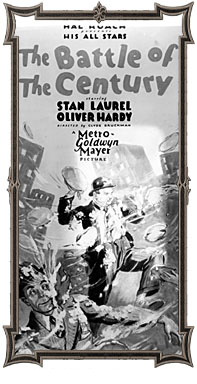
It’s late 1927. Laurel & Hardy’s pairing has blossomed, and they’ve just produced their biggest hit to date, THE BATTLE OF THE CENTURY, for Hal Roach. For another ex-Roach employee, Snub Pollard, things are not going so well. Once one of the studio’s big stars in classics like IT’S A GIFT and SOLD AT AUCTION, he had been let go as the studio moved to more sophisticated comedy. A series of shorts at the low-budget Weiss Brothers studios was a step down the ladder; even further down was a return to vaudeville when that series ended.
While Snub was treading the boards, Laurel and Hardy’s meteoric rise gave someone at Weiss Brothers a brainwave: why not produce their own version of the team, with Snub as the thin half? Pollard was called back to Weiss Brothers in early 1928, and teamed with large comic Marvin Loback. Loback was a veteran of Sennett and Roach, and had even appeared with Snub a few times in small parts.
The films that resulted might charitably be called homages to Laurel & Hardy; less kindly, they could be called blatant rip-offs. To be fair, some of the films were more original than others, and there was always a certain amount of shared ground and gag-borrowing in silent comedy. However, the way that some of the Pollard-Lobacks like SOCK & RUN re-enact whole chunks of L & H films is particularly shameless. What particularly attracted attention is the one-time belief that these shorts were made before the Laurel & Hardy films they resemble. We now know this to be untrue. However, there do seem to be some examples where the Pollard films did a gag or routine simultaneously or before the Roach crews.
The films are an interesting sidelight in Snub’s career, and a fun curio for L & H fans. The Laurel & Hardy influence is obvious from the outset, but is painted broadly: the amount of nuance may be gauged from the fact that Loback’s character is called ‘Fat’. There’s none of Oliver Hardy’s quiet dignity in that! To be fair, Loback does a decent job throughout the series of replicating Hardy’s impatience, if not his charm. It’s his presence that really brings the L & H comparison. As for Snub, he hasn’t changed his appearance from his standard costume of bowler, moustache, striped shirts and spats. As far as his performance goes, he’s definitely gone a bit more passive, but his trademark moustache is a handicap in reproducing Stan’s blank innocence. He rarely does a complete rip-off of Laurel mannerisms (although he does a crude version of the cry in one film), but the intention is clear.
Though the first few films of the series mainly aped L & H in the comic’s appearance, soon more similarities began to creep in. Perhaps it was lack of inspiration for new material, but the intentional effort to piggyback on the team’s success soon becomes a bit more blatant by –ahem- borrowing their material. Sometimes the likenesses are vague – Snub and Marvin as two sailors in HERE COMES A SAILOR, or a hint of DOUBLE WHOOPEE in MITT THE PRNCE, for instance. At other times, the similarities constitute plagiarism pure and simple, as entire gags and plots are ripped from L & H films like FROM SOUP TO NUTS, PUTTING PANTS ON PHILLIP and SHOULD MARRIED MEN GO HOME!
The L & H connection has brought the Pollard-Loback films into focus now and again, particularly when one theory suggested the films actually pre-dated the Laurel & Hardy films! In the pre-Internet days, and before the onset of trade paper archives like the Media History Digital Library, States-Rights films made by companies like The Weiss Brothers were obscure and hard to trace. As a result, the films seem to have been confused with Pollard’s first (solo) Artclass series, which were made in 1926-27. We now know that the Pollard – Lobacks were released in two batches, six films in 1928-29, and a further four in 1929-30, disproving the claim that Laurel & Hardy were the ones doing the borrowing.
The trade magazines only gave light coverage to low-budget, indie two-reelers like these, but after sifting through, I’ve gathered a handful of more precise dates. British trades like The Bioscope and Kinematograph Weekly also came in handy – though the films generally hit the UK a little later, the release dates gives a rough indication of when they were made and registered for release. Below is the information I’ve been able to gather to pin down the dates and titles a bit more.
1928 -29
Variety reported that Snub was working for Artclass on May 2, 1928. By June 19, they note that both Pollard and Ben Turpin have finished filming their first shorts for the company (THICK & THIN and SHE SAID NO, respectively). By September 1st, 1928, Film Daily reports that an additional two films are ready: ONCE OVER & THE BIG SHOT. American mentions of the series are scant hereafter. However, the British Press picks up the slack. Louis Weiss visited London to trade-show the series in the Autumn and they were distributed by Gaumont from November 1928. The Films Act, article 6 required that all films must be registered for exhibition – these listings tells us that the other three films from the first series were SOCK & RUN, MEN ABOUT TOWN and HERE COMES A SAILOR.
1929-30
In May 1929 Film Daily reported that Snub listed four titles in production for 1929-30; however, the titles listed were actually ones from the previous season, presumably an error. Actually, the four films were DOUBLE TROUBLE, NO KIDDING, SPRINGTIME SAPS and MITT THE PRINCE. These were released with synchronised music tracks (but no dialogue) as a concession to the advancing sound revolution. Adverts exist for the reissue of these films, with soundtracks, in 1943.
All the films were filmed in the Spring of 1929, with Variety reporting that the series wrapped in the second week of May, 1929. DOUBLE TROUBLE was used to launch the second series, and was reviewed in Film Daily on August 18th, 1929. SPRINGTIME SAPS was reviewed on October 24th. In Britain at lease, MITT THE PRINCE was the last of the series to be released, in February 1930.
With the above in mind, here’s a run-down of these seldom-discussed films, in what I believe is the order of release.
THICK & THIN
THICK & THIN was definitely the first of the shorts to be released and sets the tone for the series, with Snub and Marvin as two penniless gents in a shabby boarding house, trying to cook a meal, and then sneaking their belongings out without paying the rent.
Of all the series, this is the one that most harks back to Snub’s Hal Roach films, the hidden devices that the pair use to cook their meal a bit like a less elaborate reminder of IT’S A GIFT, STRICTLY MODERN and other films featuring Snub gadgetry.
There’s also a bit of a Harry Langdon influence, both in Pollard’s subdued persona, and in a gag lifted from Langdon’s FIDDLESTICKS. THICK & THIN is undoubtedly derivative, but the gags flow nicely and it’s an entertaining little two-reeler.
2. ONCE OVER
Snub and Marvin roll into town on a freight train, riding in a boxcar of cows. There’s a funny scene featuring the atrociously fake cow heads they use as a disguise, confounding brakeman Tiny Lipson (even more so when one of the cows appears to smoke his cigar!). For a topper, they exit the boxcar under blankets that make them appear to be a strange, two-headed beast!
The bulk of the film centres around their attempts to filch some food, pursued by cop Harry Martell. Along the way, two Hal Roach gags are – *cough* – borrowed. The scene from THE FINISHING TOUCH with Stan Laurel on both ends of the same plank is used, and there’s also a gag with a mailbag and a fence lifted shot-for-shot from Max Davidson’s DUMB DADDIES
Then it’s on to the park, where they fail to steal a family’s picnic before Snub has a brainwave. Covering his hand with a long white sock, he hides in a bush and pretends to be a swan, stealing the sandwiches a lady is feeding to the birds. Unfortunately, he knocks her in the water, and the cop is on their trail again. To elude him they enter a restaurant and are put to work as waiters. A predictable level of competence ensues, and things wrap up with some pie-throwing. Though the finish is weak, ONCE OVER is maybe the best of the Pollard-Lobacks. The borrowing is less overt than in many of the other shorts, and the film rambles along happily from one gag situation to the next, with some nice original ones thrown into the mix.
3. THE BIG SHOT (Released October 1928, belatedly reviewed in Film daily, Feb 1929)
THE BIG SHOT is another one of the better Pollard-Lobacks, having some semblance of following the same story from start to finish. Snub and Marvin are reporters tasked with getting a photo of a camera-shy Scottish inventor. This involves Snub being coerced into wearing a kilt, and we’re into a semi re-run of PUTTING PANTS ON PHILIP. It doesn’t work on the same level of the L & H film – the sexual ambiguity surrounding the innocent Laurel character in PHILIP just cannot translate to a character wearing a huge moustache! To be fair, the gags don’t try to be a carbon copy and mainly just deal in the incongruity of Snub’s appearance. There are a few nice original variations, including Snub trying to change a tyre, with the draught from every passing car sending his kilt flying up. Snub and Marvin wind up following the inventor onto a boat and eventually corner him for a photo, but Snub is too generous with the flash powder and after a huge explosion, he is left clinging to the mast.
4. MEN ABOUT TOWN
After three films that borrowed from Laurel & Hardy but at least tried to have original plots, the Pollard unit pretty much gave up the pretence of trying to be original for the next few films.
MEN ABOUT TOWN is largely a re-run of SHOULD MARRIED MEN GO HOME set on the golf course, with added gags from YOU’RE DARN TOOTIN’. However, there are some occasional moments in the Weiss Bros films where they seem to foreshadow a later Laurel & Hardy moment. Here, Marvin’s attempts to contact Snub and sneak him out of the house include trying to contact him by phone, anticipate L & H’s BLOTTO of 1930. However, L &H knew how to milk the scene for all it was worth, whereas here it is just a quick throwaway gag. MEN ABOUT TOWN is definitely one of the weaker films in the series.
5. SOCK & RUN
Ok, now they’re really taking the Mickey. Not content with pinching the kilt material from PUTTING PANTS ON PHILIP, they basically re-film the entire first reel of that film, throwing in some soup gags from YOU’RE DARN TOOTIN’ and ending with a boxing match á la BATTLE OF THE CENTURY!
The PHILIP material is recreated gag for gag, from the laughter of the crowd as Snub arrives, to his medical examination, to Marvin’s attempts to keep him walking a few paces behind. Oh, but wait, it’s actually been changed – Snub is French, not Scottish, and people are laughing at his silly top hat instead of his kilt. That ought to avoid the copyright infringement lawsuit…
Of all the Pollard-Lobacks, SOCK & RUN is maybe the one that has most secured the reputation of the series as being mindless L & H rip-offs. In this sense, it’s the worst of the bunch. On its own terms, it’s not terrible, and if you’d never seen a Laurel & Hardy picture, you’d probably find it entertaining. But if you lived in a world without Laurel & Hardy, SOCK & RUN would be the least of your problems.
6. HERE COMES A SAILOR
HERE COMES A SAILOR starts out with the boys as sailors who hire a car, in the spirit of TWO TARS, but doesn’t get down to mass car destruction (something Weiss Bros surely didn’t have the budget for). Instead, it takes a left turn to become a clone of FROM SOUP TO NUTS as the pair get jobs at a dinner party, down to Snub serving the salad “undressed”.
There is one nice original gag, as Snub accidentally causes a cameraman’s tripod camera to collapse on top of him; bumbling around on all fours with the cloth over his back and the lens dangling out in front, the man resembles some strange elephantine creature!
7. DOUBLE TROUBLE
Snub and Marvin unsuccessfully rehearse and audition their terrible vaudeville act, then are hired as process servers to repossess their landlord’s piano. This second series of Pollard-Lobacks are where some of the confusion over their originality seems to have come from. While the first-series L & H rip-offs like SOCK & RUN are blatant steals, the second batch do actually contain some gags or situations used by Pollard & Loback before Laurel & Hardy. DOUBLE TROUBLE is a case in point; Snub and Marvin’s attempts at repossession anticipate BACON GRABBERS, not just in story, but also down to individual gags.
Held back until after L & H’s first few talkies, BACON GRABBERS wasn’t released until October 1929, but DOUBLE TROUBLE was filmed before May, and had already been released and previewed by August of 1929. Therefore, it couldn’t have been a simple case of Les Goodwins or other Weiss gagmen having been to see the latest L & H film at their local theatre and filling their notebooks with ideas.
However, while DOUBLE TROUBLE may have reached cinemas before BACON GRABBERS, the Laurel & Hardy film was almost certainly finished first. My theory is that a Roach gagman moved over to Weiss Brothers, probably during the time when the Roach studios were being fitted out for sound. Another possible ‘mole’ was Bert Ennis, Snub’s gag and title writer. Ennis doubled as a publicist, and had his own regular column in Motion Picture Classic, so was probably quite well connected with other studios.
8. NO KIDDING (September 1929)
NO KIDDING is a fun little short, featuring Snub and Marvin accidentally in charge of a toddler, and then having to hide him from the landlord of their bachelor apartment. The toddler is actually played by midget Billy Barty (incidentally, he played a similar role in the Laurel-Hardy SAILORS BEWARE). There are some amusing scenes as they disguise the toddler as an adult in a suit, complete with cigar, but the deception is undermined as he proceeds to make various noises and arouse the landlord’s suspicion.
Again, there’s a parallel situation of the Snub film seeming to pre-empt the Laurel & Hardy film. The central situation of the team hiding an unwanted guest in their apartment was also the basis of ANGORA LOVE, and one particular gag appears in both films. As the landlord lectures Snub & Marvin/Stan & Ollie that “this is a respectable boarding house”, a woman walks behind him towards her room, pursued by a sailor! NO KIDDING was filmed in early Summer 1929, and released in the Autumn, but ANGORA LOVE wasn’t released until December 1929. The Roach Mole seems to have been at work again…
(By the way, this is the short I saw on COMEDY CAPERS VHS, cut down and retitled…)
9. SPRINGTIME SAPS (October 1929)
SPRINGTIME SAPS is a ragbag effort that changes situations as the team run out of gags for each one. The best scenes are set in the park, with Snub and Marvin attempting to get 40 winks on a bench before being woken by a cop, and then trying to steal a man’s cigar.
When that’s milked for all the comedy they can manage, the pair get jobs as taxi drivers, mainly so that they can nab a gag from the Sennett film TAXI DOLLS. Then things peter out in some feeble haunted house comedy.
The most notable aspect of this film is a moment where a man angrily gives Snub the middle finger! It’s not a slip or even made to seem like one – it’s just blatantly there, in full shot! It shows how low under the radar these states-rights films must have flown, particularly at the tail end of the silent era.
10. MITT THE PRINCE (Release dates variously quoted as Dec 1929 and Feb 1930).
Snub and Fat are two incompetent handy men. Sent to deliver some parcels to the social-climbing Mrs Woodby-Noble (Ho Ho!), they write off the car on the way there with bit of L & H patent tit-for-tat. When the Prince who is supposed to attend fails to show, the hostess persuades Snub to take his place. There’s a vague hint of DOUBLE WHOOPEE in this premise, but no direct stealing of material.
The best thing about MITT THE PRINCE is a nice running gag of Snub accidentally getting his hand continually in others’ pockets; other than that, it’s a middling effort.
The series wrapped in May of 1929, and with it Snub’s career in silents. However. there was still one last gasp for his starring career, and his association with Weiss Brothers. In July 1929, Film Daily reported that the company was planning some talkie shorts, with Snub heading east to film some. Two shorts resulted, and the Pollard-Loback faux L & H vibe was dropped:
HERE WE ARE (filmed July 1929, released August 1929 )
Snub played a plumber’s assistant, who ends up pretending to be the plumber’s wife. Obviously, he didn’t wear his moustache in this one, or the deception wouldn’t have been very convincing!
PIPE DOWN (Trade shown September 1929)
Snub was teamed with Jack Kearney as a pair of sailors on shore leave who keep running afoul of tough guy Gunboat Smith, ending in a slapstick fight. After Kearney knocks smith unconscious, the pair light cigarettes, but an open gas lamp next to them causes a huge explosion. At least Snub’s starring career ended with a literal bang! Variety wasn’t impressed, calling PIPE DOWN “third-rate Vaude stuff passed off as film comedy”.
These two talkies were released in the UK in February, 1930.
And with that, the Snub Pollard Weiss Brothers series was over. The films were hardly his most glorious moment, but they helped keep his starring career afloat a little longer. Viewed today, the films range from good fun, to middling, to outrageous rip-offs (sometimes within the space of the same film!), but they show an interesting sidelight to how silent comedians could try to meet changing tastes and demand for particular styles of comedy. They are also a reminder of how special, and how hard to replicate, the chemistry between Stan Laurel and Oliver Hardy was.
You can enjoy some of Snub’s Weiss Brothers films (and a host of others from the studio, including Ben Turpin and Jimmy Aubrey) in the great DVD WEISS-O-RAMA
Great news for silent comedy fans in the U.K.: Kennington Bioscope’s Silent Laughter Weekend is returning to London’s Cinema Museum on November 4th – 5th. Once again there’s a fantastic programme of rare and classic shorts and features, with live accompaniments and guest introductions.
We’ve got films that haven’t been seen anywhere for almost a century, and premieres of recent restorations, including two classic Charley Chase comedies you won’t have seen before! There’s also an exclusive bit of ‘new’ Laurel & Hardy footage alongside some of their classic shorts, and the premiere of Dave Glass’ brand new restoration of Monty Banks’ PLAY SAFE! There are rarities that only survive via small gauge prints, plus wonderful and rarely screened features starring Edward Everett Horton, Mabel Normand and Max Linder.
Present via video introductions and presentations will be some of the most knowledgeable silent comedy experts in the world: Steve Massa and Richard M Roberts. We’ve also got plenty of surprises waiting…
Amidst all this fun and excitement, there is a bittersweet note as this will be the first Silent Laughter without its founding father, David Wyatt, who passed away last October. As well as one of the most knowledgeable film historians, DW was always generous with sharing rarities from his connection and passionately believed in making opportunities for silent comedies to be seen the way they were intended. He was a big supporter of The Lost Laugh, and a great friend. It was his enthusiasm that drove the Silent Laughter weekends, and the continuation of this happy, joy-filled event is one of his great legacies. We’ll be doing our best to honour that legacy, including a special tribute programme including his favourite clips and some of his own work.
Come and join us! Tickets on sale now – £30 for the whole weekend. With 12 shows in the programme, that’s just £2.50 per screening, an absolute steal! (there are also day and evening tickets available too)
Many of the great comedians had come up through the stage and had to be all-round entertainers. When sound film came in, one of the benefits was allowing them to show off these talents. Many of the silent clowns seemed to enjoy the novelty of performing a song or dance once in a while, and of course performers who primarily worked in this area now had a new outlet for their talents. These routines always make me smile, so here are a choice selection.
Let’s kick off with Laurel & Hardy doing a bit of a dance. Nope, not that dance! While their moves to ‘At the ball, that’s all’ in WAY OUT WEST are iconic, this scene from BONNIE SCOTLAND is less well-known, but has a charm of it’s own. There’s a kind of infectious joy to L & H’s dancing moments, and this one is no exception.
Fellow Roach studios comic Charley Chase positively flourished with the chance to strut his stuff in talkies. Chase had a deep love of music, writing his own songs and choreographing routines for them to use in his comedies. This example, from his penultimate Roach short ON THE WRONG TREK, is a real charmer.
Over to Britain now. The bright and breezy Jack Hulbert had made his name in musical comedies on stage, often partnered with his wife Cicely Courtneidge. His lanky frame made him quite a talent as an eccentric dancer, and here he gives us a song and a bit of tap. This is from JACK OF ALL TRADES (1936), one of several dated but extremely charming romantic comedies he made for Gainsborough Pictures in the 30s.
Another British comic who made his career in musical comedy (though opposite in build to Hulbert!) was Stanley Lupino. This routine comes from OVER SHE GOES, one of his plays adapted for film in 1937. Leslie Halliwell was right on the money when he called this scene “one of the most dextrous routines I’ve ever clapped eyes on”. It’s glorious.
Did someone mention Lupinos? Here’s Stanley’s cousin, Lupino Lane, in a wonderful slapstick ballet with Lillian Roth. It’s from THE LOVE PARADE (1929), and is one of my very favourite scenes of his. That Lupino family training really paid off, didn’t it?? (By the way, if you like what you see of Mr Lane, don’t forget there’s currently a Kickstarter appeal running to get some of his films on DVD). This clip is a little slow to get going, but kicks in at about the 1.50 mark..
Carrying on the theme of slapstick dance, here’s a wonderful routine from Buster Keaton. Buster’s MGM sound features were undoubtedly a waste of his talents compared to his silent masterpieces, but they do have some charming moments of 100 proof Keaton in them. The studio’s zeal for making the most of sound with singing and dancing lets us see another side of Keaton’s talents not often displayed. Like the other comics here, he was a stage veteran too, so could pull off this stuff very well indeed, even if it’s not really the idiom we expect of him. Here he is in the highlight of DOUGHBOYS, an Apache dance routine. Quite a few comedians incorporated their knockabout into one of these , but Keaton’s superior athleticism makes this really something special.
And, to finish off, just a tiny but more Buster. Here’s his international dancing medley from the short GRAND SLAM OPERA (1936). He’s waiting backstage at a radio station when hearing the band spurs him into motion… Great fun.
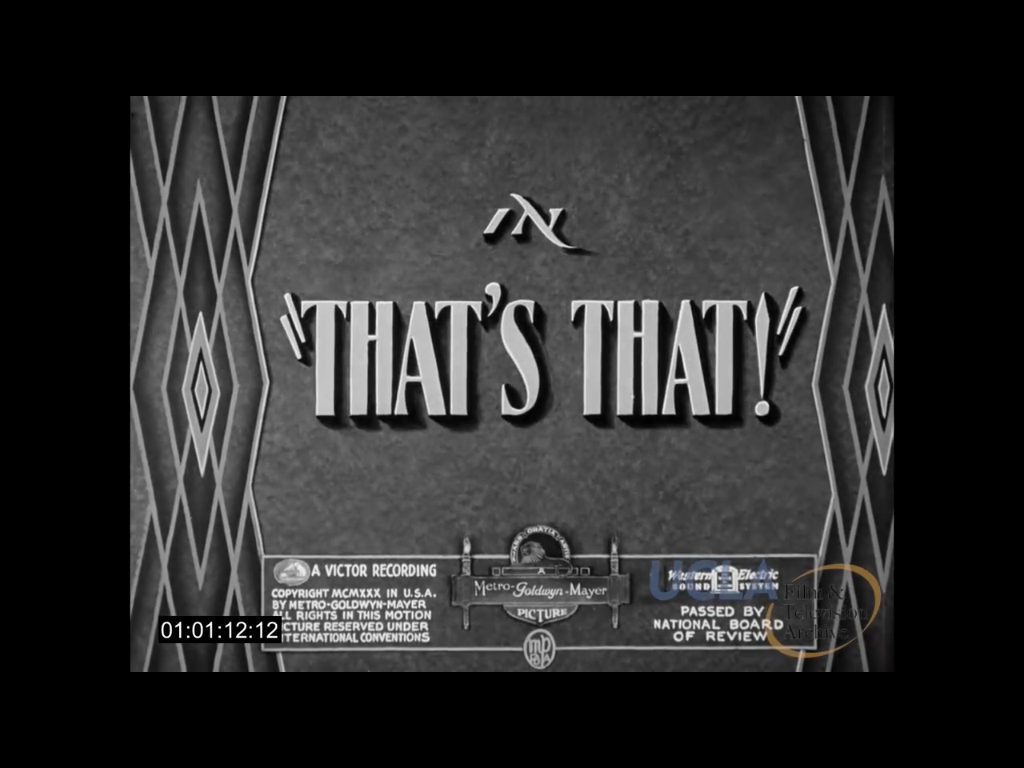
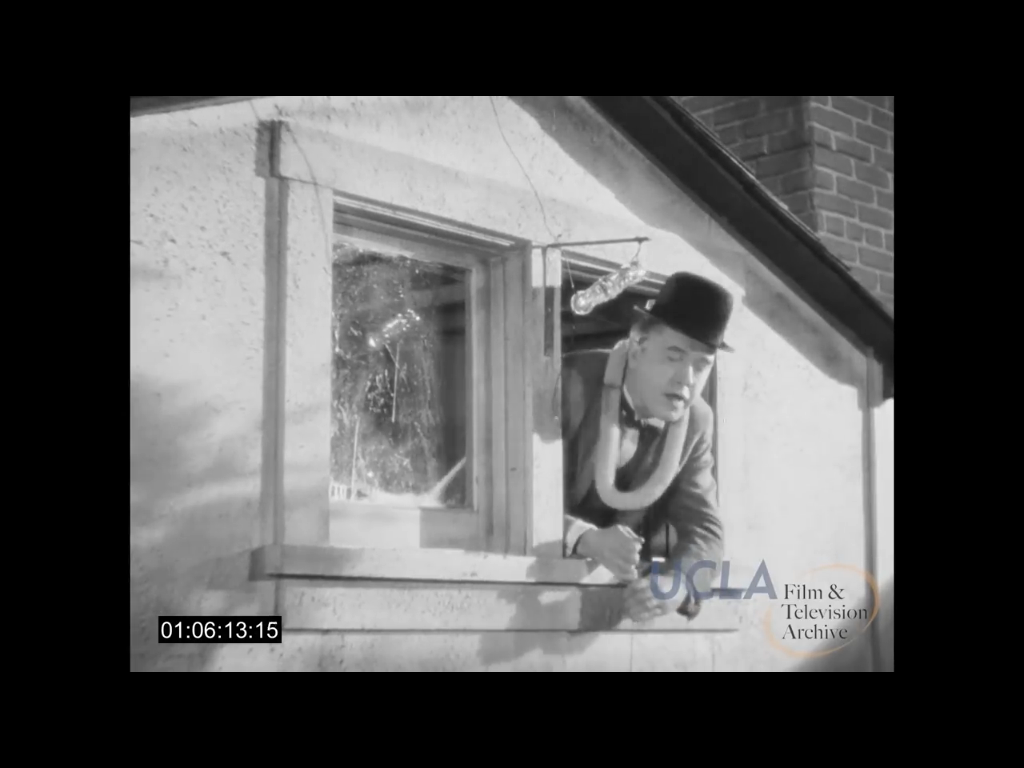
One of the Laurel & Hardy items I’ve wanted to see for the longest is ‘THAT’S THAT!’. It was a gag reel compiled by Hal Roach Studios editor Bert Jordan, on the occasion of Stan Laurel’s 47th Birthday. It’s been shown at a couple of L & H conventions, and a really ropey off-screen dupe of a short section once appeared on YouTube, but now it’s been fully restored by UCLA and put online. And it’s a strange eight minutes, to be sure…
Jordan had access to all sorts of outtakes, bloopers and sound effects in the Roach vaults, and used them to cobble together a bizarre little stream-of-consciousness short, replete with non-sequitirs, random effects, animations and amusing juxtapositions ending up like something Spike Milligan would have been proud of!
It begins with full Roach titles; THAT’S THAT was the original working title for THE LAUREL-HARDY MURDER CASE. Alternate takes from MURDER CASE form a large part of the footage, along with its Spanish language counterpart NOCHE DE DUENDES. There are also chunks of OUR WIFE, LAUGHING GRAVY, DIRTY WORK and the then-current WAY OUT WEST. Outtakes from the latter include a shot of Tiny Sandford in costume (replaced by Stanley Fields in the finished version) and Stan’s double Ham Kinsey reciting the declaration of independence!
L & H co-star Charley Chase makes an appearance, messing up a scene from MANHATTAN MONKEY BUSINESS and cursing; Edgar Kennedy provides a wrap-up comment for the short. There are also glimpses of Mae Busch, Jimmy Finlayson, Charlie Hall, Babe London and Gordon Douglas.
Most interesting of all is a very brief deleted gag from SONS IN THE DESERT, from the attic scene. Stan is attempting to pull something on a string up to the attic, but manages to get it caught on a radio set, which falls over and explodes.
Moments like this make you wonder what else was once lurking in the vaults and now vanished. A fascinating, if bizarre, way to spend eight and a half minutes… Many thanks to UCLA and their funding donors for making this available! We really are spoiled these days… If you want to give a little something back you can support UCLA’s Laurel & Hardy Preservation fund here: https://www.cinema.ucla.edu/support/laurel-and-hardy
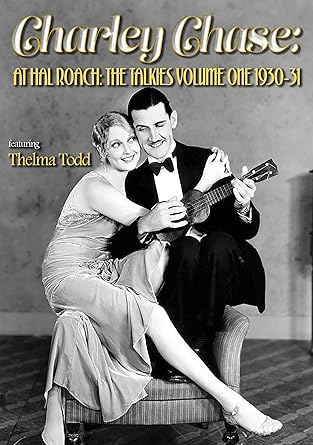
Charley Chase has gone from being an under-represented figure on home video releases to having much of his classic work out there in superior quality. Thanks to DVD releases from Kino, AllDay Entertainment and Milestone films, a majority of his existing silent work can now be widely seen. In recent years, even his late sound shorts for Columbia have even been pulled from the vaults and released by Sony.
All this is extremely heartening, but the holy grail has always been his Hal Roach sound shorts. Picking up from where he left off in silent days, Chase kept on churning out little gems at Roach until 1936. The distinctive charm of the Roach films, with their stock company and background music, along with Chase’s excellent performances and some great gags, made these a wonderful bunch of films. More’s the pity that they’ve been so hard to see! There was a period when the films were aired semi-regularly on TCM in the USA, and it has been possible to cobble them together through a ragbag assortment of bootlegs from off-air recordings, VHS transfers and often ropey 16mm prints, but a legitimate and comprehensive release, in nice quality, has remained elusive.
No longer. Step forward expert comedy historian Richard M Roberts and The Sprocket Vault, who have achieved what no-one else has been able to in bringing some of Chase’s sound shorts to DVD (it’s the first in a planned series of volumes, which will hopefully work through all the other Chases). Simply by existing, this set would be automatically brilliant; that it presents the films in the best quality possible, with great extras and authoritative commentaries, makes it an absolute triumph.
Chase’s earliest talkies are currently unavailable, so this set picks up with THE REAL McCOY, his first release of 1930, and goes through to his last release of 1931. Within these parameters, you get some of his all time best, including WHISPERING WHOOPEE, LOOSER THAN LOOSE, THE HASTY MARRIAGE and, of course, THE PIP FROM PITTSBURG. Disc 1 covers 1930, and disc 2 1931. The chronological nature means that you get to see how Charley developed his approach to comedy during the early sound era. This was a transitional period for Chase, and while sound gave him no cause for alarm, it did give him pause for thought, and to try some new approaches and variations in character. As well as films in the vein of his silent farces like LOOSER THAN LOOSE and DOLLAR DIZZY , several of the 1930 films are particularly offbeat and experimental in nature. FIFTY MILLION HUSBANDS is a really fun little short full of quirky bits of business and GIRL SHOCK is a particularly unusual comedy, with Charley bordering on Harpo Marx-style mania every time a girl touches him. This one was new to me, and while it’s not one of Chase’s all-time best, I find it a fascinating film. Present also are his experiments at making mini musicals, HIGH Cs and its wonderful companion piece, ROUGH SEAS. Not all the experiments are entirely successful, but that said, practically everything Chase did is diverting and most watchable, especially for L & H buffs, who can enjoy seeing familiar Roach faces like James Finlayson and Charlie Hall in other roles.
Of course, the most famous supporting player to feature opposite Charley is the pip herself, Thelma Todd. Their partnership resulted in some absolutely charming comedies, of which THE PIP FROM PITTSBURG endures the most. This simple tale of Charley’s attempts to turn off a blind date, then trying to undo his work when it turns out to be Thelma, is elegantly told and full of great sight gags. As a fascinating extra, the Spanish phonetic version, LA SENORITA DE CHICAGO, is included. While it loses Thelma Todd, it gains an extra reel, including a song from Charley and some bridging scenes that actually make it flow much better than the English original (for more details on THE PIP FROM PITTSBURG and Chase & Todd’s other films together, take a look here)
While PIP is most definitely a highlight, some of the less vaunted shorts are just as delightful. Personal favourites:
LOOSER THAN LOOSE, a charming romantic situation comedy, where much of the humour is down entirely to the wonderful performances of the cast;
HASTY MARRIAGE, full of great sight gags and slapstick in a tale of streetcar romance;
ONE OF THE SMITHS, a hillbilly comedy with some terrific mechanical gags, and a much funnier update of L& H’s upper berth sequence, as Charley tries to share his tiny berth with a large tuba!
THE PANIC IS ON, riffing on black humour gags spoofing the depression. There’s an added bonus of a nice little cameo from Laughing Gravy.
Richard Roberts provides detailed and entertaining commentaries for all the film. It’s clear that this is a labour of love, and we owe a huge vote of thanks for the effort in creating the set. As he has said, it is hoped that other volumes in this series will follow; that just depends on how well this first volume sells. So what are you waiting for? Buy, buy, buy! I’m certain you won’t regret it. It’s hard not to like Charley Chase, and this set is a must-have if you have even the slightest interest in his work, or that of Laurel & Hardy and the Hal Roach studios. While the Chase talkies are generally looser than his impeccably constructed silents, there’s a heckuva lot of talent in these films, and a heckuva lot of fun, too. And there’s plenty more where that came from: Many of the films that the prolific Chase made in 1932 and beyond, such as YOUNG IRONSIDES, HIS SILENT RACKET, NURSE TO YOU, MANHATTAN MONKEY BUSINESS and POKER AT EIGHT, are as good as anything he ever did, so here’s (greedily) hoping for more volumes soon!
— A belated report on a screening of the restored ‘BATTLEOF THE CENTURY’–
Recently, happy coincidence presented the opportunity for me to see several ‘new’ Laurel and Hardy films in a short space of time. Kennington Bioscope’s Silent Laughter Weekend presented newly rediscovered footage from ‘THE SECOND HUNDRED YEARS’ as well as two L & H solo films, and shortly after came the chance to see the newly restored, almost complete version of ‘THE BATTLE OF THE CENTURY’. For so many years a frustratingly fragmented film, this has finally had its iconic pie fight reinstated at full length. Re-premiered last year, the film has, I believe, only had two previous screenings in the UK, both in London, and both of which I was crushingly unable to attend. It was with great excitement that I saw the film was being shown as part of the Leeds International Film Festival, in support of Harold Lloyd’s wonderful ‘SPEEDY’.
The venue was The City Varieties theatre, a Victorian marvel which, like the films, has been newly restored to its former glory. It was also an appropriate venue for a silent comedy show, as both Chaplin and Keaton once trod the boards here (Chaplin as a young performer, Buster in his later years).
Accompaniment was by Jonathan Best and Trevor Bartlett. Their accompaniment, of piano and percussion, was magnificent, one of the very best I’ve heard.
And the films? ‘SPEEDY’, my favourite Lloyd feature, was wonderful as ever, and shimmered magnificently in its new Blu Ray version. As good as it is though, ‘THE BATTLE OF THE CENTURY’ was inevitably the big star here. The restoration looked absolutely beautiful on the big screen, and I found myself in a childlike state of excitement and wonder as the new footage unfolded.
We’ll get to the prodigalpie fight in a minute, but first, a word on the opening scenes.
The boxing scenes looked stunning, much less dark than the previously available version. Comedically, I’ve always thought this a very underrated sequence: some nice physical comedy, superb ‘heavy’-ing from Noah Young, and wonderful reactions from both Stan and Babe. It’s also a rare foray into topical satire, albeit loosely, for L & H. ‘The Battle of the Century’ was how the 1927 Dempsey v Tunney prize fight was billed, and it became notorious for its ‘long count’. The Chicago Tribune takes up the story:
“Amid a screaming crowd of 104,943 spectators, reporters at ringside said it took champion Gene Tunney somewhere from 12 to 15 seconds to regain his feet after being knocked down byformer champion Jack Dempsey.
It should have taken referee Dave Barry 10 seconds to count out Tunney, making Dempsey a winner by a knockout in the seventh round. But Dempsey ignored the rule that he first had to go to a neutral corner. He thereby transformed those few seconds into legend.Barry escorted Dempsey to a corner, then began a delayed count. Tunney rose before it reached 10.
In his autobiography, Dempsey conceded that he forgot all about the rule: “It’s hard to stop what you’re doing, standing over a guy and waiting for him to get up.”
Tunney, who floored Dempsey briefly in the ninth round, won the 10-round fight and retained the title.”
So, actually, the whole scene is a directly comic version of the real life event. It also struck me while watching the prizefight scenes that this is where ‘Stan’ is really born. While THE SECOND HUNDRED YEARS and PUTTING PANTS ON PHILIP were both wonderful comedies with terrific performances from Laurel, he’s a bit too spirited and spritely in both to fully represent the later Stan we know and love. Perhaps the mellowing was present in ‘HATS OFF’, too, but the surviving still photographs and cutting continuity cannot reveal whether the nuance of performance we see in ‘BATTLE’ began in the earlier film. Until that magical date when we can see ‘HATS OFF’, ‘THE BATTLE OF THE CENTURY’ represents the real birth of ‘Stan’.
With the boxing scenes over, the sense of anticipation rose in the audience. The scene which followed, with insurance man Eugene Pallette persuading Babe to take out some insurance on Stan, is still elusive. It was replaced by the same selection of bridging title cards and stills we’ve always been familiar with. But then, the last still faded, there was a brief, pregnant pause, and up in silver light shone a different corner of the Roach studios. Our two heroes walked into the frame and it was true. This was something I’d never seen before!
Here they were, bringing to life images we’ve previously only known as still photographs, lost frozen images in books. Here was Babe, imperiously leading the way, and sneakily dropping a banana peel ahead of Stan; here was Stan, walking right over it in bland-faced, blissful ignorance. It was really happening. The whole scene was very well developed as a comic sequence. Feigning indecision over which direction to take, Babe repeatedly leads Stan for a walk back and forward along the same small piece of street. Each time, he gets to subtly shows his frustration with an understated “Damn!” gesture. Wonderfully funny underplaying from Mr Hardy.
Eventually, it is not Stan but a cop who slips on the peel. This begins a running gag of Babe trying to plant the rest of the banana on Stan. When he finally succeeds in doing so, the scene plays out beautifully slowly, a fine example of the L & H breakthrough in pacing. The cop looks at the banana, then at Stan. Stan looks at the banana, then back at the cop. The cop removes Stan’s hat, which Stan looks at curiously. Then, and only then, does the cop exact retribution on the Laurel cranium. Stan continues playing the scene slowly, glazing over and replacing his hat. Finally, he begins to cry. Early in the game of the L & H characters, the cry is set up wonderfully; there was not just laughter but real sympathy in the audience at Leeds!
Babe investigates the damage; a large lump has risen on Stan’s head. “I’ll get $100 dollars for that pineapple!” he crows. Stan, like Harry Langdon, seeks solace in food, but Babe snatches the banana from him before it can reach his mouth. This leads us into where the existing footage previously picked up: Pieman Charlie Hall slipping on the peel and Babe trying to plant the peel back on Stan. However, it soon becomes clear just how much Youngson edited down the footage. Practically every sequence or shot we’re used to has at least some extra material to it, in many cases full omitted gags. Careful examination of the film shows the joining points, as the ‘new’ footage is just a tiny bit less sharp.
The initial altercation with Charlie Hall, for instance, reinstates a previously unknown tit for tat sequence with ‘the little menace’. After Babe (this time unsuccessfully) again tries to plant the peel on Stan, Hall flicks his nose, messes his tie, and generally gives him a classic, finger-wagging Hall telling off before resorting to a pie! It’s easy to see why Youngson edited this down after dispensing with the previous scene: it works much better in the context of Ollie getting his come-uppance after leaving poor Stan at the mercy of the policeman.
After this, Dorothy Coburn receives Babe’s pie and marches over, demanding, via title “Who threw that poultice?” She returns the favour, after Stan has carefully moved Hall out of the way.
Youngson’s footage has some judicious edits from this sequence, including the disappearance of the moment where Stan receives a pie of his own.
Also now reinstated is the reappearance of the insurance salesman, who cries out “Don’t you know it’s foolish to throw pies without insurance?”, and is roundly pelted.
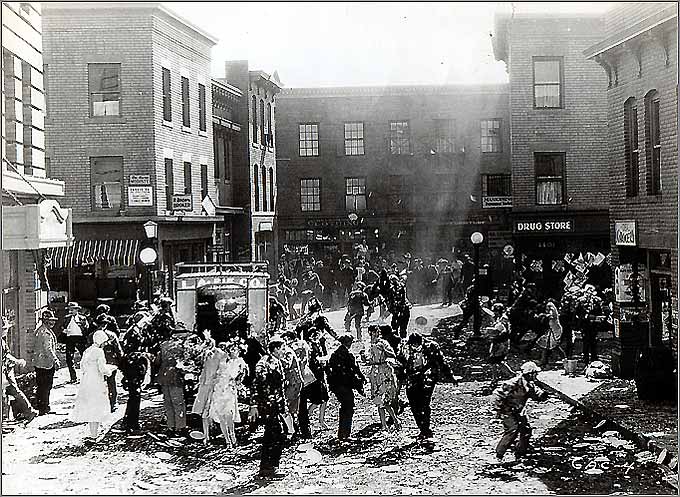
Added to the recipients of pastries are a chairwoman beating a rug (“Who threw that goober?!”), and several others. We’ve already seen a man receiving a pie on his freshly shined shoes; now, the shoeshine man also gets a delivery of his own. Ditto, the photographer whose subject is a victim. In the bakery, we see a customer make the demand , via title card, “Gimme a pie!”, before his wish is fulfilled. These little details, previously lost, add a great deal to the previously known footage. Without trying to sound pretentious, the sequence now flows much more organically, as the filmmakers intended it to be seen. Laurel’s later observation that they “made every pie count” stands truer than ever and the even greater plethora of variations on the gag is increased testament to the gag writers’ talent.
Of course, one of the most justly celebrated gags in the whole thing is a cameo by Anita Garvin. Recalling that she did it as a favour to Stan on his lunchbreak, it’s a testament to her talent that she can make a quick, off the cuff shot perhaps the funniest moment in the picture. Falling on the ground, the pie landing beneath her skirt, she registers shock, disgust and embarrassment all at once in a marvellously subtle facial expression, before getting up awkwardly, and pausing to shake her leg ever so gently to dislodge some pastry. This is where the previous version ended, but the celebrated scene now has a tag – we cut back to the boys, having seen her, laughing away, and Stan even imitating her leg waggle. At this point, the cop re-enters.
“Did you start that pie fight?” He asks.
“What pie fight?” asks Babe, his face a picture of earnest and cherubic helpfulness beneath the pastry; cut to the view of the entire city block consumed by the ritualistic pastry orgy.
Right on cue, a pie lands square in the cop’s face. The boys stifle a laugh, and attempt to saunter nonchalantly off, but turn to running as the cop gives chase. Fade to The End title, and it was all over too soon.
In an age of DVD box sets, eternally cycling YouTube playlists and instant availability of classic (and not so classic) film footage, it’s easy to take for granted how much we have. The discovery of small chunks of important footage like this, at a time when our L and H wish list is so mercifully small, really make us pore over them and appreciate every frame. And what a wonder it is to be treated to new scenes, rather like bumping into an old, beloved friend in the street and unexpectedly embarking on a new adventure. As such, I found it really quite moving to witness ‘brand new’ footage after all these years. Of course, it’s impossible not to be left wanting more – the one remaining missing scene from BATTLE, and of course the complete HATS OFF – but even if this turns out to be the last major L & H rediscovery, it’s a fitting jewel in the crown of their catalogue.
**By the way, you can catch the new version,of “BATTLE” at the Hippodrome Film Festival of Silent Cinema in Scotland next month, and due to demand there’s a repeat showing in April. It’s also planned to be part of the 2017 Silent Laughter Weekend. Watch this space for details!**

 Charley Chase has gone from being an under-represented figure on home video releases to having much of his classic work out there in superior quality. Thanks to DVD releases from Kino, AllDay Entertainment and Milestone films, a majority of his existing silent work can now be widely seen. In recent years, even his late sound shorts for Columbia have even been pulled from the vaults and released by Sony.
 Of course, the most famous supporting player to feature opposite Charley is the pip herself, Thelma Todd. Their partnership resulted in some absolutely charming comedies, of which THE PIP FROM PITTSBURG endures the most. This simple tale of Charley’s attempts to turn off a blind date, then trying to undo his work when it turns out to be Thelma, is elegantly told and full of great sight gags. As a fascinating extra, the Spanish phonetic version, LA SENORITA DE CHICAGO, is included. While it loses Thelma Todd, it gains an extra reel, including a song from Charley and some bridging scenes that actually make it flow much better than the English original (for more details on THE PIP FROM PITTSBURG and Chase & Todd’s other films together,
  LOOSER THAN LOOSE, a charming romantic situation comedy, where much of the humour is down entirely to the wonderful performances of the cast;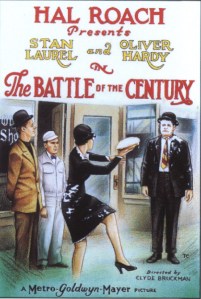
 The Lost Laugh