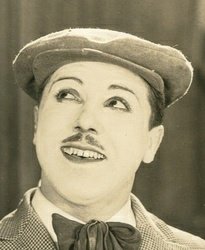
I’m midway through writing notes for the films in the new Monty Banks Kickstarter BluRay. If you’ve signed up for this one, you’re in for an absolute treat – the films are great and look fantastic! Anyway, while looking up a few bits and pieces about our Monty, I stumbled on an intriguing YouTube video. It’s an archival Czech/Yugoslavian TV documentary dedicated to Monty, from a series called ABECEDERA HUMORU, which roughly translates as ‘The Alphabet of Humour’. It seems like each episode presents a spotlight on a particular vintage comedian, with highlights from their films presented, narrated GOLDEN SILENTS style.
The interest here is that the clips chosen are big chunks of some really rare Monty films! This episode features excerpts from some of his short films, none of which I’d seen before. Some of the Banks shorts are downright obscure, so these are my best guesses for identification (this book was a big help on a couple of the films!). I’d love to be corrected, so all you silent comedy scholars lurking out there, do please chime in…
The first clip is certainly from PEACEFUL ALLEY, which has been called Monty’s version of Chaplin’s EASY STREET. (There’s perhaps more overlap with Larry Semon’s own version, THE RENT COLLECTOR, though). Some good scenes here as Monty tries to collect debts from the tough tenants, led by his very own Eric Campbell-style heavy, William Blaisdell.
Following this is a sequence where Monty, en route to his wedding, accidentally (and unknowingly) comes into possession of some bootleg booze. I haven’t got a clue which film this is from, but it’s loads of fun!
Monty unknowingly lures a crowd of drunkards through the streets. Is that Syd Crossley on the right?
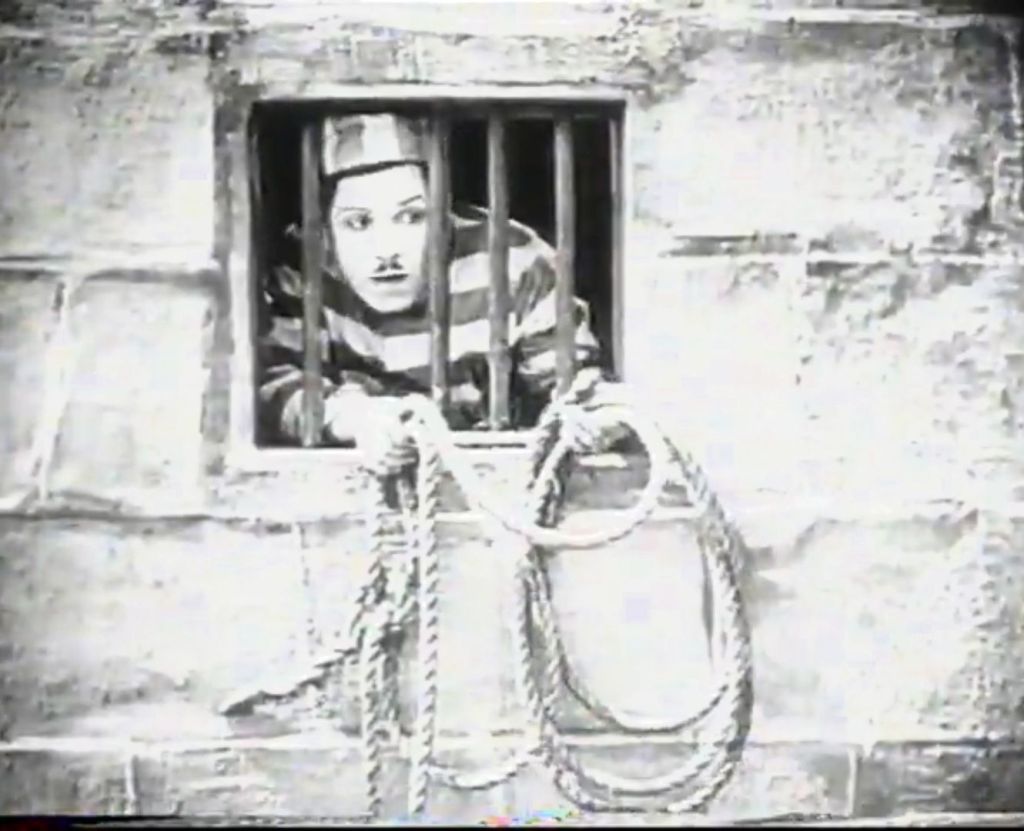
Next up, there’s another scene that echoes Chaplin, namely his ballet in SUNNYSIDE, as Monty frolics, Pan-like with some girls. This turns out to be a dream, and he’s rudely awakened in his prison cell, where an escape is in progress. He makes it out, and the rest is a series of fun chase gags, including a great one where Monty, in his prison garb, disguises himself against a striped tent. This film is SQUIRREL FOOD, from 1922. Incidentally, the lanky prison guard among his pursuants has been identified as Teddy Jefferson, younger brother of Stan Laurel.
A sequence featuring Monty trying to sneak in to a harem to rescue his girl from the clutches of a sheikh (Bill Blaisdell once more). It’s reminiscent of Lupino Lane’s MAID IN MOROCCO (though that film came after this one) I wonder if this might be EAST IS WORST? (1922)
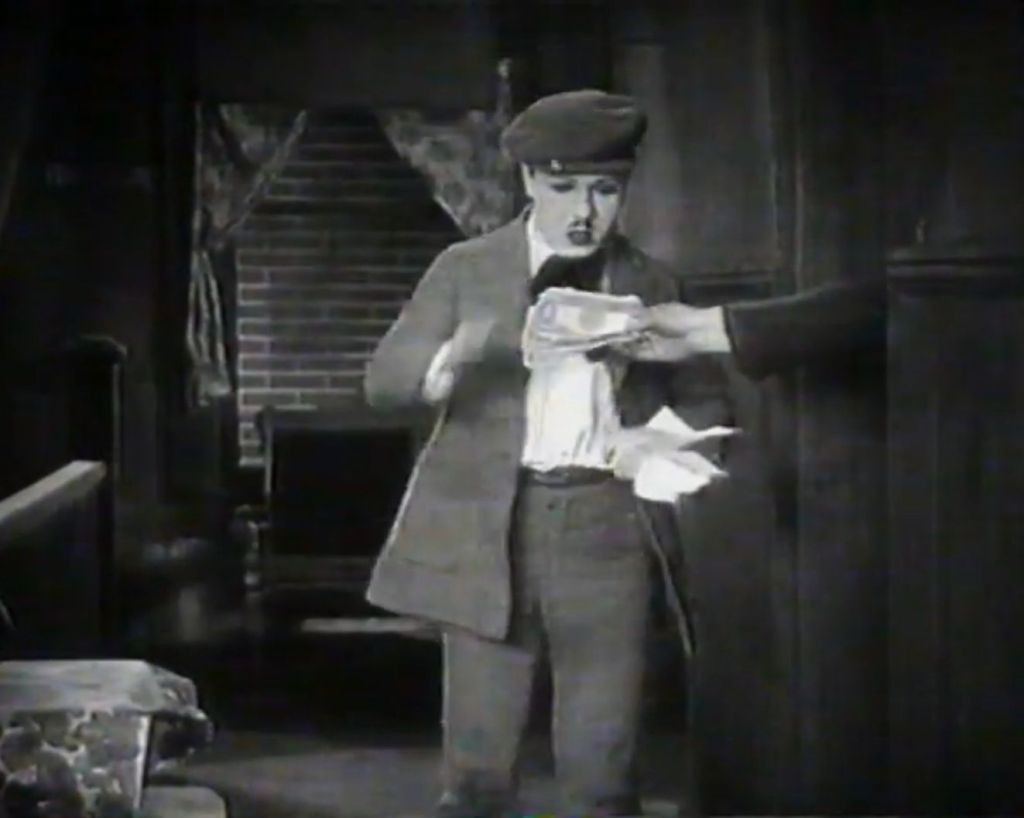
The last section is a wonderful little sequence of Monty trying to duck out of his apartment without paying his rent, then trying to evade a cop (you guessed it, Bill Blaisdell again). The more I see of Monty’s films, the more impressed I am at his ability to milk a gag to produce really well-structured comedy sequences, and this is a great example. I wonder if this might be from RENT DAY? (1922).
Here’s the video – enjoy some vintage, very rare Monty Banks!
Now, where did they get these clips and whatever happened to the original films? Perhaps they’re from the Czech archive, which definitely has some interesting silent comedies. I wonder if any more episodes from the series are out there. This opening credit sequence features shots of Larry Semon and Lupino Lane, among others. Who knows what rare gems might have been showcased in their episodes…?
From the archives, here’s an article that first appeared in issue #13 of The Lost Laugh, in 2021…
DOUBLE TROUBLE: THE SNUB POLLARD & MARVIN LOBACK FILMS
One of my earliest memories of silent comedy is of watching a ‘COMEDY CAPERS’ VHS when I was very young. One of the episodes on the tape, ‘BABY BACHELOR’ confused me: it was a virtual copy of Laurel and Hardy, but the Laurel character was wearing an enormous moustache. Who were these L & H wannabes? Years later, I learned that they were Snub Pollard and Marvin Loback, jumping on the bandwagon of fat-and-skinny comedy teams as Stan and Babe were at their zenith. I’ve always been intrigued by these copycat shorts, and endeavoured to find out more about them. Here’s the story…
It’s late 1927. Laurel & Hardy’s pairing has blossomed, and they’ve just produced their biggest hit to date, THE BATTLE OF THE CENTURY, for Hal Roach. For another ex-Roach employee, Snub Pollard, things are not going so well. Once one of the studio’s big stars in classics like IT’S A GIFT and SOLD AT AUCTION, he had been let go as the studio moved to more sophisticated comedy. A series of shorts at the low-budget Weiss Brothers studios was a step down the ladder; even further down was a return to vaudeville when that series ended.
While Snub was treading the boards, Laurel and Hardy’s meteoric rise gave someone at Weiss Brothers a brainwave: why not produce their own version of the team, with Snub as the thin half? Pollard was called back to Weiss Brothers in early 1928, and teamed with large comic Marvin Loback. Loback was a veteran of Sennett and Roach, and had even appeared with Snub a few times in small parts.
The films that resulted might charitably be called homages to Laurel & Hardy; less kindly, they could be called blatant rip-offs. To be fair, some of the films were more original than others, and there was always a certain amount of shared ground and gag-borrowing in silent comedy. However, the way that some of the Pollard-Lobacks like SOCK & RUN re-enact whole chunks of L & H films is particularly shameless. What particularly attracted attention is the one-time belief that these shorts were made before the Laurel & Hardy films they resemble. We now know this to be untrue. However, there do seem to be some examples where the Pollard films did a gag or routine simultaneously or before the Roach crews.
The films are an interesting sidelight in Snub’s career, and a fun curio for L & H fans. The Laurel & Hardy influence is obvious from the outset, but is painted broadly: the amount of nuance may be gauged from the fact that Loback’s character is called ‘Fat’. There’s none of Oliver Hardy’s quiet dignity in that! To be fair, Loback does a decent job throughout the series of replicating Hardy’s impatience, if not his charm. It’s his presence that really brings the L & H comparison. As for Snub, he hasn’t changed his appearance from his standard costume of bowler, moustache, striped shirts and spats. As far as his performance goes, he’s definitely gone a bit more passive, but his trademark moustache is a handicap in reproducing Stan’s blank innocence. He rarely does a complete rip-off of Laurel mannerisms (although he does a crude version of the cry in one film), but the intention is clear.
Though the first few films of the series mainly aped L & H in the comic’s appearance, soon more similarities began to creep in. Perhaps it was lack of inspiration for new material, but the intentional effort to piggyback on the team’s success soon becomes a bit more blatant by –ahem- borrowing their material. Sometimes the likenesses are vague – Snub and Marvin as two sailors in HERE COMES A SAILOR, or a hint of DOUBLE WHOOPEE in MITT THE PRNCE, for instance. At other times, the similarities constitute plagiarism pure and simple, as entire gags and plots are ripped from L & H films like FROM SOUP TO NUTS, PUTTING PANTS ON PHILLIP and SHOULD MARRIED MEN GO HOME!
The L & H connection has brought the Pollard-Loback films into focus now and again, particularly when one theory suggested the films actually pre-dated the Laurel & Hardy films! In the pre-Internet days, and before the onset of trade paper archives like the Media History Digital Library, States-Rights films made by companies like The Weiss Brothers were obscure and hard to trace. As a result, the films seem to have been confused with Pollard’s first (solo) Artclass series, which were made in 1926-27. We now know that the Pollard – Lobacks were released in two batches, six films in 1928-29, and a further four in 1929-30, disproving the claim that Laurel & Hardy were the ones doing the borrowing.
The trade magazines only gave light coverage to low-budget, indie two-reelers like these, but after sifting through, I’ve gathered a handful of more precise dates. British trades like The Bioscope and Kinematograph Weekly also came in handy – though the films generally hit the UK a little later, the release dates gives a rough indication of when they were made and registered for release. Below is the information I’ve been able to gather to pin down the dates and titles a bit more.
1928 -29
Variety reported that Snub was working for Artclass on May 2, 1928. By June 19, they note that both Pollard and Ben Turpin have finished filming their first shorts for the company (THICK & THIN and SHE SAID NO, respectively). By September 1st, 1928, Film Daily reports that an additional two films are ready: ONCE OVER & THE BIG SHOT. American mentions of the series are scant hereafter. However, the British Press picks up the slack. Louis Weiss visited London to trade-show the series in the Autumn and they were distributed by Gaumont from November 1928. The Films Act, article 6 required that all films must be registered for exhibition – these listings tells us that the other three films from the first series were SOCK & RUN, MEN ABOUT TOWN and HERE COMES A SAILOR.
1929-30
In May 1929 Film Daily reported that Snub listed four titles in production for 1929-30; however, the titles listed were actually ones from the previous season, presumably an error. Actually, the four films were DOUBLE TROUBLE, NO KIDDING, SPRINGTIME SAPS and MITT THE PRINCE. These were released with synchronised music tracks (but no dialogue) as a concession to the advancing sound revolution. Adverts exist for the reissue of these films, with soundtracks, in 1943.
All the films were filmed in the Spring of 1929, with Variety reporting that the series wrapped in the second week of May, 1929. DOUBLE TROUBLE was used to launch the second series, and was reviewed in Film Daily on August 18th, 1929. SPRINGTIME SAPS was reviewed on October 24th. In Britain at lease, MITT THE PRINCE was the last of the series to be released, in February 1930.
With the above in mind, here’s a run-down of these seldom-discussed films, in what I believe is the order of release.
THICK & THIN
THICK & THIN was definitely the first of the shorts to be released and sets the tone for the series, with Snub and Marvin as two penniless gents in a shabby boarding house, trying to cook a meal, and then sneaking their belongings out without paying the rent.
Of all the series, this is the one that most harks back to Snub’s Hal Roach films, the hidden devices that the pair use to cook their meal a bit like a less elaborate reminder of IT’S A GIFT, STRICTLY MODERN and other films featuring Snub gadgetry.
There’s also a bit of a Harry Langdon influence, both in Pollard’s subdued persona, and in a gag lifted from Langdon’s FIDDLESTICKS. THICK & THIN is undoubtedly derivative, but the gags flow nicely and it’s an entertaining little two-reeler.
2. ONCE OVER
Snub and Marvin roll into town on a freight train, riding in a boxcar of cows. There’s a funny scene featuring the atrociously fake cow heads they use as a disguise, confounding brakeman Tiny Lipson (even more so when one of the cows appears to smoke his cigar!). For a topper, they exit the boxcar under blankets that make them appear to be a strange, two-headed beast!
The bulk of the film centres around their attempts to filch some food, pursued by cop Harry Martell. Along the way, two Hal Roach gags are – *cough* – borrowed. The scene from THE FINISHING TOUCH with Stan Laurel on both ends of the same plank is used, and there’s also a gag with a mailbag and a fence lifted shot-for-shot from Max Davidson’s DUMB DADDIES
Then it’s on to the park, where they fail to steal a family’s picnic before Snub has a brainwave. Covering his hand with a long white sock, he hides in a bush and pretends to be a swan, stealing the sandwiches a lady is feeding to the birds. Unfortunately, he knocks her in the water, and the cop is on their trail again. To elude him they enter a restaurant and are put to work as waiters. A predictable level of competence ensues, and things wrap up with some pie-throwing. Though the finish is weak, ONCE OVER is maybe the best of the Pollard-Lobacks. The borrowing is less overt than in many of the other shorts, and the film rambles along happily from one gag situation to the next, with some nice original ones thrown into the mix.
3. THE BIG SHOT (Released October 1928, belatedly reviewed in Film daily, Feb 1929)
THE BIG SHOT is another one of the better Pollard-Lobacks, having some semblance of following the same story from start to finish. Snub and Marvin are reporters tasked with getting a photo of a camera-shy Scottish inventor. This involves Snub being coerced into wearing a kilt, and we’re into a semi re-run of PUTTING PANTS ON PHILIP. It doesn’t work on the same level of the L & H film – the sexual ambiguity surrounding the innocent Laurel character in PHILIP just cannot translate to a character wearing a huge moustache! To be fair, the gags don’t try to be a carbon copy and mainly just deal in the incongruity of Snub’s appearance. There are a few nice original variations, including Snub trying to change a tyre, with the draught from every passing car sending his kilt flying up. Snub and Marvin wind up following the inventor onto a boat and eventually corner him for a photo, but Snub is too generous with the flash powder and after a huge explosion, he is left clinging to the mast.
4. MEN ABOUT TOWN
After three films that borrowed from Laurel & Hardy but at least tried to have original plots, the Pollard unit pretty much gave up the pretence of trying to be original for the next few films.
MEN ABOUT TOWN is largely a re-run of SHOULD MARRIED MEN GO HOME set on the golf course, with added gags from YOU’RE DARN TOOTIN’. However, there are some occasional moments in the Weiss Bros films where they seem to foreshadow a later Laurel & Hardy moment. Here, Marvin’s attempts to contact Snub and sneak him out of the house include trying to contact him by phone, anticipate L & H’s BLOTTO of 1930. However, L &H knew how to milk the scene for all it was worth, whereas here it is just a quick throwaway gag. MEN ABOUT TOWN is definitely one of the weaker films in the series.
5. SOCK & RUN
Ok, now they’re really taking the Mickey. Not content with pinching the kilt material from PUTTING PANTS ON PHILIP, they basically re-film the entire first reel of that film, throwing in some soup gags from YOU’RE DARN TOOTIN’ and ending with a boxing match á la BATTLE OF THE CENTURY!
The PHILIP material is recreated gag for gag, from the laughter of the crowd as Snub arrives, to his medical examination, to Marvin’s attempts to keep him walking a few paces behind. Oh, but wait, it’s actually been changed – Snub is French, not Scottish, and people are laughing at his silly top hat instead of his kilt. That ought to avoid the copyright infringement lawsuit…
Of all the Pollard-Lobacks, SOCK & RUN is maybe the one that has most secured the reputation of the series as being mindless L & H rip-offs. In this sense, it’s the worst of the bunch. On its own terms, it’s not terrible, and if you’d never seen a Laurel & Hardy picture, you’d probably find it entertaining. But if you lived in a world without Laurel & Hardy, SOCK & RUN would be the least of your problems.
6. HERE COMES A SAILOR
HERE COMES A SAILOR starts out with the boys as sailors who hire a car, in the spirit of TWO TARS, but doesn’t get down to mass car destruction (something Weiss Bros surely didn’t have the budget for). Instead, it takes a left turn to become a clone of FROM SOUP TO NUTS as the pair get jobs at a dinner party, down to Snub serving the salad “undressed”.
There is one nice original gag, as Snub accidentally causes a cameraman’s tripod camera to collapse on top of him; bumbling around on all fours with the cloth over his back and the lens dangling out in front, the man resembles some strange elephantine creature!
7. DOUBLE TROUBLE
Snub and Marvin unsuccessfully rehearse and audition their terrible vaudeville act, then are hired as process servers to repossess their landlord’s piano. This second series of Pollard-Lobacks are where some of the confusion over their originality seems to have come from. While the first-series L & H rip-offs like SOCK & RUN are blatant steals, the second batch do actually contain some gags or situations used by Pollard & Loback before Laurel & Hardy. DOUBLE TROUBLE is a case in point; Snub and Marvin’s attempts at repossession anticipate BACON GRABBERS, not just in story, but also down to individual gags.
Held back until after L & H’s first few talkies, BACON GRABBERS wasn’t released until October 1929, but DOUBLE TROUBLE was filmed before May, and had already been released and previewed by August of 1929. Therefore, it couldn’t have been a simple case of Les Goodwins or other Weiss gagmen having been to see the latest L & H film at their local theatre and filling their notebooks with ideas.
However, while DOUBLE TROUBLE may have reached cinemas before BACON GRABBERS, the Laurel & Hardy film was almost certainly finished first. My theory is that a Roach gagman moved over to Weiss Brothers, probably during the time when the Roach studios were being fitted out for sound. Another possible ‘mole’ was Bert Ennis, Snub’s gag and title writer. Ennis doubled as a publicist, and had his own regular column in Motion Picture Classic, so was probably quite well connected with other studios.
8. NO KIDDING (September 1929)
NO KIDDING is a fun little short, featuring Snub and Marvin accidentally in charge of a toddler, and then having to hide him from the landlord of their bachelor apartment. The toddler is actually played by midget Billy Barty (incidentally, he played a similar role in the Laurel-Hardy SAILORS BEWARE). There are some amusing scenes as they disguise the toddler as an adult in a suit, complete with cigar, but the deception is undermined as he proceeds to make various noises and arouse the landlord’s suspicion.
Again, there’s a parallel situation of the Snub film seeming to pre-empt the Laurel & Hardy film. The central situation of the team hiding an unwanted guest in their apartment was also the basis of ANGORA LOVE, and one particular gag appears in both films. As the landlord lectures Snub & Marvin/Stan & Ollie that “this is a respectable boarding house”, a woman walks behind him towards her room, pursued by a sailor! NO KIDDING was filmed in early Summer 1929, and released in the Autumn, but ANGORA LOVE wasn’t released until December 1929. The Roach Mole seems to have been at work again…
(By the way, this is the short I saw on COMEDY CAPERS VHS, cut down and retitled…)
9. SPRINGTIME SAPS (October 1929)
SPRINGTIME SAPS is a ragbag effort that changes situations as the team run out of gags for each one. The best scenes are set in the park, with Snub and Marvin attempting to get 40 winks on a bench before being woken by a cop, and then trying to steal a man’s cigar.
When that’s milked for all the comedy they can manage, the pair get jobs as taxi drivers, mainly so that they can nab a gag from the Sennett film TAXI DOLLS. Then things peter out in some feeble haunted house comedy.
The most notable aspect of this film is a moment where a man angrily gives Snub the middle finger! It’s not a slip or even made to seem like one – it’s just blatantly there, in full shot! It shows how low under the radar these states-rights films must have flown, particularly at the tail end of the silent era.
10. MITT THE PRINCE (Release dates variously quoted as Dec 1929 and Feb 1930).
Snub and Fat are two incompetent handy men. Sent to deliver some parcels to the social-climbing Mrs Woodby-Noble (Ho Ho!), they write off the car on the way there with bit of L & H patent tit-for-tat. When the Prince who is supposed to attend fails to show, the hostess persuades Snub to take his place. There’s a vague hint of DOUBLE WHOOPEE in this premise, but no direct stealing of material.
The best thing about MITT THE PRINCE is a nice running gag of Snub accidentally getting his hand continually in others’ pockets; other than that, it’s a middling effort.
The series wrapped in May of 1929, and with it Snub’s career in silents. However. there was still one last gasp for his starring career, and his association with Weiss Brothers. In July 1929, Film Daily reported that the company was planning some talkie shorts, with Snub heading east to film some. Two shorts resulted, and the Pollard-Loback faux L & H vibe was dropped:
HERE WE ARE (filmed July 1929, released August 1929 )
Snub played a plumber’s assistant, who ends up pretending to be the plumber’s wife. Obviously, he didn’t wear his moustache in this one, or the deception wouldn’t have been very convincing!
PIPE DOWN (Trade shown September 1929)
Snub was teamed with Jack Kearney as a pair of sailors on shore leave who keep running afoul of tough guy Gunboat Smith, ending in a slapstick fight. After Kearney knocks smith unconscious, the pair light cigarettes, but an open gas lamp next to them causes a huge explosion. At least Snub’s starring career ended with a literal bang! Variety wasn’t impressed, calling PIPE DOWN “third-rate Vaude stuff passed off as film comedy”.
These two talkies were released in the UK in February, 1930.
And with that, the Snub Pollard Weiss Brothers series was over. The films were hardly his most glorious moment, but they helped keep his starring career afloat a little longer. Viewed today, the films range from good fun, to middling, to outrageous rip-offs (sometimes within the space of the same film!), but they show an interesting sidelight to how silent comedians could try to meet changing tastes and demand for particular styles of comedy. They are also a reminder of how special, and how hard to replicate, the chemistry between Stan Laurel and Oliver Hardy was.
You can enjoy some of Snub’s Weiss Brothers films (and a host of others from the studio, including Ben Turpin and Jimmy Aubrey) in the great DVD WEISS-O-RAMA
Great news for silent comedy fans in the U.K.: Kennington Bioscope’s Silent Laughter Weekend is returning to London’s Cinema Museum on November 4th – 5th. Once again there’s a fantastic programme of rare and classic shorts and features, with live accompaniments and guest introductions.
We’ve got films that haven’t been seen anywhere for almost a century, and premieres of recent restorations, including two classic Charley Chase comedies you won’t have seen before! There’s also an exclusive bit of ‘new’ Laurel & Hardy footage alongside some of their classic shorts, and the premiere of Dave Glass’ brand new restoration of Monty Banks’ PLAY SAFE! There are rarities that only survive via small gauge prints, plus wonderful and rarely screened features starring Edward Everett Horton, Mabel Normand and Max Linder.
Present via video introductions and presentations will be some of the most knowledgeable silent comedy experts in the world: Steve Massa and Richard M Roberts. We’ve also got plenty of surprises waiting…
Amidst all this fun and excitement, there is a bittersweet note as this will be the first Silent Laughter without its founding father, David Wyatt, who passed away last October. As well as one of the most knowledgeable film historians, DW was always generous with sharing rarities from his connection and passionately believed in making opportunities for silent comedies to be seen the way they were intended. He was a big supporter of The Lost Laugh, and a great friend. It was his enthusiasm that drove the Silent Laughter weekends, and the continuation of this happy, joy-filled event is one of his great legacies. We’ll be doing our best to honour that legacy, including a special tribute programme including his favourite clips and some of his own work.
Come and join us! Tickets on sale now – £30 for the whole weekend. With 12 shows in the programme, that’s just £2.50 per screening, an absolute steal! (there are also day and evening tickets available too)
Monty Banks is one of the most underrated silent comedians, in my opinion. A likeable performer and great gagman, he made a string of shorts and, yes, features, that hold up very well but are rarely seen. One of those features, PLAY SAFE, is a bit of a classic in the silent thrill comedy genre, featuring an epic stunt-filled train chase that was excerpted by Robert Youngson in DAYS OF THRILLS AND LAUGHTER.
Now, Dave Glass has just launched his newest Kickstarter project, putting the spotlight on Monty. Included is the FULL version of PLAY SAFE, for the first time anywhere! There are also lots of other goodies, too – this is going to be an essential release. Take a look at the video below and head to the link to get your copy. But don’t delay, it’s only a 30-day window to pledge your support!
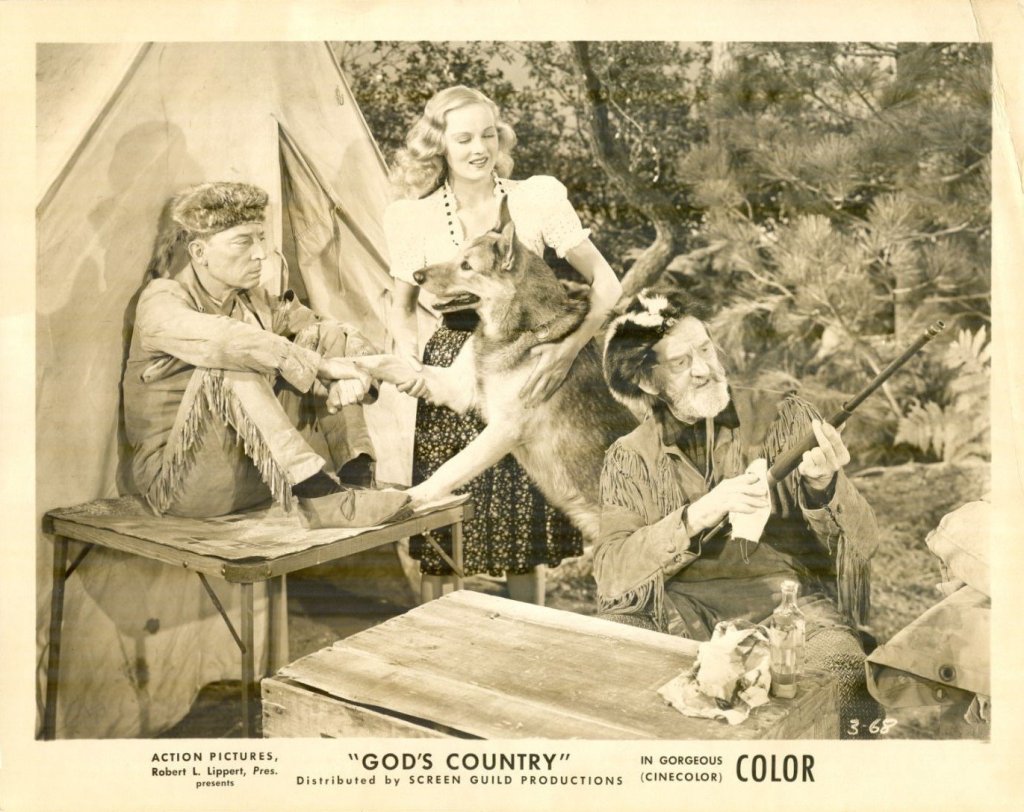
The mid-late 1940s are an interesting time in Buster Keaton’s career. The comedy short market was pretty much dead in the water, but he hadn’t yet made his television debut. In the middle ground between these two fields, he made several supporting roles in feature films. Some, like FOREVER & A DAY or SAN DIEGO, I LOVE YOU, were quite prestigious, but there were several more obscure ones that are seldom seen today. GOD’S COUNTRY is one of the most obscure of all.
Released in April 1946, this feature was a low-profile B-Western/outdoor adventure film starring Robert Lowery and Helen Gilbert. It was directed by Robert Emmett Tansey, a veteran of the genre. The main plot concerns Lowery hiding out in the backwoods of the NorthWest when he is wrongly accused of murder. Adding a little light to this heavy plot, Keaton plays “Old Tarp”, a coonskin wearing bumbler. Though many silent comedians – among them Snub Pollard, Andy Clyde and Keaton’s old buddy Al St John – had often essayed the comic Western sidekick role, this is a rare diversion into the genre for Buster.
Sadly, he doesn’t get much to do, but does get one comedy routine to himself, attempting to making a Chilli while being interrupted by a raven, squirrel and raccoon. It’s hardly a classic Keaton routine, and he’s further stymied by Tansey’s direction, but it does have some amusing moments. It’s always nice to see Buster doing his thing, and here there’s the extra bonus of seeing him do it in Cinecolor. Enjoy!
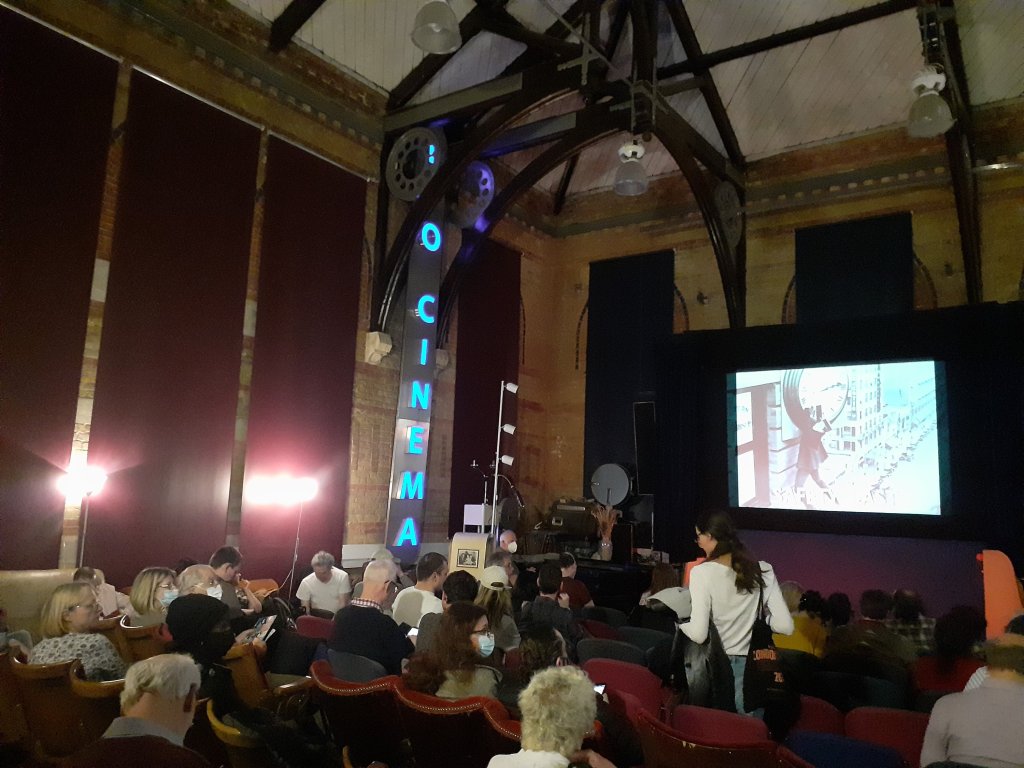
I’ve just come back from the long-awaited return of Kennington Bioscope’s Silent Laughter Weekend. The world has changed a lot since the last one in 2019, and we’ve certainly all earned some good laughs! Finally, we could enjoy another full weekend of rare and classic silent comedy, and what an occasion it was. There was really something special in the air at The Cinema Museum this weekend. The films, the live music and the audience seemed even more wonderful and I think we all laughed more readily and joyously after the time away. It felt so great to be back.
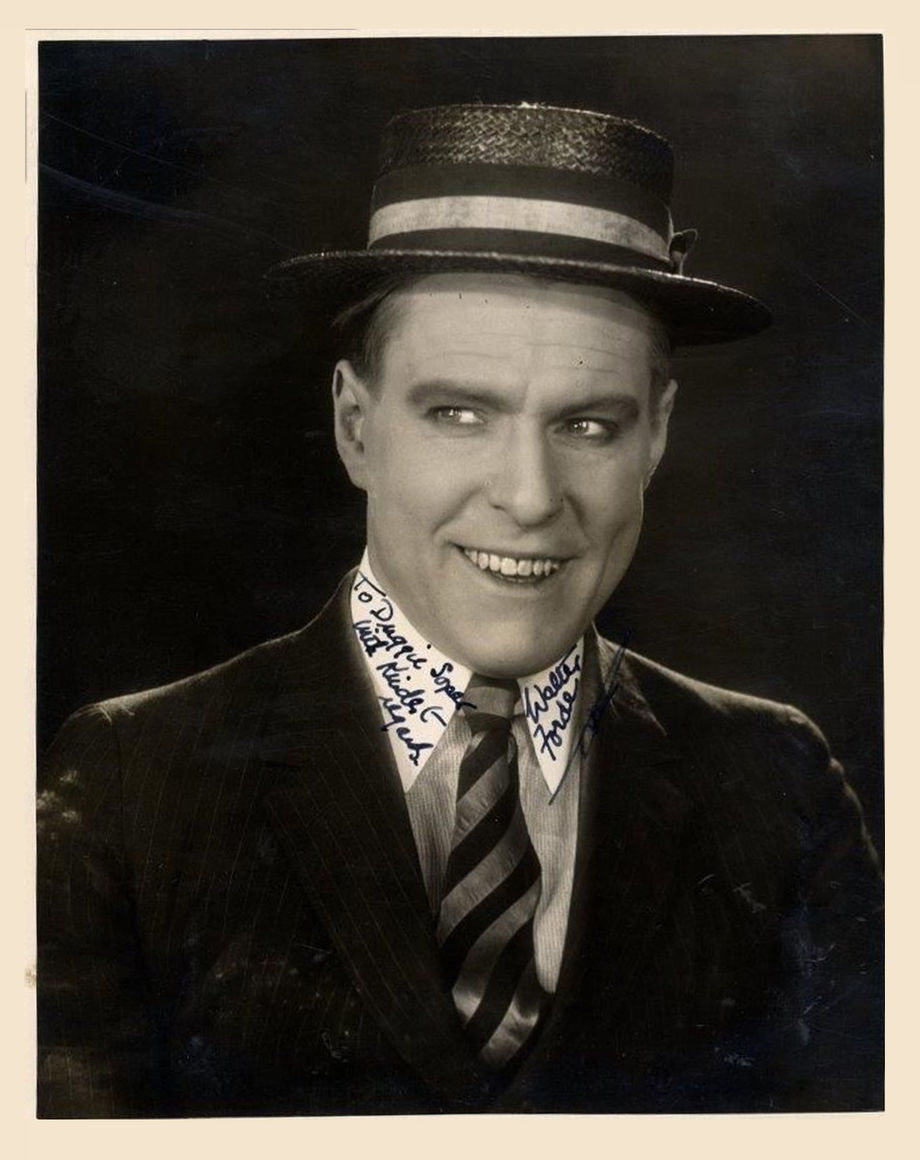
Walter Forde
Saturday’s programme began with Walter Forde’s WOULD YOU BELIEVE IT. I’ve wanted to see this feature on a big screen for years; having only seen it, unaccompanied, on a Steinbeck in the BFI’s basement. Forde plays an inventor working on a wireless controlled tank – but spies from a hostile nation are out to steal his plans and sabotage the tank before the war Ministry gets it. This isn’t quite a classic, but a great little film with a uniquely British flavour – the highlight is a wonderful chase sequence on the London Underground (actually a specially built replica constructed at Nettlefold Studios). The opening scenes in a Toy shop feature some great gags too, including Forde’s attempts to gift wrap some helium-filled balloons. Although he began as a Chaplin imitator, and his later work is often compared to Harold Lloyd, Forde definitely has a style of his own, and the gags in this film are almost all uniquely his. He mixed thrills with his comedy too, and the climactic scenes of his tank (a genuine one borrowed from the War Office) running amok are genuinely exciting. Geoff Browne, author of the only book on Forde, gave some entertaining insights into the making of the film. There’s more on Forde here, and in issues 12 & 13 of The Lost Laugh magazine!
Next up, silent comedy expert Steve Massa, beamed in virtually from the U.S. to celebrate Roscoe Arbuckle. Steve’s presentation, accompanied by a wonderful montage of clips compiled by Dave Glass, really showed Roscoe in a new light. Like his terrific book on Arbuckle, it allowed us to focus on his comic skills and achievements, rather than that scandal. Roscoe’s ability to flit between slapstick chaos on a grand scale to subtle farce and even serious acting in films like THE ROUND UP deserves more praise, and the compilation of all these skills together in Steve’s presentation really showed what a multi-faceted talent he was. The show concluded with a complete screening of HIS WIFE’S MISTAKE (1916), a lesser-known but terrific little short, with some great slapstick routines for Roscoe.
Into the afternoon, and we had a programme of ALMOST LOST LAUGHS – films that nearly didn’t survive, but were rescued and/or rediscovered in the nick of time. These included Charley Bowers in MANY A SLIP, the surviving reel of the Charley Chase-Stan Laurel- Oliver Hardy curio NOW I’LL TELL ONE, and Edward Everett Horton’s DAD’S CHOICE. All great fun, and a good sampler of the stylistic breadth of silent comedy: surrealist stop motion, to situational slapstick to farce comedy in three easy moves.
I’d never seen Mary Pickford’s last silent, MY BEST GIRL, before. This was a real treat! The storyline of a shopgirl in a big store has some similarities to Clara Bow’s IT, but for my money this was a much funnier film. Pickford handled situational humour and slapstick with equal flair, a highlight being her attempts to walk through a busy store while carrying an enormous pile of pots and pans. The film depicts the burgeoning real life romance between Pickford and co-star Charles ‘Buddy’ Rogers. There’s an absolutely charming sequence as Mary hitches a ride on the back of a truck, “accidentally” dropping astring of objects so that Rogers will keep following her and returning them.
There’s also one hell of a comedy cast in this film, adding to the fun; stand up and take a bow Lucien Littlefield, Sunshine Hart, Mack Swain, William Courtwright, Sidney Bracey and Carmelita Geraghty.
Cinematographer Charles Rosher made MY BEST GIRL positively glow, and was nominated for an Oscar, only to lose out to… himself. He received his award not for this film, but for his work on the classic SUNRISE, nominated in the same category. Thanks to Chris Bird for sharing his rare print of this sparkling rom-com.
I’m a huge Harry Langdon fan, so it was a real pleasure to be able to introduce a showing of THE STRONG MAN, his funniest feature film. I know Harry can be an acquired taste, but I was delighted to see the film go down really well with the audience. A huge boost to the film was Meg Morley’s piano score. With his slow performance style and quirky rhythms, Langdon is quite hard to match music to – I’ve certainly heard soundtracks that don’t really suit his style before – but Meg played an absolutely wonderful accompaniment to THE STRONG MAN that was just spot on. It was one of the best live accompaniments to a silent film I’ve seen, in fact. While we’re on the subject of music, all weekend long I found myself appreciating the live music for these films even more than usual – the absence of live cinema events in the last couple of years has really driven home how much the talented silent film pianists bring to the films. Lest we forget, this is how silent films were designed to be seen.
Day 1 finished with another classic, Harold Lloyd’s SAFETY LAST. Chris Bird gave a terrific introduction explaining how Lloyd shot the climbing sequences, and Dave Glass had an extra treat: a compilation of clips from a Spanish print he’s just acquired featuring alternate camera angles, and in some instances, completely different takes! SAFETY LAST is a film made for an audience, and boy, did it deliver the goods tonight. About half the audience had never seen the film before, and were completely wowed by it, giving it one of the best receptions ever! A jubilant finish to a great day.
Day 2 began with another Chris Bird rarity – his recently rediscovered, sole surviving print of Johnny Hines’ THE WRIGHT IDEA. This was certainly the rarest film of the entire weekend, and the screening was probably the first time it had been seen in at least ninety years. I wrote about the film in issue 13 of The Lost Laugh, but briefly, it’s a typically breezy effort from Johnny Hines featuing his attempts to market his invention of a luminous, blotterless ink. A patently contrived plot sees him mixed up with an escaped lunatic, some stolen bonds, a yacht and some bootleggers; it’s all fairly ridiculous, but a heap of fun, with plenty of good sight gags. Fred Kelsey provides a good share of the comedy as the inept Detective Flatt, and the most unconvincing prop octopus I’ve ever seen is also responsible for a good few laughs, too (If that sentence doesn’t make you want to see it, what will??). Some great accompaniment from John Sweeney kept the film bouncing along pleasantly.
Lots of fun was provided by Dave Glass’s new Billy Bevan restorations from the upcoming Blu-Ray set. ON PATROL, NIP & TUCK, CALLING HUBBY’S BLUFF and WANDERING WAISTLINES really showed that Bevan was much less two-dimensional than the received version of film history tells us. As well as an excellent performer of slapstick and sight gags, he could also add plenty of subtlety, as in the famous scene where he plays cards with Harry Gribbon (and Cameo the Wonder Dog!) in NIP & TUCK, or the gentle domestic comedy of CALLING HUBBY’S BLUFF. After seeing him in these different roles, I could fully understand how he was able to transition to work as a character actor in sound films. We were also treated to an interview snippet with Bevan’s grandson, and a behind-the-scenes featurette of how Dave has completed the restorations. If you were in on the Billy Bevan Kickstarter, you’re in for a treat!
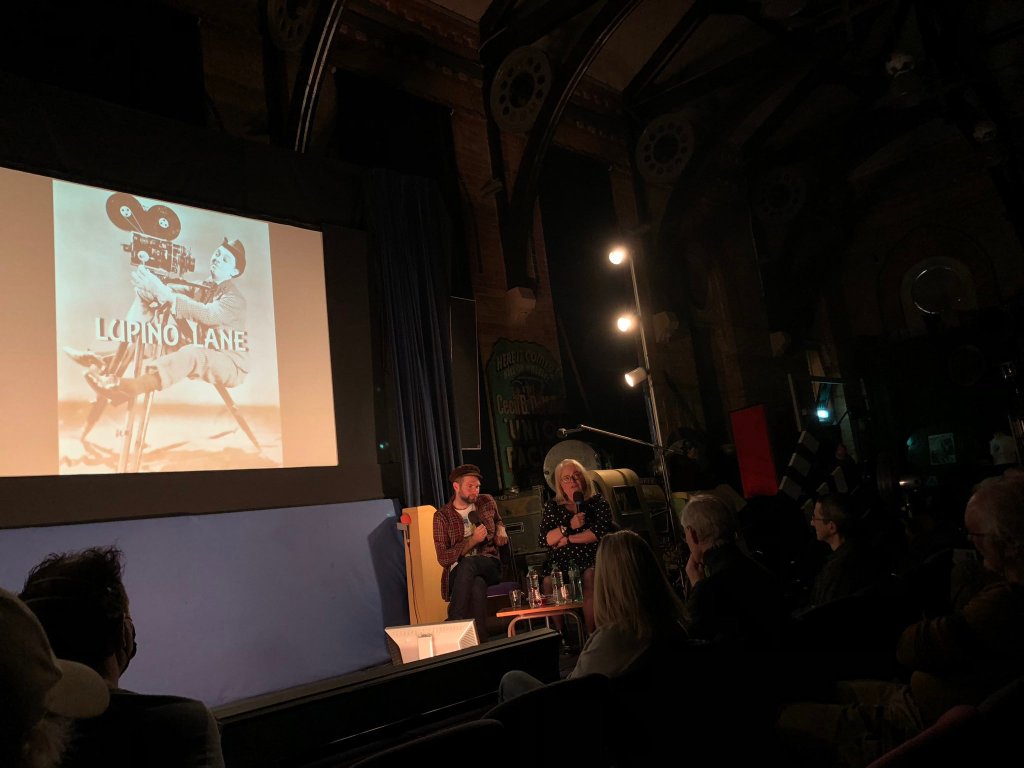
Reginald Denny followed, in the wonderful WHAT HAPPENED TO JONES? I had to duck out of this one though, as I had to go meet our special guest for the afternoon: Sara Lupino Lane, granddaughter of Lupino Lane! Sara had very kindly agreed to come along the Cinema Museum and take part in a Q & A session to accompany some of her Grandfather’s films.
(Photo from Kennington Bioscope)
Sara has wonderful memories – of her Grandfather’s many and varied hobbies, of their trips to see panto together, and of her own father, Lauri Lupino Lane. Lauri followed in his dad’s footsteps and became a performer, specialising in a slapstick ‘slosh routine’, which he even performed in Chaplin’s A KING IN NEW YORK. Sara shared a terrific story of the time Lauri and Chaplin were together at a theatre; Lauri was besieged by autograph hunters, who all failed to recognise Chaplin and totally ignored him!
Sara was also kind enough to share one of her treasures – a can of film that she’d forgotten about for years, but had turned out to contain Lupino Lane’s own home movies! We’d kept this discovery under wraps until this weekend, but what a find they are! As well as lots of domestic scenes and clowning around, there is some priceless behind-the-scenes footage taken on the Educational Pictures lot. We get brilliant fly-on-the wall glimpses of Lane shooting MONTY OF THE MOUNTED and HALF PINT HERO; there are candid shots, outtakes and footage of Lane conferring with director Charles Lamont. There are glimpses of other comedians too: Lane’s cousins Stanley and Barry Lupino, and best of all, a previously unseen snippet of Charley Chase! Just wonderful to see, and there were some audible gasps in the room at some of the footage. As well as these rarities, we showed two of Lane’s finest slapstick ballets: SUMMER SAPS and JOY LAND, both recently restored for 2020’s Kickstarter project.
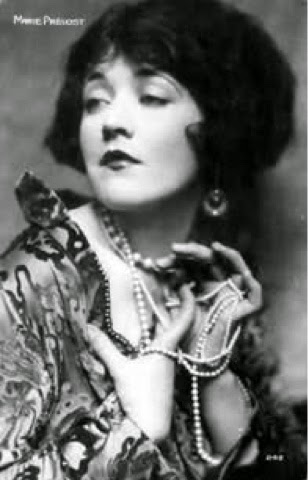
The wonderful Marie Prevost.
It was such a pleasure to be involved in hosting this screening. I’m always passionate about making sure that forgotten comedians are celebrated and introduced to new audiences, but being able to show Sara how much people still enjoy her Grandfather’s films felt extra special.
A change of pace for the next show – there’s no slapstick or acrobatics in view in Lubitsch’s THE MARRIAGE CIRCLE! This low-key film is much more subtle, but wonderfully sophisticated with fantastic direction from Lubitsch and brilliant performances. Adolphe Menjou and Marie Prevost, in particular, are just sublime. Costas Fotopoulos provided a lovely accompaniment to the film, and Michelle Facey gave a fact-packed introduction.
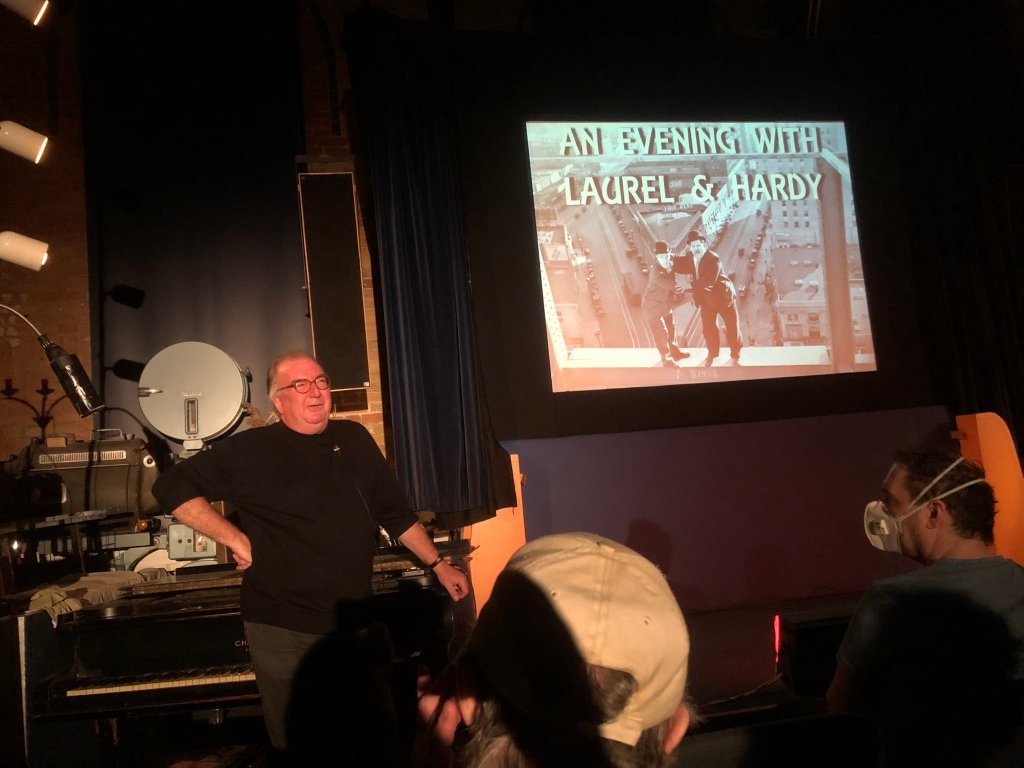
How time flies when you’re watching funny old films: it was time for the last show of the weekend already. Another treat to finish with: the always wonderful Neil Brand presenting his Laurel & Hardy show. Aside from the always wonderful clips of the boys, Neil’s intro was beautiful, describing how Laurel & Hardy had helped him through the COVID lockdown and how they were more relevant than ever. It was heartfelt and really quite emotional, and seemed to sum up the whole weekend.
Yes, there was definitely something special in the air at The Cinema Museum – the laughter seemed to flow more freely, somehow. Part of this was down to the wonderful curation of the programme by David Wyatt and the Kennington Bioscope team, but there was something else indefinable too. The enforced hiatus seemed to make everyone appreciate everything more. How wonderful to have chance to enjoy the breadth of comic talent on-screen, but also the amazing talent of the accompanying musicians; the chance to experience the extra dimension a live audience brings to these films; the chance to meet up again with fellow comedy fans we haven’t seen in years, and share favourite moments from the films. The wonderful news that the Cinema Museum has just been given a reprieve from closing down was the icing on the custard pie.
Despite everything, these century-old films are still funny, and have the power to bring people together to share in some collective joy. That’s a special kind of magic.
Now, can we do it all again next weekend??
P. S. Here are the programme notes, for anyone who couldn’t make it:
Here’s a fun little rarity, one of the few talkie shorts made by light comedian Johnny Hines. It’s an Educational Short from 1930; although Educational’s sound shorts have a reputation for being cheap, at this point they still had a bit more prestige, with decent budgets and good supporting casts. DON’T LEAVE HOME is a tightly plotted farce showing what happens when Johnny and his wife (Jean Reno) are forced to spend time apart and plan a surprise visit for each other. Hines is pretty good as a talking comedian, and the short gives him a nice mixture of dialogue, sight gags and reaction comedy to get his teeth into. It also has a juicy comic role for James Finlayson as a cynical cab driver, and a talking bit for Snub Pollard (he’s the plumber, without his usual moustache!)
There’s a blackface gag that it would have been better off without, but the rest of it is really pretty good, and it’s nice to see some silent veterans doing their thing in a strange new idiom. This is just one of the many delights on Joseph Blough’s YouTube channel, which has recently been spoiling us with many rare 1930s shorts, including Joe Cook, Ernest Truex and Lloyd Hamilton. Thanks Mr Blough for sharing these rarely seen gems!
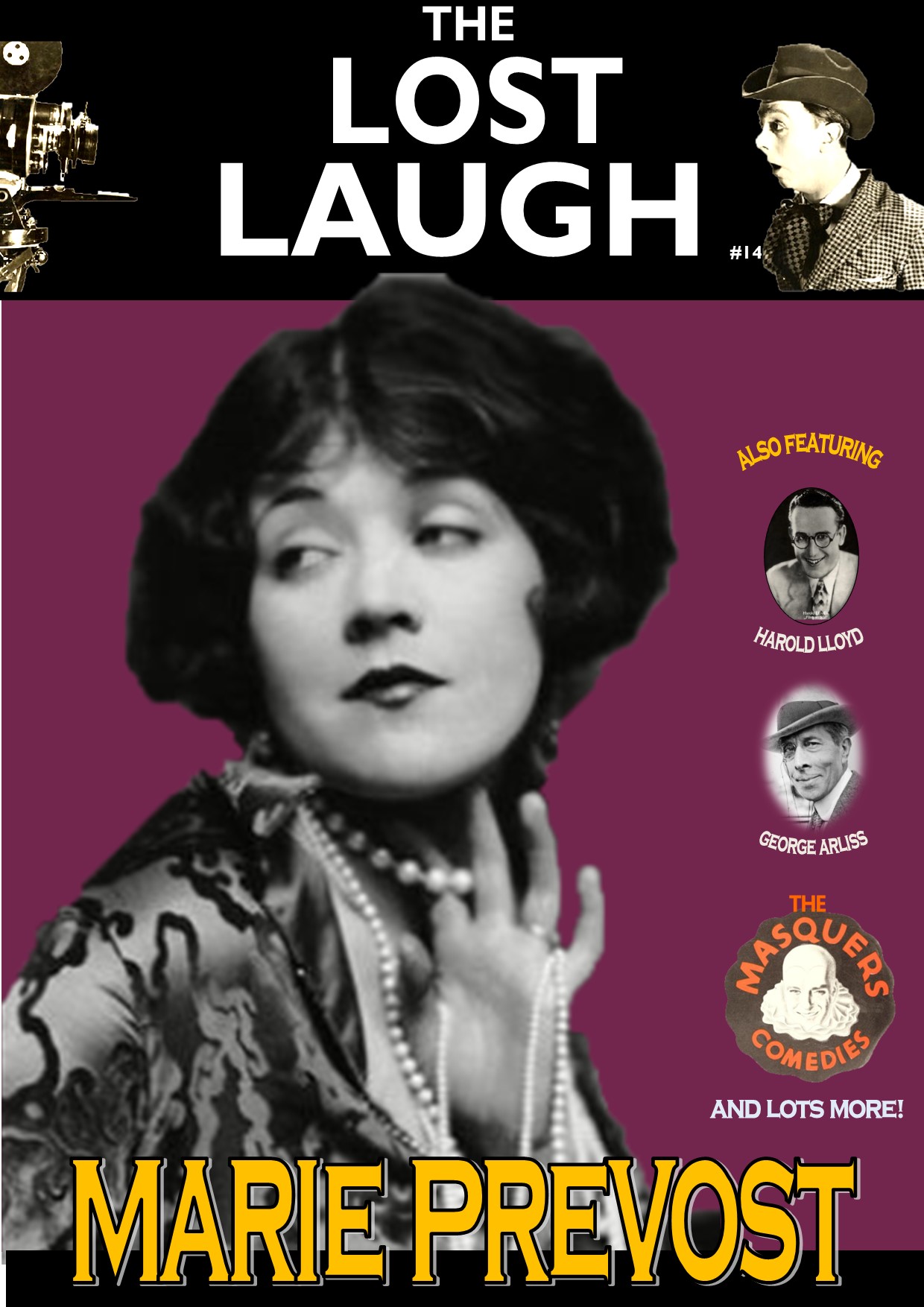
Issue 14 of THE LOST LAUGH is now available to download!
The newest issue features a focus on some of the ‘light comedies’ of the 1920s. The cover star is Marie Prevost, who is usually remembered chiefly as a terrible cautionary tale of the tragedy that can befall a forgotten star. It’s unfortunate that this has overshadowed her tremendous skill as a comic performer in both Sennett slapstick and more sophisticated farces. In issue 14, we put the spotlight back on her overlooked comedy talent.
The ‘light comedies’ of Johnny Hines, Reginald Denny and Doug MacLean also feature, and did you know that great dramatic actor George Arliss made some lightly comic feature films? . It’s a thrill to be able to publish a guest article by Mr Arliss’ biographer Robert M Fells, focussing on this forgotten aspect of his career.
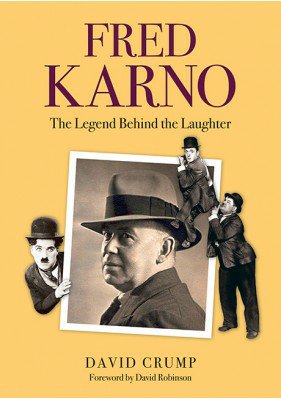
Other articles include a Q & A with David Crump, author of a fantastic new biography of Fred Karno. You’ll also find articles on Harold Lloyd‘s UK visit in 1932, the surreal and postmodern Masquers Club Comedies and forgotten silent comedian Al Alt. Plus the usual news and reviews!
*Errata: In the review of the new Charley Chase DVD, I somehow got the number of films included wrong. D’oh! There are actually 21 shorts, not 15. So, now you’ve got even more reason to buy it!
—-
The Lost Laugh magazine is totally free. However if, you do enjoy reading the issues and would like to make a donation to support site running costs, then these would be gratefully received! If you would like to donate, you can buy me a coffee on Ko-Fi. Thanks a lot!
Among comedy buffs, Fred Karno will be forever remembered as the man who discovered Charlie Chaplin and Stan Laurel, but his career involved much more than this. In the days of music halls, Karno crafted a new type of sketch comedy, and remained hugely influential for a long period of time. The list of comedy talents he worked with. In later years, his status waned; subsequently, his legacy has been largely forgotten.
Today marks the publication of Fred Karno, The Legend Behind the Laughter by David Crump. This definitive biography has been ten years in the making, and is a real labour of love. Dave very kindly took time to answer a few questions about Karno, and his quest to uncover more about the man behind the laughter.
Hi, Dave. So, why Fred Karno? What led you on this mission to research and write about him?
DC: I’ve always been a huge fan of comedy and as a writer of pantomimes, the history of panto routines and gags was something I’d become increasingly interested in. However, the Karno connection was pure co-incidence. One day in my office my secretary stumbled over some random boxes which had been left where they shouldn’t and exclaimed “It’s like Fred Karno’s Army in here!”. I had never heard the expression and asked her what it meant. She just said that it meant anything chaotic, but she had no idea why people said it. I googled Fred Karno and found very little information on the internet (this was about 12 years ago) except a brief biographical paragraph which said that he had been a circus acrobat, turned impresario who was responsible for discovering Charlie Chaplin and Stan Laurel. I was intrigued. I lodged in the back of my mind that this sounded like someone who I should know more about but didn’t do anymore about it for a year or so. Then a theatre company I was working with were deciding on their next production and were considering both Mack and Mable (the story of Mack Sennett and Keystone) or Underneath the Arches (The Crazy Gang musical), some research demonstrated that Fred Karno’s story was almost a prequel to both of these and that led ultimately to me writing a musical about Karno’s life based on a 1971 biography. We staged that in Birmingham in 2010 and as a result I was introduced to some members of the Karno family, they gave me access to a treasure trove of archive material which demonstrated to me that much of what we thought about Karno was clearly untrue. I spent the next ten years writing this new biography which I hope corrects previous errors and sets the record straight for a man who was such an extraordinary influence on comedy, film and popular culture.
Stan Laurel, Charlie Chaplin and many others referred to Karno as “the Guv’nor”, and acknowledged the debt they owed him. What do you think were the comic skills they learned most from working in his troupe?
DC: Karno was an acrobat by background, and had begun in circuses where he would perform on the high wire, the parallel bars and on horseback, but in those small circuses the acrobats also had to perform as clowns. He later bought this physical purely visual comedy to the music hall on a scale and with a complexity which was innovative and set him apart from his contemporaries. His headquarters at The Fun Factory became the base for his companies and he had an Alex Ferguson approach to management – find young performers and train them up, that way you keep costs down and ensure that they perform in a consistent Karno style. Well over 2000 individual comics worked with Karno during his career and many young discoveries went on to enormous success. Will Hay, Billy Bennett, The Crazy Gang, Syd Walker, Frank Randal, Fred Kitchen, Max Miller, Sandy Powell and many more. Karno trained them all in visual comedy first and foremost (especially in the early days). When Karno companies crossed the channel to tour America they turned up performing this breakneck acrobatic visual comedy just as silent films were in their infancy and studios were looking for visual comics. Karno’s comics were trained in pratfalls, custard pies, taking a punch, falling down stairs, etc etc. The Karno comics formed were quickly poached by the studios and formed a nucleus of comics which quickly became omnipotent in silent comedy: Charlie Chaplin and Stan Laurel are the most famous but there was also Charley Rogers, Eric Campbell, Albert Austin, Jimmy Aubrey, Billy Reeves, Billie Ritchie and many others.
Karno taught them not only physical comedy but also how pathos could be mixed with comedy to create tension and release, leading to bigger laughs, Stan recalled that Karno would always say “Keep it wistful gentlemen” – and Chaplin took that to the silver screen.
As well as physical comedy skills and subtleties of pathos, Karno instilled in his troops a strong work ethic, formed in his circus days, which led him to be both a perfectionist and a control freak. It is no coincidence that both Chaplin and Laurel were hands on both on and off screen, in writing, directing, editing, etc. that attention to detail was very much a Karno trait. So it wasn’t just the physical acrobatic comedy, the timing and subtleties of performance but it was also his approach to ensuring every aspect of a production was spot on.
The list of performers Karno employed is like a Comedy ‘Who’s Who’ list. Did he ever discuss his particular favourites? How did he view the meteoric rise of Chaplin?
DC:I’ve noted some of the names above, and although he was very proud of both Chaplin and Laurel’s success, the comedian he claimed ‘always did him the most credit’ was Fred Kitchen. Kitchen was a huge star of the halls in his day, but never transferred to film so is now largely forgotten. His style was a significant influence on Chaplin, so much so that Kitchen said he didn’t go into film because everyone would have assumed he was copying Chaplin when in fact the opposite was true.
When Chaplin first began making films he was just another one of Karno’s comics who had defected, he had not stood out. After he became a global superstar everyone was quick to claim the credit. Karno did so to an extent but he gave Chaplin credit for his own abilities, and they stayed on reasonable personal terms. However, in later life Karno began to resent Chaplin’s fame, feeling he’d achieved it largely off Karno’s material and Chaplin did nothing to help Karno when he desperately needed it after his bankruptcy. The story that Chaplin funded a retirement business for Karno (an off licence in Poole) is untrue. Only Stan Laurel gave Karno any sort of support or help in later life.
Karno’s career was boosted by Chaplin’s fame – and his most popular music hall sketch ‘Mumming Birds’ which had first been performed in 1904 (four years before Chaplin joined Karno) was later publicised as ‘the sketch that made Charlie Chaplin famous’. This helped keep the sketch running until well into the 1930s, supposedly the longest running music hall sketch of all time.
Your research for the book must have led you to meet some interesting people and visit some interesting places. What were the highlights?
DC:Lunch with Richard Bann and the late Chuck McCann at the Culver City Hotel in L.A. was a great experience, to hear Chuck tell stories that Stan Laurel and told him directly, and Richard sharing his memories of Hal Roach was a privilege. Kate Guyonvarch of the Chaplin archive in Paris was amazingly helpful and I had a wonderful time rooting through archives over there. I’ve met so many people along the way and all have been lovely, helpful, interested and so generous in sharing their stories and information. Particularly Chaplin’s biographer the legendary David Robinson who also wrote a lovely foreword for the book, and A.J. Marriot who is so knowledgeable about Chaplin and Stan’s early careers and who has acted as a mentor to me throughout the experience. I’ve been in touch with literally hundreds of descendants of Karno comics, through my website, all of whom contacted me in search of information on their relatives, and most of whom told me as much as I told them, shared photographs and family anecdotes (although they couldn’t ALL have worked with Charlie Chaplin!). Finally, meeting and becoming close friends with Karno’s direct descendants has been amazing. His granddaughter Jo, great-grandaughter Louise and great-nephew Warren are now firm friends. I was lucky enough to meet Karno’s two grandsons who lived in Palm Springs and had lived interesting lives of their own in and around Hollywood, back in 2010 – they were both in their 90s by then and are now sadly no longer with us – but they were a joy and their children are still in regular touch with me.
Did you have any particular revelations about Karno or his work as a result of doing this deep dive into his life?
DC:Lots and lots. Firstly there are two previous biographies, one Karno pretty much wrote himself in 1939 – that is a sycophantic account of his career, which is full of holes and inaccuracies and says nothing about his personal life. Then in 1971 J.P. Gallagher wrote a biography which is a scandalised account of his personal life, recounted largely by friends of Karno’s ex-wife, and largely fiction. Unfortunately every subsequent biography of Chaplin and Laurel repeats these errors and takes Gallagher’s stories as fact. I have been able to fill in the blanks, correct many errors, chart his career accurately, whilst also casting significant doubt onto many of the claims made against Karno. He was no saint, but with access to his personal letters and business files it has been possible to paint a much more objective and balanced picture of this most complex character and I hope to a certain extent, repair his reputation. As well as this, and unlike the previous biographies I have tried to set the story in the context of social history at the time, for instance Karno’s wife had an involvement in the Dr Crippen Case, Karno’s company sailed across the Atlantic just a few weeks after the Titanic disaster, on the RMS Olympic (her sister ship) – how did that feel? I’ve dug up stories on how Stan Laurel avoided the draft in World War One and how a tiny mistake on Karno’s contract may well have saved Chaplin’s life. The challenge has been that everywhere I looked I found more interesting stories, everyone Karno worked with and employed could have been (and in some cases has been) the subject of a book of their own – avoiding going down too many side alleys was difficult. The book is big, over 600 pages, and yet I have spent the last three years editing down from more than double that.
Karno’s short-lived stint at the Hal Roach studios is quite infamous among comedy buffs. Were you able to find out any more about this, and why do you think he was unable to find a more permanent home there?
DC:Oh yes, and how wrong we all were. Karno wrote regularly back home from L.A. while he was there and those letters reveal for the first time what really happened at the Roach studios and why he came home with his tail between his legs after only a few months – it’s a very interesting part of the book and I think will shed fresh light on that part of Karno’s story and also on the history of Roach’s studio.
Things went less well for Karno in later years, after the failure of the Karsino. Did you find any evidence of how he felt about the downturn of his fortunes?
DC: Yes, he was a fairly regular letter writer and I have letters to his daughter in law Queenie (Fred Karno Junior’s wife), Syd Chaplin, Con West (his first biographer) and others – they help to tell the personal story and reveal the impact of his fall from grace had on him personally and on his family. It really is a very sad story for someone who had brough so much laughter to so many people.
What do you think is Karno’s legacy to the world of entertainment?
DC:Where do I start? Imagine a world without Charlie Chaplin or Stan Laurel. How different would things have been in those early comedy films? Chaplin at least is seen as being hugely influential on the filmmakers and comedians that followed, and even today many many comedians still cite Laurel and Hardy as an influence. But Karno did much more than train and launch two of the most influential comedians of our time. He pioneered physical comedy in the music hall (bringing it from the circus), he pushed the boundaries of legislation which forbid speaking in the halls and effectively created sketch comedy as we know it today. He was hugely influential in establishing copyright around early film and its use of stage materials, he was a pioneer of musical accompaniment to his comedy and Chaplin credited Karno with teaching him that innovation – imagine film without a musical soundtrack? Finally his later comedians, like the Crazy Gang, were innovators in breaking the fourth wall and engaging directly with the audience – previously unheard of except amongst musicians. He even invented the idea of including a talent show in a professional show, still popular today – in a way we have Karno to thank for the X Factor and Britain’s Got Talent. This may all sound far fetched, and it is an oversimplification, but I think the book will support these claims. When you take these things collectively, he was quite simply the biggest single influence on comedy and popular culture we have ever known – and yet most people have never heard of him!
Thanks to Dave for his terrifically detailed answers to my questions! I’m sure, like me, you can’t wait to read the book.
Here’s more from the press release:
“From his famous nursery of nonsense, the ‘Fun Factory’, the Guv’nor conquered the world, built an empire, made millions and lost the lot. In the process he discovered and trained the early twentieth century’s greatest comedians: Will Hay, Robb Wilton, Sandy Powell, Syd Walker, Frank Randle, Max Miller, Billy Bennett, the Crazy Gang, and most significantly of all Stan Laurel and Charlie Chaplin. He pioneered physical sketch comedy and developed the raw material that Hollywood later fashioned into the finest comics of silent film. The phrase ‘It’s like Fred Karno’s Army’ entered the lexicon to describe any chaotic situation, but his extraordinary legacy is largely forgotten, lost in the mists of time and sullied by a tarnished personal reputation.
This book tells the remarkable story of the man behind the myth and reveals Karno’s huge contribution to comedy and popular culture – an impact which still resonates today.”
Fred Karno: The Legend Behind The Laughter is available now from Brewin Books, and here’s the Amazon link. For more on Karno, visit Dave’s home page ‘Khaotic’.




 The Lost Laugh