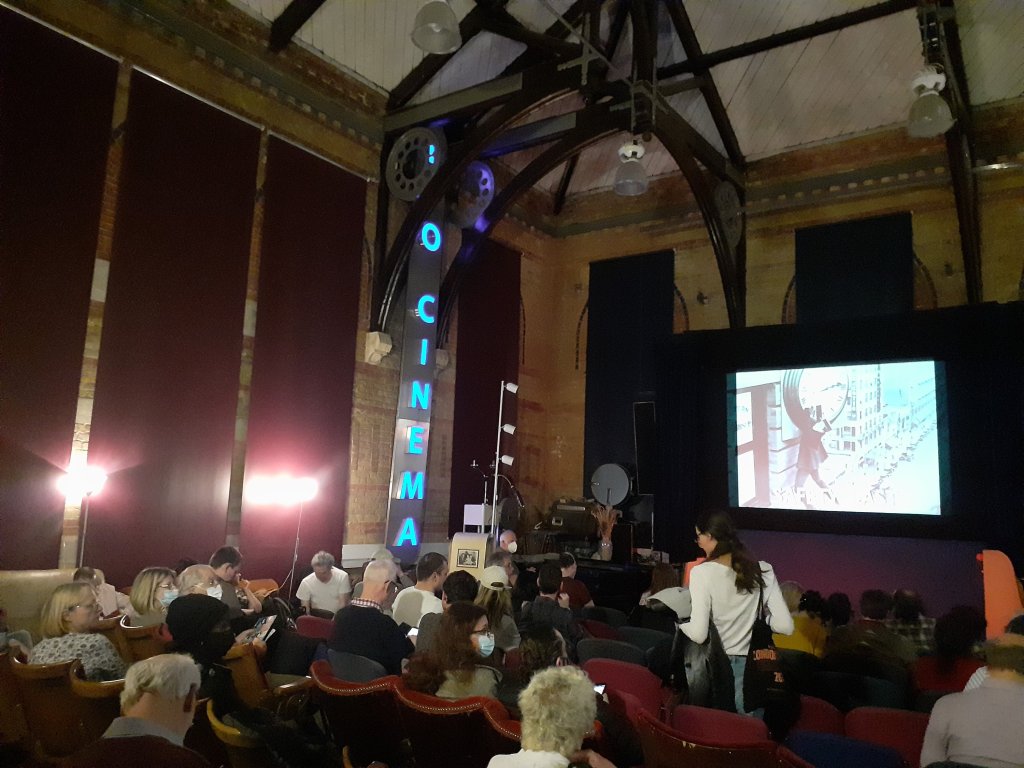
Silent laughter weekend

Silent Laughter: Free download of programme notes

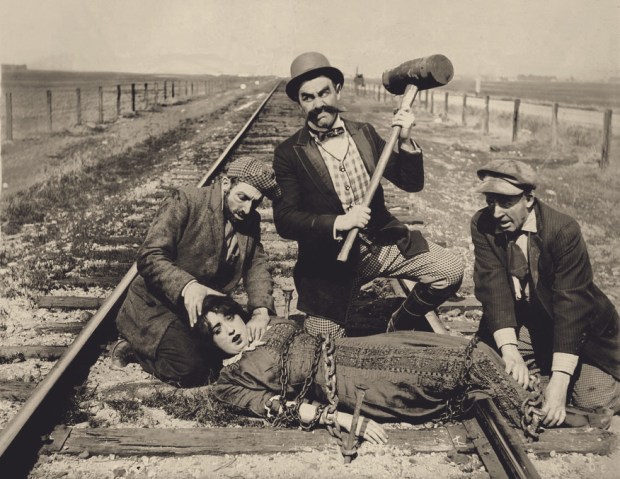
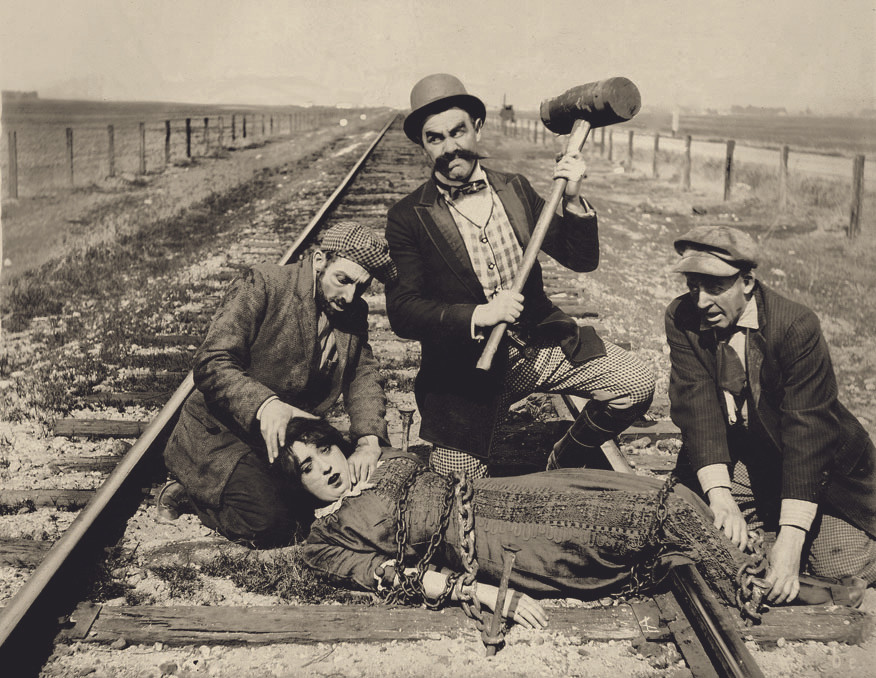
It’s the 2025 Silent Laughter event this Sunday at The Cinema Museum! A full day of silent comedies on the big screen, with live musical accompaniment and introductions from film historians. Among the line-up are W.C.Fields, Louise Brooks, Colleen Moore, Mabel Normand, Wanda Wiley, Fred Evans (‘Pimple’), Snub Pollard, a long-lost silent P.G. Wodehouse adaptation, and Laurel & Hardy as you’ve never seen them before…

The programme notes are now available for download – eleven pages of essays and commentary by Glenn Mitchell, Michelle Facey, Bob Geoghegan and yours truly. You can read them below, or download the pdf.

If you’re on the right side of the pond, it’s not too late to book a ticket. Here’s the link to the programme and tickets: http://www.cinemamuseum.org.uk/2025/kennington-bioscope-presents-silent-laughter-day/

Hope to see you there!

Silent Laughter 2025: on sale now!

It’s back! This year’s Kennington Bioscope Silent Laughter day takes place on Sunday November 23rd at London’s Cinema Museum. We’ve got a full programme featuring some brilliant silent comedies that you won’t see on the big screen anywhere else, including some being shown for the first time in almost a century! As regular attendees will know, we’re all about telling the forgotten stories of silent comedy: the overlooked performers, the forgotten gems and the long-lost. So, among the highlights this year are a rediscovered adaptation of the P.G. Wodehouse novel The Small Bachelor (1927), an unlikely pairing of W.C. Fields and Louise Brooks, and a celebration of some of the brilliant funny women often neglected in the male-centred narratives of the silent comedy genre: Wanda Wiley, Mabel Normand, Colleen Moore and Marion Byron. We’ll also be featuring some familiar favourites, too: Chaplin, Laurel & Hardy and Charley Chase all feature in the programme. All screenings feature introductions from film historians, and live music from some of the best accomnpanists in the world! Tickets are just £21 for the day – a steal! – and you can get them from this link: https://www.tickettailor.com/events/kenningtonbioscope/1922369

Read on for the full programme:

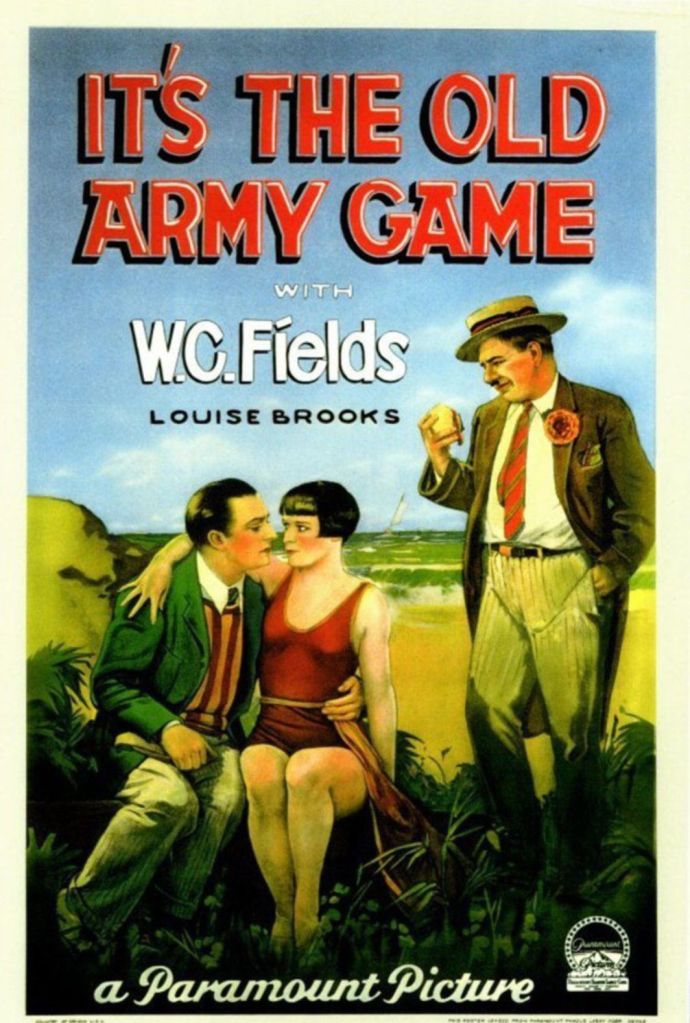
10.00 IT’S THE OLD ARMY GAME.  Though posterity remembers him as a talking comedian, the great W.C. Fields – enemy of small dogs and children everywhere – made some wonderful silent comedies. This 1926 feature follows the trials and tribulations of small-town druggist Elmer Prettywillie (Fields) and boasts some terrific comic set pieces, from his encounters with difficult customers to a nightmare picnic. It later provided the blueprint for his 1934 classic It’s A Gift, and also features an unlikely co-star: silent icon Louise Brooks!

11.30 REDISCOVERIES & RESTORATIONS
Almost a century after the silent era ended, some brilliant lost films keep resurfacing, while restoration efforts help others to live anew. Regular attendees will know that we always pull out some real goodies from the bag for this segment of Silent Laughter, and this year is no different. We’re still digging through the treasures on offer, and exact titles are TBC, but expect new restorations of long-lost (and hilarious) films starring Snub Pollard and Roscoe Arbuckle, as well as a long-lost British short Pimple’s Lady Godiva (1917). We’ll also be showing a sparkling new restoration of Laurel & Hardy’s classic Big Business.

14.00 FEMALE FUN
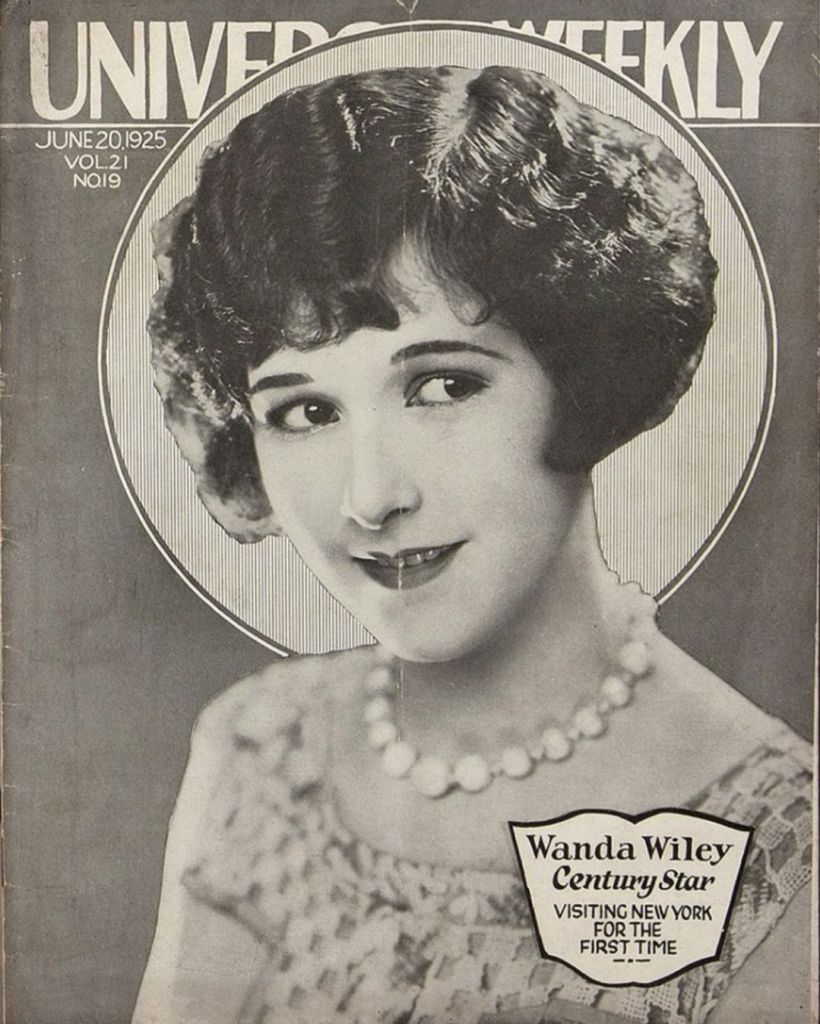
Unfortunately, our view of silent comedy tends to be dominated by male performers. Although fewer studios provided opportunities for women to shine in comedy, there were still plenty of wonderful performers who managed to break through the slapstick patriarchy to achieve stardom in their own right. Here we shine a light on three of the best funny women: Wanda Wiley proves that women can do slapstick just as well as men in A Thrilling Romance, Marion Byron stars with Max Davidson in charming situation comedy The Boy Friend, and the wonderful Mabel Normand pokes fun at vanity in the rarely seen Anything Once. Introduced by Matthew Ross.


15.45 WHY BE GOOD?
One of the defining ‘flappers’ of the 1920s, Colleen Moore sparkled in a series of deliciously frothy light comedies. Why Be Good? is a classic jazz-age tale set in a metropolitan world of department stores and night clubs: a real time capsule. Life-of-the-party Pert Kelly (Moore) falls for the boss of the department store where she works – but will her free-spirited ways be tolerated by high society?Lost for many years, Why Be Good?  was restored in 2014, complete with its original ‘Vitaphone’ music and effects soundtrack. We’ll be showing the film with this vintage accompaniment today. Introduced by Michelle Facey.

17.30 FOCUS ON… KEYSTONE
In the early teens, Keystone Studios was a crucible forfilm comedy. From Charlie Chaplin to Roscoe Arbuckle, Mabel Normand and The Keystone Cops, many of the icons of silent comedy were forged here. Dave Glass and Glenn Mitchell take a deep dive into the studio’s modius operandi and its seismic influence on comedy, with classic and rare film clips galore!

20.00 THE SMALL BACHELOR
Lost for a century, we’re proud to present this re-premiere of a rediscovered adaptation of a P. G. Wodehouse novel. Set in Greenwich Village, the plot focuses on aspiring artist Finch (George Beranger) and his romantic entanglements. The New York setting gave Wodehouse plenty of chance to gently lampoon American culture, especially through the Western-obsessed character Sigsbee Waddington. A cast of great comic character actors bring Wodehouse’s characters to life, including Lucien Littlefield, Tom Dugan, Gertrude Astor and George Davis. Directed by light comedy specialist William A Seiter, The Small Bachelor fizzes with gentle wit and farcical humour: a rediscovered treasure for fans of Wodehouse and silent comedy alike.
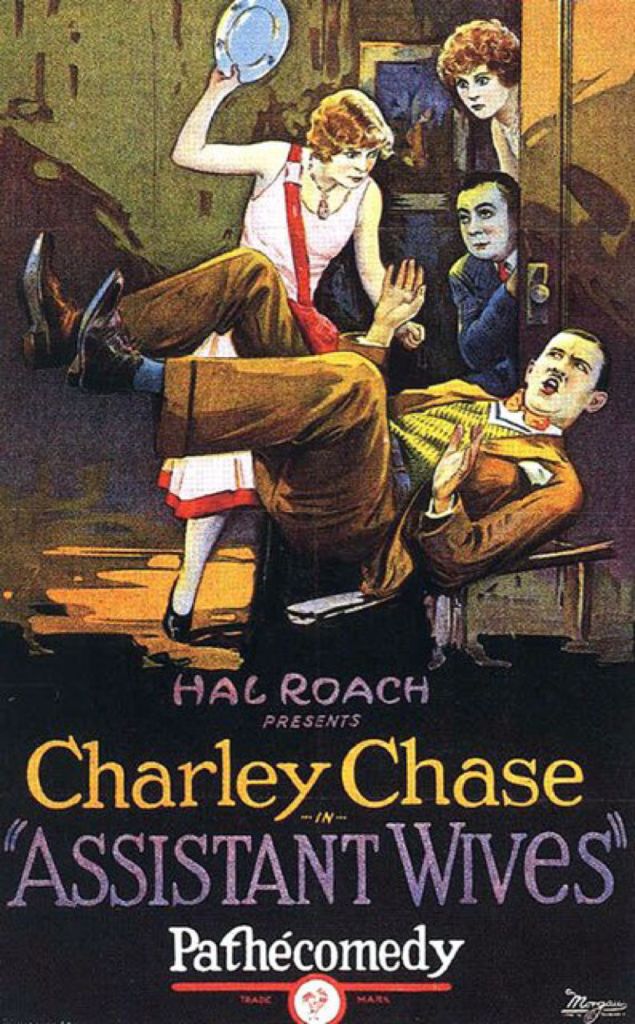
This screening will be introduced of Christopher Bird, who rediscovered the film. Continuing the spirit of the main feature, The Small Bachelor will also be supported by a short film starring Bioscope favourite – and farceur extraordinaire – Charley Chase. Limousine Love is one of Chase’s all-time funniest films, as he -innocently – acquires a naked woman in the back of his car en route to his wedding! 


We hope you’ll join us on November 23rd!

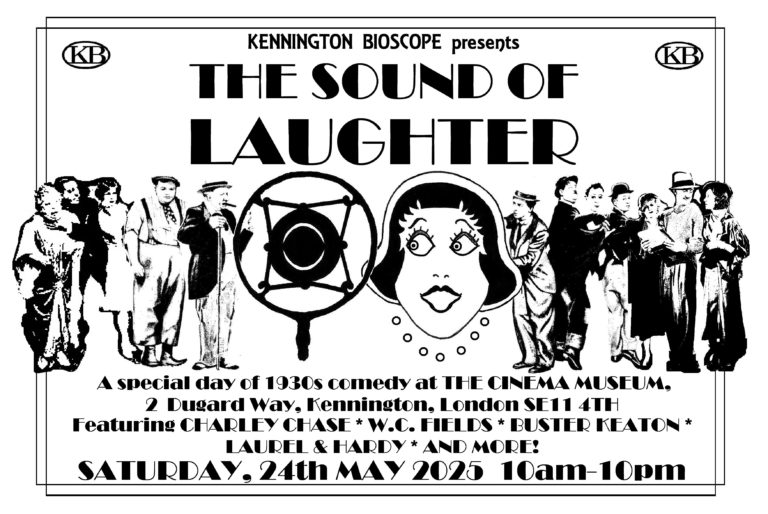
The Talkies come to Kennington…

Coming next month at The Cinema Museum! After years of celebrating silent comedy, we thought it was high time we did a spin-off event to celebrate the best sound comedy.  From favourites like Laurel & Hardy, Charley Chase and W.C. Fields, to forgotten funnies like Harry Gribbon, Lloyd Hamilton and Tom Walls, we think we’ve got a great programme. But it’s your laughter that will bring the films to life… so we hope to see you there.

Here’s the link to the event page, and to buy tickets. You can also find the full programme below, but this great little video by Dave Glass gives a nice flavour of what it’s all about…


Kennington Bioscope present a fun-packed day of vintage film comedies from the 1930s, on the big screen. A spin-off from the ever-popular Silent Laughter events, this all-dayer will feature some of the very best talking comedians in a hilarious selection of shorts, features and rarities. We’ll also be spotlighting the work of silent comedians who transitioned to sound, with classic shorts from Laurel & Hardy, Charley Chase and W.C. Fields, plus the rare chance to see a fantastic Buster Keaton feature that captures the essence of his silent work. All this, plus some choice rarities from the British Film Institute, Library of Congress and private collections. Introductions and presentations by film comedy experts will spotlight the work of key performers and studios, and there will be plenty of screenings on celluloid! So come along and enjoy the sound of laughter as we celebrate one of film comedy’s greatest decades.

The full programme is below. All films subject to confirmation.


10.00 SOUND BEGINNINGS

The coming of sound brought new opportunities in cinema for comedians specialising in verbal humour, nonsense patter and musical comedy. From the zany antics of the Marx Brothers and The Three Stooges to the sly humour of Mae West, or songs and patter of Eddie Cantor, there was a dazzling array of fresh talent. This programme will showcase the best of the new guard, through short films and excerpts. Among the gems we’ll be showing complete are Robert Benchley’s witty, Academy Award winning How To Sleep and The Druggist’s Dilemma, featuring the hilarious comedy team Clark & McCullough with James Finlayson. Presented by Matthew Ross.


11.30 ROOKERY NOOK (1930)

Ben Travers’ series of Aldwych Farces were some of the most popular British films of the 30s. Featuring the wonderful dynamic between disreputable Tom Walls, silly-ass Ralph Lynn and nervous Robertson Hare, the films set a benchmark for situation comedy. The first of the farces to be filmed, Rookery Nook was voted the best comedy of 1930, but has rarely been screened since. This is a rare chance to see the farceurs at the top of their game in one of their classic films. Rookery Nook will be screened on 35mm, in a copy from the BFI National Archive and introduced by film historian Geoff Brown.


14.00 THE TALKIE FUN FACTORIES

The comedy two-reeler was a mainstay of cinema programmes throughout the 1930, and here we spotlight the efforts from specialist comedy studios. From the Mack Sennett Studios comes a terrific spoof of early musicals, A Hollywood Theme Song, with Harry Gribbon; we’ll be screening this on 16mm. The same studio also made some of W.C. Fields’ funniest films, including The Dentist, which we’ll be showing in its rarely seen, complete and uncensored version! Other films include a very rare – and very funny – RKO short starring Harry Sweet, Firehouse Honeymoon. Presented by Glenn Mitchell and Dave Glass.


15.30 LE ROI DES CHAMPS-ÉLYSÉES (1934)

Legend has it that Buster Keaton’s sound films are all horrors that allowed him no creative control, but that’s not completely true. While MGM may have mis-used his talents, independent studios gave him much better opportunities – albeit on a low-budget. In 1934, Keaton travelled to France to make this indie feature for producer Max Nosseck. Within the story of an amateur actor who gets mixed up with gangsters, Keaton creates new silent comedy routines and shows off his acting chops in a dual role – all set against great location backdrops of Paris in the 1930s. A rare chance to see this charming and funny film on the big screen. In French, with English subtitles. Introduced by Keaton expert David MacLeod.


17.00 SILENT SURVIVORS

Another film comedy myth is that the lion’s share of silent comedians were out of work when sound came in. Actually, many of them remained busy and continued to produce some great comedy. Glenn Mitchell and Matthew Ross present a selection of the funniest and most fascinating sound appearances by silent comics, including excerpts featuring Harold Lloyd, Roscoe Arbuckle and Lupino Lane. The programme will also feature complete screenings of Lloyd Hamilton’s Good Morning Sheriff (courtesy of The Library of Congress), Harry Langdon’s charming A Dog-Gone Mix-Up and Laurel & Hardy’s Our Wife, in which the duo meet silent comics Babe London and Ben Turpin! The last two of these films will be screened on 16mm.


20.00 THE LOT OF FUN: LAUREL & HARDY & CO

The Hal Roach studios were the gold standard for comedy studios in the 1930s, turning out wonderful and charming short films. This programme will show some of the finest comedies made on ‘The Lot of Fun’! The female comedy team of Thelma Todd & Zasu Pitts crash society in The Pajama Party, while Charley Chase brings his talent for farce into the sound era in Looser Than Loose. The programme will conclude with Laurel & Hardy’s Academy Award winning classic The Music Box (the one with the piano!), which will be shown on 35mm. A fitting end to a day filled with the sound of laughter!

Silent Laughter in London: it’s this weekend!

Well, here we are. Somehow it’s November, and it’s almost time for the Silent Laughter Weekend at London’s Cinema Museum. We think it’s a great lineup, from classics with Chaplin, Keaton, Lloyd and Laurel and Hardy, through to obscurities and rediscoveries starring everyone from Dorothy Devore, Monty Banks and Charley Bowers to Marion Davies and Pat & Patachon. Plus the UK re-premieres of long unseen  films with Charley Chase, Syd Chaplin, Charlie Murray and Clara Bow.

The trailer above gives a good flavour of what’s to come, but if you want to know more, here are the full programme notes for the weekend:

(And if that doesn’t convince you, we’ve got a whole load of “Easter Egg” extras to add in. AND some of the most talented silent film accompanists playing for each show!) Here’s the link to buy tickets, if you haven’t already:

https://www.tickettailor.com/events/kenningtonbioscope/1371001

If you’re a reader of this blog, do come up and say hello! Hope to see you there.

Silent Laughter 2024 is on the way…

It’s back! Mark your diaries for giggles, chuckles and belly laughs! On November 9th & 10th, Kennington Bioscope present another Silent Laughter Weekend: two days of live silent cinema showcasing the cream of silent comedy films.


This year features one of our most packed programmes ever, a wide-ranging and eclectic selection of the funniest, rarest and most unusual gems from comedy’s greatest era. From the best-loved comedians to the most obscure; from wild slapstick to the subtle and sophisticated; from surreal stop-motion animation to European clowns, there’s a smorgasbord of silent hilarity spread over twelve programmes.

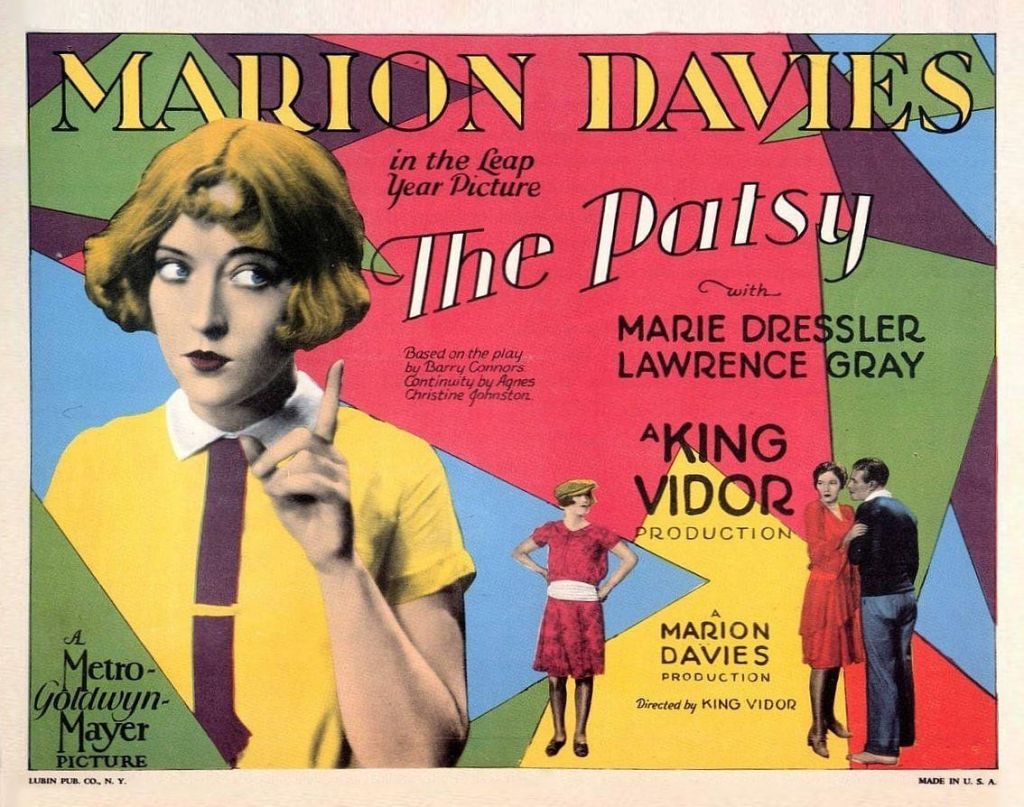
You’ll find plenty of familiar favourites, including classic shorts starring Charlie Chaplin, Buster Keaton, Harold Lloyd and Laurel & Hardy. But there’s so much more to silent comedy than the well-known stars, and as always we also spotlight the undeservedly forgotten comedy talents, such as Marion Davies (in The Patsy), Danish comedy team Pat & Patachon, Richard Dix, Charlie Murray and Charley Chase.

 
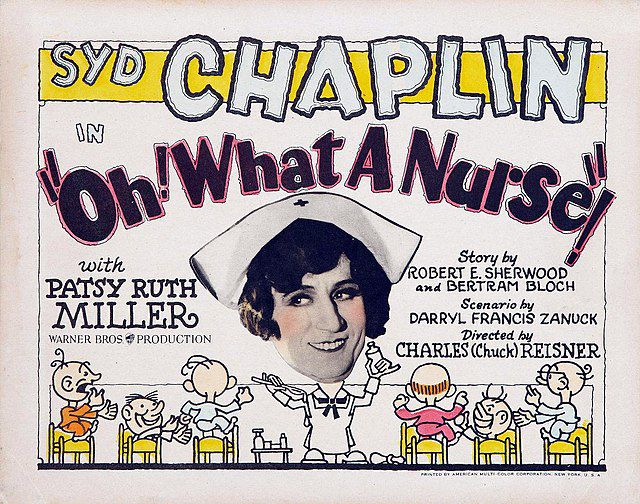
Regular attendees will know that we always pull some real rarities out of the hat. This year is no exception, as we’ll be hosting the U.K. premieres of several recently rediscovered films. On Saturday evening, Charlie Chaplin’s brother Syd stars in Oh! What a Nurse!  one of the big hits of last year’s Pordenone, it hasn’t been seen in this country for almost 100 years! We’re also thrilled to be showing the newly rediscovered spooky comedy thriller The Gorilla, starring comedy stalwart Charlie Murray. Murray also features alongside Clara Bow in another previously lost film, The Pill-Pounder. Bioscope favourite Charley Chase will feature in a programme of newly restored short comedies that have been unseen in many, many years and we’ll also be showing some incredibly rare films starring the likes of Monty Banks, Harold Lloyd and Dorothy Devore.


There is also a spotlight on the iconic Keystone Kops, as well as the work of Vitagraph Studios. An ‘Animations and Illusions’ programme will feature camera trickery, from Meliés’ experiments to the mind-blowing madness of Charley Bowers.  You won’t want to miss a very special presentation of 9.5mm rarities by Christopher Bird, shown on film using amazing vintage projectors. Bioscope favourite Charley Chase will feature in some of his rarest comedies, newly restored and presented by Hal Roach expert Richard M Roberts.


We’ve even got a silent film appearance of a Marx Brother! There’s a rare screening of Too Many Kisses, a 1925 comedy featuring a supporting role from none other than Harpo Marx.

Every programme features live musical accompaniment from London’s finest silent film pianists. A roll call of comedy film authors, enthusiasts and collectors will contextualise the films, and share stories of the filmmakers. And it all takes place in the wonderful surroundings of London’s Cinema Museum. Oh, and it’s just £30 for the whole weekend!

 
So come and join us on the 9th-10th November for a lafftastic weekend of live silent cinema. It’s the best selection of rare and classic silent comedy you’ll find anywhere!

Here’s the link to the full programme, and to buy tickets:

http://www.cinemamuseum.org.uk/2024/kennington-bioscope-silent-laughter-weekend-3/

Silent Laughter Rides Again

Great news for silent comedy fans in the U.K.: Kennington Bioscope’s Silent Laughter Weekend is returning to London’s Cinema Museum on November 4th – 5th. Once again there’s a fantastic programme of rare and classic shorts and features, with live accompaniments and guest introductions.

We’ve got films that haven’t been seen anywhere for almost a century, and premieres of recent restorations, including two classic Charley Chase comedies you won’t have seen before! There’s also an exclusive bit of ‘new’ Laurel & Hardy footage alongside some of their classic shorts, and the premiere of Dave Glass’ brand new restoration of Monty Banks’ PLAY SAFE! There are rarities that only survive via small gauge prints, plus wonderful and rarely screened features starring Edward Everett Horton, Mabel Normand and Max Linder.

Present via video introductions and presentations will be some of the most knowledgeable silent comedy experts in the world: Steve Massa and Richard M Roberts. We’ve also got plenty of surprises waiting…

Amidst all this fun and excitement, there is a bittersweet note as this will be the first Silent Laughter without its founding father, David Wyatt, who passed away last October. As well as one of the most knowledgeable film historians, DW was always generous with sharing rarities from his connection and passionately believed in making opportunities for silent comedies to be seen the way they were intended. He was a big supporter of The Lost Laugh, and a great friend. It was his enthusiasm that drove the Silent Laughter weekends, and the continuation of this happy, joy-filled event is one of his great legacies. We’ll be doing our best to honour that legacy, including a special tribute programme including his favourite clips and some of his own work.

Come and join us! Tickets on sale now – £30 for the whole weekend. With 12 shows in the programme, that’s just £2.50 per screening, an absolute steal! (there are also day and evening tickets available too)

Here’s the full programme: http://www.cinemamuseum.org.uk/2023/kennington-bioscope-silent-laughter-weekend-2/

And here’s the link to tickets. You know what to do…

The Return of Silent Laughter!

I’ve just come back from the long-awaited return of Kennington Bioscope’s Silent Laughter Weekend. The world has changed a lot since the last one in 2019, and we’ve certainly all earned some good laughs! Finally, we could enjoy another full weekend of rare and classic silent comedy, and what an occasion it was. There was really something special in the air at The Cinema Museum this weekend. The films, the live music and the audience seemed even  more wonderful and I think we all laughed more readily and joyously after the time away. It felt so great to be back.

Walter Forde

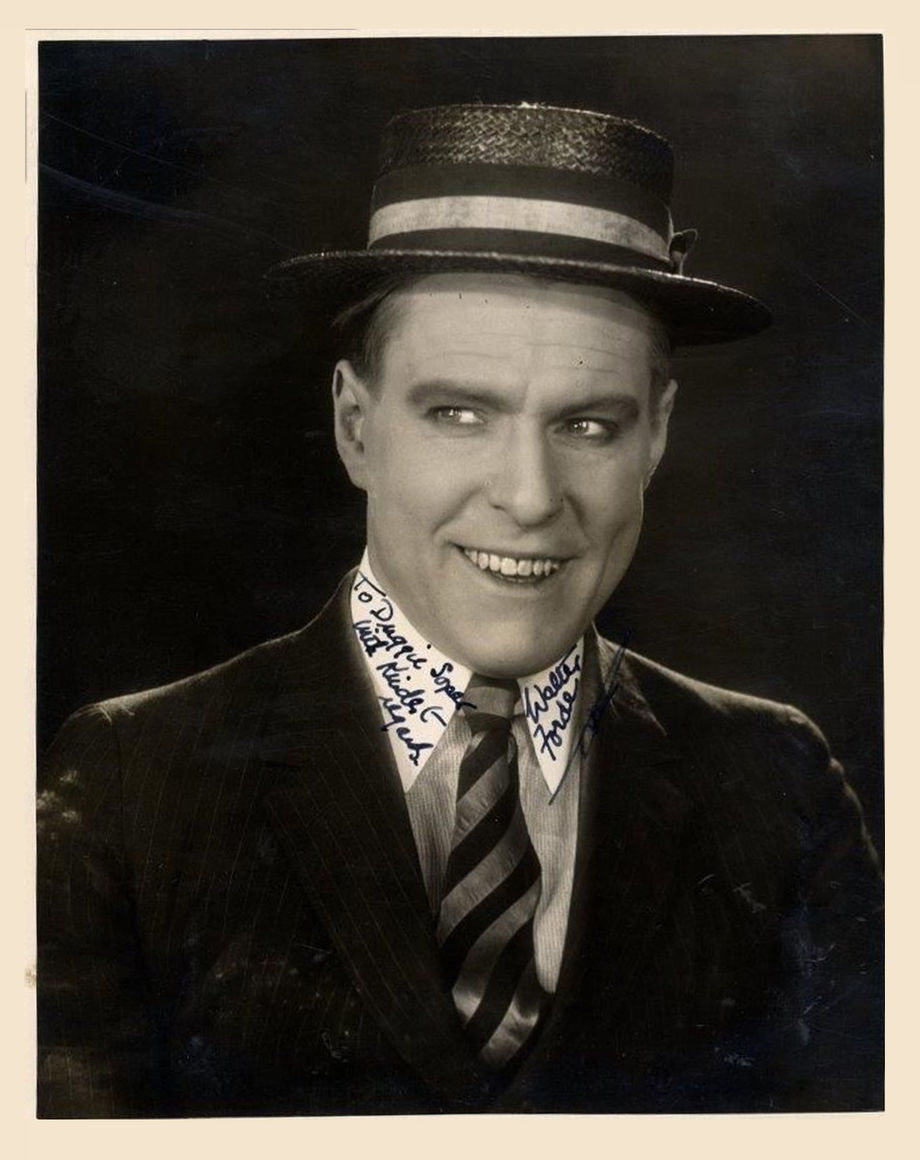
Saturday’s programme began with Walter Forde’s WOULD YOU BELIEVE IT.  I’ve wanted to see this feature on a big screen for years; having only seen it, unaccompanied, on a Steinbeck in the BFI’s basement. Forde plays an inventor working on a wireless controlled tank – but spies from a hostile nation are out to steal his plans and sabotage the tank before the war Ministry gets it. This isn’t quite a classic, but a great little film with a uniquely British flavour – the highlight is a wonderful chase sequence on the London Underground (actually a specially built replica constructed at Nettlefold Studios). The opening scenes in a Toy shop feature some great gags too, including Forde’s attempts to gift wrap some helium-filled balloons. Although he began as a Chaplin imitator, and his later work is often compared to Harold Lloyd, Forde definitely has a style of his own, and the gags in this film are almost all uniquely his. He mixed thrills with his comedy too, and the climactic scenes of his tank (a genuine one borrowed from the War Office) running amok are genuinely exciting. Geoff Browne, author of the only book  on Forde, gave some entertaining insights into the making of the film. There’s more on Forde here, and in issues 12 & 13 of The Lost Laugh magazine!

Next up, silent comedy expert Steve Massa, beamed in virtually from the U.S. to celebrate Roscoe Arbuckle. Steve’s presentation, accompanied by a wonderful montage of clips compiled by Dave Glass, really showed Roscoe in a new light. Like his terrific book on Arbuckle, it allowed us to focus on his comic skills and achievements, rather than that scandal. Roscoe’s ability to flit between slapstick chaos on a grand scale to subtle farce and even serious acting in films like THE ROUND UP deserves more praise, and the compilation of all these skills together in Steve’s presentation really showed what a multi-faceted talent he was. The show concluded with a complete screening of HIS WIFE’S MISTAKE (1916), a lesser-known but terrific little short, with some great slapstick routines for Roscoe.

Into the afternoon, and we had a programme of ALMOST LOST LAUGHS – films that nearly didn’t survive, but were rescued and/or rediscovered in the nick of time. These included Charley Bowers in MANY A SLIP, the surviving reel of the Charley Chase-Stan Laurel- Oliver Hardy curio NOW I’LL TELL ONE, and Edward Everett Horton’s DAD’S CHOICE. All great fun, and a good sampler of the stylistic breadth of silent comedy: surrealist stop motion, to situational slapstick to farce comedy in three easy moves.

I’d never seen Mary Pickford’s last silent, MY BEST GIRL, before. This was a real treat! The storyline of a shopgirl in a big store has some similarities to Clara Bow’s IT, but for my money this was a much funnier film. Pickford handled situational humour and slapstick with equal flair, a highlight being her attempts to walk through a busy store while carrying an enormous pile of pots and pans. The film depicts the burgeoning real life romance between Pickford and co-star Charles ‘Buddy’ Rogers. There’s an absolutely charming sequence as Mary hitches a ride on the back of a truck, “accidentally” dropping astring of objects so that Rogers will keep following her and returning them.

 There’s also one hell of a comedy cast in this film, adding to the fun; stand up and take a bow Lucien Littlefield, Sunshine Hart, Mack Swain, William Courtwright, Sidney Bracey and Carmelita Geraghty.

 Cinematographer Charles Rosher made MY BEST GIRL positively glow, and was nominated for an Oscar, only to lose out to… himself. He received his award not for this film, but for his work on the classic SUNRISE, nominated in the same category. Thanks to Chris Bird for sharing his rare print of this sparkling rom-com.

I’m a huge Harry Langdon fan, so it was a real pleasure to be able to introduce a showing of THE STRONG MAN, his funniest feature film. I know Harry can be an acquired taste, but I was delighted to see the film go down really well with the audience. A huge boost to the film was Meg Morley’s piano score. With his slow performance style and quirky rhythms, Langdon is quite hard to match music to – I’ve certainly heard soundtracks that don’t really suit his style before – but Meg played an absolutely wonderful accompaniment to THE STRONG MAN that was just spot on. It was one of the best live accompaniments to a silent film I’ve seen, in fact.  While we’re on the subject of music, all weekend long I found myself appreciating the live music for these films even more than usual – the absence of live cinema events in the last couple of years has really driven home how much the talented silent film pianists bring to the films. Lest we forget, this is how silent films were designed to be seen.

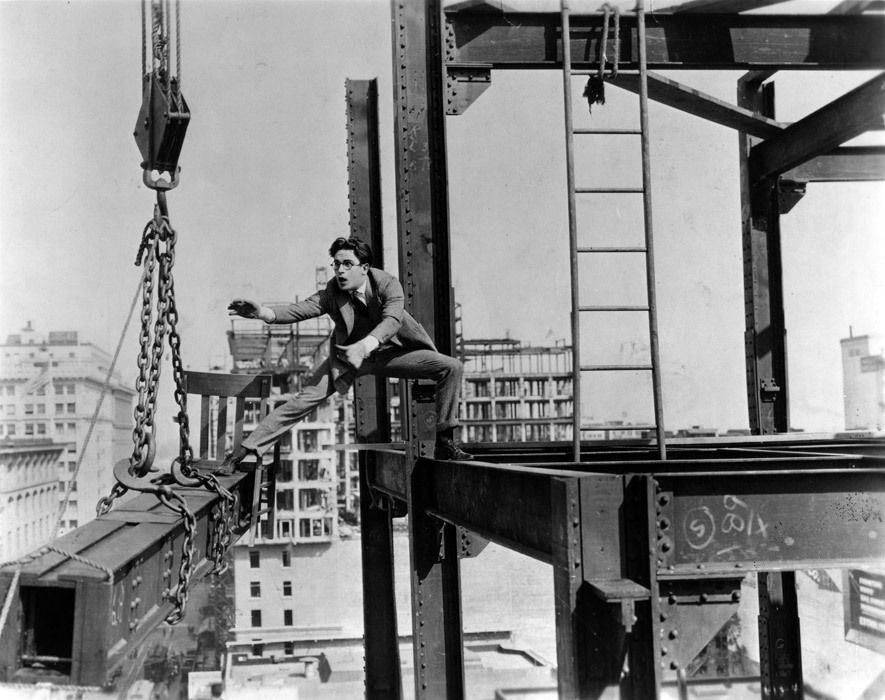
Day 1 finished with another classic, Harold Lloyd’s SAFETY LAST. Chris Bird gave a terrific introduction explaining how Lloyd shot the climbing sequences, and Dave Glass had an extra treat: a compilation of clips from a Spanish print he’s just acquired featuring alternate camera angles, and in some instances, completely different takes! SAFETY LAST is a film made for an audience, and boy, did it deliver the goods tonight. About half the audience had never seen the film before, and were completely wowed by it, giving it one of the best receptions ever! A jubilant finish to a great day.

Day 2 began with another Chris Bird rarity – his recently rediscovered, sole surviving print of Johnny Hines’ THE WRIGHT IDEA. This was certainly the rarest film of the entire weekend, and the screening was probably the first time it had been seen in at least ninety years. I wrote about the film in issue 13 of The Lost Laugh, but briefly, it’s a typically breezy effort from Johnny Hines featuing his attempts to market his invention of a luminous, blotterless ink. A patently contrived plot sees him mixed up with an escaped lunatic, some stolen bonds, a yacht and some bootleggers; it’s all fairly ridiculous, but a heap of fun, with plenty of good sight gags. Fred Kelsey provides a good share of the comedy as the inept Detective Flatt, and the most unconvincing prop octopus I’ve ever seen is also responsible for a good few laughs, too (If that sentence doesn’t make you want to see it, what will??). Some great accompaniment from John Sweeney kept the film bouncing along pleasantly.

Lots of fun was provided by Dave Glass’s new Billy Bevan restorations from the upcoming Blu-Ray set. ON PATROL, NIP & TUCK, CALLING HUBBY’S BLUFF and WANDERING WAISTLINES really showed that Bevan was much less two-dimensional than the received version of film history tells us. As well as an excellent performer of slapstick and sight gags, he could also add plenty of subtlety, as in the famous scene where he plays cards with Harry Gribbon (and Cameo the Wonder Dog!) in NIP & TUCK, or the gentle domestic comedy of CALLING HUBBY’S BLUFF. After seeing him in these different roles, I could fully understand how he was able to transition to work as a character actor in sound films.  We were also treated to an interview snippet with Bevan’s grandson, and a behind-the-scenes featurette of how Dave has completed the restorations. If you were in on the Billy Bevan Kickstarter, you’re in for a treat!

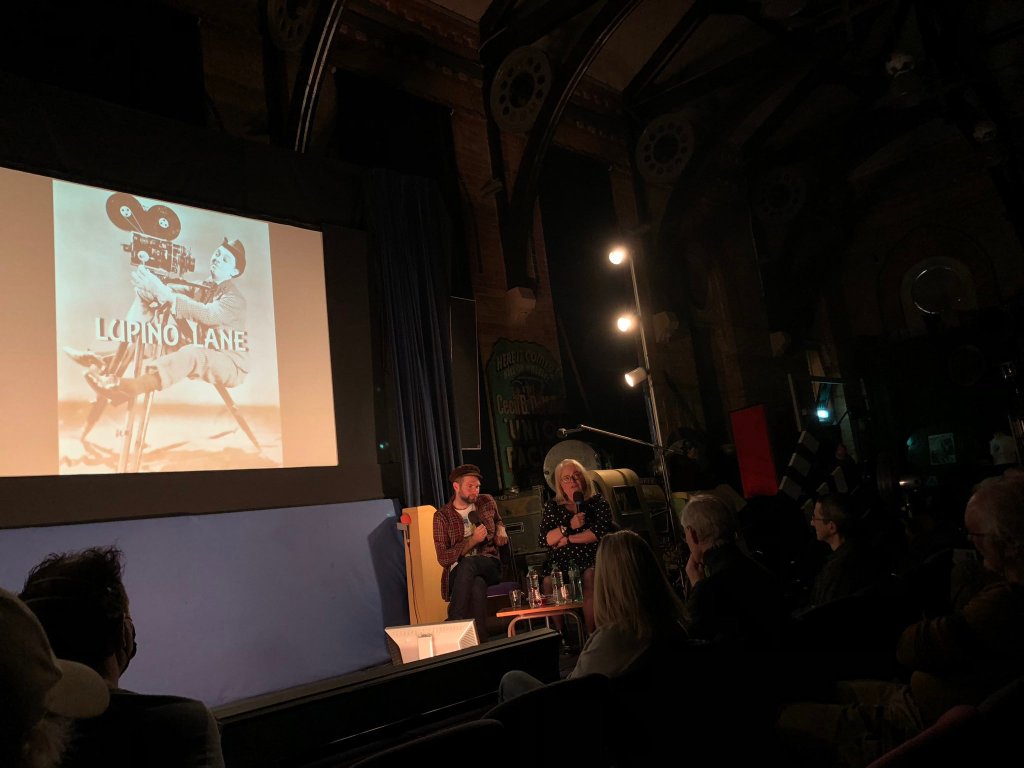
Reginald Denny followed, in the wonderful WHAT HAPPENED TO JONES? I had to duck out of this one though, as I had to go meet our special guest for the afternoon: Sara Lupino Lane, granddaughter of Lupino Lane! Sara had very kindly agreed to come along the Cinema Museum and take part in a Q & A session to accompany some of her Grandfather’s films.

(Photo from Kennington Bioscope)

Sara has wonderful memories – of her Grandfather’s many and varied hobbies, of their trips to see panto together, and of her own father, Lauri Lupino Lane. Lauri followed in his dad’s footsteps and became a performer, specialising in a slapstick ‘slosh routine’, which he even performed in Chaplin’s A KING IN NEW YORK. Sara shared a terrific story of the time Lauri and Chaplin were together at a theatre; Lauri was besieged by autograph hunters, who all failed to recognise Chaplin and totally ignored him!

Sara was also kind enough to share one of her treasures – a can of film that she’d forgotten about for years, but had turned out to contain Lupino Lane’s own home movies! We’d kept this discovery under wraps until this weekend, but what a find they are! As well as lots of domestic scenes and clowning around, there is some priceless behind-the-scenes footage taken on the Educational Pictures lot. We get brilliant fly-on-the wall glimpses of Lane shooting MONTY OF THE MOUNTED and HALF PINT HERO; there are candid shots, outtakes and footage of Lane conferring with director Charles Lamont. There are glimpses of other comedians too: Lane’s cousins Stanley and Barry Lupino, and best of all, a previously unseen snippet of Charley Chase! Just wonderful to see, and there were some audible gasps in the room at some of the footage. As well as these rarities, we showed two of Lane’s finest slapstick ballets: SUMMER SAPS and JOY LAND, both recently restored for 2020’s Kickstarter project.

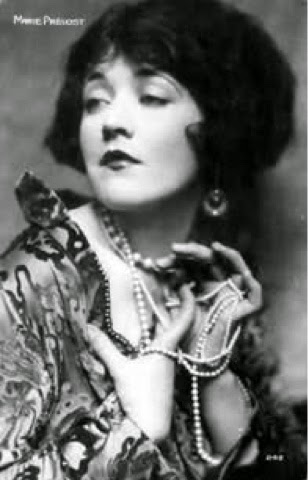
The wonderful Marie Prevost.

It was such a pleasure to be involved in hosting this screening. I’m always passionate about making sure that forgotten comedians are celebrated and introduced to new audiences, but being able to show Sara how much people still enjoy her Grandfather’s films felt extra special.

A change of pace for the next show – there’s no slapstick or acrobatics in view in Lubitsch’s THE MARRIAGE CIRCLE! This low-key film is much more subtle, but wonderfully sophisticated with fantastic direction from Lubitsch and brilliant performances. Adolphe Menjou and Marie Prevost, in particular, are just sublime. Costas Fotopoulos provided a lovely accompaniment to the film, and Michelle Facey gave a fact-packed introduction.

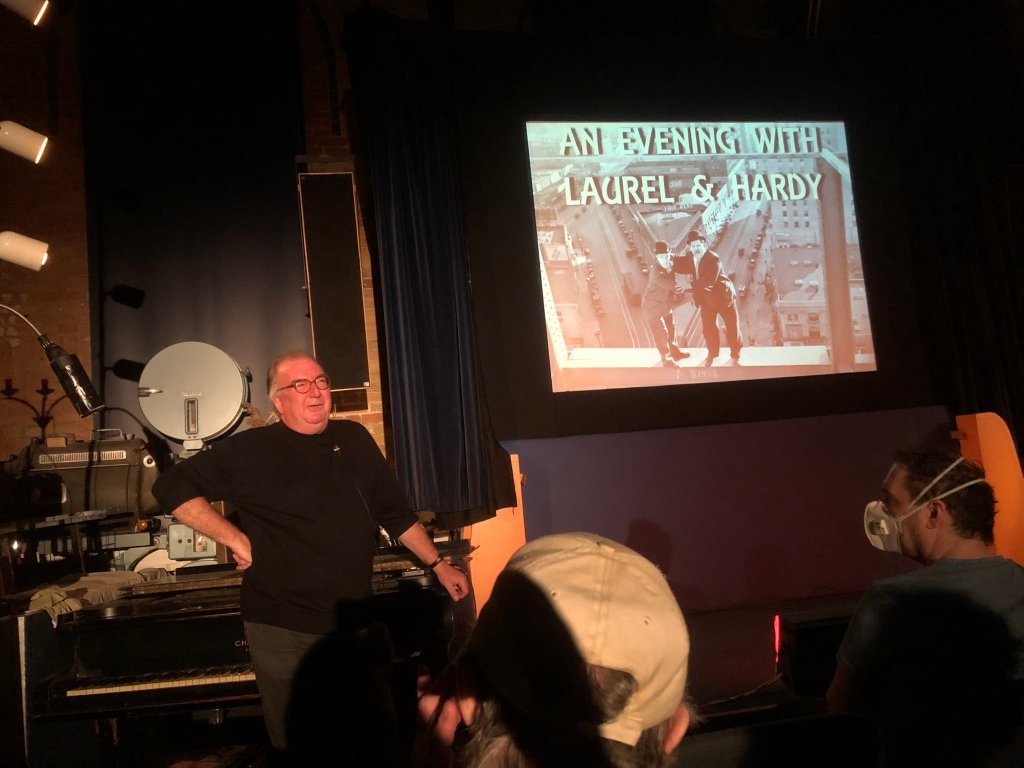
How time flies when you’re watching funny old films: it was time for the last show of the weekend already. Another treat to finish with: the always wonderful Neil Brand presenting his Laurel & Hardy show. Aside from the always wonderful clips of the boys, Neil’s intro was beautiful, describing how Laurel & Hardy had helped him through the COVID lockdown and how they were more relevant than ever.  It was heartfelt and really quite emotional, and seemed to sum up the whole weekend.

Yes, there was definitely something special in the air at The Cinema Museum – the laughter seemed to flow more freely, somehow. Part of this was down to the wonderful curation of the programme by David Wyatt and the Kennington Bioscope team, but there was something else indefinable too. The enforced hiatus seemed to make everyone appreciate everything more. How wonderful to have chance to enjoy the breadth of comic talent on-screen, but also the amazing talent of the accompanying musicians; the chance to experience the extra dimension a live audience brings to these films; the chance to meet up again with fellow comedy fans we haven’t seen in years, and share favourite moments from the films. The wonderful news that the Cinema Museum has just been given a reprieve from closing down was the icing on the custard pie.

Despite everything, these century-old films are still funny, and have the power to bring people together to share in some collective joy. That’s a special kind of magic.

Now, can we do it all again next weekend??

P. S. Here are the programme notes, for anyone who couldn’t make it:

Silent Laughter 2019 announced

It’s back! Kennington Bioscope presents another weekend of classic & rare silent comedy at the historic cinema museum. Lots to enjoy in a packed programme, including classics like Chaplin’s ‘THE GOLD RUSH’ and Lloyd’s ‘GRANDMA’S BOY’, plus rarely seen films starring Marion Davies, Gloria Swanson, W.C. Fields & more. There’s also a chance to see Laurel & Hardy’s recently rediscovered ‘THE BATTLE OF THE CENTURY’, and I’m looking forward to presenting some of Charley Chase’s finest silent shorts.

As always, films will be accompanied by the cream of silent film accompanists. Best of all, it’s only £30 for a weekend pass! Don’t miss it – tickets available at www.kenningtonbioscope.com

SILENT LAUGHTER FLYER V3.jpg

New issue of The Lost Laugh Magazine out now!

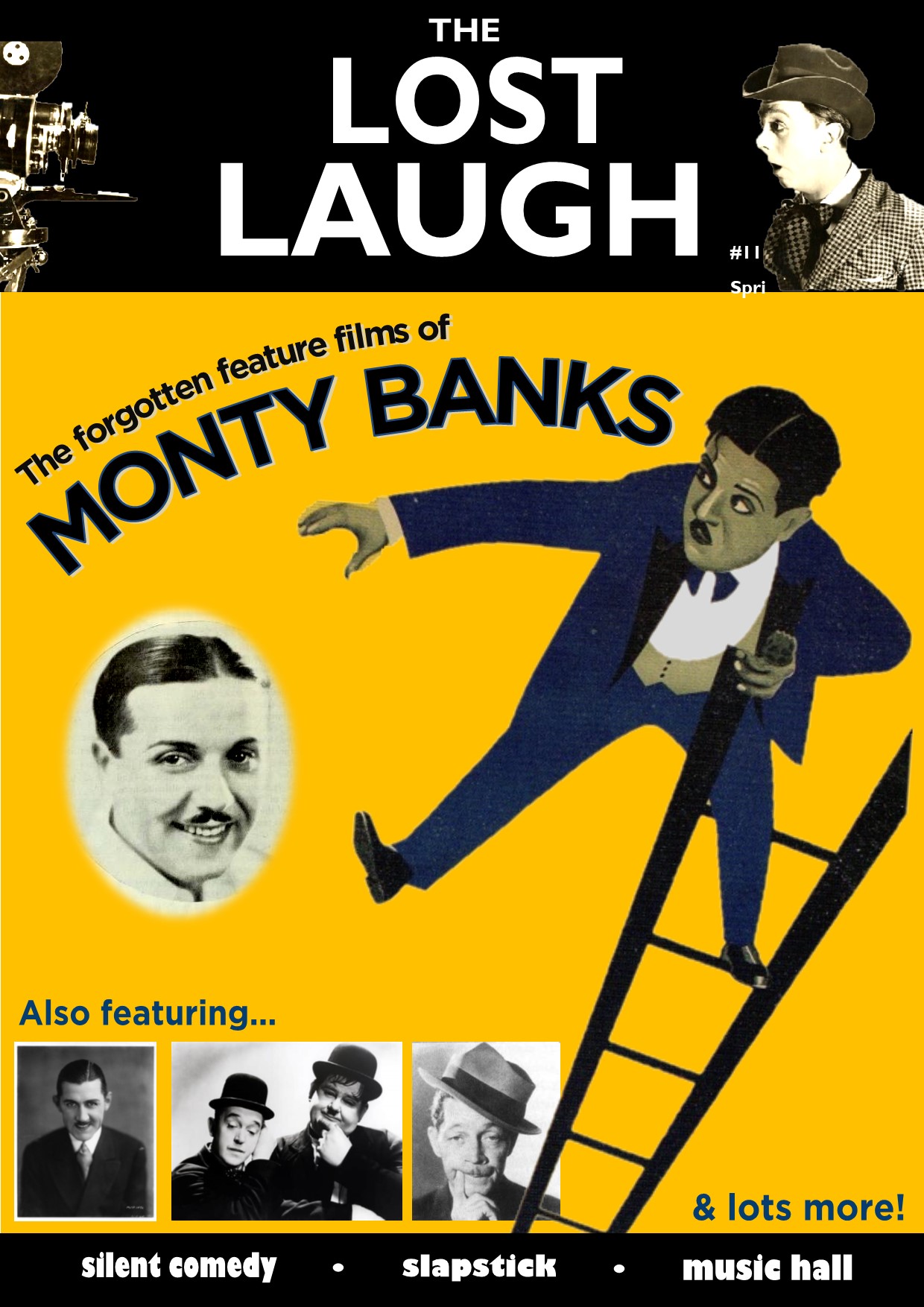
So, I finally got round to finishing the new issue – number 11! This time, there are articles on Monty Banks’ feature comedies, perennially soused character actor Arthur Housman, some Laurel & Hardy discoveries, and reviews of rare films starring Harold Lloyd and Lupino Lane.

If you’re a subscriber, hopefully it’s arrived in your inbox now; if not, head to The Lost Laugh Magazine to download the pdf.  I do hope you enjoy reading it!

LOST LAUGH 11 final

Lame Brains, Lunatics, Lost films & Noisy silents: Silent Laughter, day 2.

 What’s better than a whole day of rare silent comedies on the big screen? A whole weekend of it! After an action-packed Saturday, the second and final day of SILENT LAUGHTER WEEKEND saw even more rare screenings, along with some very special guests. So, it was back into the Cinema Museum early on a grey and sleepy Sunday morning…

And how better to wake up on a sleepy sabbath day than with some fast-paced slapstick comedies? The LAME BRAINS & LUNATICS programme showcased the more manic, knockabout end of the silent comedy spectrum in a programme curated by American expert Steve Massa (whose authoritative book the programme was named after). Thanks to the technical wizardry of David Glass, we were able to see filmed introductions by Mr Massa to each of the five shorts, full of details, and entertainingly presented. These were rare films; as far as we know, at least two or three of them are the only known copies. We’d taken a look at these in the BFI archive and thought they were worth showing; now, inn beautiful prints on the big screen and with expert musical accompaniment by John Sweeney, the films sprang to life.

First up was a rare Arbuckle short, ‘LOVERS’ LUCK’ (1913). A standard piece of rural knockabout from ‘The Prince of Whales’, this features Arbuckle at typically violent odds with Al St John for the hand of Minta Durfee (Arbuckle’s real life wife). With extra support from Frank Hayes as a parson and Phyllis Allen as a harridan, this was an unsophisticated but very fun short. There was an especially neat conclusion, as Parson Hayes finds himself on the wrong side of a jealous husband, and hides in a wardrobe.; hiding from Minta’s parents, so does Arbuckle. Minta is also locked in there by her parents until she agrees to marry Al, but she and Roscoe are able to be married by the parson inside the wardrobe.

Also from the teens was ‘HIS BUSY DAY’ (1918). This starred Toto the clown, an eccentric character whose success in circuses did not translate to films. Hal Roach found this out to his cost; Toto hated film making, objecting to the whir of the camera and refusing to be dunked in water. Eventually, he broke his contract to return to the circus.

See the source imageOn-screen, he is an odd creature to be sure; his slithery, amphibious movements inside oversized clothes and a bucket-shaped hat give him the appearance of a strange, giant newt. His saucer-shaped eyes and slow blink anticipate a little of Langdon, but nothing else indicates any real kind of character. HIS BUSY DAY, as its title suggests, was a fairly generic little trifle, with parks, pretty girls, pies and a lack of continuity: Toto steals a pie, dresses as a woman to escape a policeman, gets a job as a newsreel cameraman for a bit, then gives it up after he angers the newsreel proprietor (Bud Jamison). Even allowing for some missing footage, this was clearly a fairly run of the mill effort. Toto did have good timing however, as the highlight of the film showed: a scene where he hides from Bud Jamison behind a pivoting wooden sign, at one point attaching himself to it in the splits position! Ultimately, Toto’s biggest contribution to film comedy was in leaving films, thus opening the door for Roach to hire a young Stan Laurel as his replacement.

This was a beautiful, albeit incomplete, print from the BFI, found under the title TOTO CAMERAMAN, we were able to identify the real title after viewing it last year. I believe this is the only print around?

Next up was another European, Marcel Perez, the man of a thousand names. Robinet, Marcel Fabre, Tweedledum, Tweede-Dan and Tweedy were some of his screen names over the years. Billed under the latter moniker in ‘SWEET DADDY’ (1921), Perez was already a veteran of the screen; his European films dated back to 1906! Like Max Linder, he had come to the U.S. during WW1, making several seriesSee the source image of independent comedies and also working as a director. ‘SWEET DADDY’ was a simple tale of a henpecked husband who seizes his hour of freedom when sent out for the groceries, but it was full of some great gags, and snappily directed by Perez. Particularly there was a charming sequence in which he gazes at a girl on a poster, who seems to come to life and flirt with him. Perez’ career was sadly coming to an end; cancer cost him a leg in 1923, and while he continued as a director, the illness returned and took his life in 1928. Nevertheless, he was obviously a real talent, and it’s been mainly due to the efforts of Steve Massa and Ben Model that we’re able to see his films again: they’ve put together two volumes of his surviving shorts on DVD.
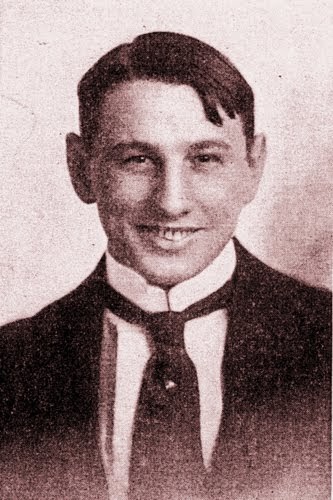
The final two films were both Mermaid comedies, produced by Jack White, described by Steve as “silent comedy’s boy wonder!”. A fully-fledged producer by the age of 21, White specialised in fast and furious comedies full of stunts and sight gags. A typical example was DANGER! (1922), a magnificently elaborate gag fest starring Lige Conley. It’s hard to believe quite how much technical effort went into staging a little two-reeler like this, which contained chases, undercranked gags, wild stunts and animated trick gags, such as Conley’s eyebrows seeming to twirl around his forehead in surprise. No time to worry about characters in a film like this, but when it’s done so well, who cares? Even the borrowings were done well, as Conley appropriates Chaplin’s gag from THE ADVENTURER, where he utilises a lampshade as a disguise. Here, an extra twist was added, as Conley’s ‘lamp’ is next to the bed of the villain. The villain decides he wants to read, pulling Conley’s pyjama cord as the lightswitch, forcing him to continuously light matches to keep up the charade until he burns his fingers and the jig is up.

Similarly action packed was Al St John’s SKYBOUND (1926). Very much in the mould of the Roscoe Arbuckle shorts, this was full of slapstick grocery store gags, but Al’s performance was much more toned-down and almost Keatonesque. The second half had a rather arbitrary plane chase that was well filmed with trick shots, and had a great final gag as Al’s parachute blows him away down a very long, dusty road. This film came with an additional introduction from St John expert Annichen Skjaren in Norway, who shared entertaining tales about the film, and added that St John was in real life a wing walker capable of doing aerial stunts.

The more manic films like those that made up this programme are often shunned as being unsophisticated. Of course, they aren’t enduring classics, but you have to marvel at the sheer gusto and ingenuity that went into making them, and they can often be very funny indeed, especially when contextualised by experts such as Steve Massa and Annichen Skjaren. Many thanks to them for sharing their time with us, and to David Glass for coordinating the programme.
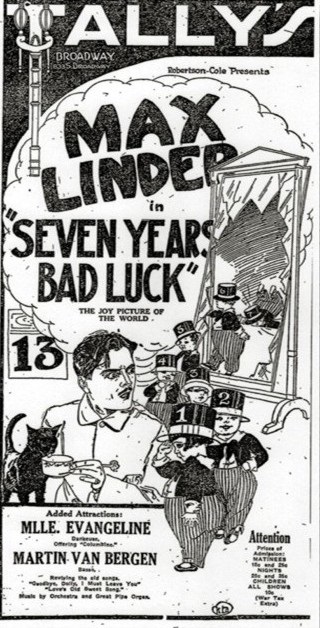
SEVEN YEARS BAD LUCK pic 1Next up was ‘SEVEN YEARS BAD LUCK’ (1921), perhaps Max Linder’s best feature. It’s now famous for having one of the best versions of that broken mirror routine, some 12 years before the Marx Brothers’ DUCK SOUP, but the whole film is most entertaining. David Robinson’s introduction paid a heartful tribute to Max’s daughter Maud Linder, who passed away last year. It was her zealous promotion of her father’s talents that has ensured he is still remebered today, almost 100 years after his death.

There was an extra Linder-shaped bonus in the form of ‘LES EFFETS DE PILULES’, or ‘LOVE AND GOOD FELLOWSHIP PILLS’. One of his French shorts, this was in a new restoration by Bob Geoghegan of the Archive Film Agency. Max is down in the dumps, and is prescribed the eponymous pills; they raise his spirits enormously. His wife also takes some, with even more vivid results: she’s soon launching herself at every man she meets in the street! Max is in hot pursuit, challenging each man to a duel! In the missing final sequence, all the men show up for a duel, but Max shares the pills around and all is forgotten. A great fun little short that shows how much more sophisticated Max was than his contemporaries.

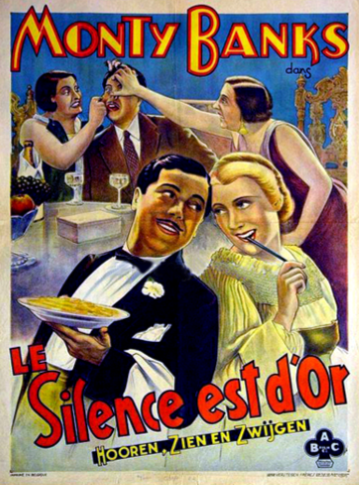
Sophisticated was certainly not a word that applied to WE’RE IN THE NAVY NOW (1926). A vehicle for the team of gruff Wallace Beery and shrimp Raymond Hatton, this was a standard service comedy, basically a series of all-too-familiar blackout gags involving hammocks, scrubbing floors, peeling potatoes, etc etc. Still, perhaps audiences hadn’t seen it all 3000 times before in 1926; certainly the Beery-Hatton team were very popular, making 4 such service pictures that also took them through the army, air force and fire service. In fact, the commercial success of their teaming possibly inspired the Laurel & Hardy pairing. Certainly, the opening scenes in which boxer Beery is knocked cold and wakes up in the ring hours later was influential on the opening scenes of L & H’s ‘BATTLE OF THE CENTURY’. L & H, of course, made the situation much funnier by making the smaller member of the team the boxer, and added in Hardy’s exasperated camera looks to make something timeless. There was one superb gag in the original sequence though: Beery has landed on a chair when he is knocked out; when he finally comes round hours later, we see that he has been sat on a very crumpled Billy Bletcher the entire time!

Kevin Brownlow’s introduction admitted the failings of the film, and he recalled that he had offered director Eddie Sutherland the chance to view the film in later years. Sutherland repeatedly declined… ‘nuff said!

We're_in_the_navy_now_lobby_card

wont talk

Next up was the return of Monty Banks, in a talkie! ‘SO YOU WON’T TALK’ (1935) is a rare sound starring vehicle for Banks, and is a wonderfully creative idea for a silent comedian: he spends most of the film unable to speak. This give him lots of opportunity for communicating in pantomime and sight gags. The reason is another one of those improbable inheritance plots –if he can go thirty days without talking, he will inherit a fortune – but it’s set up very well in the exposition; we get to meet the soon-to-be-deceased, a real grouch who is driven mad by his chatty, fortune-hunting family and understand his motivation for making the will. Banks is the family outcast, an incessantly talkative Italian waiter (a nice cover to make Banks’ strong Italian accent more acceptable to contemporary audiences), who staying silent will be a real challenge for. The build up to the will is quite slow, but it really sets the situation up well. Highlights of Banks’ silence include his attempts to mime what drink he wants, a wrestling match as the family attempt to find his birthmark, and Banks’ seduction by Enid Stamp-Taylor. A strong cast, including wonderfully dopey Claude Dampier, and snappy direction from William Beaudine, helped get lots of laughs from this film. If only more silent clowns had got to make a talkie like this. One can only wonder what Keaton might have done with the idea…

From talkies full of silence to silent filled with noise… it was time for some NOISY SILENTS! Hosted by masterful silent accompanist Neil Brand, this programme presented some of the silent shorts whose gags relied on noise. As well as Neil’s accompaniment, there was an orchestra of cacophony providing live sound effects ranging from kazoos and trumpets to ukuleles, squeakers, drums, car horns, pots and pans! A special shout out must also go to cellist Emily, who stepped in at the last moment and did a fantastic job. Her cello was an integral sound for Harry Langdon’s wonderful FIDDLESTICKS, a tale of Harry’s attempts to make a living busking. Lupino Lane’s SUMMER SAPS, a tale of a holiday from hell in a noisy boarding house, and Our Gang’s NOISY NOISES, both offered comedy of frustration and chance for some creative sound effects!

20180311_172206

A selection of the sound effects for NOISY SILENTS…
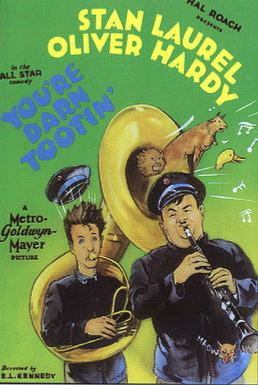
 

tootinWe finished off in fine style with some audience participation for Laurel & Hardy’s YOU’RE DARN TOOTIN’, in which the pants-ripping finale was replicated through the ripping of newspapers placed under each chair in the auditorium. This programme was great fun, and a real variation on the usual silent film accompaniment. No kazoos were hurt during the screening of these films.

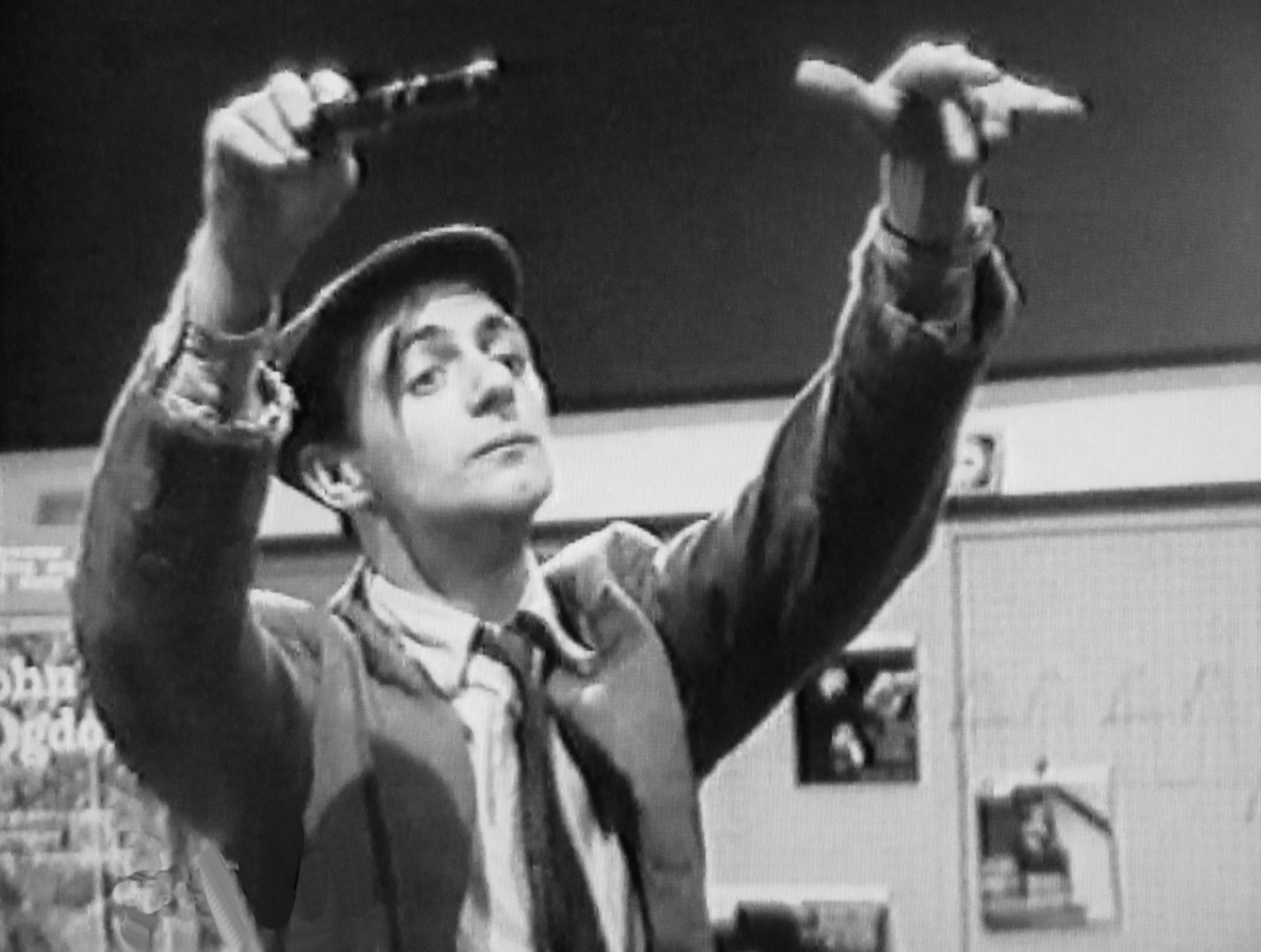
And just like that, it was time for the final show of the weekend. It was a fine finish, with a very special guest. Roy Hudd, one of the last links to the music hall and variety tradition, presented his favourite visual comedy clips, in conversation with Glenn Mitchell. This was a real treat; Roy was a fantastic, funny storyteller, and had real enthusiasm and ROY HUDD for programme noteknowledge for the old comedians. Among the highlights were clips from Tati’s MON ONCLE, Lupino Lane’s JOYLAND, and Roy’s own semi-silent film ‘THE MALADJUSTED BUSKER’. Finally, we concluded with a full showing of the complete ‘BATTLE OF THE CENTURY’. I’ve written about this film before, but it was as marvellous tonight as the first time I saw the ‘new’ footage; simply one of the iconic silent comedy scenes, now once again “as nature intended”.
As the lights came up for the final time, I felt incredibly lucky and grateful. Lucky that films like ‘BATTLE’ still exist, against the odds; luckier still that we are able to see them, especially with terrifically talented musicians and with informative introduction. Most of all, I felt lucky to be able to be able to share all this with other likeminded people in a warm and happy atmosphere. There’s a danger that watching old films in darkened rooms, sometimes alone, can become a very solitary hobby, but the chance to enjoy it as a shared experience, especially with the lovely folks at the Kennington Bioscope, is something else entirely.

Huge thanks to all the KB folk, especially to David Wyatt, who curated the event magnificently, and of course to Kevin Brownlow. Thanks too, to all the musicians and speakers. The Silent laughter events are something very special; here’s to the next one!

For more comprehensive info, here are the full programme notes, courtesy of the Kennington Bio website.