Silent Comedy Lover & editor of blog and e-zine The Lost Laugh www.thelostlaugh.com. Tentatively working on a book about great clown Lupino Lane.
National Park Ranger, Nature lover and occasional nature writer.
Guitarist & songwriter; half of Landscape Pop duo Mr Magpie: mrmagpieband.bandcamp.com
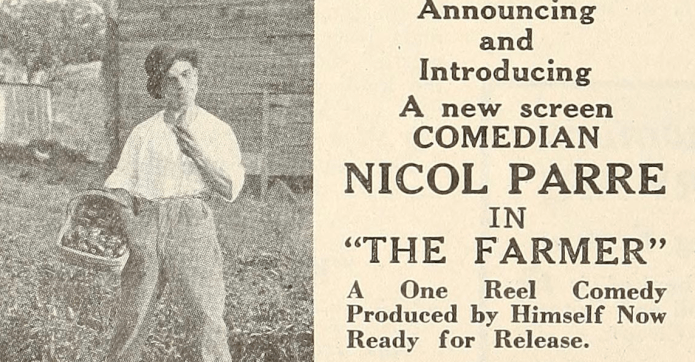
I came across this ad while flicking through old editions of ‘The Exhibitor’s Review’, an old film trade magazine available to browse through online at The Media Digital History Library. One of the joys of digitally leafing through these is the fact that little oddities like this turn up. I’ve certainly never heard of Nicol Parre before, and no reviews seem to exist of this film, which begs the question of if it ever found a release at all.
A further search through the archives revealed only one more mention of Nicol Parre, not as star, but as producer for the ‘N.P. Film Company’ in another prominent ad in ‘The Exhibitor’s Review’:
However, if we look a bit closer, I’d say the star they’re now promoting, ‘Dom Ferre’, is actually the same guy. Probably a classic example of trying to make a one-man operation seem bigger than it actually is. There’s a hint of desperation, too, in that blurb: “open to contract with any distributors”. Certainly, the surnames are suspiciously similar.
Both names sound French to me; was Nicol/Dom an ex-pat with previous experience in the French industry? Or was he of a French immigrant family in New York, trying his luck at films? We’ll probably never know, and I doubt ‘THE FARMER’ was much more interesting than its title. Still, an interesting reminder that for all the clichéd stories of extras and studio janitors crashing the movies, it could actually be pretty hard to break in as an independent film maker or comedian.
As a footnote to the story, the address above, 412 Lake Street, appears to be still standing on Google Street View.
I wonder if there are any film cans buried in the backyard…?
As the silent film era recedes further from living memory, it’s a constant source of amazement to me how many ‘lost’ films continue to turn up. In the last few years, we’ve witnessed the rediscovery of unknown Chaplin and Keaton films, missing films by Harold Lloyd, Harry Langdon and Charley Bowers, and the prized second reel of Laurel & Hardy’s ‘THE BATTLE OF THE CENTURY’. Truly, it’s a good time to be a silent comedy fan.
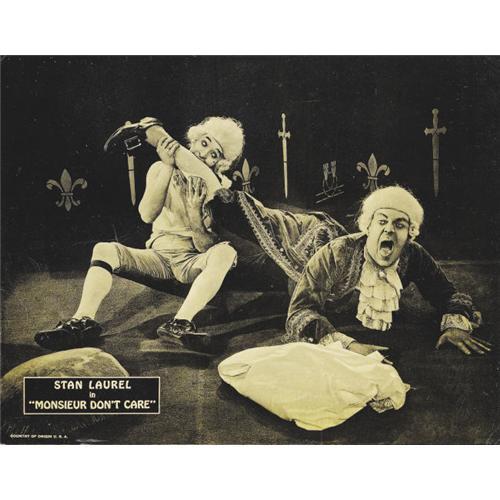
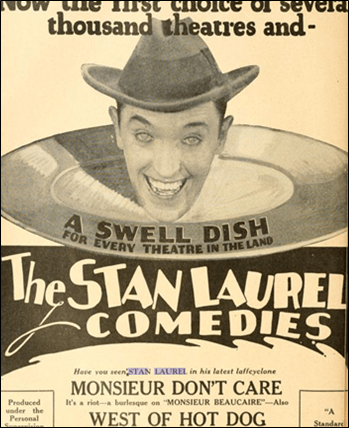
The latest discovery seems to be one of the most interesting of Stan Laurel’s solo films. 1924’s ‘MONSIEUR DON’T CARE’ was one of his independent series of comedy shorts for producer Joe Rock. It was, until now, the only one of the 12 comedies not known to exist in any form. However, in November last year, a restored 7 minute fragment found in Italy was revealed to the world again at a screening at MoMA in New York. It seems to have received little fanfare – I can’t find any reviews or comments on the screening as of yet. Nevertheless, for Stan fans, this is an exciting discovery.
Before teaming with Oliver Hardy, Laurel’s niche was parodying popular film hits of the day. ‘BLOOD AND SAND’ becomes ‘MUD AND SAND’, ‘UNDER TWO FLAGS’ becomes ‘UNDER TWO JAGS’, ‘DR JEKYLL & MR HYDE’ becomes ‘DR PYCKLE & MR PRYDE’, and so on. These are the films that first made him stand out from the masses of baggy pants film comedians, and so form a crucial part of his development as a comic. Many of them are also great, fun comedies in their own right, prescient of the Monty Python style of robust burlesque. Since Stan’s great Robin Hood parody ‘When Knights Were Cold’ turned up (or some of it, anyway), ‘MONSIEUR..’ has been just about the only one of Stan’s parody films not around in any form. Even more interestingly, it revisits Stan’s parody of Rudolph Valentino in his earlier classic ‘Mud and Sand’. Stan’s version of the great lover is given the glorious appellation of ‘Rhubarb Vaselino’, and presents lots of opportunity for the silly parody that the British sense of humour does so well.
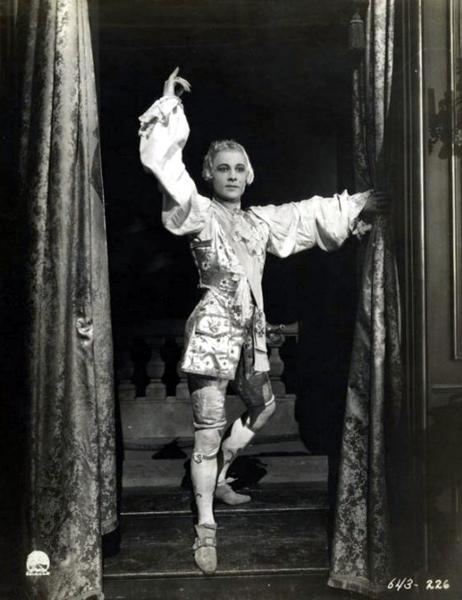
Here, Stan turns his sights on another Valentino film, ‘MONSIEUR BEAUCAIRE’, in which he portrayed a favourite courtier of Louis XIV, forced to flee to England and pose as a barber. As a vehicle for Valentino, it was perfect, allowing for lavish costumes, swashbuckling duels and romance. Stan’s version apparently followed the original story fairly closely, but obviously put a comic twist on the scenes.
Rudolph Valentino in the original ‘MONSIEUR BEAUCAIRE’ (1924)
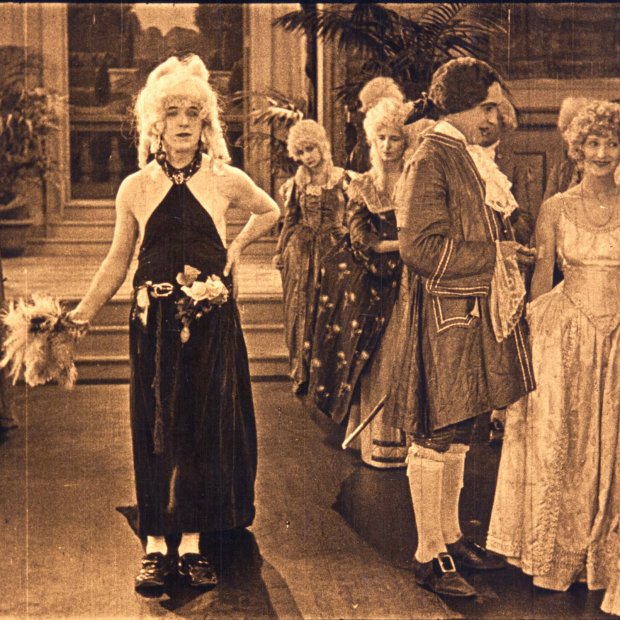
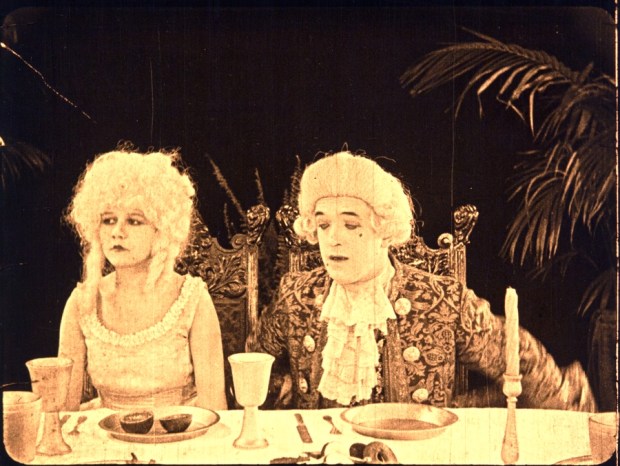
As with ‘MUD AND SAND’, much of the comedy no doubt came from Stan’s straight-faced appearance in the ridiculously lavish costumes and his comic variations on it; one frame grab from the discovered footage (below) shows him matching a ridiculous wig with a 20s vamp’s dress!
On its original release, the Kinematograph Weekly sniffily griped that there was an excess of slapstick in the film, surely missing the point that its contrast with the high society and great romantic dignity of the Valentino original was a source for comedy. Anyway, few could do slapstick like Stan Laurel. The other Rock films are generally all very good, and start to show signs of Stan’s talent maturing, so I’m certainly hopeful for this one. The most similar film from the series to ‘MONSIEUR…’ is ‘DR PYCKLE & MR PRYDE, which is the best of all his parodies, perhaps even his best solo film. With a little luck, this film matches up to its high standard.
Hopefully, we’ll all get a chance to judge ‘MONSIEUR DON’T CARE’, even in it’s fragmentary form, soon, with more screenings or a DVD release. Come to think of it, it’d be a nice extra on a DVD of ‘THE BATTLE OF THE CENTURY’!
In the meantime, there’s more on the original discovery, with some frame grabs, and details of an Oliver Hardy discovery, ‘MAIDS & MUSLIN’ here. Be warned, you need to be fluent in Italian!!
Stan chews on Syd Crossley. Interestingly enough, Crossley was originally meant to take Hardy’s part in the early L & H film ‘DUCK SOUP’. Laurel & Crossley? Hmm…
Just a reminder that, if you’re enjoying the posts on this website, you can find more articles in the same vein, along with rare images, book and DVD reviews, news and articles from guest historians, in THE LOST LAUGH e-magazine .
Standing on the shoulders of Munchkins, and walking in the steps of Comedy Giants in Culver City…
Culver City is a pleasant district to the South West of Los Angeles, not far from LAX airport. Not one of the tourist hotspots of L.A, it barely registers in guidebooks, but to classic comedy fans it is a special place of pilgrimage. Once home to both MGM and the Hal Roach Studios, it was the birthing pool of countless treasured films.
Nucleated around Culver and Venice Boulevards, Culver City was founded by Newspaperman Harry Culver in 1917. Thomas H Ince established the first studio there in 1918, followed by Hal Roach a year later. Most prestigiously, The Goldwyn studios were built in the early 20s, and later inherited by MGM. This behemoth of a studio survives, given a new lease of life as Sony Pictures Studios. It is even open to the public for daily tours.
‘THE LOT OF FUN’
Unlike MGM, Hal Roach’s elegant white wooden-fronted studio has not survived. It was torn down in the early 60s and now nothing remains. Yet, paradoxically, more of the spirit of the ‘Lot of Fun’ remains, in the streets and buildings of Culver City. While MGM’s stars generally remained cloistered on studio sets, Roach’s film-makers took every opportunity to film out on the streets. Time and time again, recognisable landmarks pop up as backdrops to the comedic action: the pie-slice-shaped Culver Hotel, the squat store-fronts of the buildings, the wide intersections where mayhem takes place. All of these, clean and sunlit in the then brand new suburb, become almost as recognisable as the bit part players, offering a comfortable familiarity to the viewer and a continuity to the films.
Until last Summer, I had never been there before, but yet I felt I knew the place already. While passing through LA I had to make a visit to this magical place home to so much laughter in the films I’ve grown up with and still love. Of course, I was prepared for disappointment. Surely time would have warped the streets beyond all recognition, the love and laughter put into the films long since departed…
Well, happily I was wrong. Naturally many things have changed, but these are still recognisably the same locations immortalised on film. What helps is that, despite having the whole of Los Angeles as a playground, the Roach film makers were particularly fond of a small handful of streets. This means that we have seen these locations countless times, from all angles. Best of all, it is this handful of locations that have remained the most unchanged. Unlike the scuzzy downtown locations favoured by Chaplin, Keaton and Lloyd, Culver City is also a very pleasant part of L.A. Recently it has been promoted as an art and food quarter, and makes very pleasant strolling. The traffic lights even emit a ‘kuku’ noise when it is safe to cross! Coincidence…?
Washington and Venice boulevards divide at the heart of Culver City, moving apart in a ‘V’ shape. Between them lies Main Street, a short road lined with storefronts, trees and alleyways. Main’s intersection with Washington is spacious; on the southeast side sits the elegant Culver Hotel. This small collection of roads and buildings formed the bulk of backgrounds in Roach films. The use of these locations reaches its apex in the MGM silents from 1927-29. Though many earlier and later films also used them, this particular run of films all seemed to feature crowds gathering on streets, to watch a Max Davidson dilemma, Charley Chase embarrassment or Laurel and Hardy fracas. Pick any Roach silent from this time and you can pretty much play Culver City Bingo!
Main Street, with its single storey shops, very much gives the appearance of a small town high street. Anytime street scenes were required that weren’t filmed on the backlot, they were usually filmed here. Laurel and Hardy’s bootlegging plans are made here in ‘PARDON US’, as are their attempts to busk on street corners. The Max Davidson films ‘DUMB DADDIES’ and ‘THE BOY FRIEND’ also make prominent use of the street, as does Thelma Todd’s ‘ON THE LOOSE’. In between the shops are alleyways, a staple of slapstick chase scenes. One of the alleyways on here was the scene of L & H’s infamous pants-changing in ‘LIBERTY’, and also appeared in their pre-teaming short ’45 MINUTES FROM HOLLYWOOD’.
Many times, this one little street was shot from different angles and made to represent a whole host of different locations in one go. ‘PUTTING PANTS ON PHILIP’ is one of the most notable examples of this; L & H’s adventures all over town are actually a merry dance up and down the same short length of street! The presence of the Culver Hotel is a giveaway to this. Looking out for the looming building is a key to spotting scenes filmed on Main Street. In ’45 MINUTES FROM HOLLYWOOD’, a tourbus heads down this way, as do the open topped buses in Chase’s ‘THE WAY OF ALL PANTS’ and, again, ‘PUTTING PANTS ON PHILIP’!
The Culver Hotel, built in 1923 by Harry Culver, was the focal point of Culver City, and remains so today. It’s elegantly austere exterior meant it could stand in for civil buildings, an office block or fancy restaurant, as well as a hotel. It’s even a dentist’s office in ‘LEAVE ‘EM LAUGHING!’. The unusual shape means that it also had entrances on the corners. This made quite a visually arresting, ‘clean’ space to film a scene, with little in the background to distract. Charley Chase’s wedding, in ‘LIMOUSINE LOVE’ , for instance, takes place here. The hotel’s ‘island’ status, surrounded by roads, adds to the plot as Charley drives around and around it, unable to stop because of the naked woman in his car!
OLYMPUS DIGITAL CAMERA
OLYMPUS DIGITAL CAMERA
The back entrance, on is also the entrance where Laurel begins chasing Dorothy Coburn in ‘PUTTING PANTS ON PHILIP’, as seen in the still below. Into the Talkie era, the hotel seemed a natural taxi pickup point for ‘THE TAXI BOYS’ in films like ‘HOT SPOT’ and ‘BRING ‘EM BACK A WIFE’. The hotel also played a key role, albeit offscreen, in later film history. When ‘THE WIZARD OF OZ’ was filmed at MGM in 1939, it became living quarters for the Munchkins, who famously held debauched parties here!
With the hotel in the background, the Washington-Main intersection is where crowds all gather in the famous scenes from ‘PUTTING PANTS ON PHILIP’.
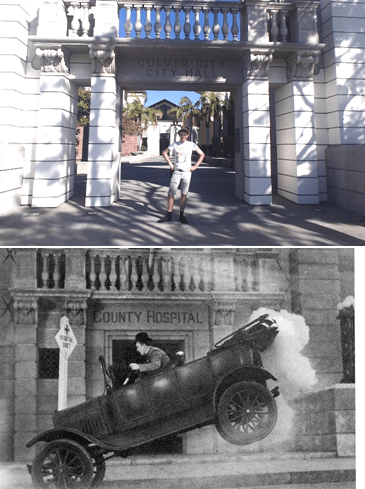
Washington itself, busier and more recognisably metropolitan than Main Street, is featured in a number of car chases – ‘THE TAXI BOYS’ films, notably, and Chase’s ‘THE COUNT TAKES THE COUNT’. Walk a little further southwest, and you come to the site of the Culver City Hall. This was disguised as a courtroom in L & H’s ‘GOING BYE-BYE’, and was the eponymous ‘COUNTY HOSPITAL’. Sadly, the original was demolished, but an impressive replica façade has been erected in the exact same spot.
A replica facade stands on the spot of the former Culver City Hall, once ‘COUNTY HOSPITAL’.
Filming ‘COUNTY HOSPITAL’ at the same spot.
So many films took place in this little area that it is impossible to list them all. Indeed, I struggled to even process them all while there. While the Music Box Steps in Silverlake are justifiably iconic, allowing you to follow in L & H’s footsteps, Culver City is actually a much more immersive experience. My favourite thing about standing in the spots where my heroes stood was not the chance to do a copycat photo, but to look out at the view they would have seen as they filmed. Suddenly, they weren’t confined to frames of film. The disappeared scene around those frames filled out; I could see the colours, hear the noise of traffic, feel the heat of the California sun. I imagined Stan Laurel or Charley Chase briefing the cameraman on the angle they wanted, then walking back to take their position, ready to be immortalised. I imagined the halted traffic on Washington Boulevard, or the crew walking back down Main Street, satisfied with a funny scene. Perhaps they conferred on this street corner, or under the shade of that awning, shaping the scenes that we now know and love. In such a well-filmed part of town, surely each corner had some part to play. If you use your imagination, you can step back in time in Culver City, and imagine you are part of it too.
Alas, time has marched on, and the Lot of Fun is long gone. So too are the laughter-makers, and in their places only the naked streets remain. The secret of Hal Roach studios was never in these streets themselves. There’s no magic in the humdrum concrete, no secrets in the fabric of the walls. But, on these pleasant yet unremarkable streets, a crowd of immensely talented people passed by briefly to weave their dreams. They congregated daily, on a mission to create laughter. On the plain concrete and through dark alleyways, in the shadow of that big hotel, they did so, giving of themselves to make audiences forget their troubles. Almost 100 years later, new audiences are still doing so in their company. The people responsible have long since gone, but they transcended these everyday streets into a place that feels special, an inventory of happy memories and smiles. Now, that is magic after all…
January 17 marked the 136th anniversary of comedy producer Mack Sennett’s birth. Sennett’s name is instantly evocative of the golden age of comedy, and of slapstick film making in particular. He was a true trailblazer in the field, opening the first dedicated comedy studio, and for 20 years creating an anarchic vision of chaos to become the self-styled “King of Comedy” (the name of his memoirs). This went unchallenged for many years, but is Sennett still the rightful owner of his royal title? The recent silent comedy revival has, in fact, tended to overlook his studio‘s efforts. Books and documentaries have focused on the iconic faces of big name comedians rather than producers, and if the subject does come up, Hal Roach is usually the first name mentioned.
The Roach and Sennett styles present an obvious contrast. Roach films focused on characterisation, pausing to reflect on humanity’s foibles. Sennett’s style was anarchic, freewheeling, joyously madcap; a whirlwind of cross-eyed and moustachioed men racing like flesh cartoons through explosions, log cabins and frenzied car chases in a dazzling display of inventive visual gags. Roach allowed the individual to flourish; Sennett star comics were subsumed into the fast-paced madness. True, more individual personalities like Chaplin and Harry Langdon worked for Sennett. Significantly though, they got the best opportunities to develop their characters elsewhere. Roach films organically developed a story that could happen; at Sennett, continuity and common sense were trifling matters to be swept aside as long as something funny was happening.
Of course, this is a sweeping generalisation that can’t be totally accurate for hundreds of films; there was some overlap between the two styles but, on the whole, it is a fair comparison. I must admit that my personal preference has always been for the Roach style, but why should there be only one way to make a comedy? Modern preference for the subtler side certainly doesn’t mean that Sennett should go unmentioned. People spend so much time comparing and choosing between Chaplin and Keaton, Beatles or Rolling Stones, sweet or savoury, and so forth. It isn’t really productive and misses a key point; one of the joys of silent comedy is the infinite number of variations on a theme. Watch Laurel and Hardy wreck their car as a result of carefully built squabbling arising from their characters; then watch Billy Bevan do the same in a series of dazzling stunts in a Sennett film. Both scenes are fun and the fact that two different approaches could exist is what makes silent comedy such a bubbling pool of inspiration.
In recent years we have, I think, come to place more value on character and story when we evaluate silent comedy. Partly, this is a defensive reflex. No longer widely seen on television, silent films easily slip into annoying, lazy stereotypes in the human consciousness. As anyone who has seen ‘THE GENERAL’, ‘LIBERTY’ or ‘THE KID’ knows those under-cranked pastiches accompanied by tinny piano are way off the mark. But how many people have seen the inspiration of these films? To try and stand up for slapstick, we focus on its most sophisticated elements – the satire, the production values, the carefully developed characters – when presenting it to an often indifferent and hostile world. Ergo, we play up Chaplin, Keaton, Laurel and Hardy and Charley Chase, and play down Ben Turpin, Keystone madness and Del Lord’s car chases.
I don’t think this emphasis is always so conscious though. Laurel and Hardy, Chaplin and Keaton have all been on TV in recent years. From a personal point of view, I was introduced to them all in this way, and then went on to buy videos and DVD as a result.
Until the recent centenary celebrations on TCM, when was the last time a Mack Sennett comedy was scheduled on TV? Or available in any extensive form on home video? Until recently, Sennett films had dropped out of sight, denied the restoration that they deserved.
Significantly, Sennett’s profile was much higher when Silent comedy last had a boom, in the 1960s. The difference is that, then, Sennett films were seen in the Robert Youngson compilations, in series like ‘COMEDY CAPERS’ and ‘THE FUNNY MANNS’, and on their own account on TV. It must be said, that perhaps a change in our sampling methods has had something to do with it. We’re fortunate now to be able to seek out complete versions of these films in nice DVD prints and at cinema showings. Compilation films sampling short clips and highlights from many films have dropped out of favour, yet they are probably the best way to see Sennett films. As Glenn Mitchell remarked in his ‘The A-Z of Silent Film Comedy’, they are often schizophrenic and look better as clips than in their entirety. Retrospective samplings enable all the strong points to be seen, rather than in more diluted form, exposing the weaknesses in plot. When you look at the whole film, one often comes away having laughed heartily for 20 minutes but with a feeling that the film was somehow unfinished, or disappointing as a narrative.
However, the more you think about this modern, revisionist way of thinking, the more illogical it becomes. Think about more recent comedy; Sketch shows move from one unrelated scene to another.
Spike Milligan, who grew up on visual comedy, essentially created a verbal version of the Sennett world in ‘THE GOON SHOW’, later recreating it on TV in his ‘Q’ series. The MONTY PYTHON films move abruptly from one unlikely dream to another. More recent comedies like ‘THE MIGHTY BOOSH’, ‘FATHER TED’ and ‘FAMILY GUY’ are all about surreal, randomly motivated plot points and are loved for it. Comedy has become edgy. Well, Sennett’s films were pretty edgy. Lest we forget, to portray policemen as Sennett did in the 1910s was little short of anarchy! Even by modern standards, there’s much that is pretty edgy throughout his oeuvre. There’s black humour (stuntman Ben Turpin left to drown by his indifferent coworkers when it’s their lunch break, Billy Bevan accidentally blowing up a dog), surrealism, gags about futuristic technology (regular allusions to TV as early as the 20s) and gags that are risqué even now.
Sennett may have had to move over from his sole position as ‘king of comedy’. His standards of storytelling may have not been consistently up to Hal Roach’s, or have dated as well, but amidst the Sennett catalogue are classic films, and many brilliant, iconic gags that still entertain and surprise. His studio designed the template for silent comedy. Others may have taken it to greater heights, but the landscape would have been very different without its founding fathers. Let Chaplin be king of pantomime and Roach be the king of situation comedy, but we must not overlook Sennett as king of the anarchic gag. It’s great to see that Bristol’s Slapstick Festival is paying tribute to Sennett this year; in the meantime, here’s my pick of some of the best of Sennett…
A SMATTERING OF SENNETT…
I’ve chosen a handful of Sennett films that, I think, show Sennett’s studios at their mad, king of comedy peak. These aren’t necessarily the very best films to come out of the studio, but they are some of the ones that I think best exhibit elements of the Sennett house style. For that reason, there’s no Chaplin, Arbuckle etc, and only a smattering of Langdon…
THE DAREDEVIL (1923)
Ben Turpin is a physical embodiment of the Sennett style; zany, unbelievable and prone to extreme slapstick. The Sennett gag team used this to their advantage by casting him in melodramatic settings. To write a Ben Turpin scenario, all one really has to do is place him in a situation where he looks ridiculous (and of course, the beauty is that he looks ridiculous pretty much anywhere!). This reaches its apotheosis in ‘THE DAREDEVIL’ as he plays a stunt double in the movies… How could Ben Turpin double for anyone?! It’s a glorious joke, and with this premise in place, the Sennett gagwriters have a field day. Ben is constantly forgotten about in the middle of stunts by his careless film crew; cruel, surreal Sennett humour at its finest.
SUPER HOOPER DYNE LIZZIES (1925)
Another key ingredient in the Sennett cauldron of madness was the use of crazy car chases and gags. Director Del Lord made this his specialty, and here the subgenre reaches its zenith. This film contains the classic sequence where Billy Bevan pushes his broken down car up a hill, oblivious to the fact he has bumped into, and begun pushing, a whole line of parked cars. This film is let down by some standard scare comedy stuff (and a couple of extremely dubious racial gags) in the second reel, but the first reel is top notch stuff.
HIS MARRIAGE WOW (1925)
Harry Langdon’s work only really flourished when he managed to replace the Sennett style with his own brand of delicate pantomime. However, on occasion, the over the top madness actually formed an effective backdrop to Langdon’s style, making his quiet talent even more apparent. This film, while not his funniest, shows the stylistic contrasts meshing nicely. In a runaway car with Vernon Dent, this could have easily become another Del Lord gagfest, but Langdon shifts the focus of the scene from the chase itself to his helpless reactions.
WHISPERING WHISKERS (1926)
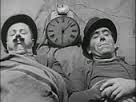
Some of the best and best-known Sennett films are the mid-20s series teaming his regulars Billy Bevan and Andy Clyde as a couple of hoboes. This one contains the classic gag where the pair are asleep on the railway tracks, but have set their alarm for the precise time where they need to roll over to avoid the oncoming express train. Plotwise, it falls into the standard “one title card to explain a complete change of location and plot” Sennett cliché, but the individual gags are of such high quality there’s not too much time to grouch.
FLIRTY FOURFLUSHERS (1927)
THE BEST MAN (1928)
Two films that show Sennett could adapt his style to the sophistication of the late 20s. The former features Billy Bevan and Madeline Hurlock as two everyday folk who pretend to be rich in order to hook themselves millionaires; of course, they end up wasting their time trying to chase each other! It’s a snappy proto-screwball comedy that relies on situation to pull it through, and the commitment to the new era is shown by the drastic step of removing Bevan’s prop moustache! Without it, his plump, partridge-like face is revealed, wearing a startled expression that befits a man who probably hadn’t seen his top lip in years…
‘THE BEST MAN’ is perhaps the best of the late 20s Sennetts. It has Bevan as hapless, obnoxious best man to nervous bridegroom Vernon Dent. Dent is an unsung hero of the Sennett films, and his underplayed frustration is a beautiful contrast to Bevan’s antics losing the ring, destroying Dent’s suit and setting fire to the bridal suite. The chaos in these scenes builds naturally, and is all the more funny for it; as Simon Louvish said ‘Stan Laurel couldn’t have done a better job’. Incidentally, the similarity to the Hal Roach style is carried further by the use of Culver City locations.
SPEED IN THE GAY 90s (1932)
Who says Sennett couldn’t do talkies? This Andy Clyde short revisits the Sennett car chases of yore, adding an extra humorous dimension by shifting the setting to the early days of motoring. There’s plenty of potential for gags based on the primitive cars, and there are some nice, bizarre extra touches, such as Andy designing a bird-man costume, and absentmindedly walking around still wearing it while going to meet the mayor. The period setting also helps to keep the film from seeming as dated as many other early talkies.
THE FATAL GLASS OF BEER (1933)
W.C. Fields’ four sound shorts are the best known of Sennett’s talkie shorts, and this faux-melodrama is the most off-the-wall. Sennett himself actually hated this short and tried to veto it being made, so you might think it an odd choice to include here. However, when you look closely, it actually dovetails nicely with the absurdist Sennett style. The studio’s comedies had a long, proud heritage of parodying melodrama that went right back to the Keystone era; this reached it’s apotheosis in the ridiculous Ben Turpin parodies. ‘THE FATAL GLASS OF BEER’ is a clear stylistic cousin of these films, especially Turpin’s frozen north parody ‘YUKON JAKE’.
Coming this weekend to Bristol’s Slapstick Festival…
David Robinson* film critic, author and Chaplin’s official biographer will be celebrating the mastermind of early slapstick comedy, the actor and producer, Mack Sennett. David will take you on a journey through his best comedy shorts from the 1910s and 1920’s featuring amongst others Charlie Chaplin, himself and the hilarious Keystone cops . With live accompaniment by John Sweeney on Piano.
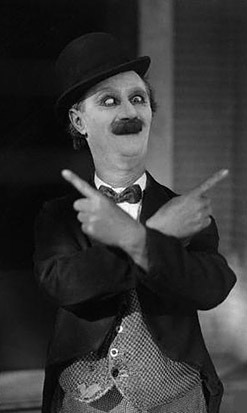
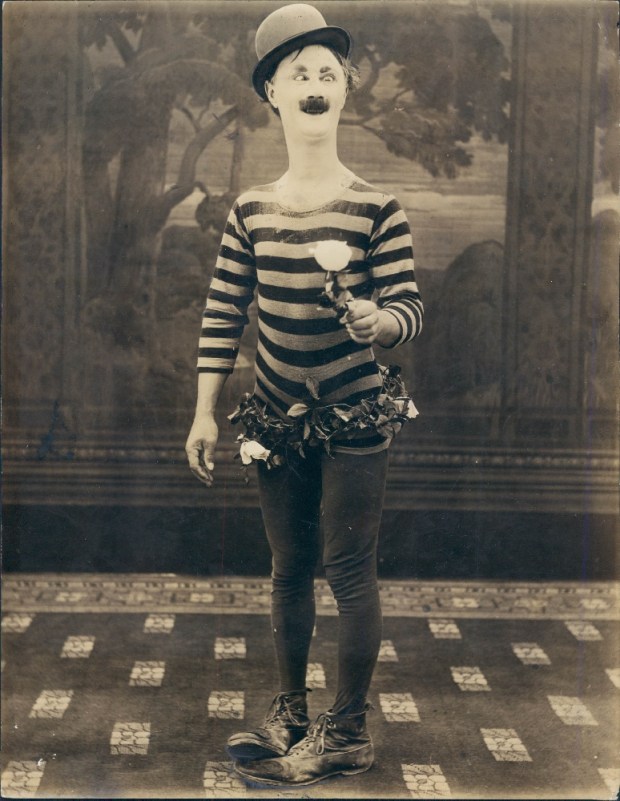
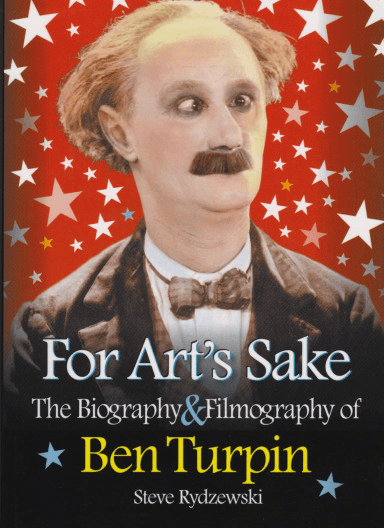
Of all the silent comedians, none was more bizarre looking than Ben Turpin. The antithesis of Chaplin, Keaton and Lloyd’s realism, his equipment – crossed eyes, scrubbing brush moustache, and long neck with globular Adam’s apple – made him almost totemic for silent comedy’s wilder, more surreal side. In fact, when James Agee wrote the 1949 ‘Life’ magazine article that inspired the first serious silent comedy revival, it was Turpin’s mug that adorned the cover. That Turpin could not just become a star, but join the company of ‘Life’ cover stars including (at that point) Eisenhower, Rita Hayworth, Marshall Tito and Stalin is just one of the many improbabilities in his career. In fact, his whole screen career was based on unlikeliness: many of his funny films have him wonderfully out of place masquerading as Rudolph Valentino or Erich von Stroheim!
Here are a few other unlikely truths about this living gargoyle..
1. Turpin was actually of French parents, although born in New Orleans. In his sound films, you can detect the hint of an accent.
2. His eyes were genuinely crossed. At the height of his fame, Turpin famously had his eyes insured by Lloyd’s of London as a publicity stunt.
3. Various stories circulated regarding the source of his miasma. The simple truth is much less exciting: after playing the cross-eyed character ‘Happy Hooligan’ in vaudeville several times a day, he found that one day, his right eye was stuck in position as a result of the repeated strain.
4.Turpin had an extremely restless spirit. He voluntarily became a hobo as a young man, choosing to ride boxcars in preference to finding a job. He did so for several years.
5.After finally settling with a variety of menial jobs, he played in vaudeville before being signed up by Essanay studios. Stardom? Well, not quite. Although he acted in films during the day, he was also required to sweep out the studio, collect props and box up films for shipment!
6.Ben allegedly took the first on-screen pie in the face, in 1909’s ‘Mr Flip’.
7. Behind his two-dimensional façade, it’s sometimes hard to recall his real life struggles: he dropped out of acting at the peak of his stardom to nurse his terminally ill wife, Carrie.
The offscreen Turpin. Almost dapper.
8. Well into his 60s, he was a master of the perilous ‘108 fall’, involving kicking a leg up into the air, turning a somersault and landing on the floor. He would apparently often do it in random places around Hollywood, often accompanied by a cry of “I’m Ben Turpin -earn 2,000 dollars a week!”. Fellow comic Lupino Lane once recalled seeing Turpin stop traffic in the middle of Hollywood Boulevard to do his trademark fall! You can see him do it (alongside Lane, coincidentally) a few minutes into this sketch from ‘The Show of Shows’:
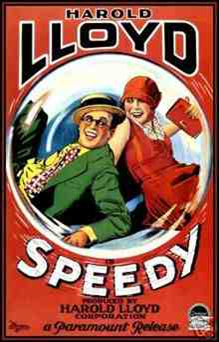
Harold Lloyd’s ‘SPEEDY’ is not an obscure or rare film, but one that manages to be consistently overlooked. It was Lloyd’s last silent film. As Harold ‘Speedy’ Swift, he’s a baseball fanatic who can’t keep his mind on his work long enough to stay in a job for more than a day at a time. Eventually, he gets work driving his girl’s grandfather’s horse-drawn tramcar, just as the big railroad company tries to force it out of business. The tram must run once a day to keep its franchise, and Speedy is charged with keeping the service running, despite all the big company’s attempts at sabotage. He manages to overcome all the obstacles to save the day, allowing Grandpappy to sell the line at a profit. Alongside all his other classic silent features, it’s often overlooked. Alright; it probably isn’t his best film – there’s nothing as iconic as the building climb in ‘SAFETY LAST’ here, and the story isn’t as evenly sustained as in ‘THE KID BROTHER’, but personally, it’s my favourite of all Lloyd’s films.
So, what sets it apart for me? Well, first of all, SPEEDY has a rather different quality to many of his other films. Most of the other Lloyd features fall into two groups; the first, including ‘THE KID BROTHER’, ‘DR JACK’ and ‘GIRL SHY’ are based in small, rural towns. The other, more Metropolitan films, are comedies of jazz age city speed and thrills, like ‘SAFETY LAST’ or ‘FOR HEAVENS’ SAKE’. These all take place in the metropolis of Los Angeles, although it is never explicitly stated. ‘SPEEDY’ on the other hand, has a definite geographic setting, on the opposite coast. It specifically takes place in New York, with landmarks like the Yankee Stadium and Coney Island integral to the film’s plot. It even features real life baseball star Babe Ruth as himself. Neither before nor since in Lloyd’s career was the fantasy quite so inextricably linked with reality.
Most unusually for Lloyd, his character has already won the girl before the film starts; he’s confident and self-assured, and so we get a change from the usual ‘weakling has to impress girl by making a man of himself’ plot. While Harold still gets to save the tramcar and succeed in making a fortune, the plot is a bet less contrived than in some of the others. In fact, his relationship with Ann Christy is probably the most realistic and genuine of any of his films, having a real, winsome charm to it. Their scenes at Coney Island are one of the highpoints of the film, and there is a lovely little scene where they catch a lift back to town in a furniture van, setting up home and dreaming of the future during the ride back.
This charming quality applies to the film as a whole; the outdated streetcar is matched by the now-vanished Coney Island funfair scenes, always a highlight. From here, through backstreets of New York, to hot dogs, yellow taxi cabs and baseball, Lloyd celebrates icons of Americana. None of his other films reflect the title of his autobiography, “AN AMERICAN COMEDY”, quite so well. With the passing of time, this has taken on an even greater nostalgic quality. Indeed, the whole film is permeated by an atmosphere of celebrating the old ways as the modern world changes everything. Is it just a coincidence that this is the film that Lloyd was making as Sound technology threatened to change the movie industry and the careers of the silent comedians beyond all recognition? (As a footnote, It’s interesting that Keaton’s last independent silent, ‘STEAMBOAT BILL JR’, also celebrates an obsolete form of technology).
Truthfully, ‘SPEEDY’ is somewhat haphazardly constructed, but there are lots of high spots, with Harold’s continued failed attempts to hold down a job provide for plenty of good gag sequences. The best is probably his short-lived career as a taxi driver, which even includes a cameo by Babe Ruth! To top it all off, there’s a classic Lloyd chase through the streets of New York, as he races to the finish line, driving the streetcar like a chariot. Lloyd later recalled how an accident when he crashed the streetcar was worked into the film, a brilliant example of the fluidity and spontaneity of silent technique, soon to be lost with the crushing rigidity of the talkies.
SPEEDY is a real charmer, and a fine way to draw the curtain on the silent era. Lloyd’s next film, the talkie ‘WELCOME DANGER’ is best forgotten. I prefer to leave him at the high point of SPEEDY, racing his streetcar to the finish line.
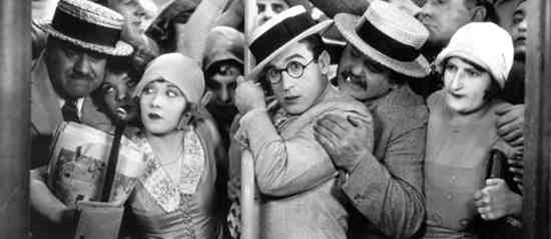
Here are a couple of my favourite scenes. First, Harold’s trip on the subway…
… and two icons of Americana together: Harold meets Babe Ruth…
Another rare British comedy released by Network DVD…
CAPTAIN BILL.
Directed by RALPH CEDER. Starring LESLIE FULLER, with Georgie Harris and Hal Gordon.Released November 1935.
In the 30s class schism in comedy, rubber-faced Leslie Fuller found himself firmly on the working class side. Finding his fame in concert parties, especially in the seaside town of Margate where he made his home. His usual character, Bill, is well-meaning, if a bit gauche and clumsy, occasionally prone to gruffness and ready for a fight. In fact, he gives the impression of being an everyday Cockney bloke, the type who might spend his holidays at Margate, for instance. Perhaps no other performer better reflected his audience, and in holding up the mirror to them, Fuller won huge stardom. He was even described as “Elstree Studio’s answer to Clark Gable!”. That’s pushing it a bit, but there is certainly something charming and realistic about him, and while ‘Bill’ seems fairly effortless, I suspect he actually took much greater skill to play.
Much the same homespun, effortlessness went into his film career: Fuller churned out films in seemingly less time than it takes some people to digest meals. ‘Captain Bill’ was one of three comedies he made in 1935. Inevitably, it shows. It is the only Fuller film I’ve yet seen, although I reckon it’s fairly typical of his vehicles.
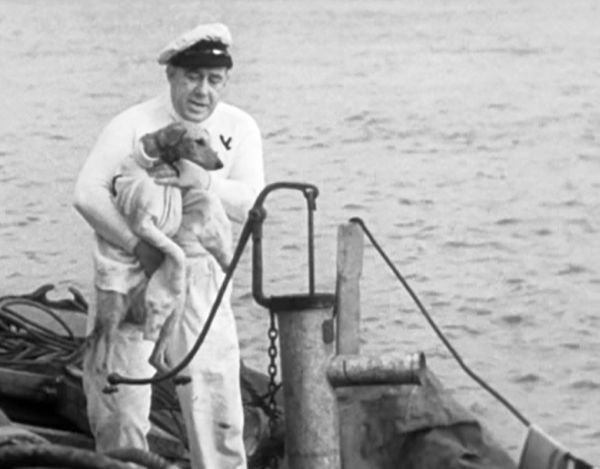
As the title suggests, Bill is plonked into a boat setting, running a barge on the Thames. Again, it’s something any of his audience could relate to – in his own way Fuller was as regionally minded as any of the Northern performers like Frank Randle. He has an inept crew of cabin boy Georgie Harris (a regular sidekick) and droopy old sad-sack D.J. Williams. In a way, the trio are a ragged foreshadow of the films soon to be made teaming Will Hay with Moore Marriott and Graham Moffatt. Although far less amusing, they certainly have their moments.
The first scenes are strung together with little consequence; few of them seem to take much responsibility for forwarding the plot. It’s more like a day in the life of Captain Bill, detailing the crew’s slapstick misadventures on board the ship, Fuller’s rivalry with fellow captain Hal Gordon, a fire on the barge, and a musical interlude. These scenes are all rather claustrophobic, taking place on the small barge with the camera struggling to take it all in. However, the location shooting adds quite a bit of charm to these seemingly off the cuff scenes. There’s something of a silent comedy feel here, especially in a good scene with the crew’s frantic efforts to bail out their sinking barge. Director Ralph Ceder was actually a Hal Roach veteran, who directed Snub Pollard, Charley Chase, Stan Laurel and Oliver Hardy (though only in separate films). Accordingly, the work-based slapstick routines here recall Laurel’s solo films like ‘The Noon Whistle’, ‘Oranges and Lemons’ or ‘Save the Ship’. Incidentally, the film is produced by Joe Rock, who had also produced solo films with Laurel.
The second half of the film involves Bill blagging a job as a yacht captain, and gets bogged down in a plot about gun-runners. Of course, all ends happily, but ‘Captain Bill’ never really lives up to its potential. With a less rushed production, stronger direction and some background music, it could have been a winner. As it is, it’s not without charm or humour, but doesn’t really inspire me to collect all of Fuller’s films.
I’m working through a Christmas haul of DVDs, including several from Network DVD’s superb series, ‘The British Film’.
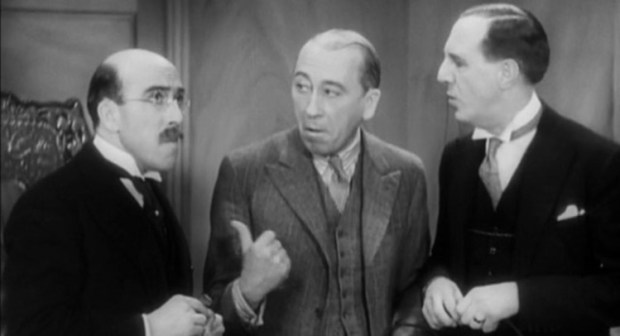
Long unavailable on VHS or DVD, the appearance of The Aldwych Farces is a much overdue treat. These were the first real comic successes of 30’s British cinema, based on a long-running series of comic plays written by playwright Ben Travers, and staged at the Aldwych theatre by Tom Walls. Beginning in 1930, they transferred to the screen and continued to be filmed through to the mid-30s, becoming a much-loved series. Most of the films nucleated around three comic actors. Tom Walls usually played a devious reprobate, well-to-do but sly and planning some kind of scheme. Ideal foils were provided by monocled silly-ass Ralph Lynn (pronounced Rafe Lynn), and bald, timid, bird-like Robertson Hare, who inevitably found himself mixed up in the middle of things, wailing “Oh Calamity!” In addition, many other regulars added to the fun: French Yvonne Arnaud, old harridan Mary Brough, or the superb, dithering Claude Hulbert.
The core of the farces: Tom Walls, Robertson Hare and Ralph Lynn.
Unlike some of the surprisingly dynamic comedies in the British Film series, the Aldwych Farces wear their heart on their sleeve as stage adaptations. Tom Walls directed the films, and has been accused of directing the actors in a stage play and then pointing the camera at them. Some of the films certainly do suffer from this, and there are some rather long scenes that need a bit more pep, closer to the stodgy, theatrical style we tend to associate with 30s films. However, this is certainly not true of all of them, and in a way this is part of their charm. In any case, the Aldwych films mostly survive their limitations to remain pleasant and entertaining examples of a bygone form of entertainment. The scripts contain many funny lines, wordplay and situations, and the performers have honed wonderful timing through their years of association. Their stock company of intrinsically British types are masterfully played, and the ensemble comedy points the way to Ealing Studios’ later comedies.
Thematically, this is very much the frothy pre-war world familiar to readers of P G Wodehouse; a world of country houses, suspicious wives and relatives. There’s nothing controversial and lots that is stereotypical, but it’s all in good fun. Even better, the films come two to the volume (one later effort, ‘STORMY WEATHER’ was also released singly a few years ago). So far, they are a mixture of some better known and lesser efforts. Hopefully, the most celebrated efforts ‘THARK’ and ‘TONS OF MONEY’ will also come along on future DVDs.
Volume 1 features ‘A CUCKOO IN THE NEST’ and ‘ TURKEY TIME’. ‘CUCKOO..’ centres around Ralph Lynn accidentally being forced to spend the night at a country inn with an old flame (Yvonne Arnaud) after they both miss their train, hire a car together and become stuck in the rain. To satisfy the suspicious, god-fearing harridan of a landlady (Mary Brough) they pose as a married couple. Unfortunately, Lynn’s wife has witnessed them going off together and followed, in tow with her dreadful mother and alcoholic old fruit of a father (Tom Walls). Naturally, Yvonne’s husband also turns up on the scene, leading to lots of awkward moments for Ralph. Lynn carries much of the comedy scenes, sneaking in and out to avoid the landlady, struggling to bed down on the floor, retrieving a dog in the rain, or rehearsing his excuses. However, it’s Tom Walls’ drunken old reprobate who provides the best laughs, forever searching for a drink or a pretty girl before being beckoned by his wife’s call. As a director, Walls lives up to his reputation, though. ‘A CUCKOO IN THE NEST’ moves with the viscosity of treacle. With a bit more pep, it could have been a classic, but just misses the mark despite some funny moments.
‘TURKEY TIME’ boasts much better direction, including the interesting idea of giving each character a little vignette to introduce themselves in the opening credit sequence. It takes place at Christmas, with Walls and Lynn joined by Robertson Hare in the main nucleus of characters. Walls is a pugnacious chap, whose fights land him in bother, especially with his fiancé when he defends the honour of a showgirl on the pier. Lynn is a jolly chap who tags along with Walls, and has fallen in love with the showgirl . Their antics to help her out constantly land henpecked Robertson Hare in trouble with his wife. This one is lots of fun.
Volume 2 contains two of the best farces. ‘A CUP OF KINDNESS’ benefits from the additional presence of Claude Hulbert, who I always find irresistible. It’s a modern day Romeo and Juliet story in suburbia: neighbours, the pompous Walls and uptight Hare constantly do battle, while Ralph Lynn and Dorothy Hyson are their star-crossed offspring. Lynn and Hulbert are both hopeless at holding down jobsm but get mixed up in some dodgy shares that threaten to throw the family into disgrace. Things get a bit slow toward the end, but there are many funny sequences, including a dotty fantasy sequence that sends the whole cast back to the Stone Age.
Robertson Hare, Gordon Harker and Ralph Lynn in DIRTY WORK.
DIRTY WORK stands slightly apart from the other farces in that Tom Walls doesn’t appear , though he still directs. In his place is the superb comic character Gordon Harker, who brings his rough-edged posh cockney (“Oh yerrrrrrs”) to the table. Harker is the doorman at Cecil Parker’s jewellery store, where Ralph Lynn and Robertson Hare also work. Thieves are targeting the store; Lynn and Harker attempt to set a trap for them, roping the reluctant Hare in to pose as a burglar. Meanwhile, the thieves have plans of their own to frame the trio for the robbery…
This one starts slowly, with lots of talk-heavy scenes in the jewellery store, but gets going at a good clip once the plans are hatched. The comic break-in scenes are excellent and this turns into maybe the funniest of all the films on the two discs. The highlight is undoubtedly Robertson Hare’s horror at being forced to shave his moustache and try on wigs to disguise himself as the burglar!
The Aldwych Farces are undeniably dated, and sometimes just a bit too polite. But, they offer plenty of smiles and even the odd belly laugh, and point a clear way to the later character ensembles of Ealing and the Boulting Brothers. As an influential part of British comedy cinemas, they’re more than worth revisiting.
I’m in the process of adding biography and filmography pages for the clowns featured on this blog. I’ve started with one of my personal favourites, inventive, surreal comedian and genius animator Charley Bowers. You can navigate to his page by the menu at top left, or there’s a direct link here.








 The Lost Laugh