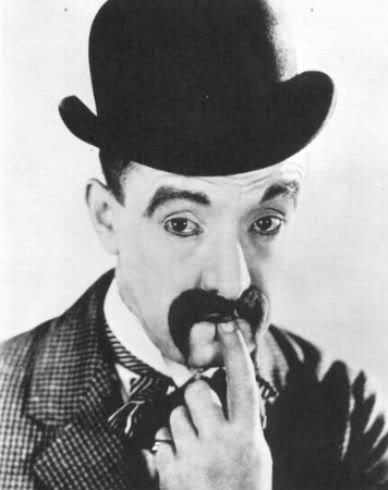
Charley Chase

Silent Laughter 2025: on sale now!

It’s back! This year’s Kennington Bioscope Silent Laughter day takes place on Sunday November 23rd at London’s Cinema Museum. We’ve got a full programme featuring some brilliant silent comedies that you won’t see on the big screen anywhere else, including some being shown for the first time in almost a century! As regular attendees will know, we’re all about telling the forgotten stories of silent comedy: the overlooked performers, the forgotten gems and the long-lost. So, among the highlights this year are a rediscovered adaptation of the P.G. Wodehouse novel The Small Bachelor (1927), an unlikely pairing of W.C. Fields and Louise Brooks, and a celebration of some of the brilliant funny women often neglected in the male-centred narratives of the silent comedy genre: Wanda Wiley, Mabel Normand, Colleen Moore and Marion Byron. We’ll also be featuring some familiar favourites, too: Chaplin, Laurel & Hardy and Charley Chase all feature in the programme. All screenings feature introductions from film historians, and live music from some of the best accomnpanists in the world! Tickets are just £21 for the day – a steal! – and you can get them from this link: https://www.tickettailor.com/events/kenningtonbioscope/1922369

Read on for the full programme:
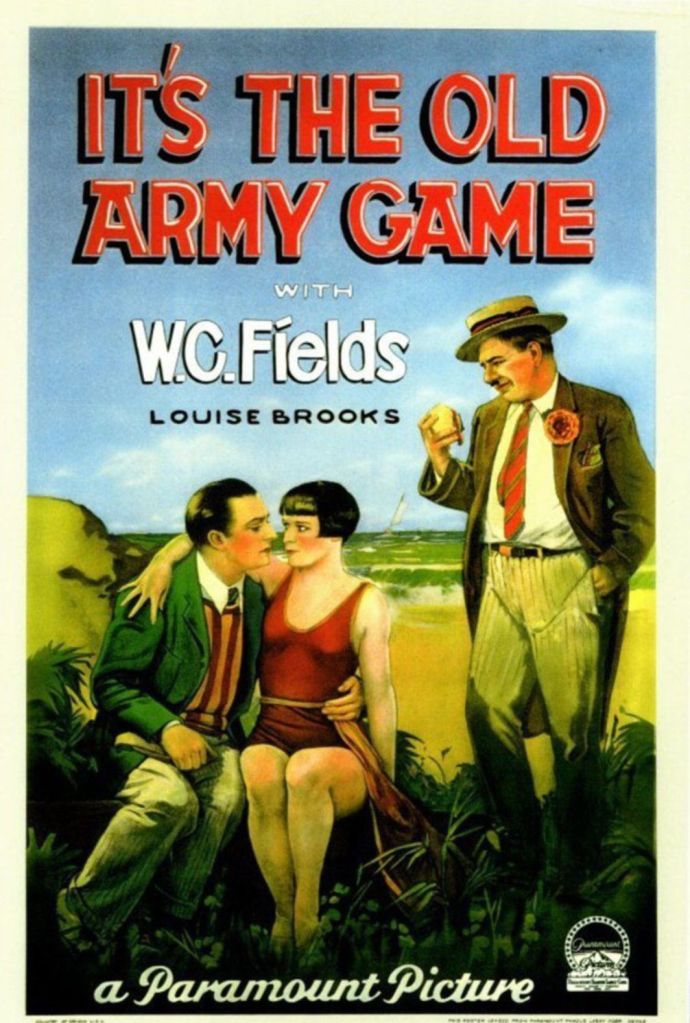
10.00 IT’S THE OLD ARMY GAME.  Though posterity remembers him as a talking comedian, the great W.C. Fields – enemy of small dogs and children everywhere – made some wonderful silent comedies. This 1926 feature follows the trials and tribulations of small-town druggist Elmer Prettywillie (Fields) and boasts some terrific comic set pieces, from his encounters with difficult customers to a nightmare picnic. It later provided the blueprint for his 1934 classic It’s A Gift, and also features an unlikely co-star: silent icon Louise Brooks!

11.30 REDISCOVERIES & RESTORATIONS
Almost a century after the silent era ended, some brilliant lost films keep resurfacing, while restoration efforts help others to live anew. Regular attendees will know that we always pull out some real goodies from the bag for this segment of Silent Laughter, and this year is no different. We’re still digging through the treasures on offer, and exact titles are TBC, but expect new restorations of long-lost (and hilarious) films starring Snub Pollard and Roscoe Arbuckle, as well as a long-lost British short Pimple’s Lady Godiva (1917). We’ll also be showing a sparkling new restoration of Laurel & Hardy’s classic Big Business.

14.00 FEMALE FUN
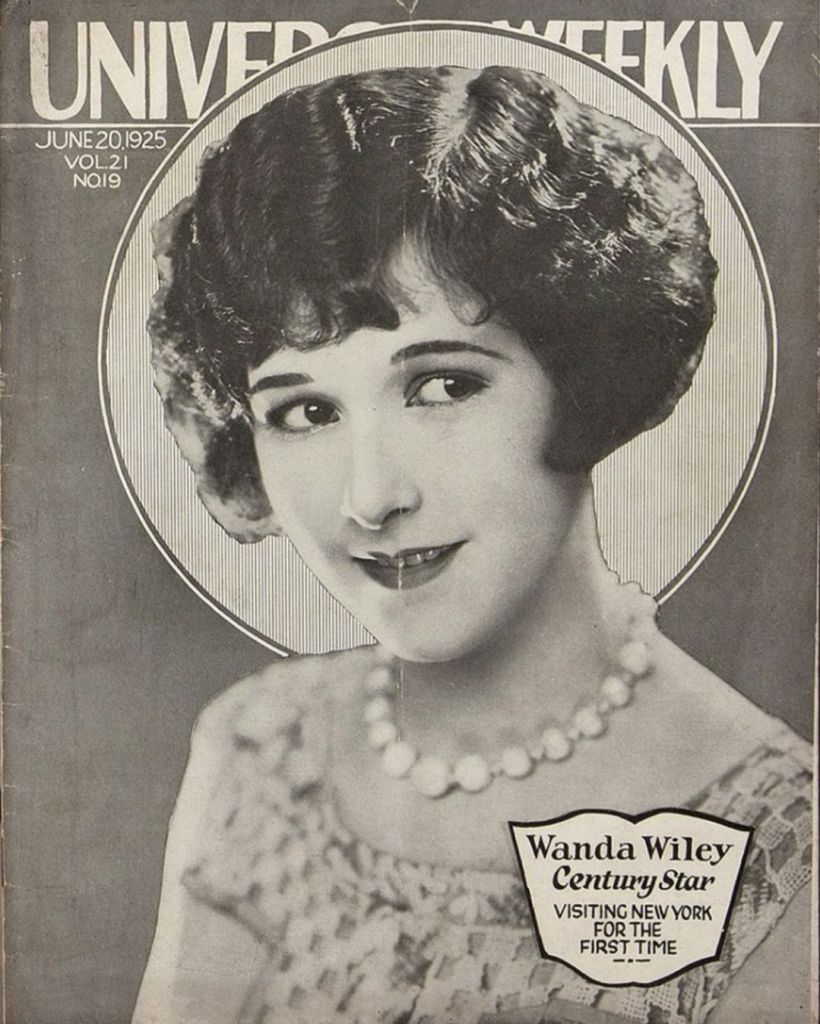
Unfortunately, our view of silent comedy tends to be dominated by male performers. Although fewer studios provided opportunities for women to shine in comedy, there were still plenty of wonderful performers who managed to break through the slapstick patriarchy to achieve stardom in their own right. Here we shine a light on three of the best funny women: Wanda Wiley proves that women can do slapstick just as well as men in A Thrilling Romance, Marion Byron stars with Max Davidson in charming situation comedy The Boy Friend, and the wonderful Mabel Normand pokes fun at vanity in the rarely seen Anything Once. Introduced by Matthew Ross.


15.45 WHY BE GOOD?
One of the defining ‘flappers’ of the 1920s, Colleen Moore sparkled in a series of deliciously frothy light comedies. Why Be Good? is a classic jazz-age tale set in a metropolitan world of department stores and night clubs: a real time capsule. Life-of-the-party Pert Kelly (Moore) falls for the boss of the department store where she works – but will her free-spirited ways be tolerated by high society?Lost for many years, Why Be Good?  was restored in 2014, complete with its original ‘Vitaphone’ music and effects soundtrack. We’ll be showing the film with this vintage accompaniment today. Introduced by Michelle Facey.

17.30 FOCUS ON… KEYSTONE
In the early teens, Keystone Studios was a crucible forfilm comedy. From Charlie Chaplin to Roscoe Arbuckle, Mabel Normand and The Keystone Cops, many of the icons of silent comedy were forged here. Dave Glass and Glenn Mitchell take a deep dive into the studio’s modius operandi and its seismic influence on comedy, with classic and rare film clips galore!

20.00 THE SMALL BACHELOR
Lost for a century, we’re proud to present this re-premiere of a rediscovered adaptation of a P. G. Wodehouse novel. Set in Greenwich Village, the plot focuses on aspiring artist Finch (George Beranger) and his romantic entanglements. The New York setting gave Wodehouse plenty of chance to gently lampoon American culture, especially through the Western-obsessed character Sigsbee Waddington. A cast of great comic character actors bring Wodehouse’s characters to life, including Lucien Littlefield, Tom Dugan, Gertrude Astor and George Davis. Directed by light comedy specialist William A Seiter, The Small Bachelor fizzes with gentle wit and farcical humour: a rediscovered treasure for fans of Wodehouse and silent comedy alike.
This screening will be introduced of Christopher Bird, who rediscovered the film. Continuing the spirit of the main feature, The Small Bachelor will also be supported by a short film starring Bioscope favourite – and farceur extraordinaire – Charley Chase. Limousine Love is one of Chase’s all-time funniest films, as he -innocently – acquires a naked woman in the back of his car en route to his wedding! 


We hope you’ll join us on November 23rd!
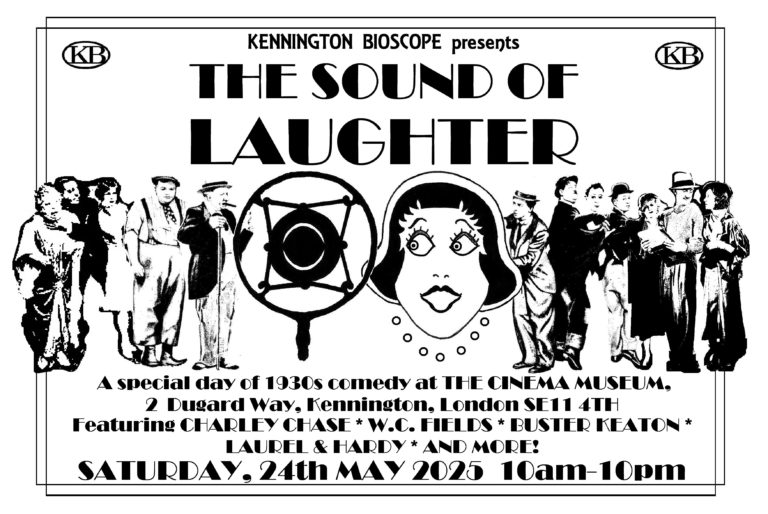
The Talkies come to Kennington…

Coming next month at The Cinema Museum! After years of celebrating silent comedy, we thought it was high time we did a spin-off event to celebrate the best sound comedy.  From favourites like Laurel & Hardy, Charley Chase and W.C. Fields, to forgotten funnies like Harry Gribbon, Lloyd Hamilton and Tom Walls, we think we’ve got a great programme. But it’s your laughter that will bring the films to life… so we hope to see you there.

Here’s the link to the event page, and to buy tickets. You can also find the full programme below, but this great little video by Dave Glass gives a nice flavour of what it’s all about…


Kennington Bioscope present a fun-packed day of vintage film comedies from the 1930s, on the big screen. A spin-off from the ever-popular Silent Laughter events, this all-dayer will feature some of the very best talking comedians in a hilarious selection of shorts, features and rarities. We’ll also be spotlighting the work of silent comedians who transitioned to sound, with classic shorts from Laurel & Hardy, Charley Chase and W.C. Fields, plus the rare chance to see a fantastic Buster Keaton feature that captures the essence of his silent work. All this, plus some choice rarities from the British Film Institute, Library of Congress and private collections. Introductions and presentations by film comedy experts will spotlight the work of key performers and studios, and there will be plenty of screenings on celluloid! So come along and enjoy the sound of laughter as we celebrate one of film comedy’s greatest decades.

The full programme is below. All films subject to confirmation.


10.00 SOUND BEGINNINGS

The coming of sound brought new opportunities in cinema for comedians specialising in verbal humour, nonsense patter and musical comedy. From the zany antics of the Marx Brothers and The Three Stooges to the sly humour of Mae West, or songs and patter of Eddie Cantor, there was a dazzling array of fresh talent. This programme will showcase the best of the new guard, through short films and excerpts. Among the gems we’ll be showing complete are Robert Benchley’s witty, Academy Award winning How To Sleep and The Druggist’s Dilemma, featuring the hilarious comedy team Clark & McCullough with James Finlayson. Presented by Matthew Ross.


11.30 ROOKERY NOOK (1930)

Ben Travers’ series of Aldwych Farces were some of the most popular British films of the 30s. Featuring the wonderful dynamic between disreputable Tom Walls, silly-ass Ralph Lynn and nervous Robertson Hare, the films set a benchmark for situation comedy. The first of the farces to be filmed, Rookery Nook was voted the best comedy of 1930, but has rarely been screened since. This is a rare chance to see the farceurs at the top of their game in one of their classic films. Rookery Nook will be screened on 35mm, in a copy from the BFI National Archive and introduced by film historian Geoff Brown.


14.00 THE TALKIE FUN FACTORIES

The comedy two-reeler was a mainstay of cinema programmes throughout the 1930, and here we spotlight the efforts from specialist comedy studios. From the Mack Sennett Studios comes a terrific spoof of early musicals, A Hollywood Theme Song, with Harry Gribbon; we’ll be screening this on 16mm. The same studio also made some of W.C. Fields’ funniest films, including The Dentist, which we’ll be showing in its rarely seen, complete and uncensored version! Other films include a very rare – and very funny – RKO short starring Harry Sweet, Firehouse Honeymoon. Presented by Glenn Mitchell and Dave Glass.


15.30 LE ROI DES CHAMPS-ÉLYSÉES (1934)

Legend has it that Buster Keaton’s sound films are all horrors that allowed him no creative control, but that’s not completely true. While MGM may have mis-used his talents, independent studios gave him much better opportunities – albeit on a low-budget. In 1934, Keaton travelled to France to make this indie feature for producer Max Nosseck. Within the story of an amateur actor who gets mixed up with gangsters, Keaton creates new silent comedy routines and shows off his acting chops in a dual role – all set against great location backdrops of Paris in the 1930s. A rare chance to see this charming and funny film on the big screen. In French, with English subtitles. Introduced by Keaton expert David MacLeod.


17.00 SILENT SURVIVORS

Another film comedy myth is that the lion’s share of silent comedians were out of work when sound came in. Actually, many of them remained busy and continued to produce some great comedy. Glenn Mitchell and Matthew Ross present a selection of the funniest and most fascinating sound appearances by silent comics, including excerpts featuring Harold Lloyd, Roscoe Arbuckle and Lupino Lane. The programme will also feature complete screenings of Lloyd Hamilton’s Good Morning Sheriff (courtesy of The Library of Congress), Harry Langdon’s charming A Dog-Gone Mix-Up and Laurel & Hardy’s Our Wife, in which the duo meet silent comics Babe London and Ben Turpin! The last two of these films will be screened on 16mm.


20.00 THE LOT OF FUN: LAUREL & HARDY & CO

The Hal Roach studios were the gold standard for comedy studios in the 1930s, turning out wonderful and charming short films. This programme will show some of the finest comedies made on ‘The Lot of Fun’! The female comedy team of Thelma Todd & Zasu Pitts crash society in The Pajama Party, while Charley Chase brings his talent for farce into the sound era in Looser Than Loose. The programme will conclude with Laurel & Hardy’s Academy Award winning classic The Music Box (the one with the piano!), which will be shown on 35mm. A fitting end to a day filled with the sound of laughter!

Issue 15 of The Lost Laugh is coming…

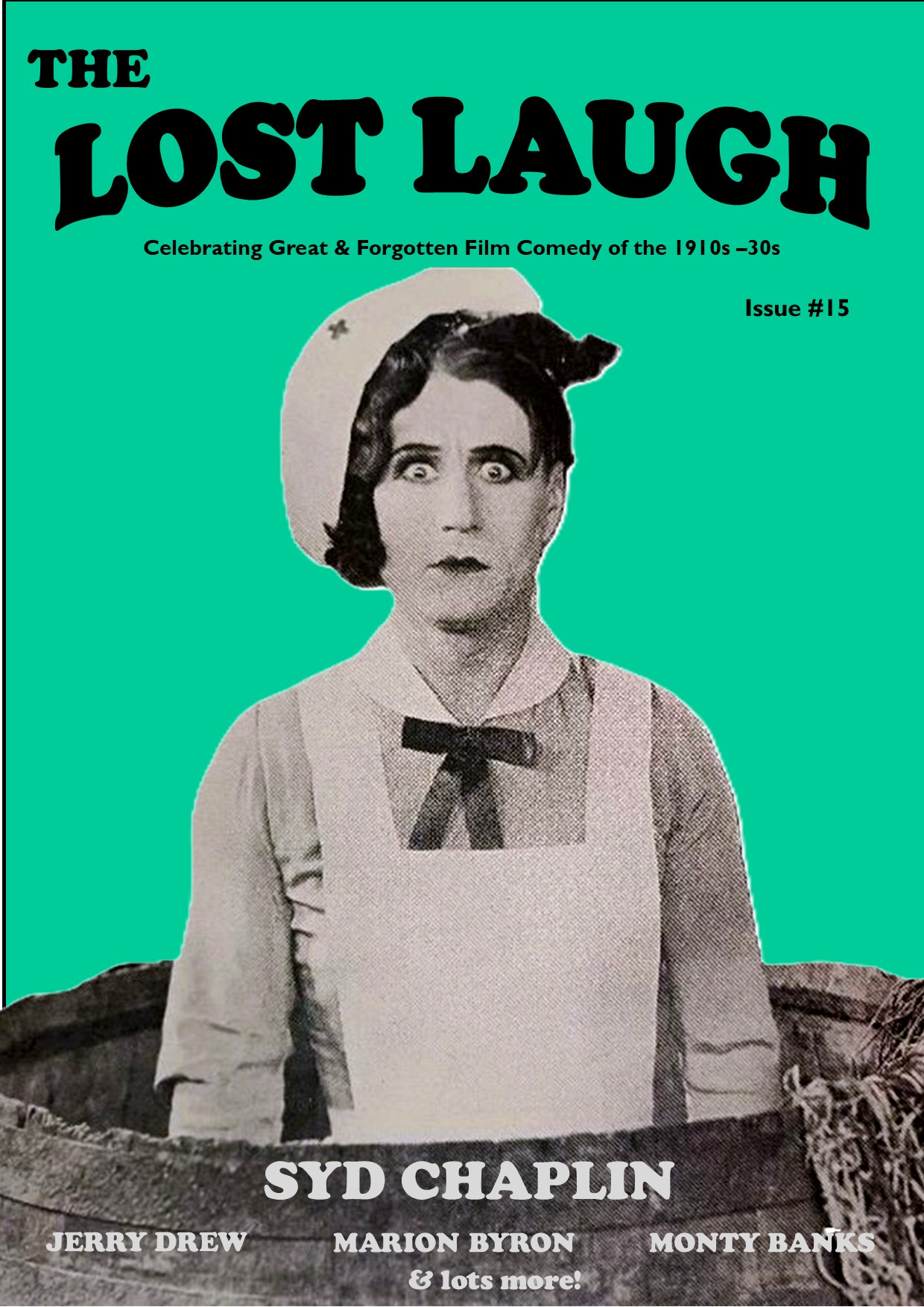
Where does the time go? Somehow, It’s just over three years since the last issue of The Lost Laugh appeared. Well, finally I’ve been cracking on with a new one, and though life has thrown a few delays in the way, I hope it will be out by the end of March.

This time round, I’m really thrilled to be featuring contributions from silent comedy experts Steve Massa, Lisa Stein Haven, Holly Foskett & Matthew Lydick, and have enjoyed researching some corners of silent film comedy that were new to me. Here’s a teaser of some of the contents:

  • Syd Chaplin. As Syd’s newly restored feature Oh!What a Nurse! is restored and re-premiered, it’s the perfect opportunity to revisit his neglected comedy career. Syd’s biographer and Charlie Chaplin expert/author Lisa Stein Haven has very kindly agreed to a Q & A about the brothers.
  • Monty Banks: his career in short films, from supporting actor to star comic.
  • Steve Massa provides an insight into the early years of Hal Roach‘s studio – Rolin, and fills us in on his exciting new book project
  • Jerry Drew: aka Clem Beauchamp, Educational’s corner on the sophisticated comedy market of the late 1920s. But there’s more to Drew than that; he was also a writer, director, stunt pilot, husband of Anita Garvin… and an Oscar winner!
  • Charley Rogers: Holly Foskett and Matthew Lydick shine a light on Stan Laurel’s right hand man, a talented gagman, director and performer whose career has been under-researched… until now.
  • A celebration of Marion Byron: one of Buster Keaton’s best leading ladies, and a very talented comedian.
  • A Charley Chase feature film is a sadly rare thing, but 1929’s Modern Love still exists and provides some vintage Chase comedy!
  • news of exciting new Kickstarter projects, film festivals, DVD/BluRay releases, plus reviews…

It’s not too late to add something, if you’d like to! Contributions are always welcomed, and if you have a project you’d like to plug, then please do get in touch. I’m always happy to help spread the word. Drop me a line in the comments section, or at movienightmag [AT] gmail .com if I can help!

Here’s the cover of the issue. I thought I’d try a simpler, cleaner look this time. What do you think?

A Charley Chase Bonanza: new release from The Sprocket Vault

Charley Chase at Hal Roach. The Late Silents: 1927 features fifteen great Chase shorts, most of them unseen for years. Here’s the trailer, and read on for a review. Spoiler alert: it’s insanely good, and you should buy it.

There’s a – quite possibly apochryphal  –  legend that Charley Chase buried a boxcar full of his old film prints and personal memorabilia somewhere in the San Jacinto desert. That rumour may never be verified, but this latest DVD/BluRay collection from The Sprocket Vault gets us close in spirit to unveiling such a Chase treasure trove. The films here have been largely unseen for decades; some were considered lost, others locked away in archives, or withheld due to copyright restrictions. When The Sprocket Vault  began their series of Chase DVDs a few years ago with his talkie shorts, this already seemed like an unlikely and amazing bonus; when they moved on to his uber-rare (and hilarious) 1929 films, I thought I’d seen everything. But this set is the culmination of everything that Richard M Roberts and Kit Parker have been working towards in the series so far. It’s yet another release I never thought I’d see, and it presents some of the greatest silent short comedies ever made, rescued from the void. Quite simply, this is one of the most important silent comedy DVD/Blu Ray releases ever.

Why? Well, it represents the biggest release of “new” (ie. largely unseen) Chase films in years, and they capture him at the peak of his powers. 1927 was maybe Charley’s annus mirabilis.  He made many of his best films, and was Roach’s biggest star. A reminder of his status is that both Stan Laurel and Oliver Hardy appear as supporting actors to him in that year’s Now I’ll Tell One, the remaining footage of which is included here. Within a year, the Laurel & Hardy team would supplant him as the big news from Culver City, and Chase would forever play second, or third, fiddle to them.

However, the work presented here is compelling evidence – perhaps the most compelling yet? – for Chase’s status in the top echelon of silent film comedians. There’s a dazzling array of comedy techniques on display  – from farce (Assistant Wives,  A One Mama Man) to topical humour (Us), and adroitly handled slapstick and sight gags (The Way of All Pants, Are Brunettes Safe?).

A couple of the films have been seen before, but scattered across a variety of releases, often in poor quality. They look much improved here, courtesy of the restorations by Paul Gierucki at CineMuseum, and its great to have films like Forgotten Sweeties  and There Ain’t No Santa Claus  available as part of a cohesive Chase collection. The most familiar film here is Fluttering Hearts, which is so good that I’m sure no-one would begrudge owning another copy. After that, almost everything is new to Chase fans. And what joys there are to experience. I don’t want to give everything away in this review, but here are a few samplers:

Are Brunettes Safe is a wonderful comedy featuring Chase standing in for his doppleganger, who turns out to be a dangerous bandit. There’s some terrific physical comedy here as he has to incorporate the villain’s distinctive limp into his impersonation. This climaxes in another one of his fantastic eccentric dances, with Polly Moran.

A One Mama Man has great performances from both Gale Henry and Vernon Dent (rarely spotted at Roach) to add to the fun. This film was remade by Chase as the talkie Skip The Maloo! In 1931, but this version is much superior.

Assistant Wives is one of his best farces – another ridiculous premise, made believable by Chase’s perfect characterization and storytelling. A terrific cast here, too: Anita Garvin, Noah Young, Eugene Pallette and Edna Marian all add to the fun as Charley has to hire a stand-in wife when the boss invites himself to dinner. Some beautiful, original gags as well; Charley trying to carry three bowls of soup backwards up a fire escape is a particular highlight.

The jewels in the crown are the long-unseen, complete versions of two films sampled in Robert Youngson’s comedy compilations. A brief section of the Lindbergh-baiting Us  was seen in Four Clowns. Alongside the other Chase excerpts showcased there, I’d always been a little underwhelmed by this one, but the whole film is an absolute delight. While there are quite a few silent comedies featuring aerobatic finales, Us is a winner by virtue of relying on Chase’s character to provide the comedy. A nervous would-be flyer afraid to leave the ground, he presents himself as an aviator to impress Margaret Quimby, then has to constantly find new excuses to weasel out of actually going up in an aeroplane. This makes for some really funny sequences, and the film looks beautiful too.

The Way of All Pants was, for many years, thought to only exist in the cut-down excerpt featured in The Further Perils of Laurel & Hardy. Even in that truncated format, it was an absolute barnstormer of a comedy, but happily the full version was rediscovered a few years ago. The extra space of the full version really sets up the characters, and provides plenty of wonderful new gags (not forgetting the witty original intertitles). While losing trousers for comedy purposes can seem like a hackneyed idea, Chase’s absolutely mastery of how to provide variations on a running gag, expertly paced, make this one of the best of all his films, and among the top tier of Hal Roach comedies. We were privileged to showcase this new restoration at the 2023 Silent Laughter Weekend, and many people said it was their favourite film of the entire weekend!

The Way of All Pants  is also a great example of how Chase’s silent films have such perfect rhythm, not just the way they are directed and edited, but in Chase’s own pitch-perfect timing and body control. I was really struck by this when watching all the shorts on this set.

This set ranks along with All Day Entertainment’s Harry Langdon: Lost & Found set, Lobster’s Charley Bowers collection, Dave Glass’ Monty Banks restorations and Undercrank’s Edward Everett Horton set as a major, game-changing showcase for a silent comedy talent. And, if the films themselves weren’t enough, you get great musical scores from Dr Andrew Simpson, and information-packed commentaries from Richard M Roberts, which really put the films into their historical context. Massive thanks and congratulations to everyone involved in making this release happen. It puts Chase at the forefront of the silent comedians, where he belongs. Now, what are you waiting for? Go buy it!

Silent Laughter Rides Again

Great news for silent comedy fans in the U.K.: Kennington Bioscope’s Silent Laughter Weekend is returning to London’s Cinema Museum on November 4th – 5th. Once again there’s a fantastic programme of rare and classic shorts and features, with live accompaniments and guest introductions.

We’ve got films that haven’t been seen anywhere for almost a century, and premieres of recent restorations, including two classic Charley Chase comedies you won’t have seen before! There’s also an exclusive bit of ‘new’ Laurel & Hardy footage alongside some of their classic shorts, and the premiere of Dave Glass’ brand new restoration of Monty Banks’ PLAY SAFE! There are rarities that only survive via small gauge prints, plus wonderful and rarely screened features starring Edward Everett Horton, Mabel Normand and Max Linder.

Present via video introductions and presentations will be some of the most knowledgeable silent comedy experts in the world: Steve Massa and Richard M Roberts. We’ve also got plenty of surprises waiting…

Amidst all this fun and excitement, there is a bittersweet note as this will be the first Silent Laughter without its founding father, David Wyatt, who passed away last October. As well as one of the most knowledgeable film historians, DW was always generous with sharing rarities from his connection and passionately believed in making opportunities for silent comedies to be seen the way they were intended. He was a big supporter of The Lost Laugh, and a great friend. It was his enthusiasm that drove the Silent Laughter weekends, and the continuation of this happy, joy-filled event is one of his great legacies. We’ll be doing our best to honour that legacy, including a special tribute programme including his favourite clips and some of his own work.

Come and join us! Tickets on sale now – £30 for the whole weekend. With 12 shows in the programme, that’s just £2.50 per screening, an absolute steal! (there are also day and evening tickets available too)

Here’s the full programme: http://www.cinemamuseum.org.uk/2023/kennington-bioscope-silent-laughter-weekend-2/

And here’s the link to tickets. You know what to do…

Festive Fun

What a year it’s been. Thanks for reading THE LOST LAUGH, and I hope the magazine and blog have been able to offer you a little entertainment and distraction. Wherever you are, I hope you’re able to squeeze some merriness out of the season, and here’s to a better 2021!

We’ve all seen Laurel & Hardy’s BIG BUSINESS, but here’s a trio of lesser-known Christmas-themed comedies to help kickstart the season.

First up, Charley Chase’s THERE AIN’T NO SANTA CLAUS, from 1926. One of his less-seen Pathé shorts, this features some great gags, including Charley’s attempts to carry a Christmas tree on his bike, and playing rival Santas with Noah Young (both fighting over the same beard!)

From the same year and the same studio, here’s Our Gang’s Christmas short, GOOD CHEER:

Another great rarity from the YouTube Channel Geno’s House of Rare Films, here’s KNIGHTS BEFORE CHRISTMAS starring Karl Dane and George K Arthur . I’ve got a bit of a soft spot for this forgotten comedy team, and have wanted to see more of their sound shorts for a while. This one isn’t quite as good as A PUT UP JOB, but it’s a lot of fun, as Karl brings George along to his family Christmas gathering. A great cast too, with Fern Emmet and Irving Bacon as Karl’s parents, plus some familiar Hal Roach players: Harry Bernard and Harry Bowen (hidden beneath a huge beard!).

Merry Christmas!

Clowns in Colour

Recently, a whole load of colourised silent films have been appearing on YouTube. I won’t wade into the colourisation debate here (let’s save that for tedious flame wars on Internet forums) but it did get me thinking about genuine colour footage of silent comedians. Unsurprisingly, there’s not much about, as a) the use of colour was limited in the era and b) lots of early colour footage has decomposed. Still, there are some examples out there…

In the silent era, colour was mainly used in small doses to add some prestige to feature films. Harry Langdon filmed a fantasy sequence for LONG PANTS (now sadly lost) and Buster Keaton created a colour prologue for SEVEN CHANCES. Happily, this does exist and has been restored to current copies. It must be said that the faded 2-strip Technicolor  isn’t exactly vivid, having faded to more of a sepia effect, but it’s still nice to have it, and if you squint hard enough you can imagine Buster in living colour.

 
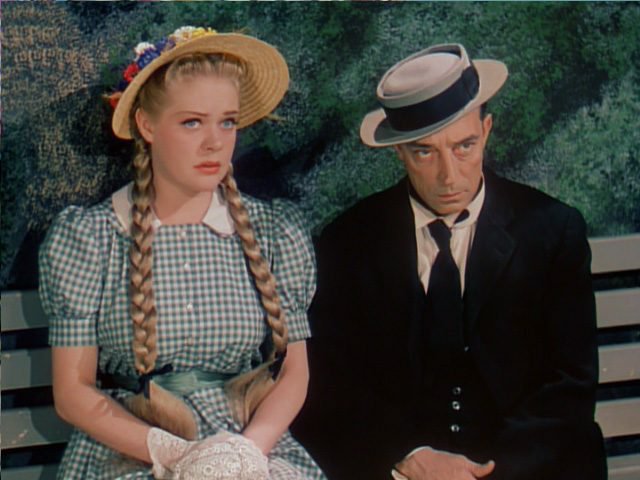
Keaton’s long career kept him working to the point where colour was much more widespread in the film and TV industry. As a result, there is lots of nice colour footage of him in his later years, but to see him looking more like the Buster we know from his classic silents, the best bet is HOLLYWOOD CAVALCADE. This 1939 feature was a vague retelling of the Mack Sennett story and Buster appears in an on-set pie throwing sequence (thus perpetrating the myth that he was another Keystone clown). It’s beautiful vivid colour, and there are even some lovely outtakes from the film showing Buster throwing pies and laughing. Sadly, neither film nor outtakes appear to be on YouTube, but there’s a brief snippet at 9:15 in this episode of the wonderful Keaton documentary A HARD ACT TO FOLLOW.
 

Charlie Chaplin didn’t make a colour film until 1967’s A COUNTESS FROM HONG KONG, but his brother Syd (always the less parsimonious Chaplin brother!) took some remarkable colour home movies on the set of THE GREAT DICTATOR that capture Charlie at work. There are scenes from the battlefields, ghettos and ballrooms of the film represented, as well as the iconic final speech. The vividly coloured uniforms of the soldiers make the viewer wish the film had been made in colour!

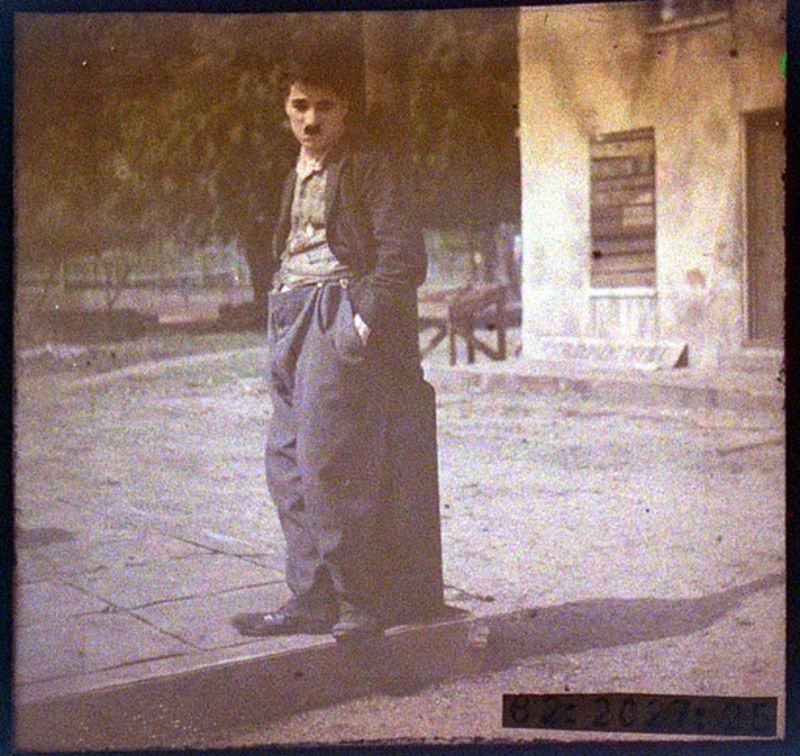
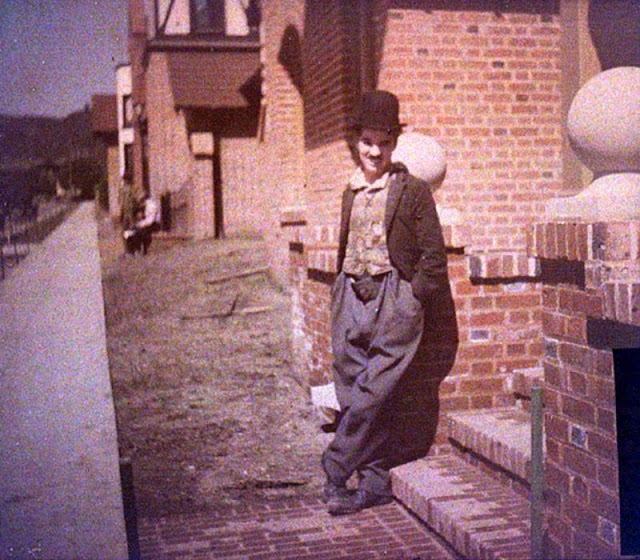
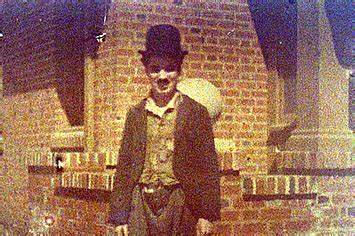
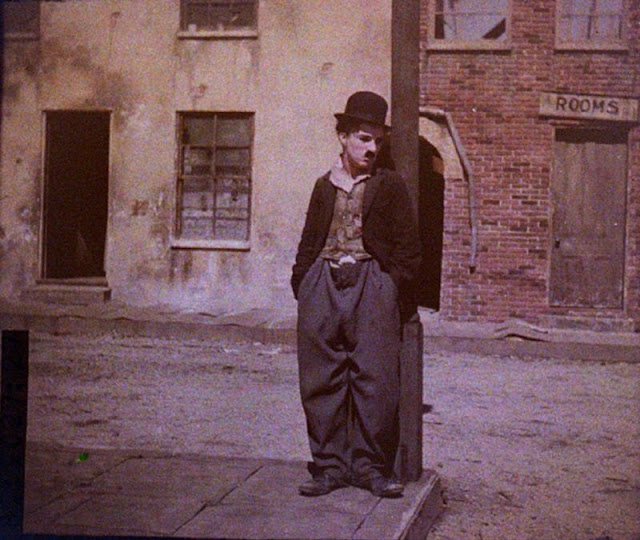
Though there is no colour footage of Chaplin from the silent era, there are a set of remarkable colour photographs taken by Charles C Zoller in 1918. These show Chaplin on the steps of his new studio and on the set of A DOG’S LIFE:

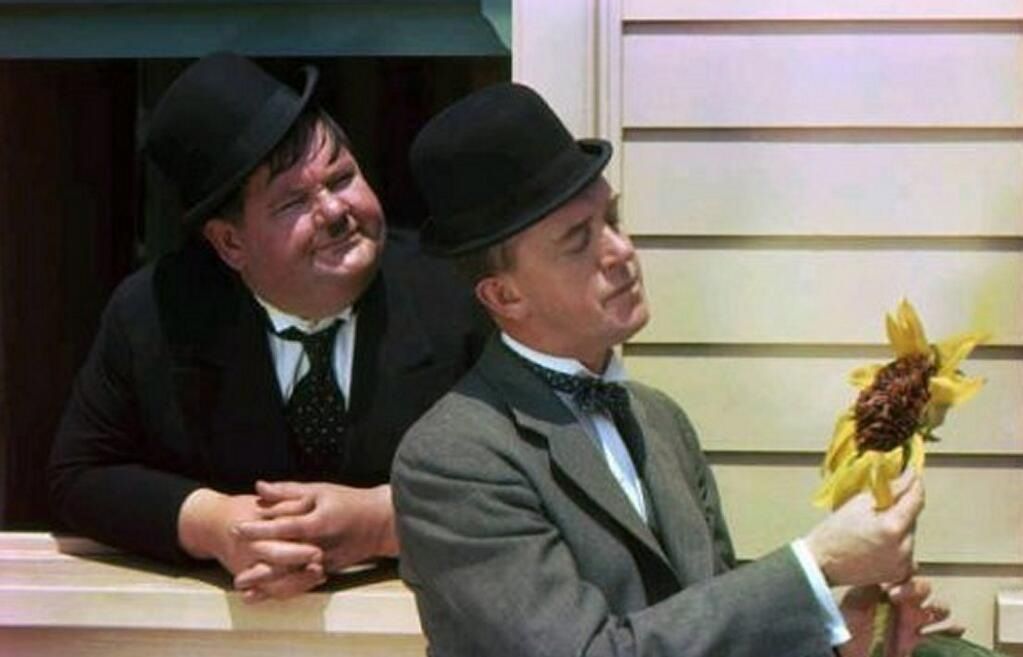
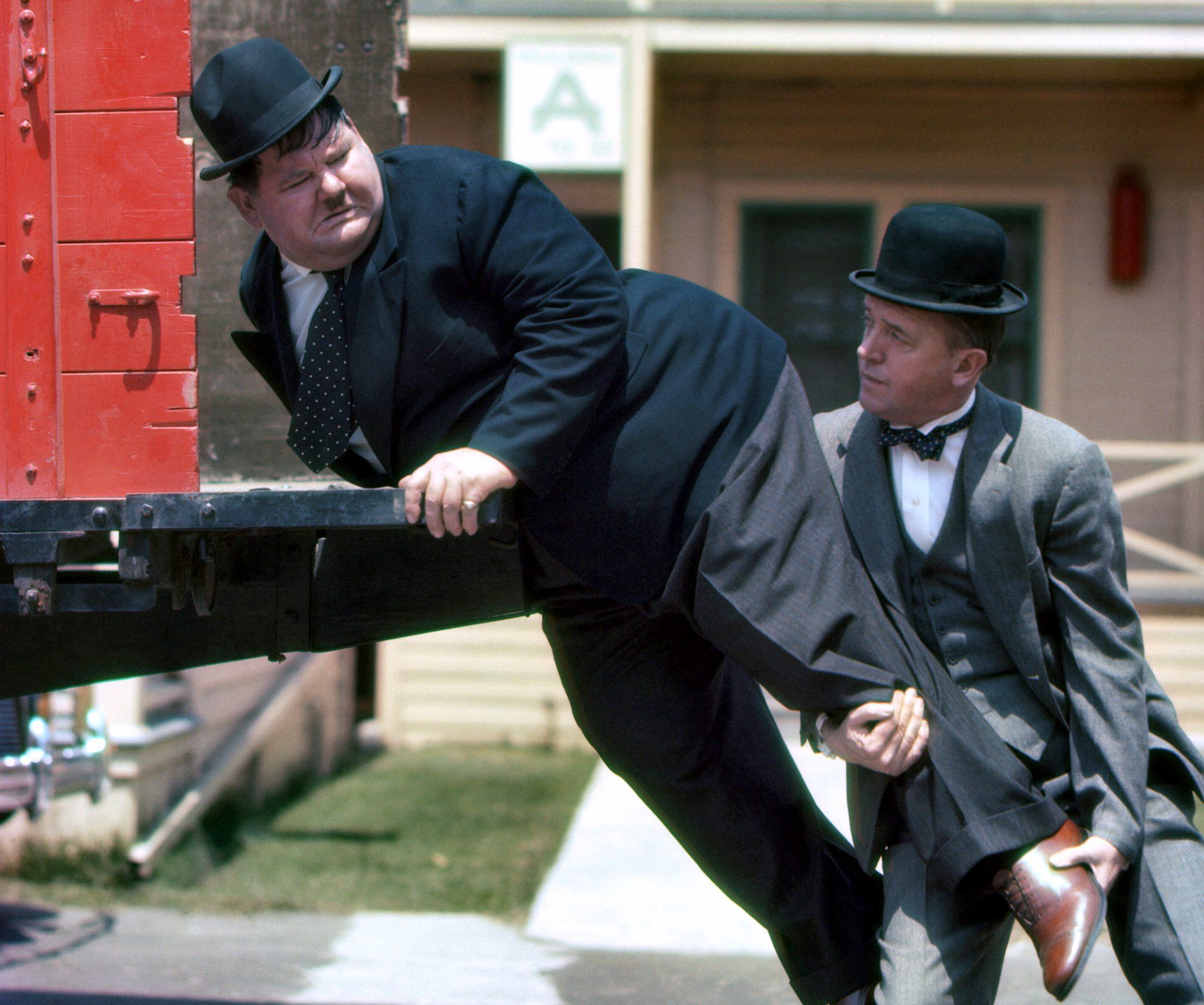
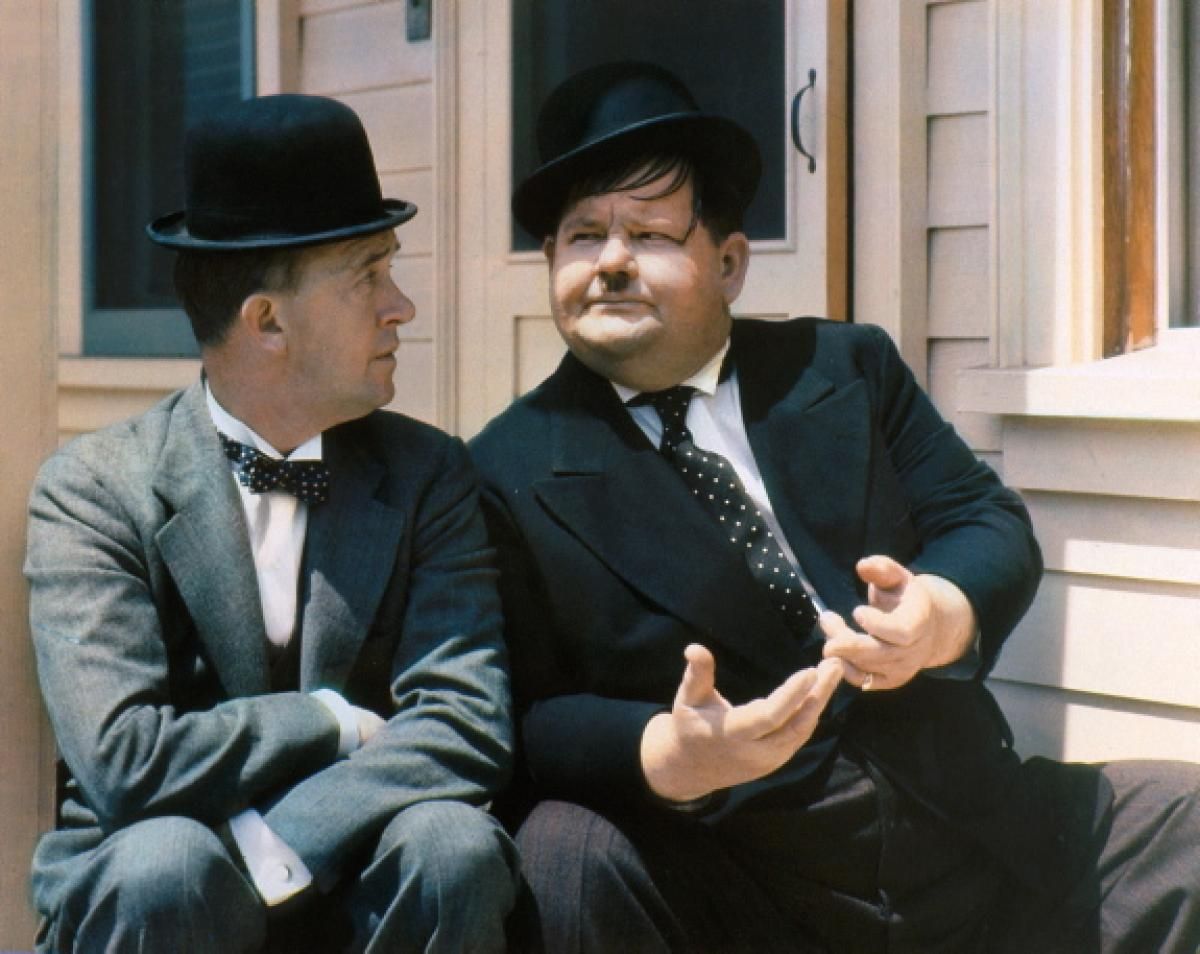
Similar in spirit are these shots of Laurel & Hardy horsing around on the Hal Roach lot in 1938:

The most famous Laurel & Hardy colour footage is the 1940s public information short THE TREE IN A TEST TUBE, which features some mute film of them clowning around with wood products. Their first colour film was actually made over a decade earlier; THE ROGUE SONG was an MGM musical starring Lawrence Tibbett, with the boys added for some comic relief.  Alas, this is another early colour film that has decomposed, but a small fragment of the boys’ footage does remain. Murphy’s law of course dictates that the existing scene takes place almost in a dark cave so there’s not much colour to be had! Here’s the clip, which ends with that famous stage direction, “exit, pursued by bear!”

Another comedy team, another clip from 1930; here’s a behind the scenes glimpse of the Marx Brothers on the set of ANIMAL CRACKERS: 
 

It wasn’t just the highest profile stars who made some colour appearances. Here’s Lupino Lane singing a tune in 1930’s GOLDEN DAWN. It’s one of the few bright spots in this turgid and dated drama of Africa; not one that stands up to repeated viewings these days.

And to finish off with here’s  Charley Chase as ‘Charley Chan Chase’, host of the oriental themed MGM novelty, HOLLYWOOD PARTY (1937) . Maybe another one that doesn’t stad much chance of being revived today… nice Technicolor, though!


Download the new issue of The Lost Laugh magazine now!

front cover

The new issue of The Lost Laugh Magazine is now available! There are exclusive articles, rare photos, reproduced articles from trade magazines and news and reviews.

Our cover star this time is British silent comedian Walter Forde; in this issue we focus on his early career and short films (including a complete filmography) , with his feature films to follow in the next issue.

Last time we looked at Monty Banks’ starring comedies. Issue 12 continues his story into the sound era, examining his handful of starring films, and his work as a director.

Other articles include:

*some of Roscoe Arbuckle’s most obscure films

*A Q & A with Ben Model, all about The Silent Comedy Watch Party

*Mabel Normand’s missing film ONE HOUR MARRIED.

*New DVDs featuring Lupino Lane, Laurel & Hardy, Charley Chase and Harry Langdon

*Screening notes on some rare films from Hal Roach and Mack Sennett studios.

Click on the link below to open the pdf of the magazine, or right click and ‘save target as’ to download the file:

THE LOST LAUGH #12

Finally, don’t forget that you can download all previous issues for free from the magazine page.

Gifts from Snub

dumbbell-SnubPollardWith his upside-down Kaiser Wilhelm ‘tache and permanently startled expression, Snub Pollard is another one of those moustachioed icons on the silent comedy Totem pole. Like Billy Bevan and Ben Turpin, he was a gift to caricaturists, a flesh cartoon. Realism was never the idiom of these comics; instead, they traded in fast-paced sight gags. They might not have had deeply developed characterisations, but what gags they had!

There’s sometimes a snobbery towards the one-and-two reelers full of slapstick and sight gags, which is totally unmerited. Yes, there was a lot of filler turned out by the industry, but many of these comedies have wonderfully inventive gags and routines, and amazing stunts.  Pollard’s films are some of the best examples of these.

Snub was an Australian, real name Harry Fraser, who adopted his stage name after working as part of the ‘Pollards Liliputians’ juvenile theatrical troupe. He made early films at Essanay in the teens, appearing opposite Chaplin and Ben Turpin. It was also at Essanay that he met Hal Roach.

When Roach set up in independent production, he hired Pollard to be second comic and villain to Harold Lloyd, before promoting him to his own series in 1919. The Kaiser moustache was a remnant of his more villainous roles, but came to suit his starring character well. As he came to play roles of the little man, always being trodden on, the ‘tache became a perfect match for his drooping, put-upon countenance.

Snub starred in films for Roach until 1924 (though a couple were held back and released into 1926), and is best remembered today for this wonderful little short. IT’S A GIFT is a beautifully zany little two reeler featuring his many Rube Goldberg-esque inventions. Wallace and Gromit, eat your heart out!

Thanks to being featured in Robert Youngson’s WHEN COMEDY WAS KING, IT’S A GIFT has long been hailed as one of the classic silent shorts. However, the side effect is that it’s often the only Pollard film ever mentioned. It’s the easy (read: lazy) Silent Comedy 101 option to write that IT’S A GIFT is Pollard’s  magnum opus, but there are many other great ones out there! While you wouldn’t rank Pollard with comic auteurs like Keaton or Laurel, he was surrounded by  hordes of brilliant gagmen and directors at the Hal Roach studios who kept cranking out wonderfully funny gags and situations for him.  One of these was Charles Parrott/Charley Chase, who helmed many of the best Pollard films.

Here are two examples, the terrific FIFTEEN MINUTES (recently pieced together by David Glass) and WHAT A WHOPPER. Both feature a classic Chase premise of a mundane beginning that swiftly escalates to become absurd, yet somehow believable.

Another of my favourite Chase-Pollard collaborations is SOLD AT AUCTION. Again, it starts simply: Pollard is an auctioneer, and does a house clearance. Trouble is, he’s gone to the wrong house! Cop James Finlayson is none-too-pleased to find his house empty and demands that Snub recovers every single item, including a runaway grand piano and a pair of false teeth being worn by an airplane pilot! Like the best of Snub’s films, it’s wonderfully absurd, but remains human. The whole film is on YouTube, but only in awful, retina-detaching quality; here’s a much better looking excerpt, courtesy of Ben Model:

Many of the Pollards only exist thanks to home movie excerpts, especially 9.5mm Pathex cutdowns. Here’s one such example. ‘CALIFORNIA OR BUST’ is a tale of Snub and his wife (regular leading lady, the charming Marie Mosquini) driving west with a wagonful of all their possessions. You can guess that they don’t make it, but the inevitable destruction of their belongings takes place in some wonderfully original ways. A favourite grace note is Snub struggling to play a game of Pool in the back of the wagon; only when it has been smashed to smithereens is he able to steady the balls to pot them! There’s only about half the original film here, but the essence is preserved nicely.

Snub Pollard’s films are full of ingenious gags, snappily performed, and deserve a wider audience. Kickstarter, anyone…?

A few song and dance moments

Many of the great comedians had come up through the stage and had to be all-round entertainers. When sound film came in, one of the benefits was allowing them to show off these talents. Many of the silent clowns seemed to enjoy the novelty of performing a song or dance once in a while, and of course performers who primarily worked in this area now had a new outlet for their talents. These routines always make me smile, so here are a choice selection.

Let’s kick off with Laurel & Hardy doing a bit of a dance. Nope, not that dance! While their moves to ‘At the ball, that’s all’ in WAY OUT WEST are iconic, this scene from BONNIE SCOTLAND is less well-known, but has a charm of it’s own. There’s a kind of infectious joy to L & H’s dancing moments, and this one is no exception.

Fellow Roach studios comic Charley Chase positively flourished with the chance to strut his stuff in talkies. Chase had a deep love of music, writing his own songs and choreographing routines for them to use in his comedies. This example, from his penultimate Roach short ON THE WRONG TREK, is  a real charmer.

https://www.youtube.com/watch?v=t5sna1_HCGE

Over to Britain now. The bright and breezy Jack Hulbert had made his name in musical comedies on stage, often partnered with his wife Cicely Courtneidge. His lanky frame made him quite a talent as an eccentric dancer, and here he gives us a song and a bit of tap. This is from JACK OF ALL TRADES (1936), one of several dated but extremely charming romantic comedies he made for Gainsborough Pictures in the 30s.

Another British comic who made his career in musical comedy (though opposite in build to Hulbert!) was Stanley Lupino. This routine comes from OVER SHE GOES, one of his plays adapted for film in 1937. Leslie Halliwell was right on the money when he called this scene “one of the most dextrous routines I’ve ever clapped eyes on”. It’s glorious.

Did someone mention Lupinos? Here’s Stanley’s cousin, Lupino Lane, in a wonderful slapstick ballet with Lillian Roth. It’s from THE LOVE PARADE (1929), and is one of my very favourite scenes of his. That Lupino family training really paid off, didn’t it?? (By the way, if you like what you see of Mr Lane, don’t forget there’s currently a Kickstarter appeal running to get some of his films on DVD). This clip is a little slow to get going, but kicks in at about the 1.50 mark..


Carrying on the theme of slapstick dance, here’s a wonderful routine from Buster Keaton. Buster’s MGM sound features were undoubtedly a waste of his talents compared to his silent masterpieces, but they do have some charming moments of 100 proof Keaton in them. The studio’s zeal for making the most of sound with singing and dancing lets us see another side of Keaton’s talents not often displayed. Like the other comics here, he was a stage veteran too, so could pull off this stuff very well indeed, even if it’s not really the idiom we expect of him. Here he is in the highlight of DOUGHBOYS, an Apache dance routine. Quite a few comedians incorporated their knockabout into one of these , but Keaton’s superior athleticism makes this really something special.

And, to finish off, just a tiny but more Buster. Here’s his international dancing medley from the short GRAND SLAM OPERA (1936). He’s waiting backstage at a radio station when hearing the band spurs him into motion… Great fun.